
Gilded Cobalt Blue China
Gilded cobalt blue china brings together rich ceramic colour and bright metallic leaf, uniting decorative utility with a striking visual contrast.
Gilded Cobalt Blue China
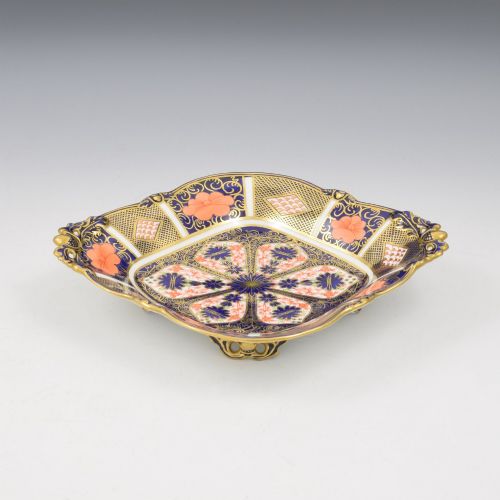
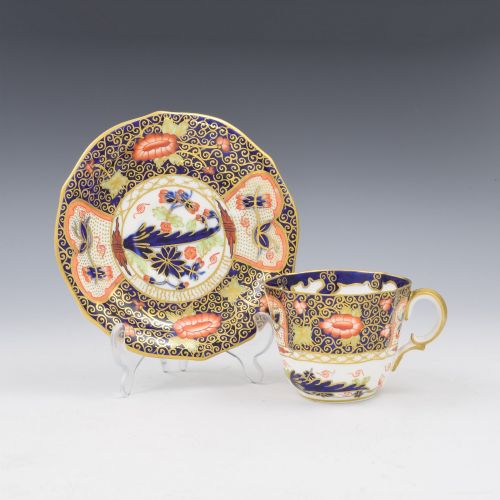
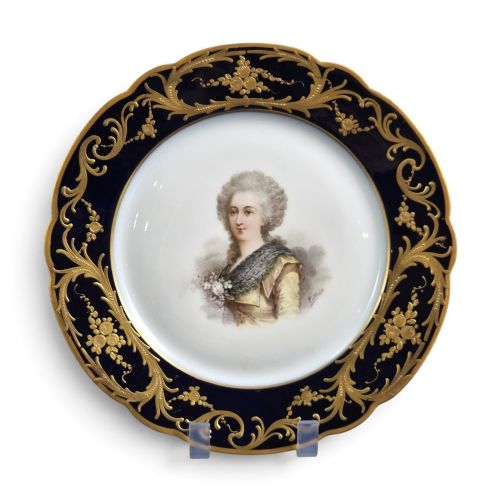
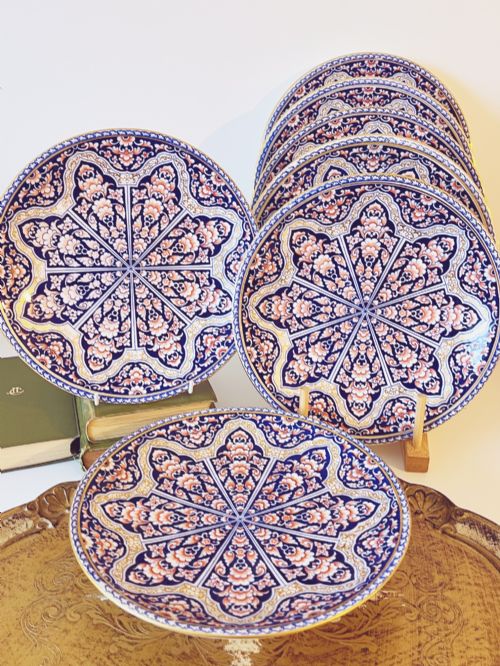
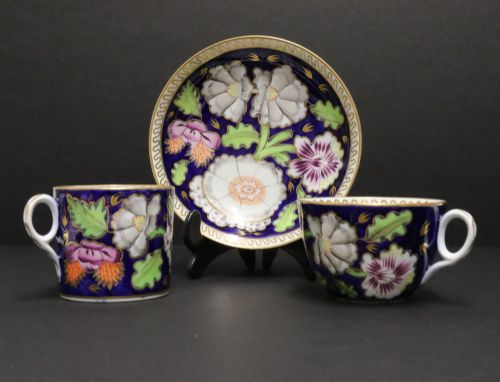
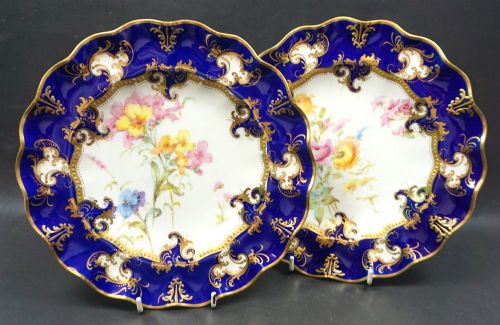
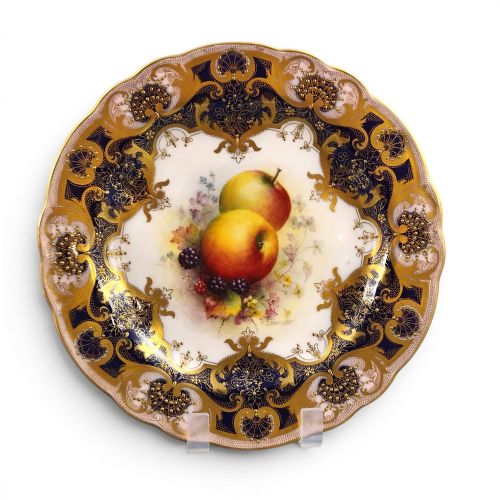
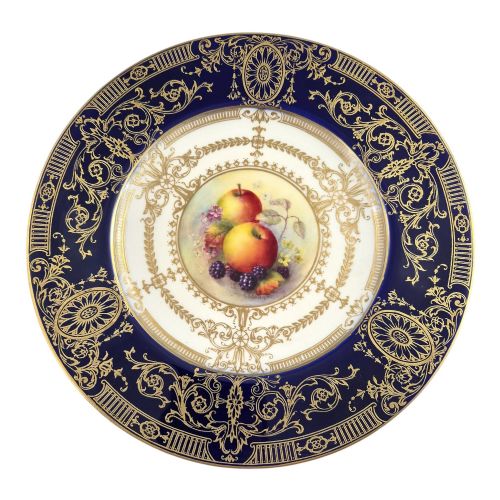
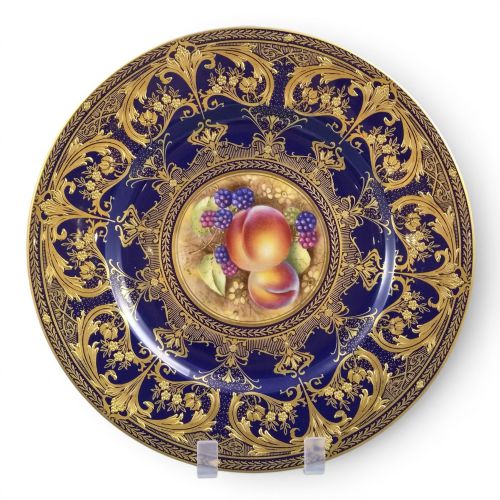
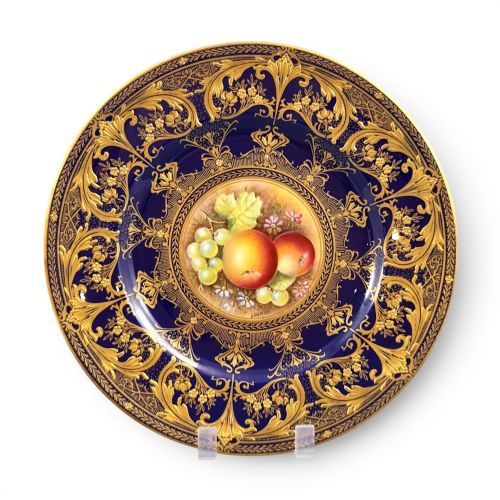
Gilded cobalt blue china encompasses a range of ceramic forms designed for display and formal dining across several centuries. Cabinet plates, teacups and saucers, vases and serving dishes dominate the selection.
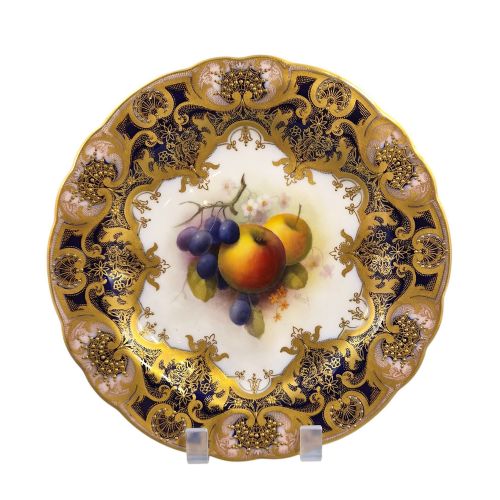
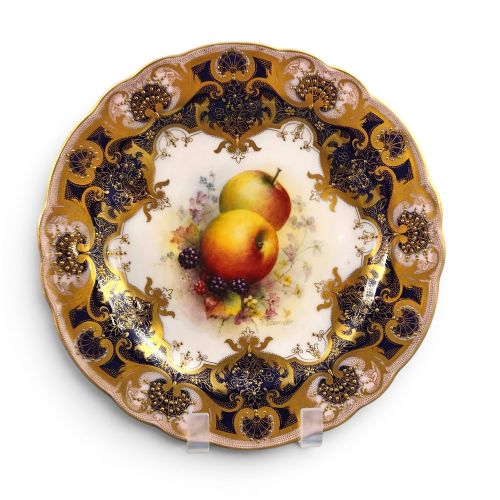
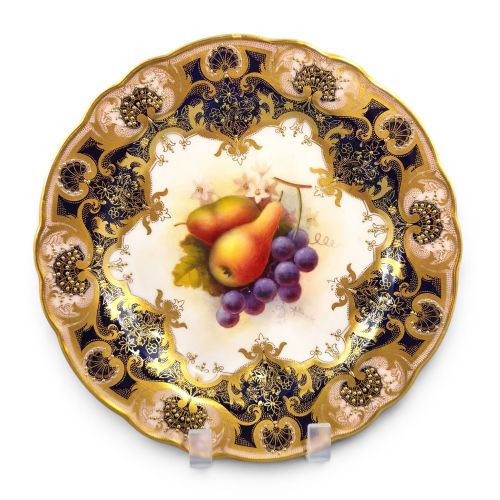
The material surface relies on a deep cobalt ground, frequently paired with intricate gold leaf or gilt ornamentation. Pieces span from the eighteenth century through the twentieth, capturing shifts in British and continental production.
Makers represented include prominent factories such as Royal Crown Derby, Coalport, Spode and Royal Worcester. Victorian Imari and traditional English styles appear alongside regency and art deco variations.
How they were made
Manufacture involves shaping porcelain, bone china or ironstone before applying a cobalt glaze to achieve the signature rich blue background. Potters then fire the pieces to fix the colour beneath a protective vitreous coating.
Craftsmen applied gold leaf, gilding or enamel over the glaze by hand, requiring a secondary low-temperature firing to adhere the metal. This technique allowed for detailed motifs, painted scenes and gilt borders that contrast sharply with the dark blue body.
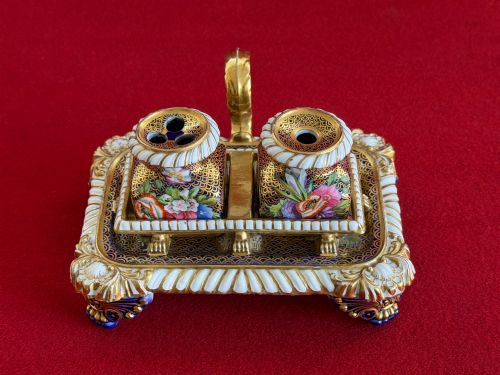
Object forms range from miniature bud vases and lemonade beakers to large dessert services and inkstands.
What varies in quality
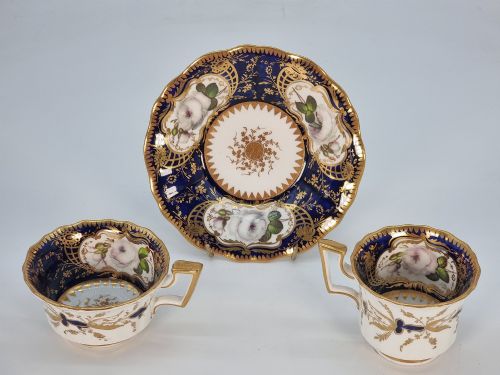
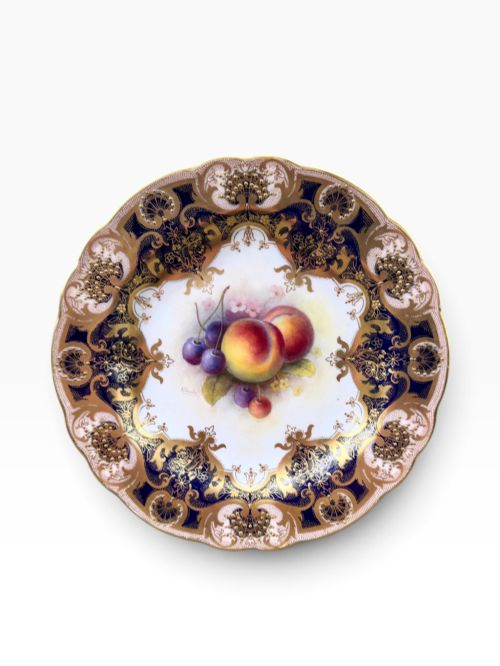
Execution of hand-painted details and the precision of the gilding dictate the standing of individual pieces. Master painters at factories like Royal Worcester or Coalport achieved remarkable depth in floral and fruit panels.
The purity of the porcelain body and the evenness of the cobalt saturation affect overall visual harmony. Heavier ironstone pieces differ significantly in refinement from delicate bone china trios and cabinet cups.
Royal Crown Derby·Coalport·Spode·Royal Worcester·Newhall·Mason·Aynsley·Doulton
The Gilded Cobalt Blue China Glossary
- Cobalt blue
- A deep blue ceramic pigment applied under the glaze. It remains stable at high kiln temperatures, producing a rich and permanent colour.
- Gilding
- The application of gold leaf or powdered gold to ceramic surfaces. This finish is typically fixed with a final firing.
- Ironstone
- A heavy, durable type of earthenware patented in the nineteenth century. It offers greater strength than standard porcelain while accepting similar glazes.
- Cabinet plate
- A decorative ceramic plate intended for display in a cabinet rather than for dining use. These items frequently feature hand-painted scenes or elaborate gilding.
- Trio
- A matched set consisting of a teacup, a coffee cup or saucers, and a tea plate. They were common components of nineteenth-century tea services.
Gilded Cobalt Blue China: Frequently Asked Questions
How should I display gilded cobalt blue china?
Display these items away from direct sunlight to protect enamel colours and prevent fading in the surrounding room.
Utilise secure plate hangers or dedicated display cabinets to support heavier pieces like ironstone mugs and serving dishes safely.
Can I use these plates for dining?
Most antique pieces function best as decorative objects due to the delicate nature of historical gilding and enamel overglazes.
Hand washing in warm water with mild soap helps preserve the gold leaf and cobalt surfaces on functional items.
How do I identify the period of a piece?
Examine factory backstamps, shape characteristics, and pattern numbers to narrow down the decade of production.
Georgian and regency items often feature simpler hand-painted marks, whereas Victorian and Edwardian examples utilise impressed or printed factory ciphers.
What is the difference between porcelain and ironstone?
Porcelain is vitrified, translucent, and fired at higher temperatures to create a delicate and refined ceramic body.
Ironstone is denser, opaque, and heavier, designed to withstand daily wear while providing a suitable surface for cobalt glazes.