



Gilded Chinese Cabinet
A gilded Chinese cabinet brings rich lacquer and bright metal leaf into a room, offering both bold colour and practical storage.
Gilded Chinese Cabinet
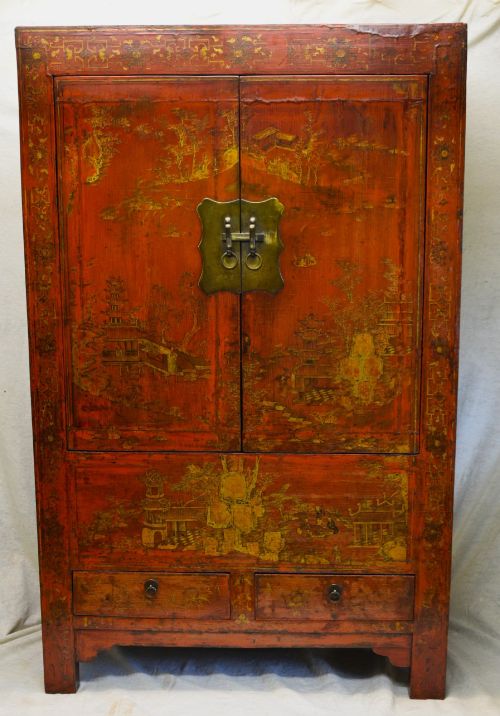
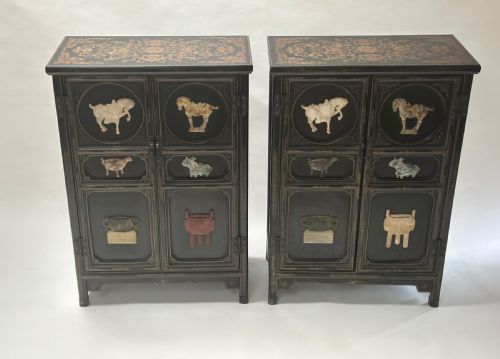
A gilded Chinese cabinet is a storage piece finished in lacquer and enriched with metallic leaf, spanning forms from large wedding armoires down to smaller table and desk cabinets.
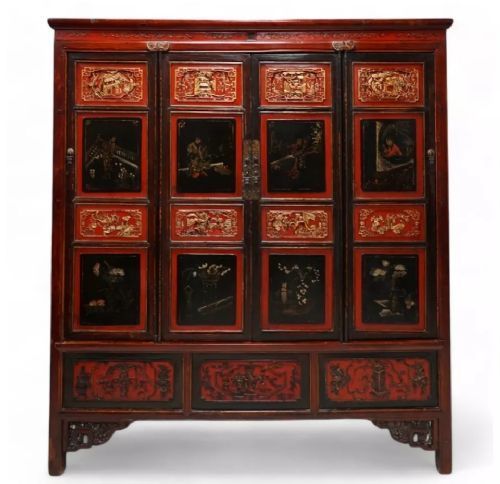
The pieces appearing for this search phrase lean heavily toward nineteenth-century works, often bearing red or black lacquer alongside carved details and export styles.
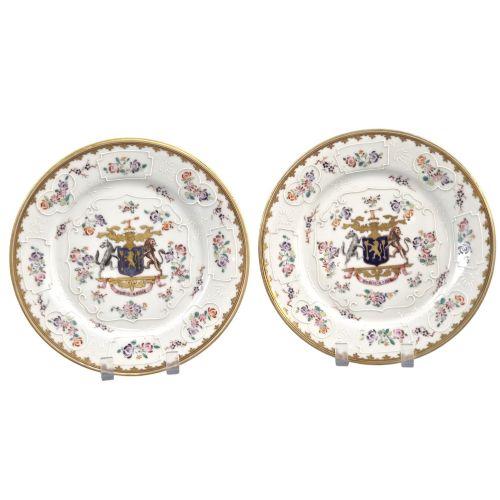
Buyers also encounter related decorative plates in porcelain, though the core of the search remains upright timber furniture designed to hold precious objects or textiles.
How they were made
Wood serves as the foundational structure, most commonly elm or general timber substrates prepared to receive successive layers of natural lacquer.
Gold leaf and gilt decoration are applied over the dark or red lacquered surfaces, frequently paired with brass hardware like hinges and lock plates.
Carving and inlay work appear across the panels, adding physical depth beneath the painted and gilded surface scenes.
Gilded Chinese Cabinet Retail Price Guide 2026
Typical asking prices for gilded chinese cabinet among the pieces listed under this phrase on Sellingantiques today, from the lower quarter to the upper quarter. They describe what is for sale here now, not the wider market.
Some nineteenth-century marriage cabinets were so beloved they doubled as portable wardrobes that followed families through changing dynasties.
What varies in quality
The depth and preservation of the lacquer layers dictate the baseline visual weight of a cabinet, separating flat surfaces from those with rich, lustrous depth.
The execution of the gilding and carved details determines the refinement of the piece, distinguishing simplified export items from more intricate workshop productions.
Edmé Samson & Cie
The Gilded Chinese Cabinet Glossary
- Lacquer
- A durable natural resin finish applied in multiple coats to wood substrates. It provides a smooth, protective base for subsequent painting and gilding.
- Gilt
- A thin application of gold leaf or gold powder used to highlight carved motifs and painted scenes. It catches ambient light within a room.
- Chinoiserie
- European decorative style inspired by Chinese artistic traditions. It frequently appears alongside authentic export items in nineteenth-century collections.
- Marriage cabinet
- A large upright storage piece traditionally given to newlyweds for bedding and garments. These often feature striking red finishes and substantial brass hardware.
Gilded Chinese Cabinet: Frequently Asked Questions
Where should I place a gilded Chinese cabinet?
These cabinets work well as focal points in reception rooms or hallways where their decorated surfaces catch the light. Keep them away from direct sunlight and steady moisture to protect the timber and lacquer.
Pair them with simple surroundings so the detailed gilding and rich red or black finishes remain the primary visual anchor of the space.
How do I clean a lacquered cabinet?
Dust the surfaces gently with a soft, dry microfiber cloth to prevent scratching the delicate lacquer and gold leaf. Avoid commercial polishes, water, and chemical sprays that can degrade the historic finish over time.
If deeper cleaning is necessary, consult a professional conservator rather than attempting solvent treatments at home.
What is the difference between a wedding cabinet and a table cabinet?
Wedding cabinets are large floor-standing pieces built to store textiles and garments, featuring tall doors and prominent brass hardware. Table cabinets are much smaller versions designed to sit on desks or side tables for storing documents or small valuables.
Both share similar lacquer and gilding techniques, but their scale dictates entirely different placements within a room.
Are all these cabinets from the nineteenth century?
While the majority of the recorded pieces date from the nineteenth century, the listings also include examples from around nineteen-twenty and the eighteenth century. The distinct Qing Dynasty influence runs through many of these varied production dates.
Examining the construction timbers and the style of the lacquer helps clarify the specific period of an individual piece.