



Chinese Display Armoire
A Chinese display armoire brings striking colour and sculptural form into a room, offering generous storage alongside a strong decorative presence.
How they were made
Joinery relies on sturdy timbers such as elm and dense hardwood, which provide the structural integrity required for large compound cabinets and wardrobes.
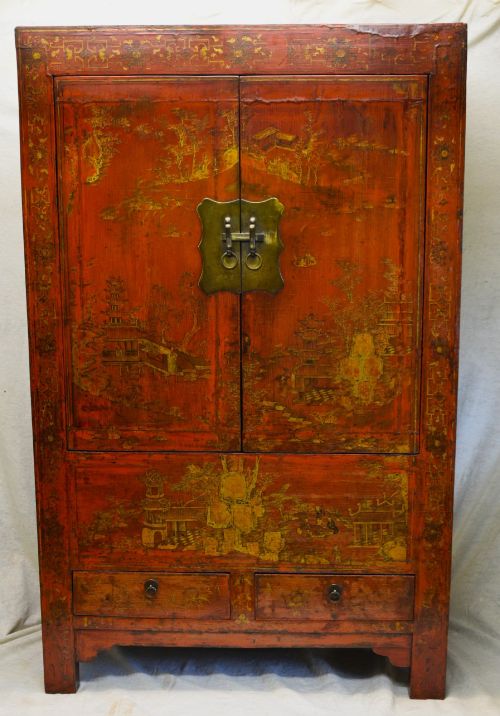
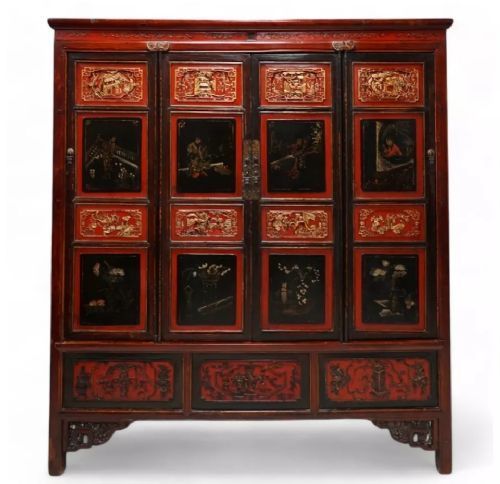
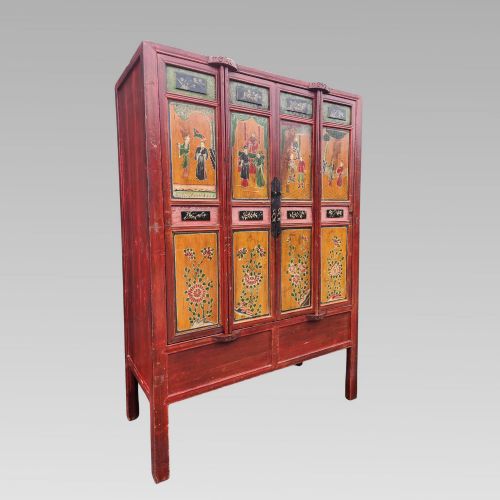
Surfaces receive deep layers of red or black lacquer, occasionally enhanced with gold leaf accents, inlaid elements, or detailed dragon carvings.
Metal fittings such as brass hinges and iron hardware secure the doors and provide contrasting detail against the wood and lacquer finishes.
What varies in quality
Distinctions in quality rest upon the sophistication of the carving and the depth of the lacquer work, ranging from simple elm surfaces to intricately figured zitan and inlaid panels.
The handling of traditional motifs, such as dragon carvings and Chinoiserie detailing, determines the artistic merit of each cabinet.
Proportion and scale distinguish monumental cupboards from standard utility pieces, affecting how the armoire commands a space.
Chinese Display Armoire Retail Price Guide 2026
Typical asking prices for chinese display armoire among the pieces listed under this phrase on Sellingantiques today, from the lower quarter to the upper quarter. They describe what is for sale here now, not the wider market.
The Chinese Display Armoire Glossary
- Armoire
- A tall wardrobe or cupboard used for storage. This term often describes large vertical storage furniture originating from various periods.
- Lacquer
- A durable resin finish applied in multiple layers to wood. It provides a smooth surface that accepts red or black pigmentation and gold leaf decoration.
- Elm
- A resilient hardwood utilised widely in traditional cabinet making. Its strong grain takes polish and lacquer effectively.
- Zitan
- A dense, heavy hardwood prized for fine antique Chinese furniture. It allows for crisp, deep carving.
- Chinoiserie
- A Western stylistic interpretation of Chinese artistic traditions. It appears on decorative cabinets and storage pieces.
Chinese Display Armoire: Frequently Asked Questions
What is a Chinese display armoire?
A Chinese display armoire is a large storage cabinet or cupboard, typically originating from the nineteenth or early twentieth century. These pieces function as wardrobes, marriage cabinets, or compound cupboards.
They combine practical storage space with decorative elements such as red lacquer, black lacquer, or carved wood panels. Each piece reflects traditional craftsmanship from periods including the Qing Dynasty and the Chinese Republic era.
How were these cabinets used originally?
These cabinets served primarily for domestic storage within households, housing garments, linens, and household valuables. Marriage and wedding cabinets often formed part of a bride's dowry.
Larger compound cabinets provided substantial vertical storage for families of means, while specialised forms like noodle cabinets served more specific household functions.
Where should I place an armoire?
An armoire functions well in living rooms, dining rooms, or bedrooms where its substantial scale can anchor the interior design. Because these pieces offer significant vertical storage, they work effectively along bare walls.
Position the cabinet away from direct sunlight and heat sources to protect historical wood, lacquer finishes, and brass or iron hardware.
How do I identify the period?
Dating relies on examining the timber construction, hardware style, and surface finish techniques. Nineteenth-century examples often feature traditional elm construction paired with heavy red or black lacquer.
Later pieces from around 1900 or the 1920s incorporate specific transitional styles, while materials like zitan indicate high-status production from particular workshops.