

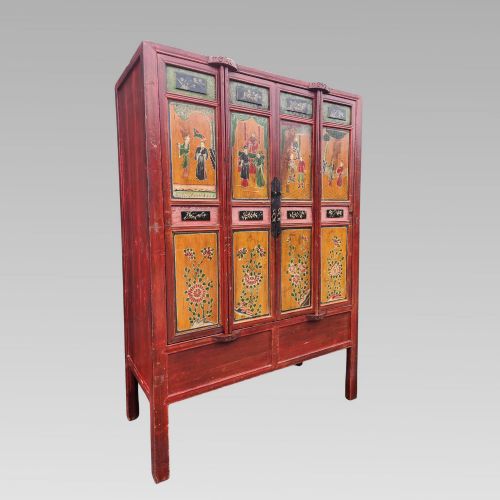


Chinese Wardrobe Armoire
These Chinese wardrobe armoire pieces are striking storage items brought from Qing Dynasty contexts, offering generous proportions and rich finishes for modern homes.
Chinese Wardrobe Armoire
When you search for a chinese wardrobe armoire, you find large storage items designed for domestic use, primarily appearing as marriage cabinets, compound cabinets and cupboards from the 19th Century, 1900, 1920, and the Victorian period. These pieces originate from traditions such as Qing Dynasty, Chinoiserie, Traditional Chinese, Chinese Qing Dynasty, Asian Colonial, Chinese Export, and Qing Dynasty Style.
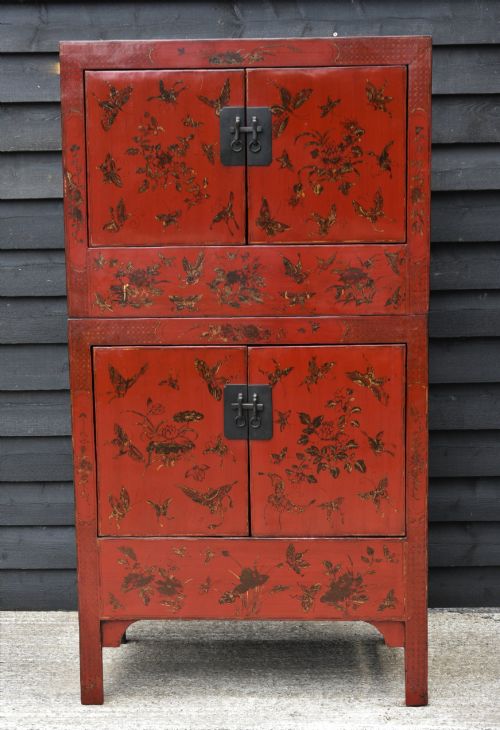
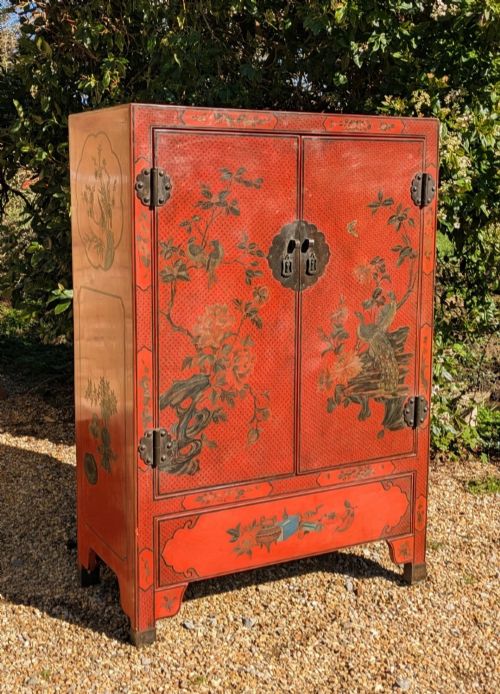
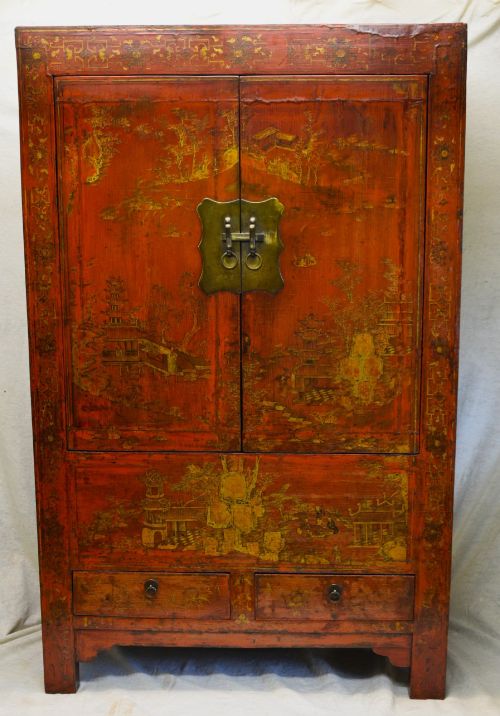
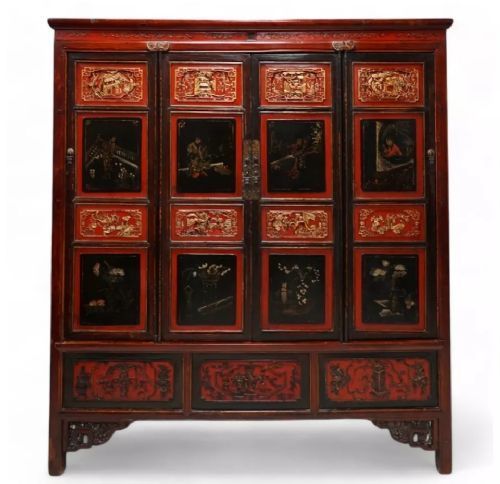
The version you are most likely to meet on this page is the red lacquered wedding or marriage cabinet, often built from elm or hardwood and finished with brass hardware. Alongside these red lacquer forms, you will encounter black lacquered compound cabinets, teak cupboards with drawers, camphor wood cabinets on chests, and carved zitan sijiangui cupboards.
These items function as focal storage points in a room, combining architectural presence with traditional craftsmanship. Each piece reflects the specific aesthetic of its period, from simple elm construction to heavily carved dragon motifs on zitan timber.
How they were made
Makers constructed these cabinets using dense timbers such as elm, teak, camphor wood, hardwood, and zitan, selected for their structural stability and ability to hold carved details. Joinery techniques allowed large panel surfaces to remain stable over time without excessive warping.
Surfaces received elaborate finishes of lacquer, including red lacquer and black lacquer, applied in multiple layers to achieve depth and resilience. Brass and iron hardware provided structural reinforcement while adding decorative strapwork and hinges to the doors and drawers.
Chinese Wardrobe Armoire Retail Price Guide 2026
Typical asking prices for chinese wardrobe armoire among the pieces listed under this phrase on Sellingantiques today, from the lower quarter to the upper quarter. They describe what is for sale here now, not the wider market.
Listings feature items spanning the 19th Century, 1900, 1920, and the Victorian period, constructed in elm, teak, camphor wood, and zitan.
What varies in quality
The distinction between standard examples and finer items rests upon the choice of timber and the complexity of the surface treatment. Hardwoods like zitan and older elm timbers demonstrate superior weight and density compared to standard utility woods.
The execution of the lacquer finish and the depth of carved dragon motifs or panels determine visual distinction. Original brass or iron hardware that remains intact adds to the integrity of the piece.
The Chinese Wardrobe Armoire Glossary
- Marriage cabinet
- A large traditional storage cabinet often presented as a wedding gift in Chinese culture. These pieces typically feature double doors opening to reveal internal shelving and hidden compartments.
- Compound cabinet
- A two-part storage system consisting of a larger lower cupboard and a smaller top chest stacked together. This form maximises vertical storage space in traditional rooms.
- Lacquer
- A durable finish made from natural resin applied in successive coats and polished to a smooth sheen. It provides both protection to the underlying wood and a rich coloured surface.
- Sijiangui
- A specific form of Chinese compound cabinet translating to four-piece-counter cupboards. They are noted for their monumental scale and stable proportions.
- Zitan
- A dense, heavy hardwood prized in traditional Chinese furniture making. It accepts fine carving and darkens gracefully with age.
Chinese Wardrobe Armoire: Frequently Asked Questions
What is a chinese wardrobe armoire used for?
These cabinets serve as substantial storage furniture for clothing, linens, and household goods. Their internal shelves and compartments organise items while the exterior acts as a prominent visual feature in a room.
Historically, marriage cabinets held textiles and valuables brought by a bride into her new household. Today, they function effectively as freestanding wardrobes or linen cupboards in modern bedrooms and living spaces.
How do I date a chinese wardrobe armoire?
Dating relies on examining the timber species, construction methods, and surface wear patterns. Pieces from the 19th Century often show traditional joinery and patinated lacquer surfaces.
Later examples from 1900 or 1920 may exhibit specific regional styles and hardware variations. Comparing the wood density and lacquer depth helps place the piece within its historical period.
Where should I place a chinese wardrobe armoire?
These large cabinets require ample wall space and a structurally sound floor to support their substantial weight. Placing them away from direct sunlight protects the lacquer finish from fading.
Allow enough clearance for the heavy doors to swing open fully. They suit bedrooms, hallways, or large living areas where their scale can be appreciated.
Are these cabinets made of solid wood?
The listings feature pieces constructed from solid timbers including elm, teak, camphor wood, and dense hardwoods. These natural materials provide the structural strength necessary for large compound cabinets and wedding chests.
Secondary woods may be used for internal framing or drawer linings. The exterior surfaces are typically finished with lacquer or left as exposed hardwood.