



Red Asian Storage Cabinet
A red asian storage cabinet brings striking colour and practical depth to a room, offering centuries of regional craftsmanship and bold red finishes.
Red Asian Storage Cabinet
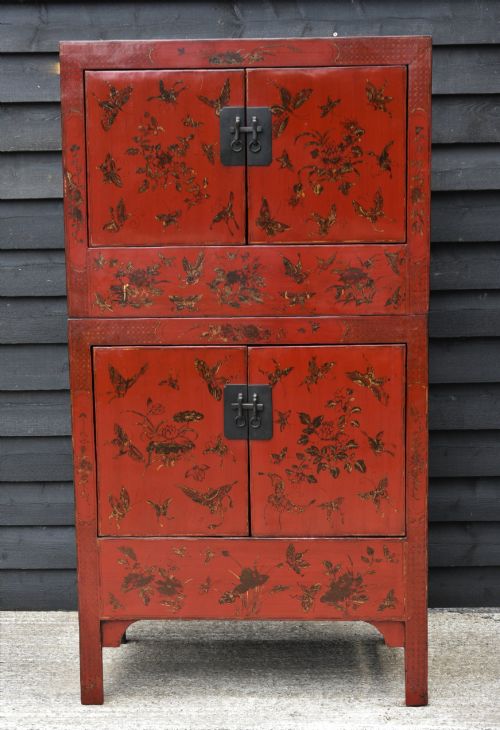
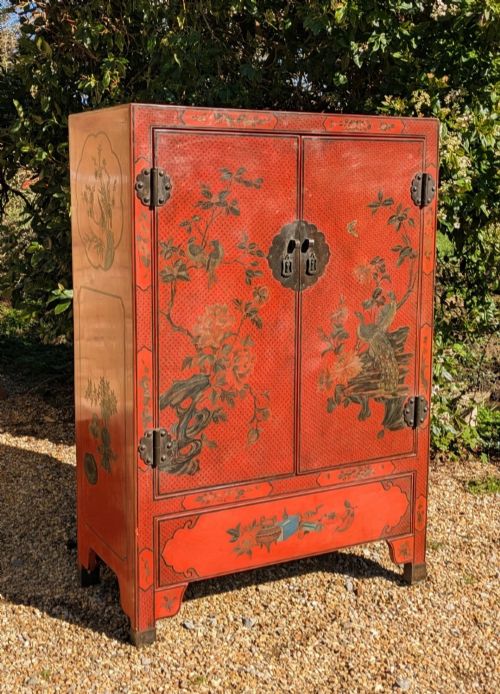
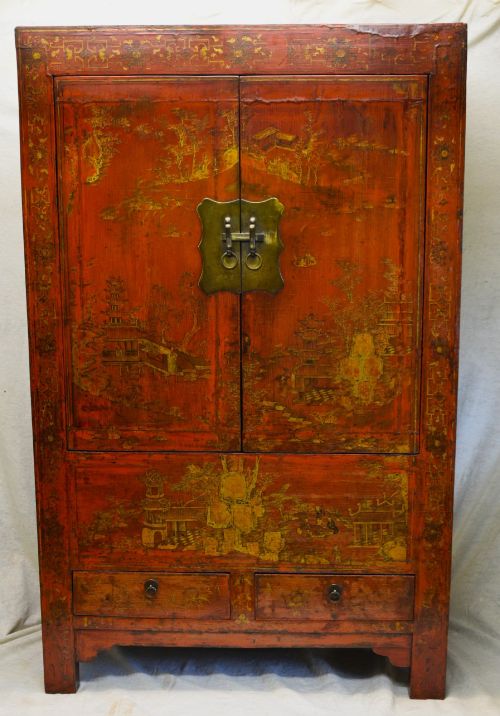
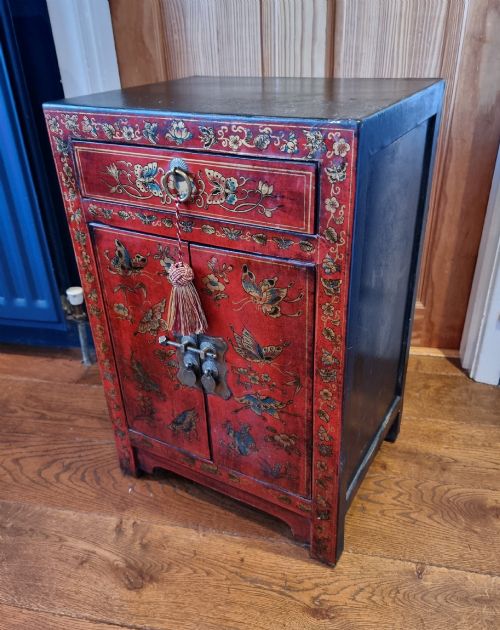
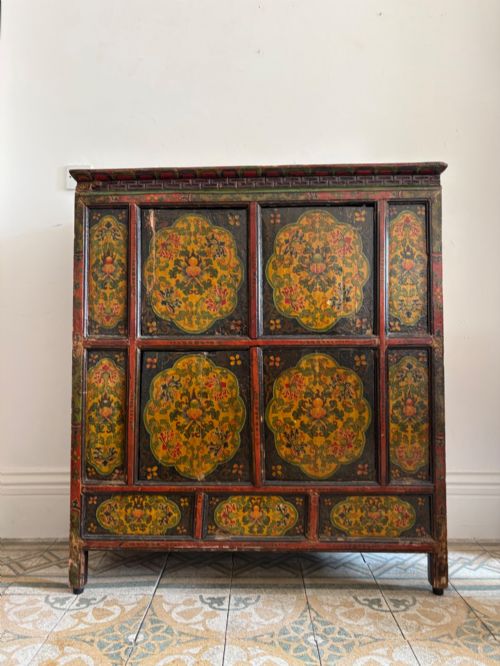
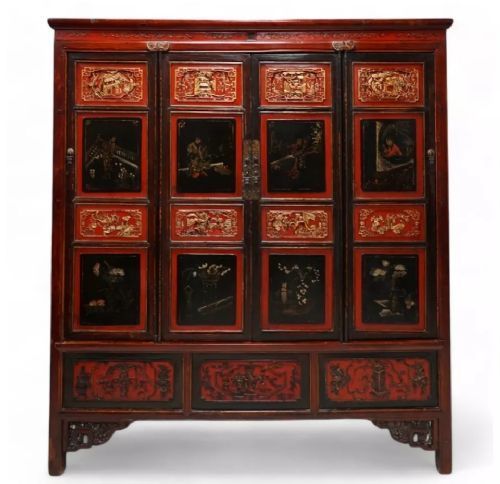
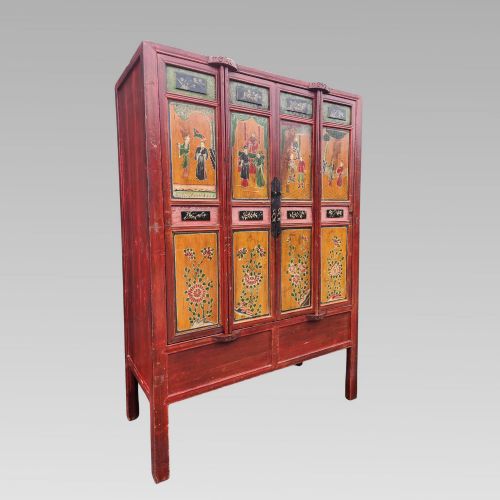
When you search for a red asian storage cabinet, you enter a field dominated by nineteenth and early twentieth-century pieces originating from China, Tibet, and Japan. The selections here range from imposing marriage cupboards and side cabinets to compact apothecary chests and noodle cabinets.
Chinese pieces often feature lacquer over elm or hardwood, while Japanese examples include traditional tansu chests built in cedar. Styles span Qing Dynasty works, regional provincial pieces, and later Chinoiserie interpretations.
The most frequent form encountered on this page is the two-door marriage or wedding cabinet, traditionally used to store household linens and valuables. Alongside these stand smaller bedside cabinets, floor cabinets, and multi-drawer apothecary chests.
How they were made
Wood serves as the foundational material for these pieces, with elm, cedar, and assorted hardwoods providing stable frames for heavy use. Carpenters constructed joints to accommodate seasonal wood movement without weakening the overall structure.
Lacquered wood finishes provide the signature red surface, built up through successive coats applied over primed timber. Artisans incorporated gold leaf, hand-painted floral decorations, and intricate carvings into the panels.
Iron and brass hardware functions both structurally and decoratively, taking the form of heavy strap hinges, circular lock plates, and corner braces. These metal elements secure the doors and drawers while contrasting sharply with the red lacquer.
Red Asian Storage Cabinet Retail Price Guide 2026
Typical asking prices for red asian storage cabinet among the pieces listed under this phrase on Sellingantiques today, from the lower quarter to the upper quarter. They describe what is for sale here now, not the wider market.
Countless generations of wedding garments and dried roots rested safely behind these heavy brass lock plates.
What varies in quality
The integrity of the timber framework and the original condition of the lacquered surface dictate the overall grade of a cabinet. Pieces retaining their early layers of red pigment and hand-painted details hold greater visual and historical coherence.
The refinement of the metalwork, from plain iron mounts to finely engraved brass backplates, reflects the workshop standard of the period. Superior examples demonstrate careful alignment in doors and drawers that operate smoothly within their frames.
The Red Asian Storage Cabinet Glossary
- Lacquer
- A durable finish made from tree sap applied in multiple layers to seal and protect wood. It cures to a smooth, hard surface that takes pigments and gold leaf exceptionally well.
- Chinoiserie
- European artistic styles reflecting Chinese motifs and decorative techniques, popular during the eighteenth and nineteenth centuries. Makers applied these designs to furniture produced both in the West and in Asia for export.
- Tansu
- Traditional Japanese mobile storage chests constructed primarily from wood with iron hardware. They were designed for specific domestic uses such as storing clothing or account books.
- Marriage cabinet
- A large Chinese storage cupboard traditionally given as a wedding gift to hold blankets and garments. These pieces often feature prominent brass lock plates and rich red lacquer.
- Apothecary cabinet
- A partitioned chest fitted with numerous small drawers designed for storing herbs and medicines. They offer compartmentalised storage with distinct regional joinery.
Red Asian Storage Cabinet: Frequently Asked Questions
What were red asian storage cabinets used for?
These cabinets served practical domestic purposes, ranging from the storage of heavy silk bedding in marriage cupboards to the sorting of dried herbs in multi-drawer apothecary chests. Households relied on them to protect textiles and valuables from dust and humidity.
Over time, many of these functional pieces transitioned into prominent display items within formal rooms, showcasing the status and taste of the family through their decorative lacquer and hardware.
How do I style a red storage cabinet at home?
A red storage cabinet works effectively as a focal point in neutral rooms, providing a strong splash of colour against plain walls. Placing one in a hallway, dining room, or living space introduces practical shelving while adding historical character.
Because these pieces vary considerably in height and width, matching the scale of the cabinet to the proportions of the room ensures the furniture anchors the space effectively without overwhelming surrounding items.
How can I tell Japanese tansu from Chinese cabinets?
Japanese tansu chests typically emphasise exposed timber grain or simpler dark finishes, though red lacquered examples do exist, and they often feature systematic exterior iron strapping. Their construction prioritises modular stacking and portability.
Chinese cabinets more frequently display smooth red lacquer surfaces, elaborate brass circular lock plates, and distinct architectural framing around the doors. The presence of carved panels or gold leaf points directly towards Chinese traditions.
Are these cabinets made of solid wood?
Traditional Asian cabinets are constructed using solid timber frames and panels, frequently utilising elm, cedar, or regional hardwoods. Joinery techniques allowed the wood to expand and contract naturally without warping the primary structure.
The application of heavy lacquer coats over the timber provides an extra layer of protection, sealing the wood while creating the smooth red ground necessary for painted decoration.