
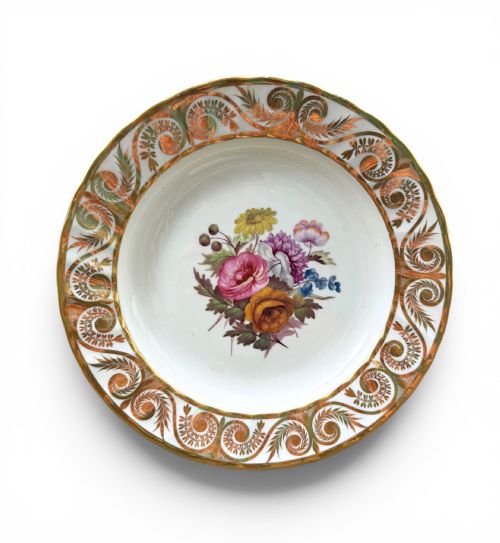
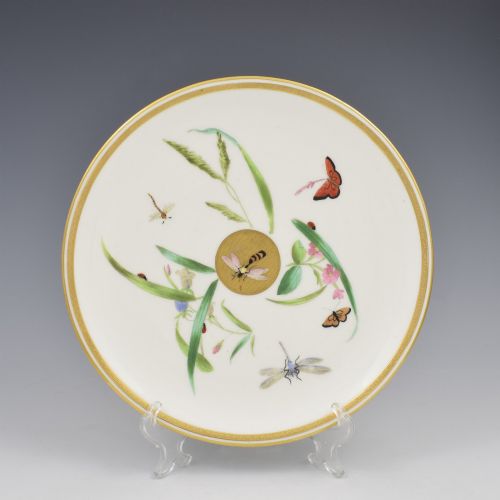
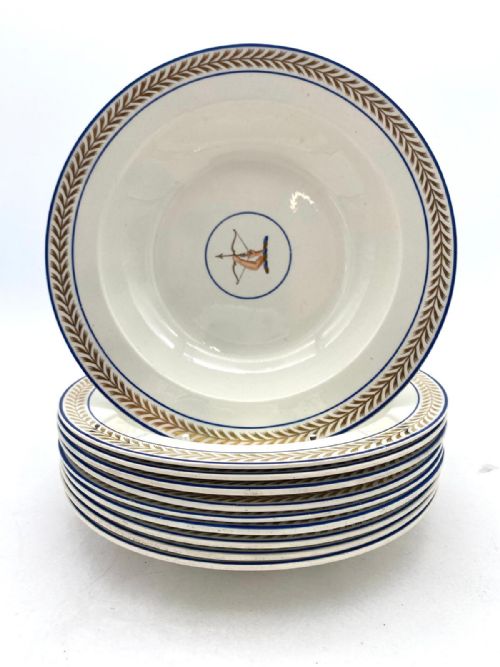
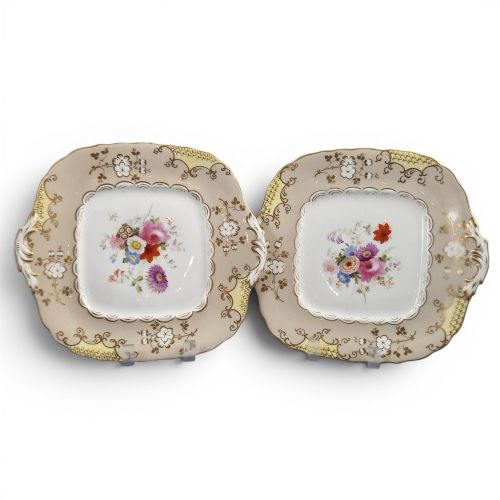


Gilded Ceramic Dessert Plate
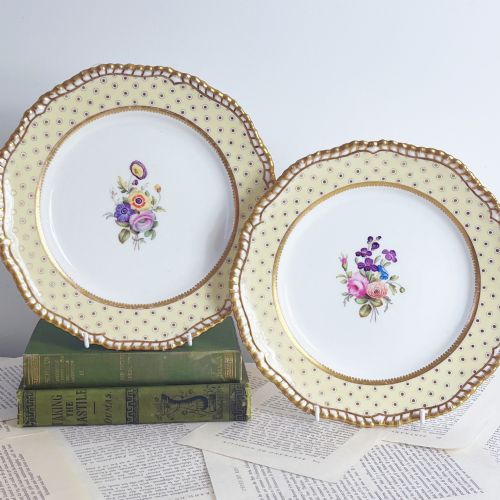
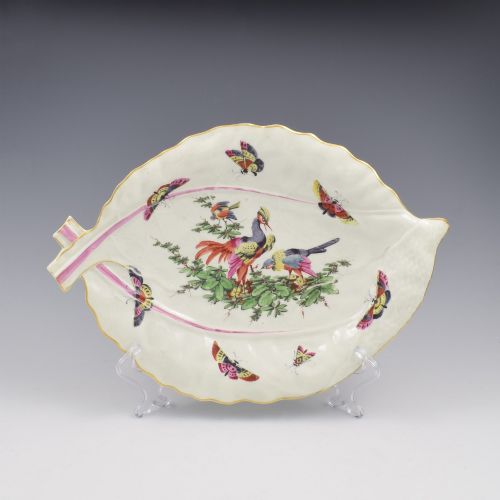
These gilded ceramic dessert plates and services span eighteenth-century Worcester to twentieth-century Derby, offering hand-painted botanical, armorial and topographical scenes for display or formal dining.
Gilded Ceramic Dessert Plate
A gilded ceramic dessert plate sits within a tradition of fine porcelain and pottery created for the final course of a formal meal. These pieces range from eighteenth-century soft-paste dishes to nineteenth-century bone china and creamware services.
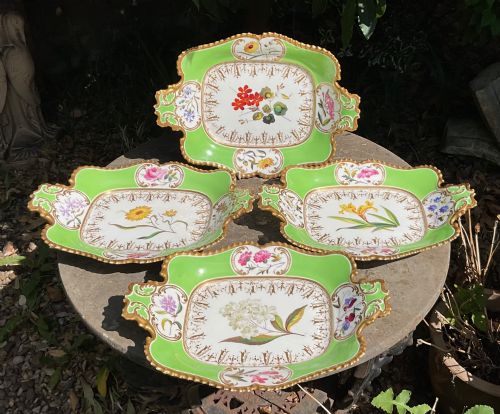
The versions most frequently met on this page date from the Georgian and Victorian eras, produced by factories such as Worcester, Derby, Minton and Coalport. They appear individually, in pairs, or as part of larger dessert services comprising comports and serving dishes.
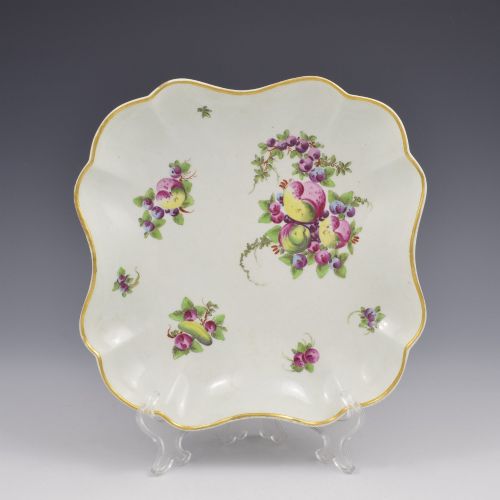
Makers shaped these plates in various forms, including lobed, square, basketweave and shaped edges. Their primary functions involved serving fruit, puddings and sweetmeats, though many served equally as cabinet plates.
How they were made
Potters utilised soft-paste and hard-paste porcelain, bone china, creamware and ironstone as the structural bodies for these pieces. Artisans then applied enamel colours by hand, often depicting birds, flowers, fruit and topographical landscapes.
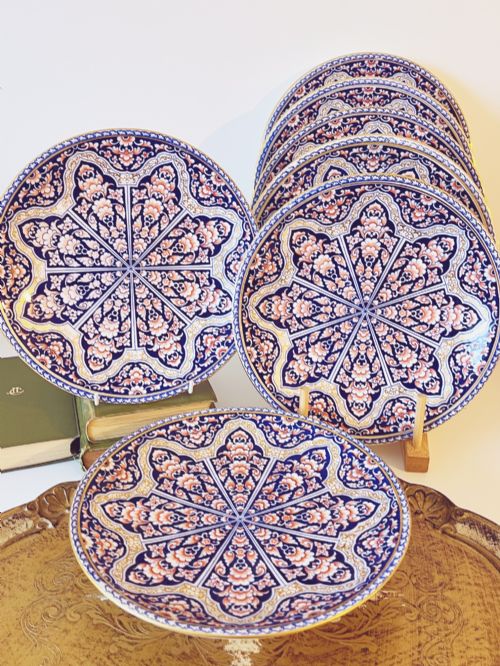
Gilding was added using gold leaf or liquid gold, which workers then burnished to achieve a bright finish. Many factories incorporated cobalt blue underglaze printing, armorial crests, and moulded patterns such as basketweave directly into the ceramic body.
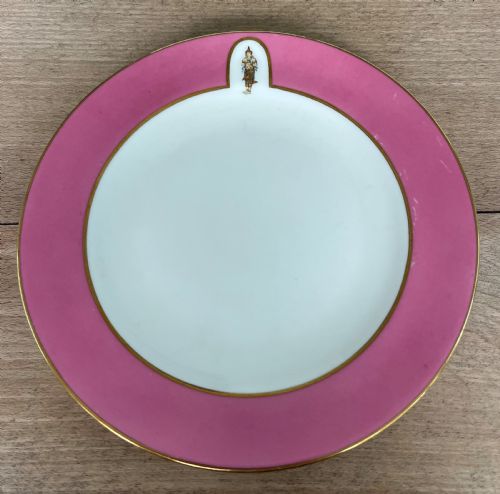
At least one plate here made its way to the King of Siam, proving nineteenth-century dessert habits crossed international borders.
What varies in quality
Quality rests upon the precision of the hand-painted decoration and the crispness of the porcelain moulding. Pieces bearing detailed botanical studies, armorial bearings or named topographical views executed by skilled artists stand above standard floral patterns.
The application and preservation of the gilding also distinguish the range, as hand-chiselled and burnished gold leaf holds its lustre better than flat painted gilt. Furthermore, the translucency and whiteness of the porcelain body reflect the technical standard of the period.
Spode·Royal Crown Derby·Chamberlains Worcester·Minton·Wedgwood·Coalport·Cauldon Ltd·John Ridgway·Rockingham Pottery·Flight Barr And Barr·Chelsea Derby·Masons Patent Ironstone·Meissen·Bloor Derby
The Gilded Ceramic Dessert Plate Glossary
- Soft-Paste Porcelain
- An artificial porcelain composition fired at lower temperatures than hard-paste, common in eighteenth-century English factories. It produces a warm, slightly creamy body with a distinctive glaze.
- Armorial
- A ceramic decorated with a family coat of arms or crest. These bespoke commissions were painted for specific aristocratic or royal patrons.
- Comport
- A elevated dish or pedestal bowl used in a dessert service to hold fruit or sweetmeats. They form the centrepiece of matching nineteenth-century table sets.
- Creamware
- A refined earthenware developed in Yorkshire and Staffordshire, notable for its pale straw or cream-coloured glaze. Wedgwood was a primary innovator of this ceramic body.
- Enamel
- Opaque glass-based colours fused to the ceramic surface during a second, lower-temperature firing. They provide the vibrant palette seen on botanical and bird plates.
Gilded Ceramic Dessert Plate: Frequently Asked Questions
Were these plates used for everyday dining?
These ceramics were reserved for the dessert course of formal dinners, rather than daily family meals. Wealthy households brought them out at the conclusion of the main dinner to serve fruit, sweetmeats and small puddings.
Because they were handled by guests during dessert, many survived in better condition than dinner plates subject to heavy cutlery use.
What is a dessert service?
A dessert service is a matching set of ceramics designed specifically for the final course of a meal. It typically includes a central high-footed comport accompanied by a dozen or half-dozen plates and serving dishes.
These coordinated sets allowed hosts to present a visually unified table arrangement for guests.
Can I hang these plates on the wall?
Cabinet plates and dessert dishes are frequently displayed on walls or within glass-fronted cabinets. Using coated spring hangers distributes the weight evenly across the rim without damaging the ceramic body.
Ensure the wall mount is secure, as antique porcelain has weight and can be fragile if bumped.