



Gilded Carriage Clock
A gilded carriage clock brings a precise piece of nineteenth-century engineering and polished metalwork straight to the mantelpiece.
Gilded Carriage Clock
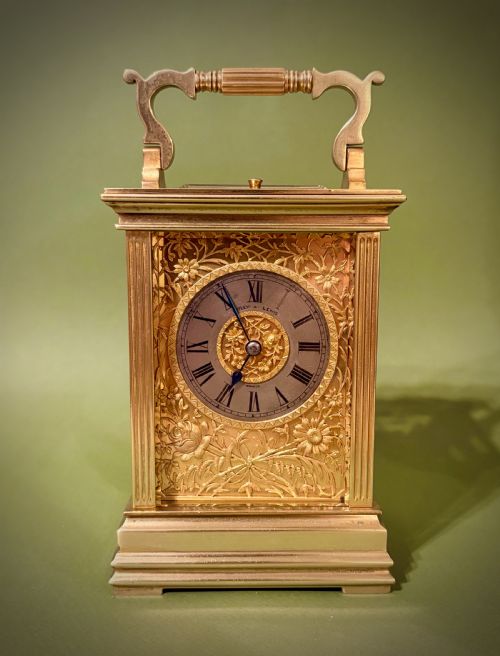
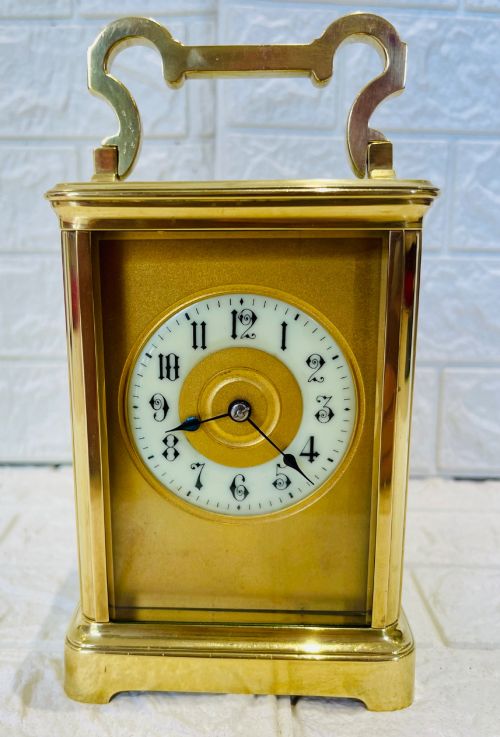
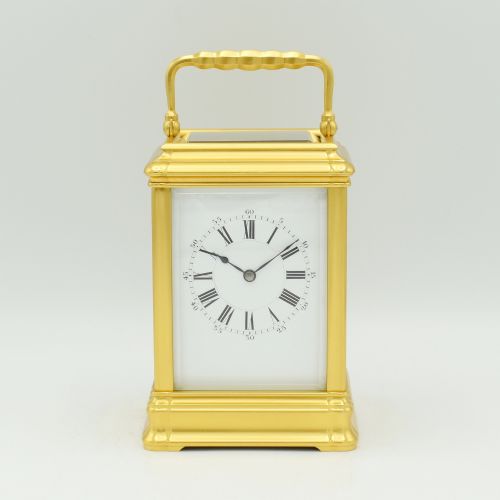
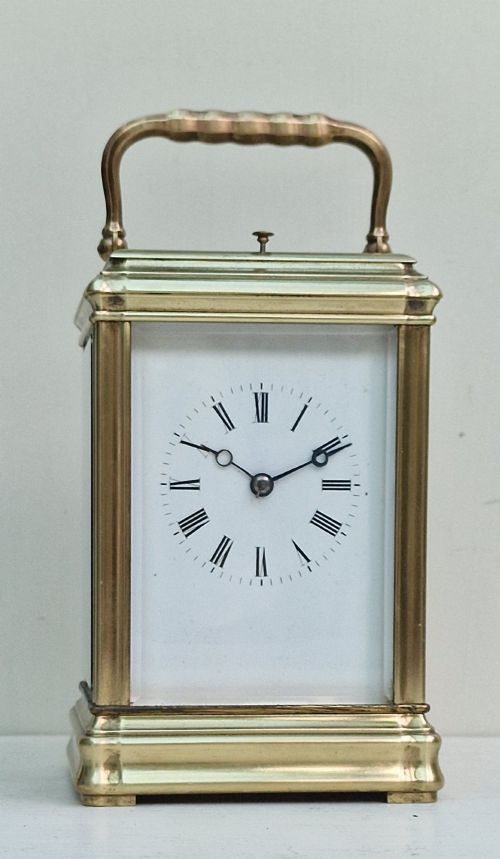
A gilded carriage clock is a portable timepiece housed in a glazed metal frame, most frequently originating from French workshops during the nineteenth century. These items were designed for travel by officers and gentlemen, combining functional mechanical movements with decorative outer cases.
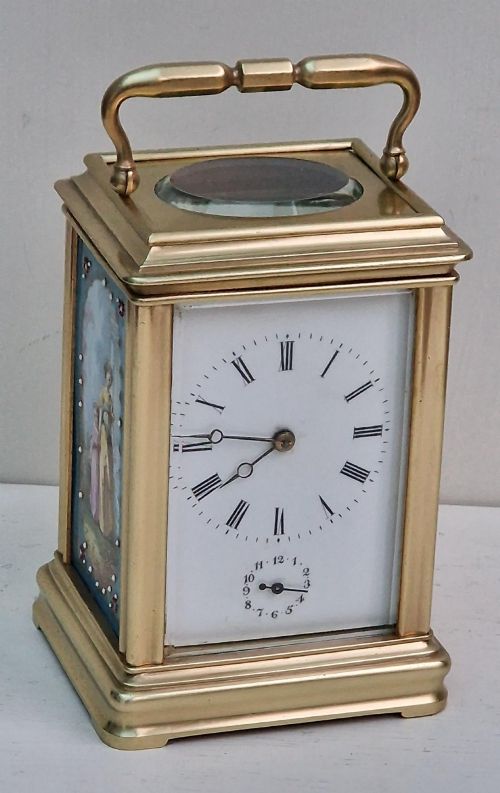
The versions most commonly met on this page date from the Victorian era up to 1900, displaying styles that range from plain gorge cases to elaborately chased and enameled frames. Buyers will encounter standard timepieces alongside more complex examples featuring alarm mechanisms, striking trains, and repeating functions.
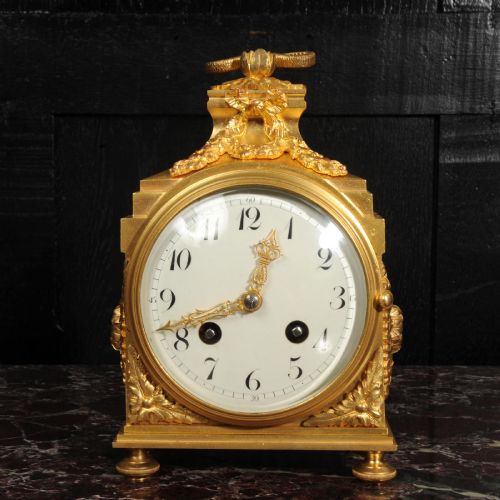
Makers housed these movements behind bevelled glass panels held within brass or ormolu structures that received a layer of surface gilding. The overall form remains compact and upright, typically surmounted by a sturdy folding carrying handle.
Materials and construction methods
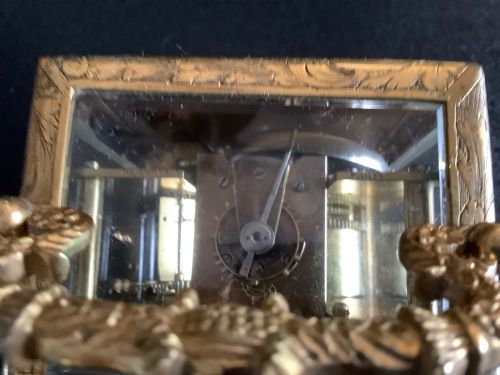
Craftsmen built the structural frames of these objects using brass, gilt brass, or ormolu, applying mercury or electroplate gilding to achieve a bright, uniform golden finish. Bevelled glass panels were then fitted into the sides and top to allow an unobstructed view of the escapement and gear trains within.
Clockmakers utilised steel for the internal springs, arbors, and pinions, while dial makers frequently employed white enamel on copper plates for the chapter rings. More decorative examples incorporated painted porcelain panels or cast bronze reliefs into the exterior case architecture.
Listings span the nineteenth and early twentieth centuries, featuring glass, enamel, brass, and ormolu across Victorian and French Empire styles.
Markers of distinction in craftsmanship
Quality in a gilded carriage clock is measured by the complexity of its movement and the crispness of its exterior chasing. Pieces equipped with grand sonnerie strikes, repeaters, or calendar complications sit at the upper end of the range, requiring superior mechanical precision from the workshop.
The survival of the original gilding and the depth of hand-engraving on the brass panels distinguish finer examples from standard production pieces. Maker signatures on the backplate or dial also elevate an item, linking it to established nineteenth-century horologists.
Henri Jacot·C. Detouche Paris·Margaine Of France·SAMUEL MARTI·Drocourt·Paul Garnier·Goldsmiths·Le Roy of Paris·Rety Poll·Dent London
The Gilded Carriage Clock Glossary
- Repeating mechanism
- A complication that strikes the hours and quarters on demand when a button on the top is depressed. This function was originally designed for checking the time in a dark room.
- Escapement
- The internal mechanical linkage that controls the unwinding of the spring by delivering periodic impulses to the balance wheel. Platform escapements became standard in portable clocks of this period.
- Sonnerie
- A striking train that automatically sounds the hours and quarters as they pass. A grande sonnerie strikes both on the hour and the quarter, while a petit sonnerie strikes only the quarters with the hour on the exact hour.
- Ormolu
- Finely chopped or powdered high-karat gold applied to a bronze base using a mercury amalgamation technique. This historic process yields a warm, deep metallic lustre distinct from modern electroplating.
Gilded Carriage Clock: Frequently Asked Questions
How do I wind a carriage clock?
Most pieces require a specific winding key inserted into the arbors located through the backplate. Turn the key gently until resistance is felt, taking care not to over-wind the mainspring.
Ensure you distinguish between the time train and any subsidiary striking or alarm trains, winding each arbor in turn according to the layout of the movement.
What is a gorge case?
A gorge case is a distinct rectangular housing defined by stepped mouldings running along the top and bottom edges. This architectural form provides a sturdy framework for the thick bevelled glass panels.
Originating in France during the nineteenth century, this design allowed maximum light to reach the escapement while protecting the delicate internal gears.
How do repeating clocks work?
A repeating movement allows the owner to press a plunger on the top of the case to hear the last hour and quarter-hour struck audibly. This system relies on an additional rack and snail mechanism driven by a separate spring train.
It served a practical purpose in the nineteenth century before the widespread availability of illuminated bedside lighting.
How should I clean the gilded case?
Dust the exterior metal and glass panels gently with a soft, dry microfibre cloth to prevent the accumulation of grime. Avoid all liquid polishes, abrasive cloths, and chemical cleaners which can strip the thin nineteenth-century gilding.
Leave internal mechanical cleaning and lubrication strictly to a qualified horologist to protect the delicate escapement and gear trains.