




Gilt Brass Clockwork
Gilt brass clockwork objects bring mechanical ingenuity and bright metallic warmth together, ranging from portable carriage clocks to automated singing birds.
Gilt Brass Clockwork
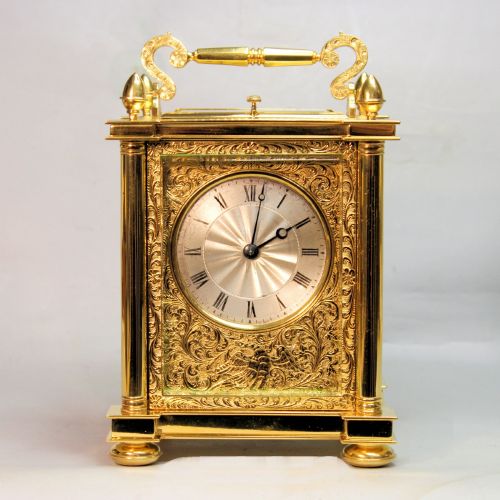
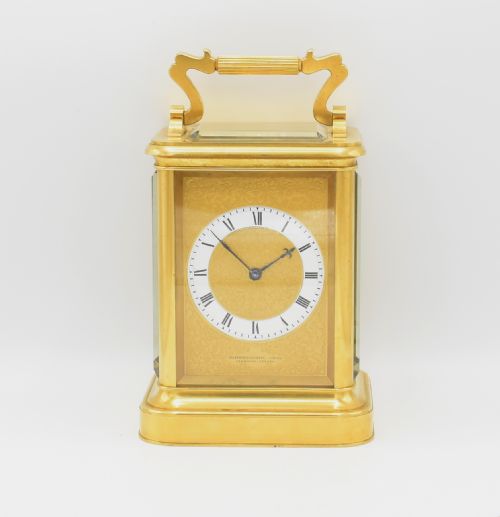
When you search for gilt brass clockwork, you encounter an array of timepieces and mechanical novelties spanning the eighteenth, nineteenth, and twentieth centuries. The selection encompasses carriage clocks, striking mantel clocks, skeleton clocks under glass domes, and intricate singing bird automatons housed in Germany.
The nineteenth century dominates the offerings, particularly French carriage clocks and Victorian brass designs featuring enamel panels or repeating mechanisms. English makers are also represented through fusee movements and lacquered bracket clocks, alongside mid-century German automaton work.
Mantel and desk clocks appear frequently, executed in styles from Georgian and Rococo Revival to French Napoleon III and Second Empire. These pieces combine heavy brass or gilt bronze casting with glass viewing panels and visible gear trains.
Materials and construction
Makers utilised brass, gilt brass, and gilt bronze as the primary structural materials for cases and clockwork frames. Steel components form the gear trains and springs, while silvered metal and enamel provide contrasting dial faces and subsidiary panels.
Listings span the eighteenth century to the mid-twentieth century, incorporating brass, gilt bronze, glass, and enamel materials across French and English designs.
Assessing craftsmanship and execution
Superior examples distinguish themselves through the crispness of case chasing, the depth of gilding, and the complexity of the internal movement. Clocks featuring fusee mechanisms, quarter-striking capabilities, or repeating complications require advanced horological skill compared to standard time-only designs.
Signed movements by known makers or retailers demonstrate greater workshop pedigree. The inclusion of original components, such as matching glass domes or bespoke winding keys, elevates the integrity of the piece.
Cousens & Whiteside·Goldsmiths Alliance Ltd·Karl Griesbaum·Delépine-Barrois·James Grohé·Samuel Marti·Chater & Son·Alfred Drocourt·Japy Freres
The Gilt Brass Clockwork Glossary
- Fusee
- A conical pulley used in mechanical clocks to maintain even power delivery as the mainspring unwinds. This mechanism ensures more consistent timekeeping throughout the duration of the wind.
- Carriage clock
- A small, portable spring-driven timepiece designed for travellers, typically featuring a glass-panelled brass case and a folding handle on top.
- Skeleton clock
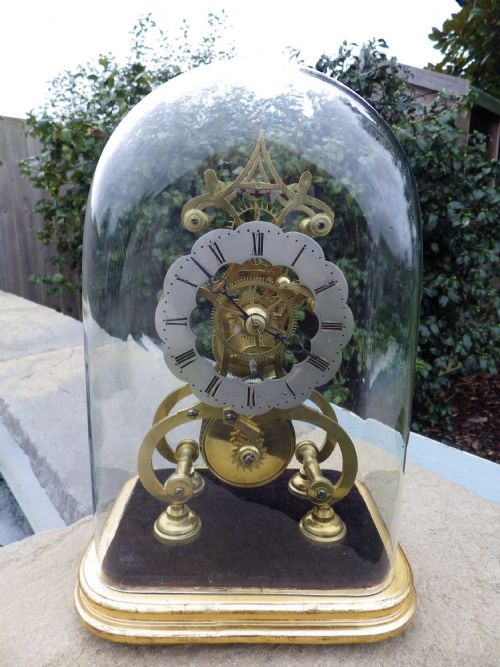
- A timepiece with an open framework designed to expose the gear train and movement to view, usually protected beneath a glass dome.
- Crystal regulator
- A mantel clock featuring a brass frame inset with four bevelled glass panels that reveal the pendulum and mercury or compensated movement.
- Automaton
- A mechanical device capable of self-operating movement, such as a clockwork mechanism that animates a singing bird inside a cage.
Gilt Brass Clockwork: Frequently Asked Questions
How do I wind a carriage clock?
Most carriage clocks utilise a specific double-ended key that fits onto arbours accessed from the backplate or underneath the base. Turn the key gently until you feel firm resistance, taking care not to over-wind the mainspring.
Ensure you handle the clock by its solid case rather than the glass panels or handle when moving it for maintenance.
What is a fusee movement?
A fusee is a conical drum connected to the mainspring via a fine chain or cord. It compensates for the diminishing torque of the spring as it runs down, delivering uniform power to the escapement.
This system is typical of finer English clocks and contributes to superior long-term accuracy.
Why are some clocks housed in glass domes?
Glass domes protect delicate skeleton movements and torsion pendulums from dust, air currents, and accidental contact. They were particularly popular during the Victorian period for intricate clocks where the internal mechanism is fully visible.
Retaining the original blown or cylinder glass dome significantly enhances the authenticity of the piece.
How do repeating clocks work?
A repeating mechanism allows the user to press a button or pull a cord on the case to make the clock sound the last hour or quarter-hour on demand. This function was especially useful for telling the time in the dark before electric lighting.
Such complications require highly intricate gear trains within the brass case.