

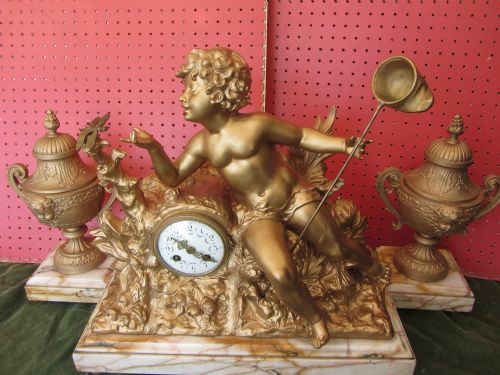
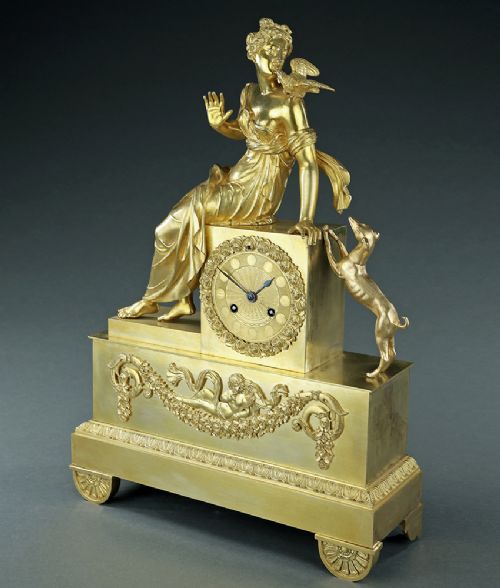
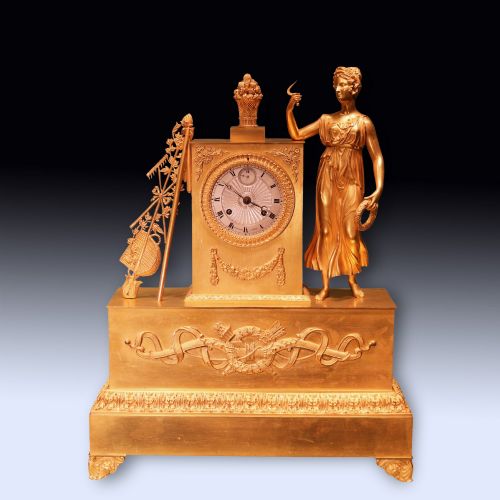
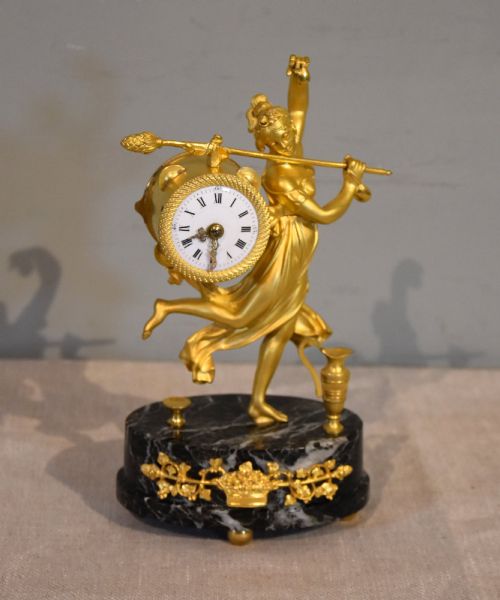


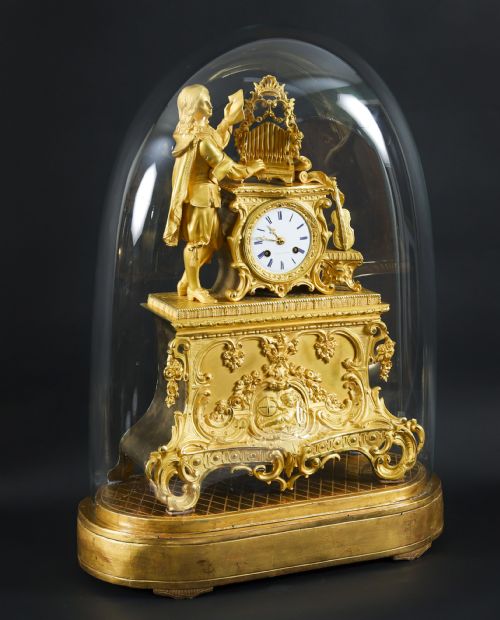


Gilded Bronze Figural Clock
A gilded bronze figural clock brings mythological figures, cherubs, and classical deities into domestic spaces with polished metal and striking movements.
Gilded Bronze Figural Clock
A gilded bronze figural clock combines timekeeping with sculptural subjects such as cherubs, lions, and classical figures like Diana the Hunter or representations of love, fidelity, and chastity. These objects sit upon mantelpieces and tables, often paired with marble bases, garniture sets, or glass domes to protect the delicate metalwork.
Most examples encountered here originate from nineteenth-century France, spanning the Regency, French Empire, Rococo Revival, and Louis XVI styles. Buyers frequently find works incorporating enamel dials, gilt bronze, ormolu, and patinated bronze figures alongside eight-day striking or fusee movements.
Materials and construction methods
Maker workshops utilised mercury gilding or electroplating on bronze and brass bases to achieve the bright ormolu and gilt finishes seen on these mantel clocks. Cast figural elements, foliage, and architectural mounts were hand-chased and pinned together before mounting onto green or white marble plinths.
Clock movements relied on brass gears, springs, and escapements, occasionally housing fusee mechanisms or bell-striking systems inside heavy metal housings. Dials were commonly fashioned from white enamel with painted numerals, protected behind hinged glass bezels.
Gilded Bronze Figural Clock Retail Price Guide 2026
Typical asking prices for gilded bronze figural clock among the pieces listed under this phrase on Sellingantiques today, from the lower quarter to the upper quarter. They describe what is for sale here now, not the wider market.
Differentiating craftsmanship levels
The integration of the sculptural subject with the mechanical housing dictates overall cohesion, where top-tier examples use custom-cast figures that hug the clock case naturally. Movement signatures from recognised clockmakers also elevate a piece above unmarked domestic timepieces.
Canaillor of Paris·Japy Freres·Leroy Paris·Deniere Et Fils·Baetens London·Bently And Beck London·Freres Raingo·P.H. Mourey·Gillion
The Gilded Bronze Figural Clock Glossary
- Ormolu
- Gilded bronze produced by applying a mercury and gold amalgam to a bronze object and heating it until the mercury vaporised. This technique creates a durable, warm golden surface found on nineteenth-century French clocks.
- Fusee
- A conical pulley used with a cord or chain to maintain even driving power as the mainspring unwinds. This mechanism improves timekeeping accuracy in Regency and nineteenth-century mantel clocks.
- Garniture
- A set of matching ornamental objects consisting of a central clock flanked by matching vases or candelabra. These sets were designed to sit together across a fireplace mantel.
- Chasing
- The art of working metal by hand with punches and hammers to refine the surface details of cast bronze figures and mounts. Fine chasing adds texture and shadow to drapery and animal fur.
- Patinated bronze
- Bronze treated with chemical solutions to produce a dark brown, green, or black surface colour. This dark finish provides contrast against bright ormolu mounts and marble bases.
Gilded Bronze Figural Clock: Frequently Asked Questions
What is a figural clock?
A figural clock incorporates a sculptural human, animal, or mythological subject directly into or beside the timekeeping case. These pieces display figures such as cherubs, lions, or classical deities alongside the dial.
They function primarily as decorative mantel objects while housing mechanical clock movements driven by weights or springs.
How do I wind an antique mantel clock?
Antique mantel clocks typically use a key inserted into specific winding holes on the enamel dial to tension the internal springs. Care must be taken not to overwind the mainspring.
Many nineteenth-century examples feature eight-day striking movements that require weekly attention to maintain accurate time and keep the bell or gong operational.
What periods do these clocks come from?
The majority of these clocks originate from the nineteenth century, encompassing Regency, French Empire, Victorian, and various revival styles. Makers drew inspiration from earlier Louis XVI designs and classical antiquity.
Production methods during this era relied on cast bronze, marble, and hand-finished ormolu details.
How do I care for gilt bronze?
Gilt bronze and ormolu require gentle dusting with a soft, dry cloth to prevent the accumulation of dirt in the chased recesses. Water and abrasive chemical cleaners will strip or damage the historic gilded surface.
Keeping the clock away from direct sunlight and damp environments preserves both the metal finish and the marble base.