


Gilded Bronze Desk Timepiece
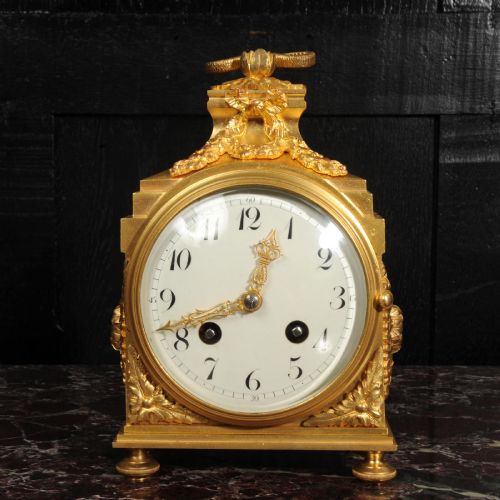
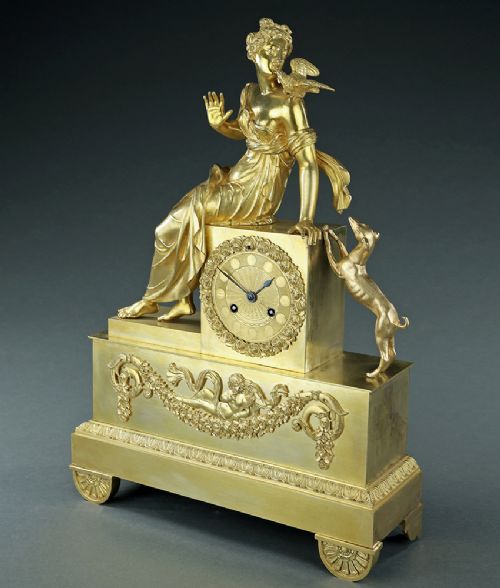
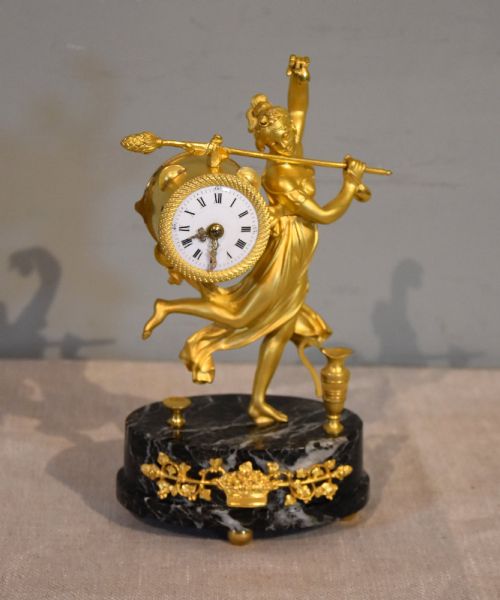
A gilded bronze desk timepiece brings warmth and weight to a surface, combining precision brass movements with sculpted metal and stone.
Gilded Bronze Desk Timepiece
A gilded bronze desk timepiece is a small, driven clock designed for a table, desk, or mantel, housed in cast metal and precious mounts. When searching this phrase, buyers encounter numerous French works from the nineteenth century alongside Regency English examples.
The assortment spans formal classical allegories, architectural marble cases, and delicate boudoir pieces designed for intimate chambers. Makers and casters favoured distinct cultural revivals, ranging from Egyptian motifs and Turkish taste to Louis-style Rococo and Empire grandeur.
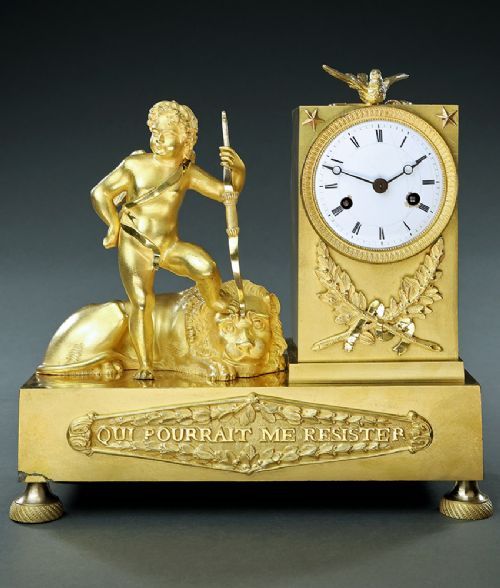
Forms vary from drum-head clocks and crystal regulators to figural compositions featuring animals, cherubs, and mythological figures. Enamel dials and porcelain plaques frequently punctuate the metallic surfaces, adding contrasting colour and fine detail.
Materials and construction
Gilt bronze and ormolu form the primary structural and decorative vocabulary of these objects, shaped through lost-wax casting and hand-chiselling. Ormolu relies on a mercury amalgamation technique to bond gold leaf to a bronze base, producing a deep, enduring lustre.
Marble in green, red, pink, and white often provides a heavy architectural plinth or contrasting case body to anchor the shimmering metal mounts. Glass panels enclose delicate movements in crystal regulators, while champlevé enamel and Sevres porcelain add coloured ornamentation to dials and bezels.
Poodle dogs and goats occasionally share watch duty with cherubs and classical deities on these desks.
Judging execution and detail
Quality rests in the crispness of the bronze chasing and the depth of the fire gilding, where hand-tooling defines hair, foliage, and drapery. Lesser examples rely on cast-only surfaces with minimal post-casting finish, lacking the sharp definition found in master workshops.
The integration of materials dictates distinction, as superior pieces marry stone, glass, and metal with seamless precision rather than mechanical assembly. Movement sophistication, signed dials, and well-known maker marks further elevate an item from a standard decorative object to a horological work of art.
Le Roy Paris·Hessen Paris·Henri Jacot·Le Roy and Fils·FB Adams London·Baetens London·Asprey Of London
The Gilded Bronze Desk Timepiece Glossary
- Ormolu
- Finely chopped gold amalgamated with mercury and applied to bronze through heat, creating a rich golden surface layer. This historic technique resists tarnish and yields a softer glow than modern electroplating.
- Fusee
- A conical pulley used in spring-driven clocks to maintain equal power as the mainspring unwinds. This mechanism ensures consistent timekeeping accuracy throughout the running period.
- Champlevé
- An enamelling technique where troughs are dug into the metal surface and filled with vitreous paste before firing. The resulting coloured patterns sit flush with the surrounding bronze borders.
- Pendule d'Officier
- A portable military-style table clock equipped with a carrying handle on top. These travel timepieces often feature striking mechanisms and robust cases suited for movement.
- Crystal Regulator
- A mantel clock featuring glazed glass panels on all four sides, allowing light to pass through the inner movement. The visible pendulum and delicate gear trains become part of the visual display.
Gilded Bronze Desk Timepiece: Frequently Asked Questions
How do I wind a fusee movement?
Insert the key into the winding square and turn it gently clockwise until the chain or cord reaches its stop. Take care not to force the mechanism once resistance increases, as over-winding can snap the fusee chain.
Most chain fusee desk clocks require weekly attention to maintain tension and accuracy. Keep the proper key attached or stored safely nearby to prevent damage to the delicate winding squares.
Where should I place a marble clock?
Position the piece on a sturdy, level surface capable of supporting considerable weight, as marble and bronze housings are exceptionally heavy. Avoid areas subject to direct sunlight or dampness, which can degrade painted enamel dials and delicate gilding.
Stable indoor temperatures help preserve antique lubricants within the brass gear train. Keep the clock away from drafty doorways or heavy foot traffic that might cause vibrations on the supporting table.
How do I identify a French Empire timepiece?
Look for crisp military trophies, classical mythological figures, and symmetrical architectural elements cast in heavy gilt bronze. These pieces often celebrate themes of love, triumph, or classical antiquity typical of the early nineteenth century.
The dials frequently feature black Roman numerals set upon white enamel, framed by bezels decorated with leaf-tip or beaded borders. The overall silhouette tends to be bold, substantial, and unapologetically formal.
What is a crystal regulator clock?
A crystal regulator is a mantel clock enclosed entirely by bevelled glass panels held within a polished brass or ormolu frame. This design exposes the inner escapement and swinging mercury or compensating pendulum to view from all angles.
First popularised during the late nineteenth century, these pieces emphasise lightness and transparency. The delicate appearance belies a heavy brass chassis built to maintain rigid alignment of the glass and movement.