


Gilded Bronze Candlestick Pair
A gilded bronze candlestick pair brings warmth and formal symmetry to a room, cast in heavy metal and finished with rich surface gilding.
Gilded Bronze Candlestick Pair
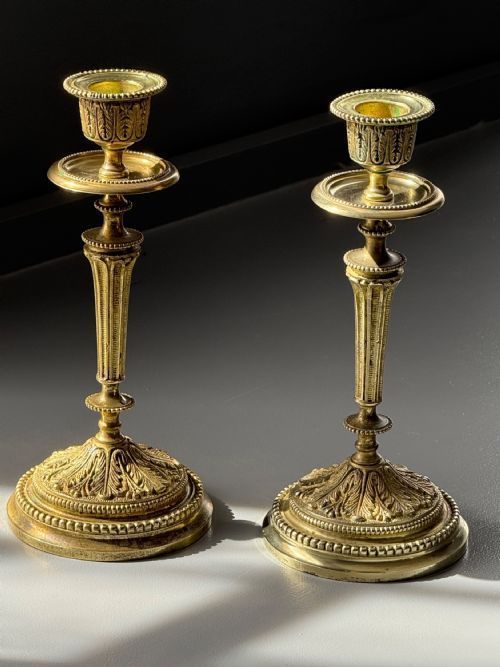
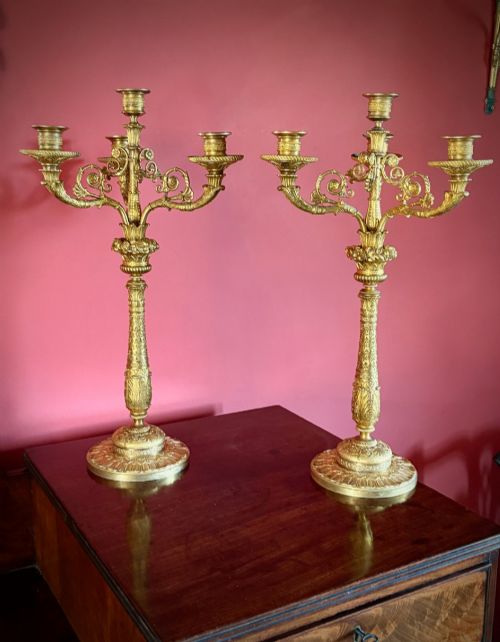
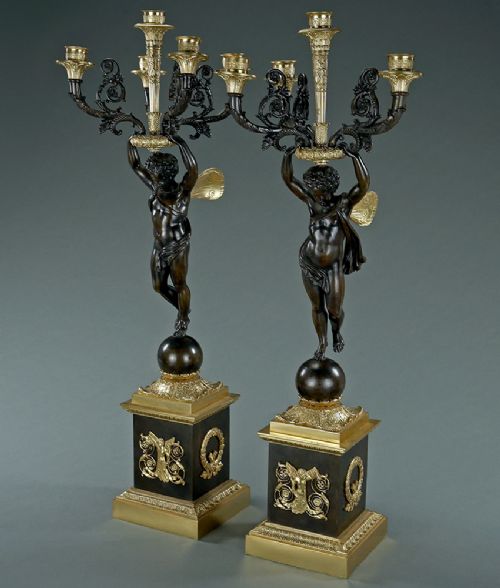
A gilded bronze candlestick pair comprises matching lighting supports created to hold candles or, in later adaptations, to function as wired lamp bases. The pieces found here span the eighteenth and nineteenth centuries, taking the form of tall candelabra with multiple branches alongside simpler single-socket candlesticks.
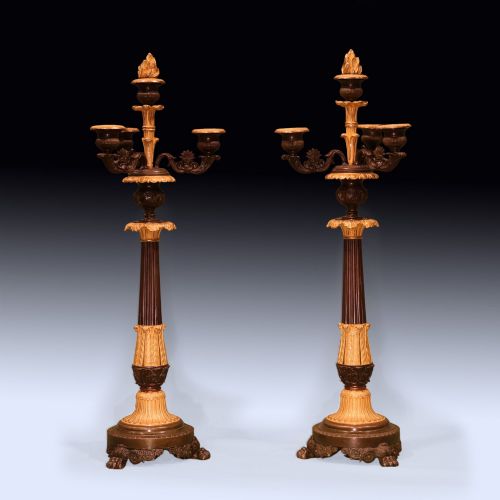
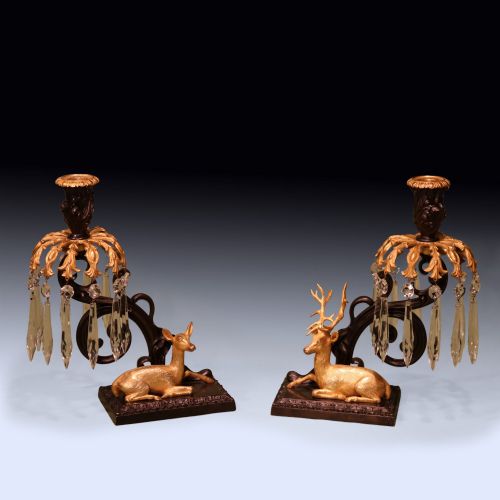
French taste dominates the selection, appearing through Louis XVI, Rococo Revival, and Empire styles alongside Victorian interpretations. Makers utilised contrasting patinated bronze alongside bright ormolu to create sculptural depth across figures, animals, and classical architectural columns.
How they were made
Casting provided the structural form, utilising molten bronze or brass shaped in moulds before being hand-chased to sharpen botanical details, figures, and scrollwork. Artisans applied mercury gilding or modern electroplating to impart a golden finish to the bronze components.
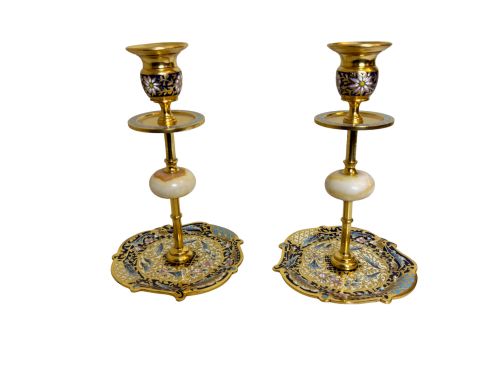
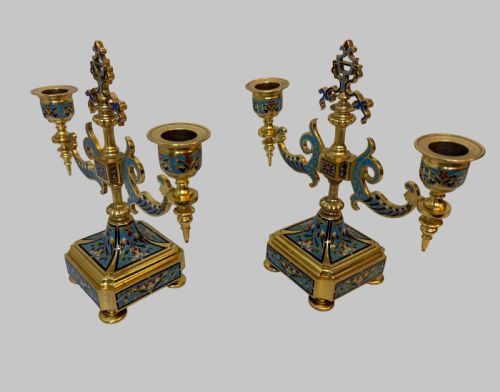
Many examples incorporate secondary materials such as white marble bases, onyx sections, and champlevé or cloisonné enamel panels in vibrant hues. Glass lustre drops and porcelain figures occasionally integrate into the metal framework to add colour and movement.
Listings feature works spanning the eighteenth century through the Victorian era, executed in ormolu, marble, and champleve enamel.
What varies in quality
The precision of the metalchasing dictates the distinction between standard production and top-tier work, visible in the crispness of acanthus leaves and the naturalistic depth of human or animal figures. Heavy gauge bronze provides a substantial physical presence and stability that lighter cast alternatives lack.
The preservation of the original gilding surface determines desirability, showing subtle variations between bright polished ormolu and softer, matte fire-gilt textures. Integration of decorative stones like marble and detailed enamel work elevates the complexity of the design.
The Gilded Bronze Candlestick Pair Glossary
- Ormolu
- Gilt bronze produced by applying a finely ground mercury and gold amalgam to a bronze base before heating. This historical technique creates a deep, durable golden lustre.
- Champlevé
- An enamelling technique where troughs are dug into the surface of the metal and filled with vitreous paste before firing. The resulting coloured patterns contrast against the polished bronze frame.
- Candelabra
- A branched candlestick designed to hold multiple candles simultaneously from a single central stem. These multi-light fixtures frequently feature removable branches for conversion.
- Patination
- The surface coloration developed on bronze through age or chemical treatment, ranging from deep chocolate brown to near black. This dark tone provides contrast against the gilt highlights.
- Pricket
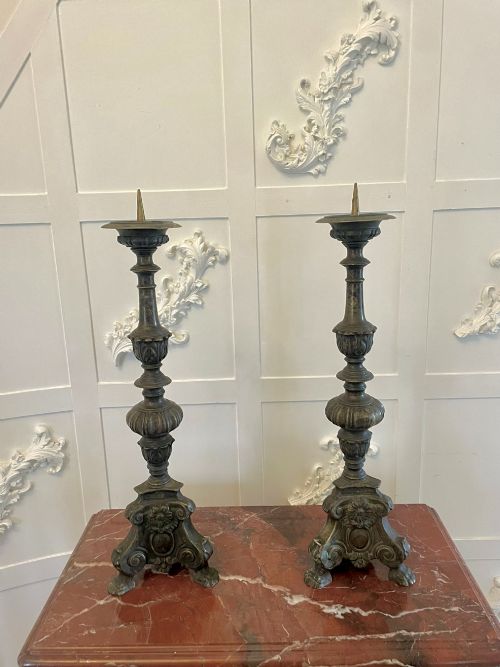
- A sharp metal spike set in the drip pan designed to impale and secure a large wax candle. This medieval form reappears in nineteenth-century revivalist church and hall pieces.
Gilded Bronze Candlestick Pair: Frequently Asked Questions
How do I clean a gilt bronze surface?
Dust the metal gently with a soft, dry brush to remove particles without disturbing the protective surface layer. Avoid abrasive polishes or chemical cleaners that strip away historical gilding.
Moisture should be kept away from any incorporated marble or enamel sections during maintenance. Professional conservation is recommended for deep cleaning or repairing structural joints.
Were these always used for candles?
Primary domestic lighting relied on these weighted metal stands to support tallow or beeswax candles during evening hours. Mirrors were often placed behind them to amplify the flickering illumination.
Many surviving pairs underwent conversion to electricity during the twentieth century to serve as decorative table lamps. Some retain removable internal fittings that allow them to switch between wax and wire.
What is the difference between ormolu and brass?
Ormolu consists of a gilded bronze substrate where gold is bonded to the underlying copper alloy. This process yields a warm, multifaceted golden depth that ages with a distinct soft glow.
Brass is a yellow alloy of copper and zinc cast as a solid metal without surface amalgamation. Brass pieces tend to have a uniform metallic tone and lighter overall weight.
How can I tell a Regency pair from a Victorian one?
Regency designs lean heavily on classical antiquity, drawing inspiration from ancient Roman, Greek, and Egyptian motifs with clean architectural lines. Ormolu dolphins, sphinxes, and patinated bronze figures frequently appear in this period. Oversized Victorian interpretations often mix varied revival styles, incorporating heavier proportions, ornate champlevé enamel, or multiple scrolling branches. Rich floral chasing and abundant cast ornamentation characterise the later nineteenth-century output.