

Gilded Brass Wall Lights
Gilded brass wall lights illuminate interiors with reflective warmth, offering traditional French styles and multi-armed illumination for period rooms.

Gilded Brass Wall Lights
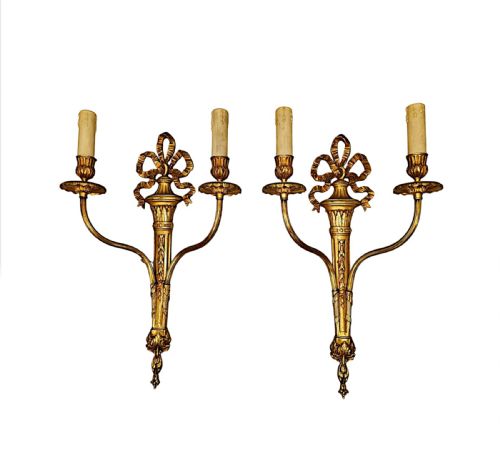
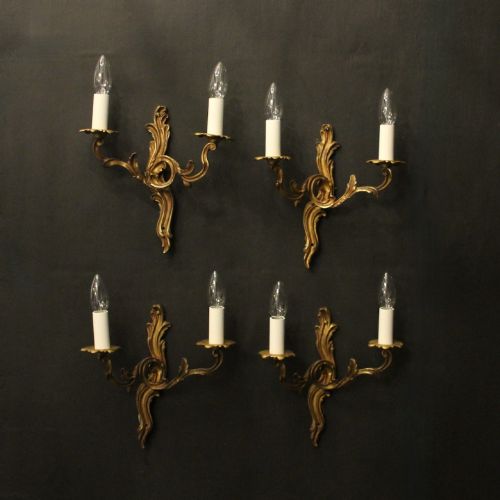
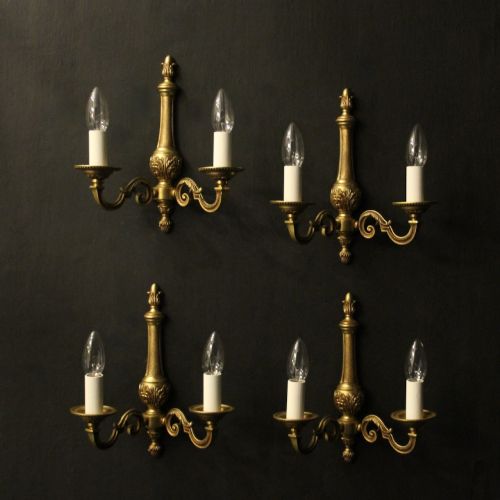
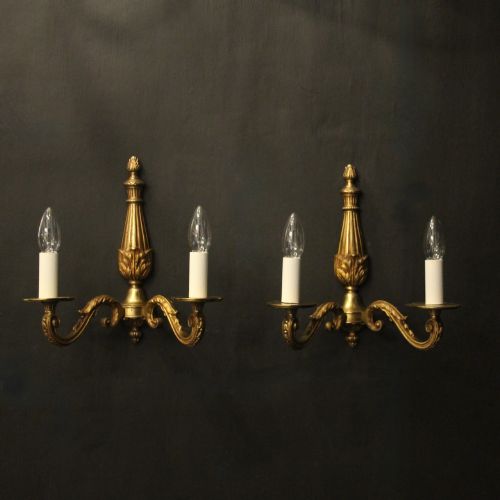
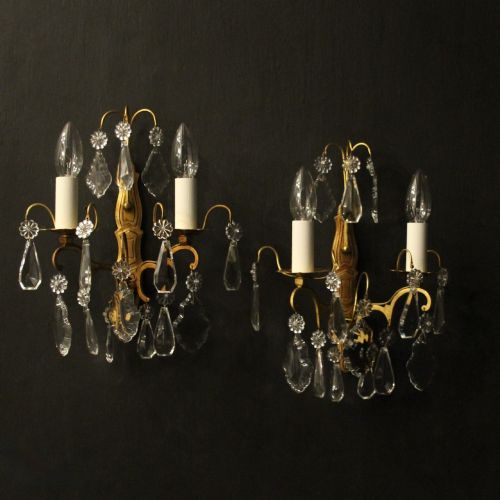
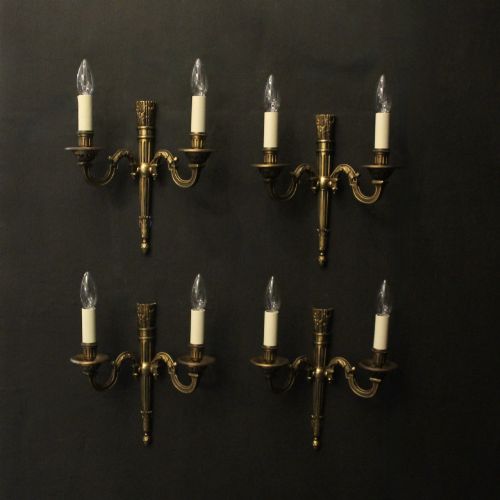
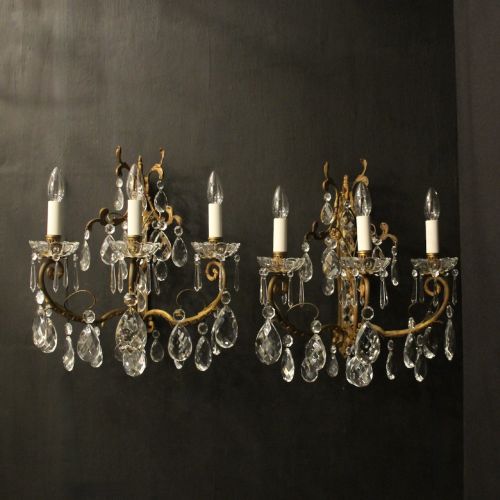
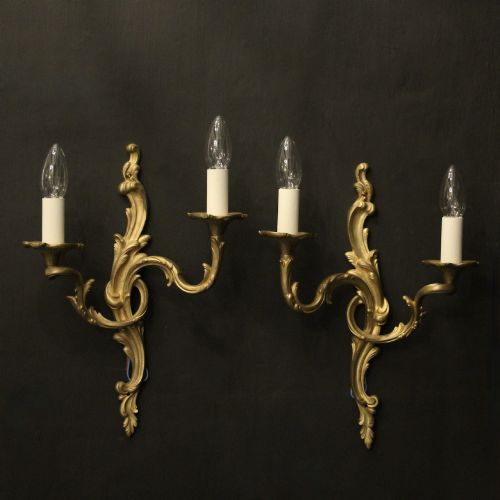
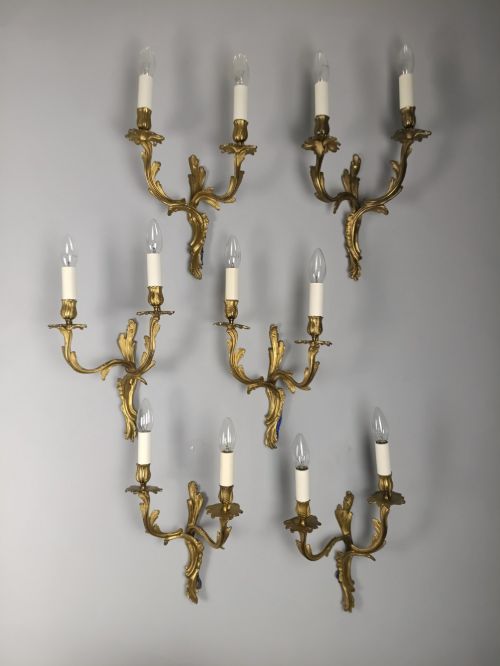
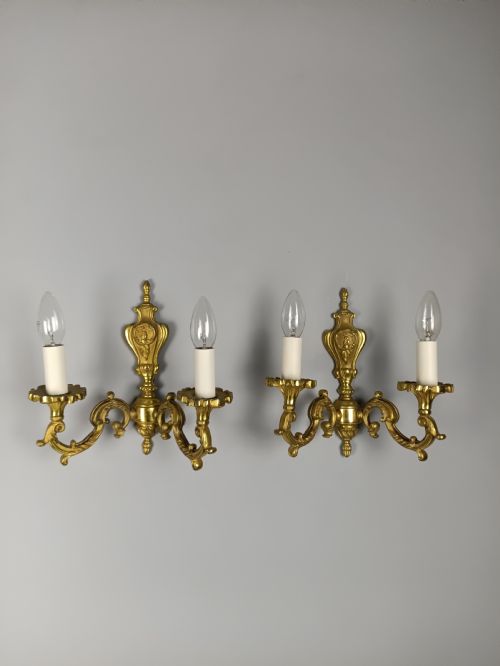
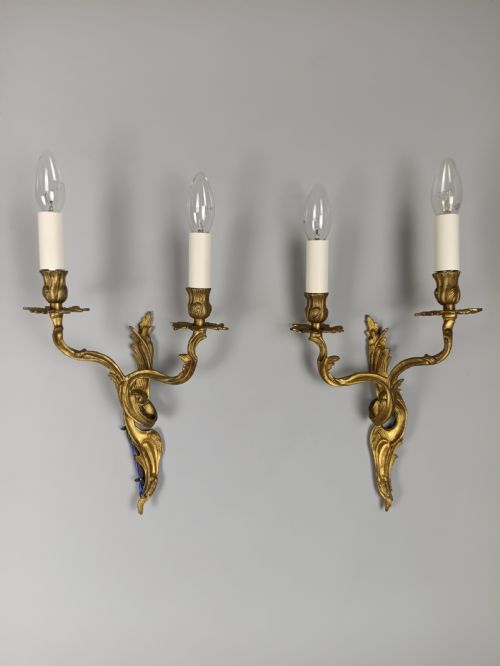
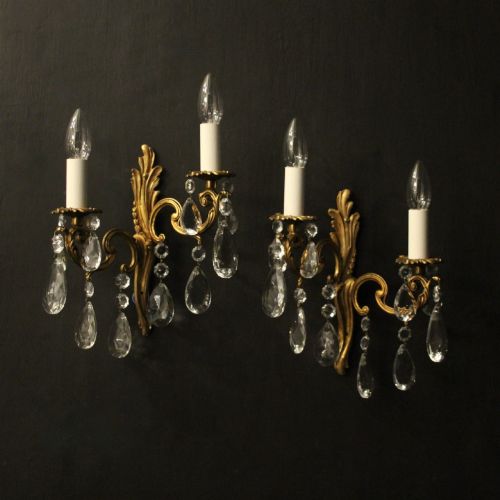
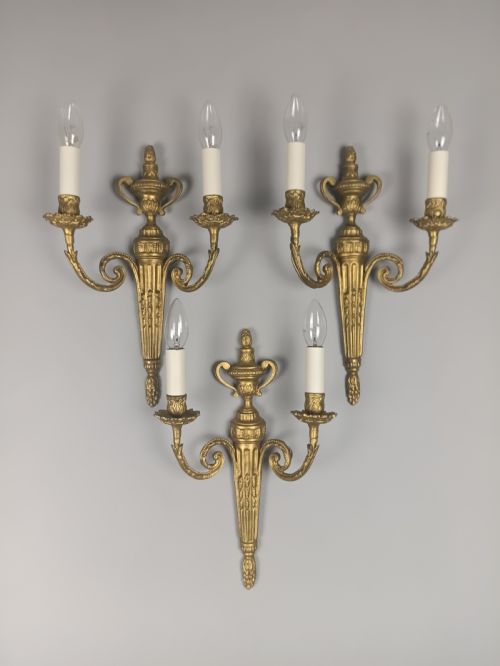
Buyers frequently encounter twin-arm and triple-arm configurations executed in styles ranging from Rococo revival to Louis XVI and Empire. These fixtures often appear in matched pairs or larger sets, providing symmetrical lighting solutions for salons, hallways, and dining rooms.

How They Were Made
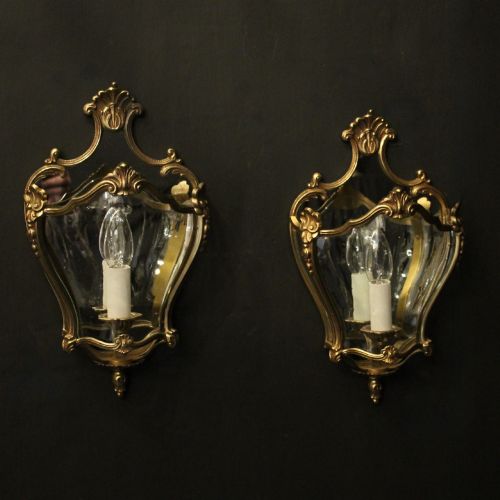
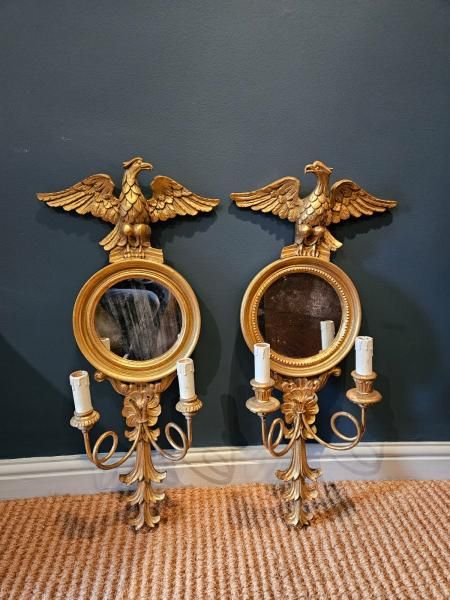
Metalworking techniques for these fixtures primarily involve cast brass or bronze treated with applied gilding or ormolu finishes. Artisans shaped metal into ornate scrollwork, ribbon motifs, and flame designs, occasionally incorporating glass elements or mirrored backplates to amplify light dispersion.
Construction methods evolved from nineteenth-century hand-chased mercury gilding traditions into twentieth-century production models while retaining decorative casting details. Many surviving pieces show adaptations for electricity alongside original candle-socket formats.
Gilded Brass Wall Lights Retail Price Guide 2026
Typical asking prices for gilded brass wall lights among the pieces listed under this phrase on Sellingantiques today, from the lower quarter to the upper quarter. They describe what is for sale here now, not the wider market.
The archive shows a strong prevalence of twin-arm and triple-arm configurations across nineteenth-century and mid-century periods.
What Varies In Quality
Quality differences emerge in the crispness of the casting and the depth of the metal finishing. Superior examples display sharply defined acanthus leaves, scrollwork, and ribbons without soft edges or obscured details from worn moulds.
The integrity of the surface treatment distinguishes finer items, as heavy gilding or genuine ormolu retains its lustre more evenly than thin or degraded metallic washes. Heavier bronze and brass foundations also provide structural rigidity compared to lighter pressed-metal variants.
The Gilded Brass Wall Lights Glossary
- Ormolu
- A technique of applying finely ground high-carat gold to a bronze object using mercury amalgam. This historic process creates a durable, warm metallic finish seen on high-end French decorative pieces.
- Girandole
- An ornamental branched wall light featuring a reflective backplate. The mirrored or polished surface helps multiply the ambient light cast into the room.
- Applique
- A decorative wall-mounted lighting fixture designed to hold candles or electric lamps. The term frequently appears in French antique trade descriptions.
- Louis XVI
- A neoclassical design style characterised by straight lines, symmetry, and classical motifs such as ribbons and urns. Pieces from this aesthetic emphasise geometric restraint over curved baroque flourishes.
- Rococo
- An exuberant decorative style marked by asymmetrical C-scrolls, shell motifs, and naturalistic plant forms. This aesthetic heavily influences nineteenth and twentieth-century revival lighting fixtures.
Gilded Brass Wall Lights: Frequently Asked Questions
How do I wire antique wall lights?
Wiring historic fixtures requires routing modern electrical flex through the existing metal channels or arms without damaging the structure. Professional electricians typically handle this process to ensure compliance with current safety standards.
Many pieces arrive pre-rewired or tested for installation, allowing direct mounting onto standard wall junction boxes. Qualified specialists can adapt older candle tubes to house modern SES or E14 lamp holders.
What is the difference between brass and ormolu?
Brass is an alloy of copper and zinc used as the structural base metal for many wall lights. Ormolu refers specifically to the gilded bronze or brass surface treatment applied to decorative items.
Items described as ormolu feature a gold layer bonded to the underlying bronze or brass casting. This distinction affects the warmth and longevity of the surface finish.
How were multi-arm wall lights used historically?
Multi-arm wall sconces provided primary and secondary illumination in formal rooms before the advent of electricity. Paired placements along architectural walls balanced candle illumination across large reception spaces.
Reflective backplates and mirrors positioned behind the arms helped maximise the reach of flickering candlelight. Today, these configurations serve a similar decorative and ambient lighting function.
How do I identify Louis XVI style wall lights?
Louis XVI wall lights display straight structural lines, classical urn motifs, and symmetrical ribbon ties. This aesthetic contrasts sharply with the curving, asymmetric scrollwork of earlier Rococo designs.
Look for architectural proportions, beaded borders, and leafy swags that reflect eighteenth-century neoclassical taste. Twentieth-century reproductions often replicate these exact decorative vocabularies.
Can I clean gilded brass safely?
Cleaning gilded surfaces requires gentle dusting with a soft, dry cloth to prevent abrasion of the thin gold layer. Harsh chemical metal polishes strip away antique gilding and should be avoided entirely.
Accumulated grime can be addressed using a damp cloth with mild soap, followed by immediate drying. Preserving the original surface patina maintains the historical integrity of the piece.