



Gilded Brass Side Table
A gilded brass side table brings a flash of metallic warmth and period character to a room.
Gilded Brass Side Table
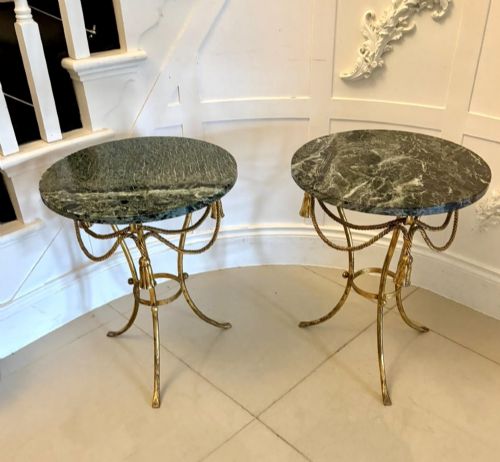
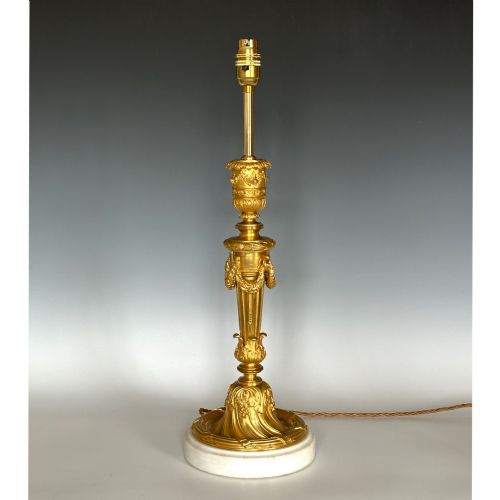
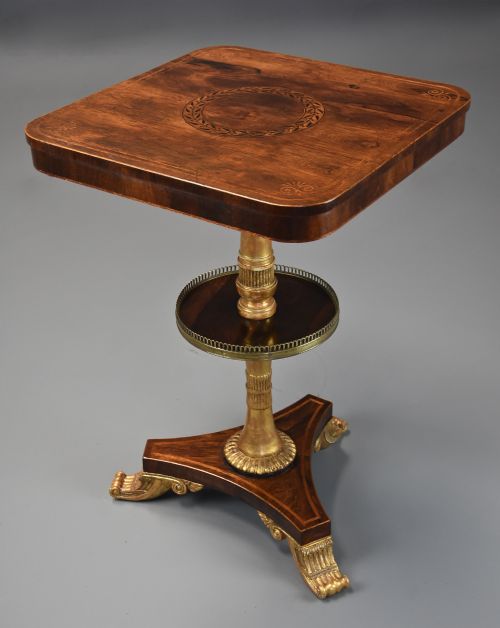
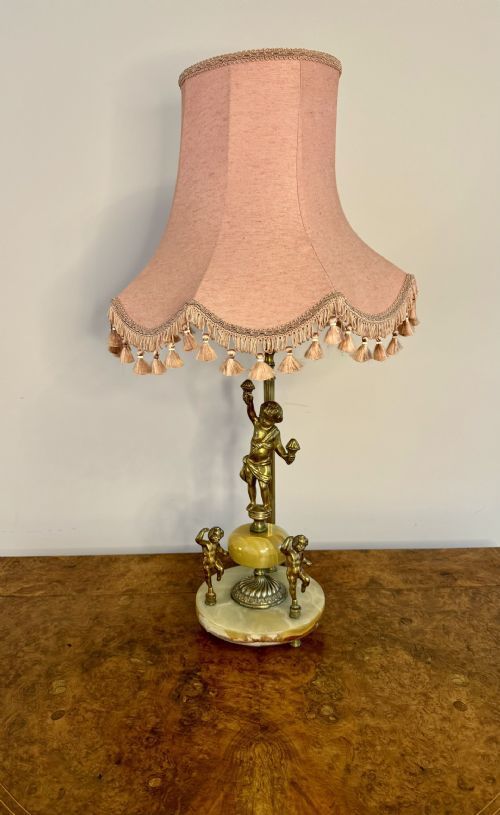
When you search for a gilded brass side table, you encounter small decorative tables and lamp stands from the nineteenth and early twentieth centuries. These furnishings combine metal frames with surfaces of marble, onyx, or wood, reflecting historical revival styles.
The pieces on this page lean heavily towards French tastes, including Louis XV and Rococo Revival designs alongside Victorian and Art Deco examples. They function primarily as occasional tables, plant stands, or side lamp tables in traditional interiors.
How they were made
The construction relies on cast and sheet brass, gilt bronze, and ormolu, paired with dense timbers such as mahogany, walnut, and rosewood. Surface decoration often involves gilding to impart a rich metallic sheen.
Insets of marble, onyx, and glass provide durable and decorative tabletops, secured within metal galleries or wooden frames.
Several listings feature decorative candlelamps modelled precisely on basket-guard cavalry dress swords.
What varies in quality
Quality rests upon the crispness of the metal casting, particularly on mounts, feet, and floral or figural details. Heavier gauge brass and finely chased ormolu indicate superior craftsmanship compared to simpler stamped metalwork.
The choice of secondary materials also dictates grade, with genuine white or verde marble tops and figured mahogany or walnut carcasses distinguishing the finer examples.
The Gilded Brass Side Table Glossary
- Ormolu
- A gilded bronze technique used extensively in French furniture mounts and decorative objects during the eighteenth and nineteenth centuries. The process involves applying a mercury and gold amalgam to bronze.
- Gilt bronze
- An alloy of copper and tin coated with a layer of gold to give a durable metallic finish. It resists tarnishing and was favoured for ornamental clock cases and lamp bases.
- Verde marble
- A dark green ornamental stone often featuring white veining, frequently utilised for tabletop inserts in nineteenth-century side tables.
- Galleries
- Low raised borders or railings fitted around the edges of tabletops to prevent items from sliding off. They are typically pierced or cast in brass or ormolu.
Gilded Brass Side Table: Frequently Asked Questions
How do I clean a gilded brass table?
Dust the surface regularly with a soft, dry cloth to prevent grime accumulation.
Avoid abrasive cleaners or chemical polishes that can strip the gilt finish from the metal.
Are these tables sturdy enough for daily use?
Most occasional and side tables are built to support lamps, books, or small decorative objects rather than heavy loads.
Placing them in low-traffic areas helps preserve their historic joints and delicate mounts.
How do I identify a Victorian piece?
Victorian items often display heavier proportions and borrow motifs from earlier French or classical repertoires.
Examination of the fixings and timber backing can help confirm a nineteenth-century origin.
What is the difference between brass and ormolu?
Brass is an alloy of copper and zinc used widely for structural frames and simpler hardware.
Ormolu specifically denotes finely cast and gilded bronze reserved for decorative mounts on high-status furniture.