
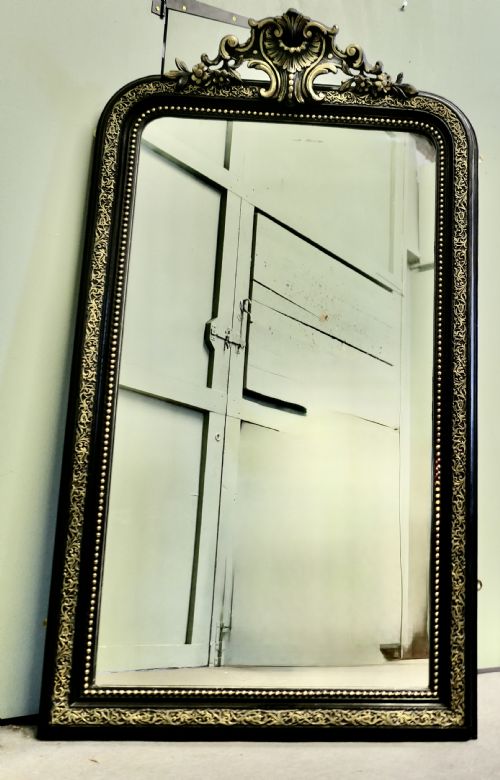
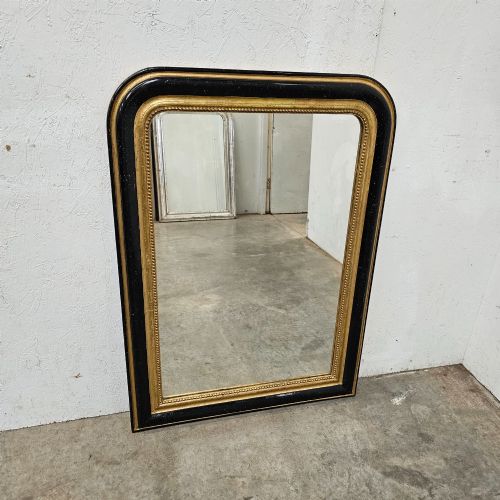
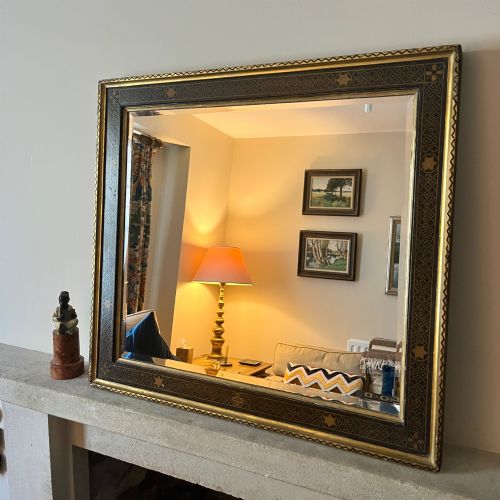


Gilded Black Mantel Mirror
A gilded black mantel mirror brings gravitas and bright reflection to a room, combining dark surfaces with metallic warmth.
Gilded Black Mantel Mirror
A gilded black mantel mirror is typically designed to sit above a fireplace, though many function equally well as grand wall mirrors. These pieces span the nineteenth and twentieth centuries, encompassing Victorian, Napoleon III, and Louis Philippe styles.
The most common formats on this page are large overmantel mirrors and tall pier mirrors, often featuring arched or ornate tops. They merge ebonised wood or painted black finishes with gilt, gesso, or gold leaf highlights.
Originating predominantly from nineteenth-century English and continental workshops, these mirrors employ robust timber frames built to anchor large expanses of glass. Their forms range from simple linear profiles to deeply carved, elaborate designs.
How they were made
Makers constructed the structural frames from wood, applying layers of gesso to create smooth or moulded surfaces ready for decoration. Ebonised finishes or black paint provided the dark base, often contrasting with parcel-gilt or gold leaf details.
Glaziers set large sheets of glass into these heavy timber surrounds, securing them to withstand the rigours of domestic placement above hearths. Carved wooden elements and applied gesso ornamentation added depth and texture to the frame.
Materials recorded across the inventory include ebonised wood, gesso, gold leaf, paint, and giltwood.
What varies in quality
The sophistication of the carved ornamentation and the crispness of the gesso work distinguish standard production from exceptional examples. Deeper relief and refined hand-finishing elevate the visual impact of the frame significantly.
The integration of the ebonised surface with the gold leaf or parcel-gilt highlights demonstrates the maker's skill. Superior execution ensures that the contrast between the dark wood and the metallic leaf remains balanced and harmonious.
The Gilded Black Mantel Mirror Glossary
- Ebonised wood
- Timber treated with stain or polish to imitate expensive ebony. This dark finish provides a sleek backdrop for gilded highlights.
- Gesso
- A plaster-like mixture applied to wood frames to create a smooth surface for gilding or moulding. It allows for intricate relief decoration.
- Parcel-gilt
- A decoration method where only specific parts of an object are gilded. This technique leaves portions of the underlying black paint or ebonised wood exposed.
- Overmantel mirror
- A large mirror specifically proportioned to hang on the wall directly above a mantelpiece. These pieces often feature wide frames designed to anchor large rooms.
Gilded Black Mantel Mirror: Frequently Asked Questions
Where should I hang a gilded black mantel mirror?
These mirrors traditionally sit above a fireplace mantel, where their proportions balance the hearth below. They also function effectively on principal walls in reception rooms to increase light and perceived space.
Ensure the wall structure can support the substantial weight of these timber and glass frames. Secure fixings are essential for safe installation.
How do I identify a Victorian ebonised mirror?
Victorian examples often feature heavy timber construction combined with ebonised finishes and gilt highlights. Look for stylistic cues such as arch tops and ornate gesso decoration.
Construction methods, including the type of wood and backing boards, help confirm nineteenth-century origins. Comparing frame profiles with documented period styles provides further clarity.
What is the difference between gilt and parcel-gilt?
Gilt refers to an entire surface covered in gold leaf or gilt paint. Parcel-gilt describes an object where only designated raised details receive the gold treatment.
In these mirrors, parcel-gilt leaves the ebonised wood visible in the recessed areas. This creates a striking contrast between the dark base and the metallic highlights.
How do I care for antique gilded surfaces?
Dust the frame gently with a dry, soft brush to remove particles without disturbing the gesso or gold leaf. Avoid commercial liquid cleaners, which can damage aged finishes.
Keep the mirror away from direct heat sources and high moisture environments. Stable room conditions help preserve the integrity of the wood and the gilt.