
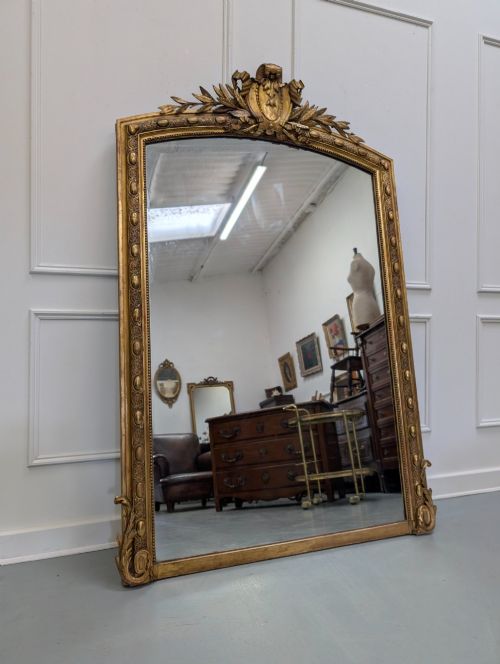
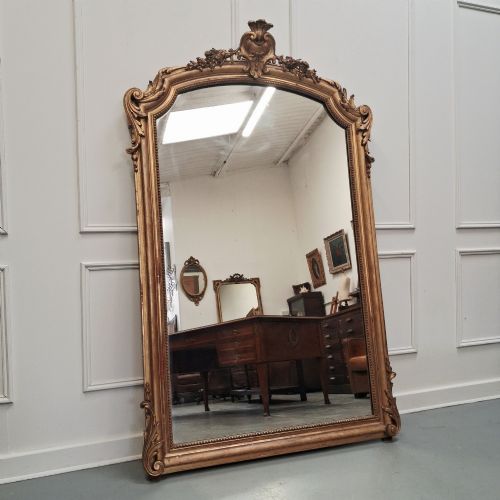
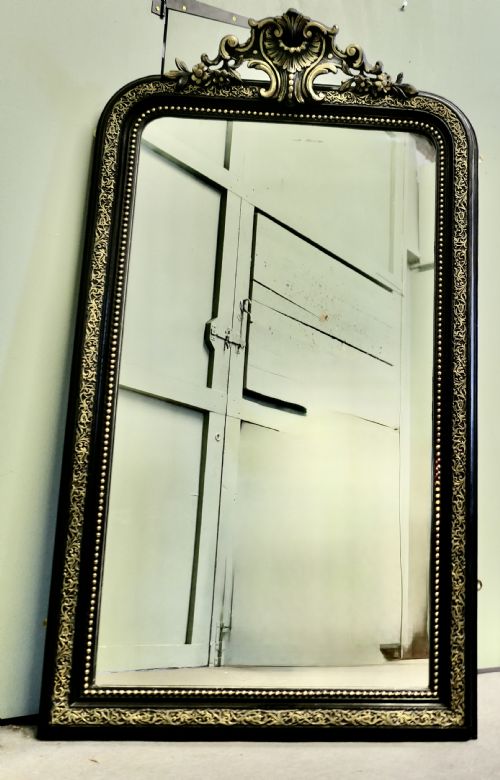
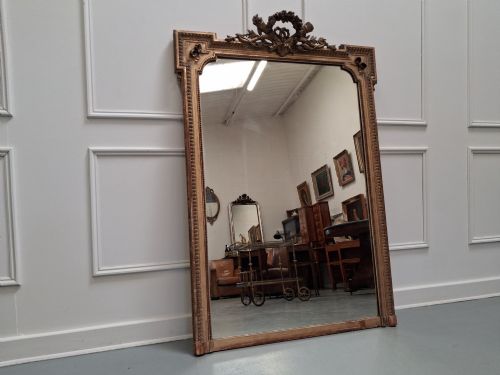
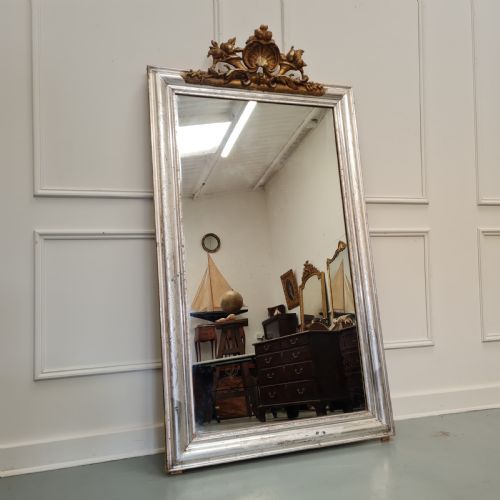


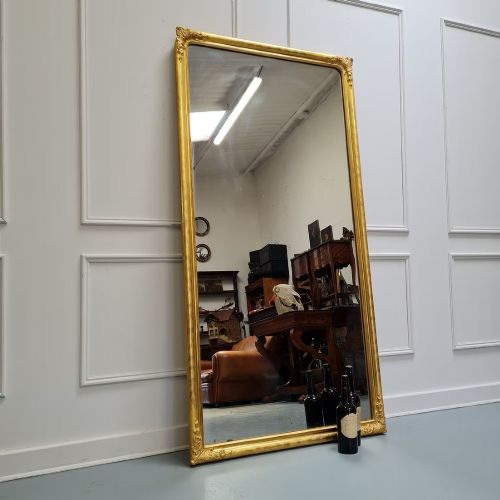


Napoleon III Pier Mirror
A napoleon iii pier mirror brings unmistakable French grandeur into a room, offering tall proportions and ornate decorative framing.
Napoleon III Pier Mirror
A napoleon iii pier mirror is a substantial wall glass designed to hang between windows or above mantelpieces in grand nineteenth-century interiors. These pieces typically originate from the French Second Empire period, reflecting the lavish revival styles popular during that era.
You are most likely to encounter large wall mirrors and cushion mirrors dating from the 1860s through to the 1880s on this page. They frequently display Louis XVI revival motifs or French rococo revival flourishes carved deeply into the timber frames.
The forms are predominantly tall and imposing, intended to bounce light around high-ceilinged reception rooms and parlours. Collectors seek these mirrors for their dramatic scale and authentic period presence.
How they were made
Makers constructed the structural frames using pine as a stable base timber, often pairing it with ebonised wood for contrasting dark finishes. Carved wooden elements provided the armature for subsequent decorative layers.
Artisans applied plaster and gesso over the wood to build up intricate relief ornaments before gilding the surface. Gold leaf and silver leaf were meticulously laid down to achieve the characteristic metallic brilliance of the period.
Mirrors from this era often carry the ghost of past drawing rooms, having spent over a century silently watching Victorian society gossip.
What varies in quality
The depth and crispness of the carved wood and gesso ornamentation dictate the visual strength of the piece. Superior examples exhibit sharply defined foliage, scrolls, and crests that retain their original definition beneath the metallic leaf.
The integrity of the original gilt or silvered surface creates a distinct hierarchy among these mirrors. Surfaces that show honest, undisturbed ageing possess a warmth and depth that heavy modern restoration often obscures.
The Napoleon III Pier Mirror Glossary
- Pier mirror
- A tall wall mirror specifically designed to hang on the narrow wall space between two windows. These pieces often anchored the decorative scheme of a nineteenth-century drawing room.
- Gesso
- A plaster-based mixture applied to wooden frames as a smooth base for gilding. Skilled craftsmen modelled intricate relief details directly into this layer.
- Ebonised wood
- Timber treated to imitate costly ebony, creating a dense black finish. This technique offered a striking contrast against gilded ornamentation.
- Cushion mirror
- A mirror frame characterised by a convex or padded profile that angles outward toward the outer edge. This shape added visual weight and dimension to the wall.
- Second Empire
- The French architectural and decorative style spanning the mid to late nineteenth century. It combined elements from previous royal epochs with lavish scale.
Napoleon III Pier Mirror: Frequently Asked Questions
Where should I hang a pier mirror?
These mirrors work best on tall wall spaces where their vertical proportions can command the room. Placing them between windows or above a principal fireplace recreates their historical placement.
Ensure the wall construction can support substantial weight, as nineteenth-century frames built with pine and gesso are exceptionally heavy.
How do I clean the glass?
Use a soft cloth and a gentle glass cleaner applied to the cloth rather than directly onto the mirror. This prevents moisture from seeping behind the plate.
Take care near the edges where silvering can degrade over the decades, and avoid harsh chemical agents on the gilded frame.
Are the mirror plates original?
Many nineteenth-century mirrors retain their original glass, which often exhibits subtle foxing, minor speckling, and gentle distortions. These optical traits are characteristic of period manufacturing techniques.
Replacement glass is occasionally fitted during historic maintenance, so inspecting the silver backing and mounting helps determine its age.
What distinguishes Napoleon III style?
The Napoleon III style draws heavily on eclectic revivals of Louis XVI and rococo aesthetics, favouring theatrical scale and rich ornamentation. It reflects the opulent tastes of the French Second Empire.
Frames from this period frequently mix gilded surfaces with ebonised wood and deep plaster reliefs.