
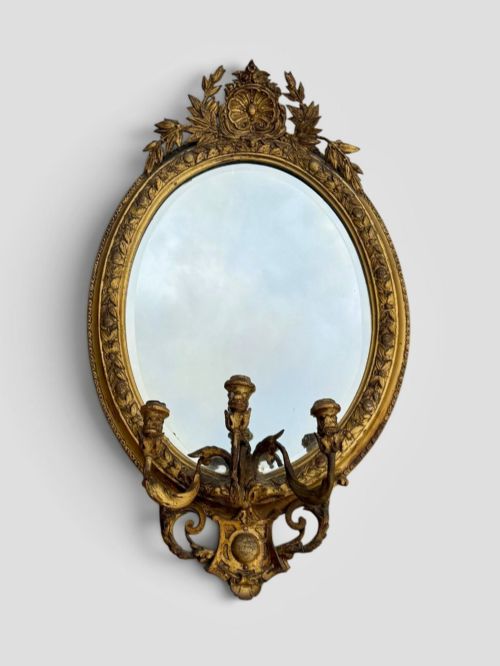
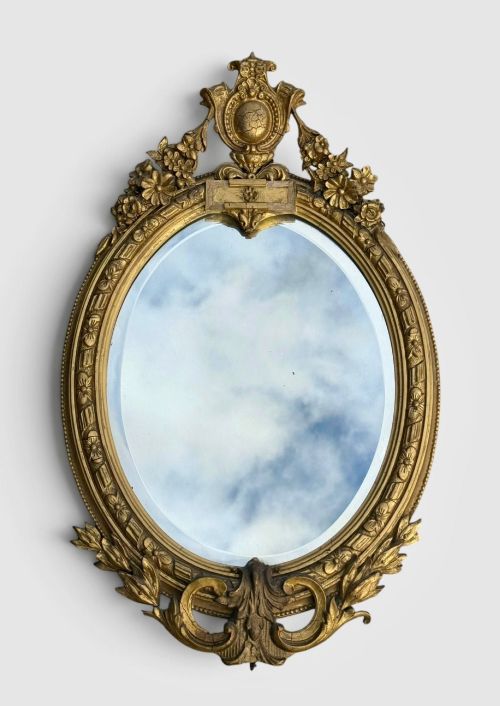
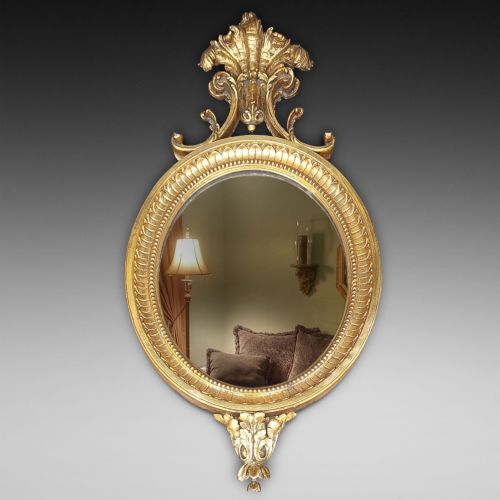
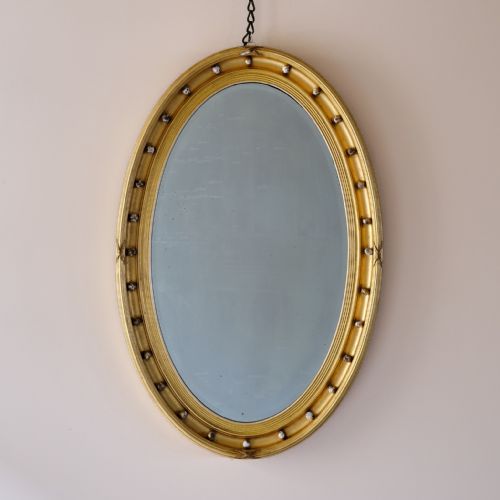
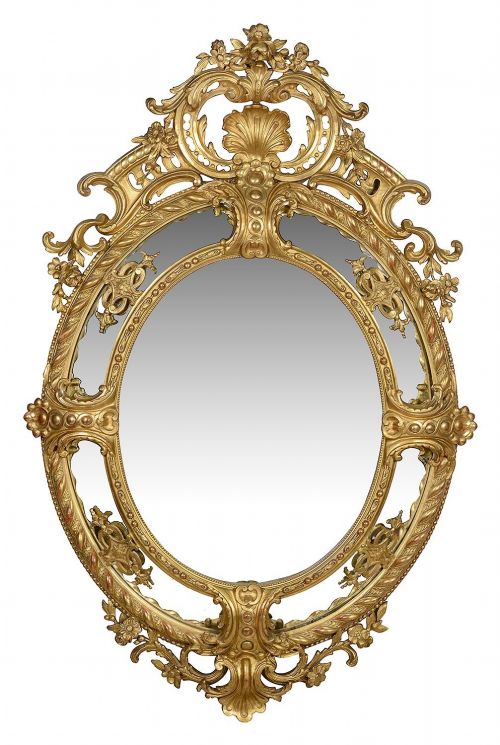


Gesso Gold Oval Mirror
A gesso gold oval mirror brings warmth and classical proportion to a room, catching the light across elaborate moulded surfaces.
Gesso Gold Oval Mirror
A gesso gold oval mirror is a decorative wall hanging shaped with curved borders, uniting timber frameworks with sculptural plasterwork. These pieces emerge across the eighteenth, nineteenth and early twentieth centuries, spanning periods from Regency and Victorian eras to Edwardian and Adam Revival designs.
The version most commonly met on this page is the nineteenth century wall mirror, often finished in rich giltwood or gold leaf over carved gesso. Alongside large wall formats, smaller toilet mirrors and table mirrors appear, offering intimate variations in scale and placement.
How they were made
The construction of a gesso gold oval mirror begins with a wooden base, typically timber or carved giltwood, onto which layers of gesso are applied to build up delicate relief ornamentation. Artisans then cover the prepared surface with gold leaf, burnishing the metal to achieve a bright, reflective finish that frames the central glass plate.
Glazing methods include early mercury glass and bevelled plates, secured within sturdy wooden frames designed to support the weight of the ornate border. The combination of carved wood, plaster gesso and gold leaf provides both structural integrity and decorative depth.
Some dressing table mirrors come equipped with secret pivoting stands that tilt at just the right angle for eighteenth century hair powdering.
What varies in quality
The quality of a gesso gold oval mirror rests in the crispness of the moulded ornament and the preservation of the original gilded surface. Finer examples display deep, sharp relief work on the gesso and wood carvings, whereas simpler or heavily restored pieces show softened details and mismatched gilding.
The integrity of the glass plate also defines the tier of the piece, with original mercury glass and well-maintained bevelled edges offering greater character than later replacements. The balance of the oval proportion and the soundness of the underlying timber frame complete the distinction between standard and superior examples.
The Gesso Gold Oval Mirror Glossary
- Gesso
- A plaster mixture applied to wood frames to create a smooth or raised surface for gilding. It allows craftsmen to model intricate floral and scroll designs before applying gold leaf.
- Giltwood
- Timber that has been coated with gold leaf or gold paint. This material provides the sturdy foundation for many ornate antique frames.
- Mercury glass
- A type of double-walled silvered glass produced in the nineteenth century. It creates a characteristic mottled reflection behind the glass plate.
- Girandole
- A decorative wall mirror fitted with candle sconces attached to the frame. The polished gold surface reflects the candlelight to brighten dark interiors.
- Overmantle mirror
- A large horizontal or vertical mirror designed to hang above a fireplace mantel. These pieces often feature grand proportions and elaborate gesso mouldings.
Gesso Gold Oval Mirror: Frequently Asked Questions
Where should I hang an oval mirror?
An oval mirror suits spaces that benefit from softened geometric lines, such as above a mantelpiece, in an entrance hall or over a dressing table. The curved frame breaks the rigidity of straight walls and bounces light into darker corners.
Ensure the wall fixings match the weight of the timber and gesso frame, as these pieces can be heavy. Positioning the mirror opposite a window maximises natural illumination within the room.
How do I date a gesso mirror?
Dating relies on examining the style of the gesso ornamentation, the construction of the wooden backing, and the characteristics of the glass plate. Georgian and Regency pieces often show neoclassical motifs like urns and swags, while Victorian and Edwardian examples lean towards heavier Rococo Revival or Adam Revival patterns.
Original mirror plates with foxing or mercury backing also help anchor the piece to a specific century. Nails, fixings and timber shrinkage provide further clues to the age of the frame.
Are these mirrors fragile?
The gesso composition on these frames requires careful handling because the plaster relief can chip or crack if subjected to sharp impacts. Regular dusting with a soft, dry cloth keeps the gold leaf surface clean without damaging the delicate mouldings.
Avoid using liquid cleaners or abrasive cloths on the gilded areas, as moisture and harsh chemicals strip the finish. Hang the mirror securely using appropriate wall anchors to prevent accidental falls.
What is the difference between giltwood and gesso?
Giltwood refers to the actual wooden framework covered in gold leaf, providing the primary structural support for the mirror. Gesso is the plaster-like substance applied over the wood to form raised decorative details before gilding takes place.
Most antique mirrors combine both materials, using carved wood for strength and gesso for the intricate scrollwork and floral motifs.