





Gesso Art Frame
A gesso art frame is a moulded wooden border finished with plaster and gilding to house paintings and mirrors.
Gesso Art Frame
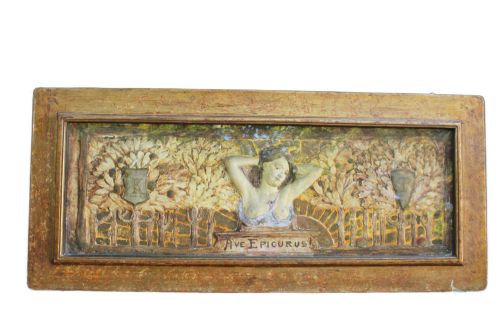
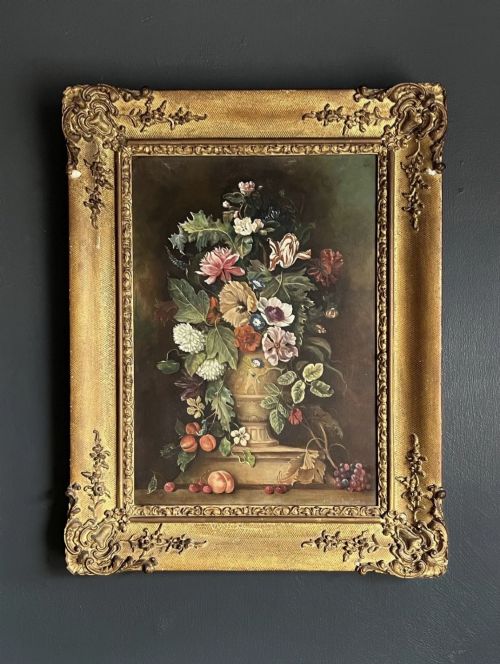
A gesso art frame houses oil paintings, portraits, landscapes, and mirrors across various historical periods. The inventory on this page spans the nineteenth century through the early twentieth century, taking the form of picture frames, paintings, wall relief, and wall art.
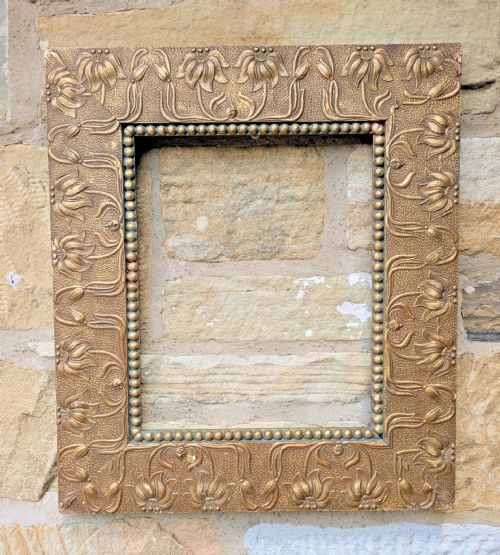
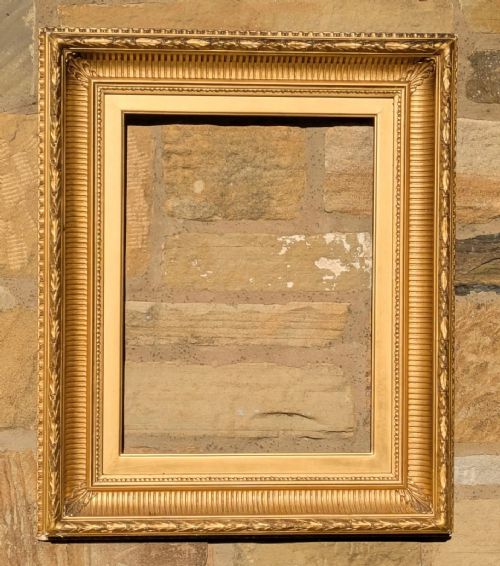
The most common versions met here are nineteenth-century giltwood and gesso picture frames alongside paintings already housed in decorative surrounds. Styles range from Victorian and Rococo Revival to Arts & Crafts and Dutch Golden Age interpretations.
How gesso art frames were constructed
Makers built the structural carcass from timber, using wood as the foundational support for the decorative elements. Plastered layers of gesso were then applied over the timber substrate to create build-up for modelled ornamentation.
Surfaces received finishes of gold leaf, silver gilt, or polychrome paint over the gesso relief. Craftsmen carved details directly into the dried gesso or moulded composition applied to the wooden corners and running lengths.
One listed portrait depicts a bearded Victorian gentleman staring out from his original gilt gesso surround.
What separates the finest examples
The depth and crispness of the moulded relief define the visual weight of the border. Sharp corners and deeply undercut gesso ornament demonstrate higher skill in the workshop than softened or flattened profiles.
The application of gold leaf or silver gilt alters the richness of the surface finish. Intact gilding with original patination shows superior preservation compared to overpainted or heavily restored surfaces.
Bryce Smith·Armand Guillaumin
The Gesso Art Frame Glossary
- Gesso
- A plaster mixture applied to wood frames to provide a smooth surface for gilding or painting. This substance allows intricate low-relief ornamentation.
- Giltwood
- Timber coated with gold leaf applied over a preparation layer. It provides the metallic sheen seen on period picture frames.
- Swept frame
- A picture frame featuring scrolling, undulating moulded contours common in nineteenth-century design. This profile creates movement along the sight edge.
- Polychrome
- Painted in several colours. This finish appears on Arts & Crafts plaster relief works.
- Wall relief
- Ornamental sculptural work projecting from a flat background. These pieces are designed specifically for interior display.
Gesso Art Frame: Frequently Asked Questions
What is a gesso art frame?
A gesso art frame is a wooden border covered in a prepared plaster mixture that accepts gilding and paint. These surrounds protect and elevate canvases and works on paper.
Such frames date primarily from the nineteenth and early twentieth centuries, constructed in styles ranging from plain mouldings to ornate Rococo Revival designs.
How do I choose the right frame?
Consider the period and visual weight of the artwork or mirror intended for the display. The scale of the moulding should balance the proportions of the central piece without overpowering it.
Matching nineteenth-century paintings with frames from the same era ensures historical and aesthetic coherence.
Are these frames sold with paintings?
Many listings combine the frame with an original oil painting, portrait, or landscape from the period. Some items function purely as empty frames ready to house alternative artwork.
Check individual item descriptions to confirm whether the canvas or mirror plate is included.
How do I date a gesso frame?
Dating relies on examining the timber construction, the composition of the gesso, and the style of the moulding. Victorian and Arts & Crafts pieces exhibit specific profiles and finishing techniques characteristic of their decades.
Wear patterns on the gilt surface also indicate the age and history of the object.