




German Salt Glazed Stoneware
German salt glazed stoneware vessels are dense, textured earthenwares thrown centuries ago and prized for their rugged surfaces and cobalt decorations.
German Salt Glazed Stoneware
When you search for german salt glazed stoneware, you encounter utilitarian and decorative vessels originating from German kilns across several centuries. These pieces encompass pitchers, tankards, jugs, flagons, and wine or oil bottles formed from heavy clay bodies.
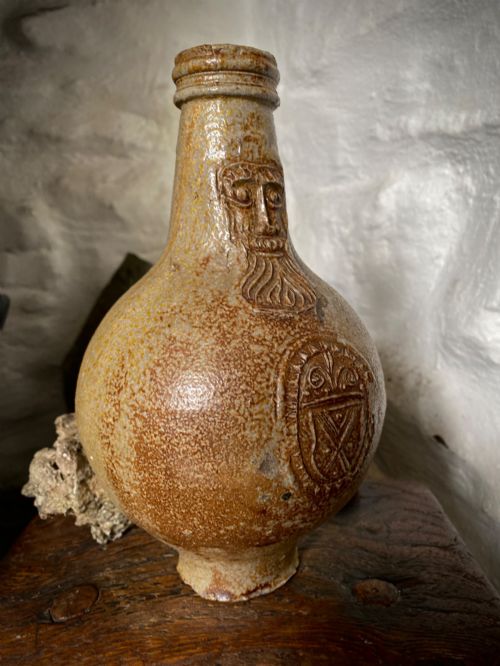
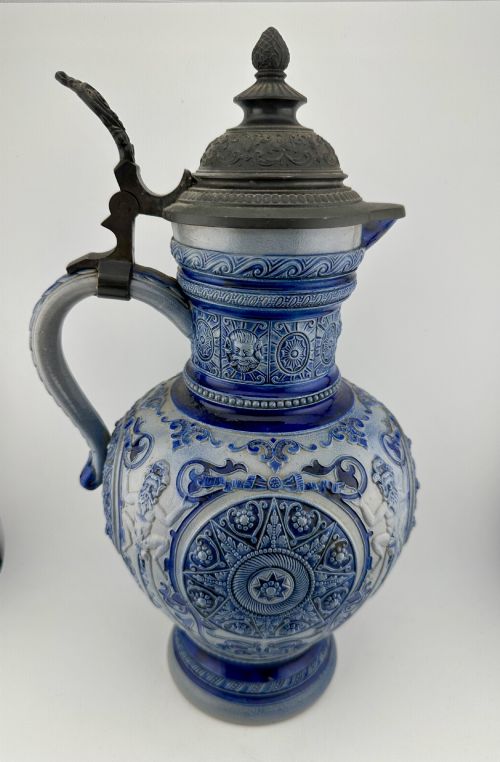
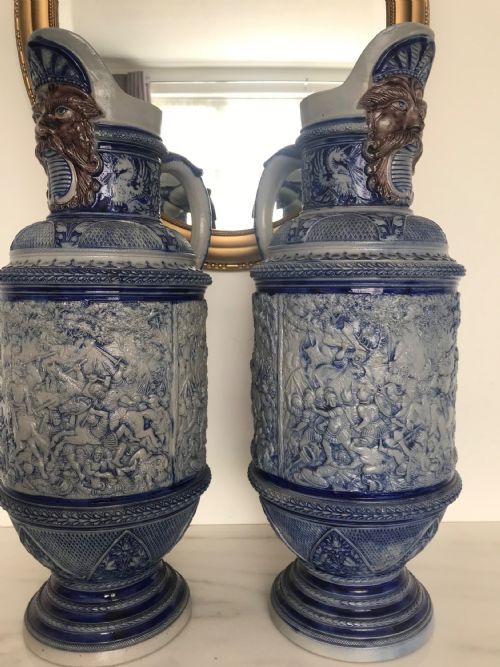
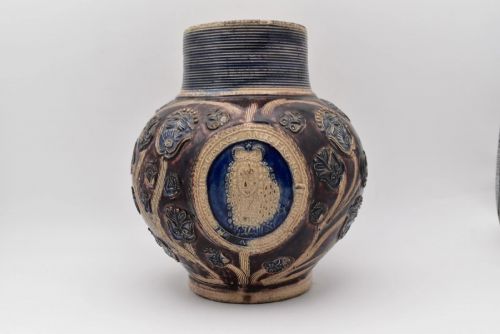
The most frequent examples on this page are Westerwald jugs and tankards dating from the seventeenth and eighteenth centuries, alongside earlier sixteenth-century Bartmann or Bellarmine pieces. They range from modest loop-handled bottles to large lidded jugs adorned with royal ciphers, masks, and battle scenes.
Collectors seek these items for their distinct regional styles, which span the German Renaissance, Baroque, and nineteenth-century Historismus revivals. Each vessel bears the characteristic orange-peel texture created by salt thrown into the kiln during high-temperature firing.
What varies in quality
The finesse of the moulded relief work and the clarity of the cobalt oxide decoration distinguish finer vessels from simpler utilitarian containers. Crisp detailing on facial masks, royal ciphers, and historical battle scenes indicates superior craftsmanship in the original workshop.
Survival condition and the presence of original components, such as contemporary pewter lids, significantly influence the standing of a piece within this category. Kiln artefacts like wasters represent specific technical processes rather than domestic service wear.
German Salt Glazed Stoneware Retail Price Guide 2026
Typical asking prices for german salt glazed stoneware among the pieces listed under this phrase on Sellingantiques today, from the lower quarter to the upper quarter. They describe what is for sale here now, not the wider market.
Some sixteenth-century jugs feature stern bearded masks intended to ward off evil spirits while holding your evening beer.
Simon Peter Gerz
The German Salt Glazed Stoneware Glossary
- Salt glaze
- A glassy, textured coating formed on stoneware when common salt is thrown into the hot kiln during firing. This chemical reaction creates the signature orange-peel surface texture.
- Cobalt
- A metallic oxide used under the glaze to produce deep blue ornamentation on grey stoneware bodies. It remains stable at the extreme temperatures required for salt glazing.
- Bartmann jug
- A spherical stoneware vessel featuring a bearded human mask applied to the neck, produced widely in Germany from the sixteenth century onwards. These are also known as Bellarmine jugs.
- Westerwald
- A prominent German ceramic production region known for grey and blue salt-glazed stoneware. Kilns here turned out vast quantities of tankards, jugs, and flagons.
- Tankard
- A tall, cylindrical drinking vessel with a single handle, frequently fitted with a hinged pewter lid in seventeenth and eighteenth-century examples.
- Waster
- A piece of pottery deformed, fused, or damaged during the firing process in the kiln. These items provide direct evidence of historical firing methods.
German Salt Glazed Stoneware: Frequently Asked Questions
What is german salt glazed stoneware?
German salt glazed stoneware refers to hard, vitreous ceramic vessels produced in German kilns using salt thrown into the fire to create a pitted, impervious surface. These items include heavy jugs, flagons, and tankards often decorated with blue cobalt designs.
Craftsmen shaped these vessels from dense clay to hold liquids securely without interior glazing. The resulting pieces combined utility with robust sculptural decoration.
How do I date a piece?
Dating relies on stylistic markers such as moulded facial masks, royal ciphers, and specific regional forms associated with centuries like the sixteenth, seventeenth, or eighteenth. Glazing characteristics and decorative motifs like battle scenes help narrow the period of origin.
Reference points include documented rulers and stylistic movements such as the German Renaissance or Baroque. Comparing vessel shapes and handle attachments further clarifies the chronology.
How were these vessels used?
These stoneware vessels served practical domestic and commercial purposes, functioning as containers for storing wine, oil, or beer, and as drinking vessels like tankards and pitchers. Their durable, non-porous walls made them ideal for everyday provisioning.
Larger flagons and decorated jugs sometimes served decorative or celebratory roles in taverns and households. Pewter lids added convenience for containing beverages.
Why is the surface textured?
The textured surface results from the chemical reaction between common salt introduced at the peak of the kiln firing and the silica in the clay body. This process creates a characteristic orange-peel sheen.
The pitting and sheen are intrinsic to the salt glazing technique rather than subsequent wear or damage. This finish made the stoneware completely waterproof without additional interior linings.