



German Porcelain Ornament
German porcelain ornament pieces bring animal figures, human subjects and elaborate groupings from centuries of continental kilns.
German Porcelain Ornament
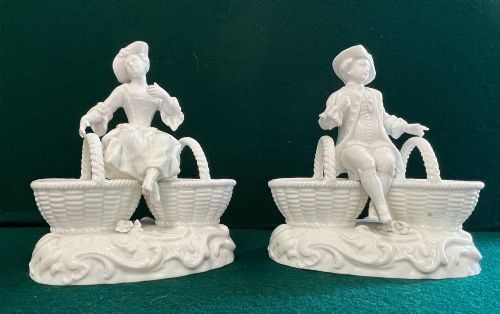
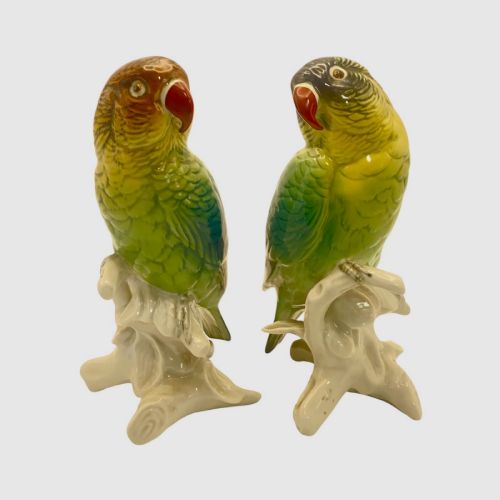
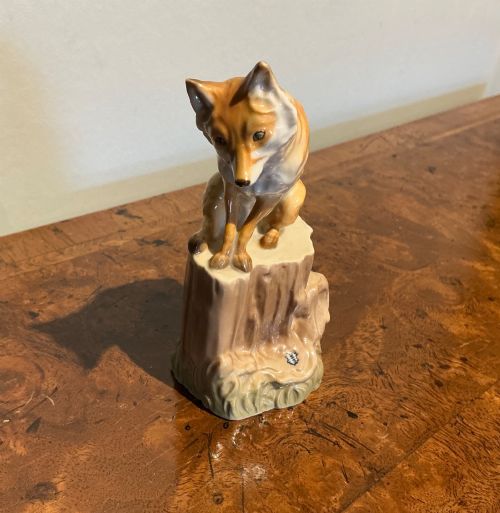
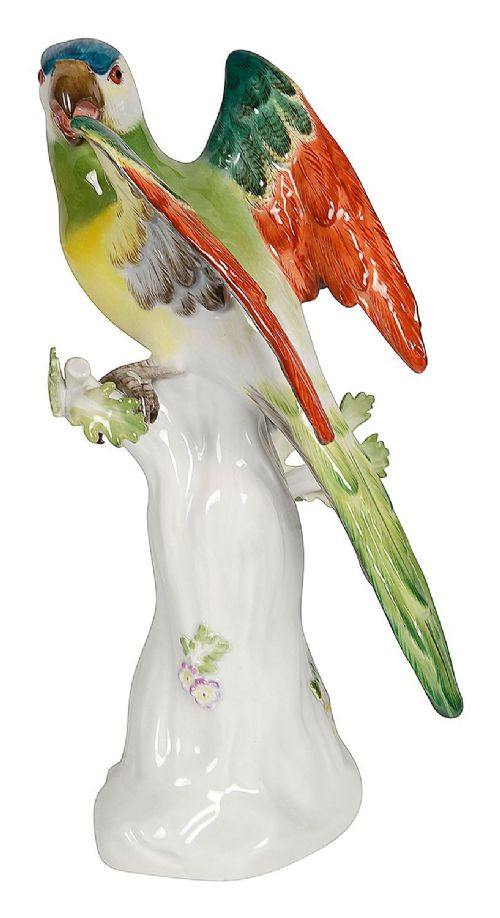
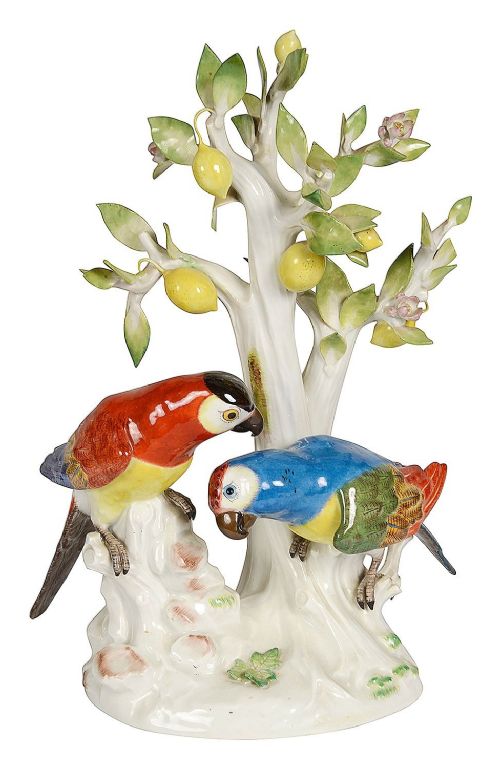
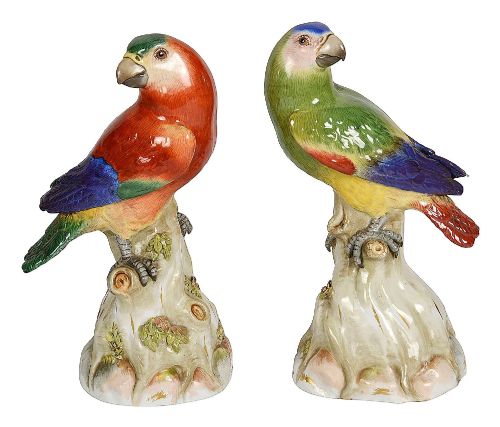
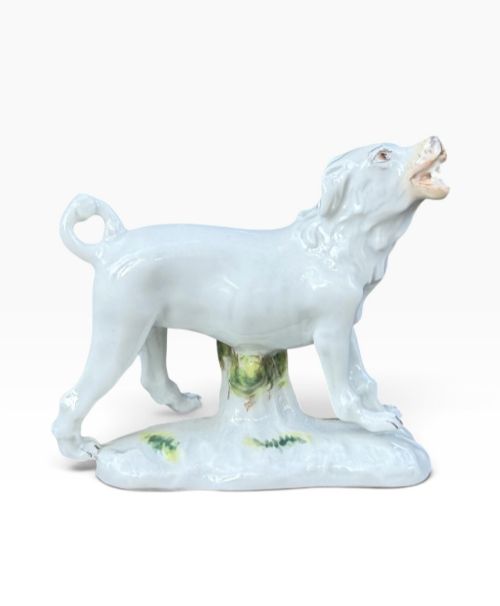
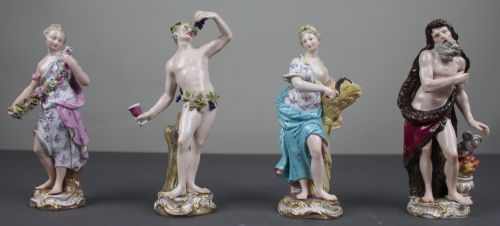
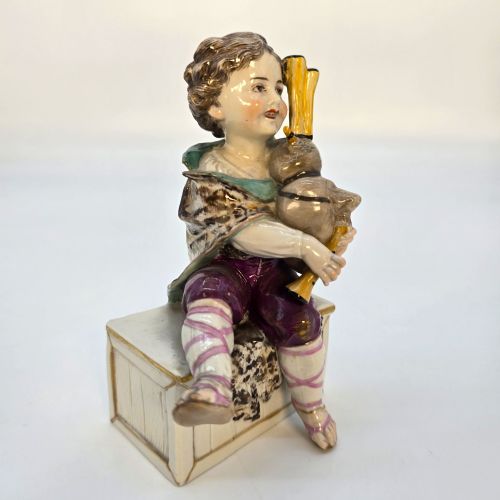
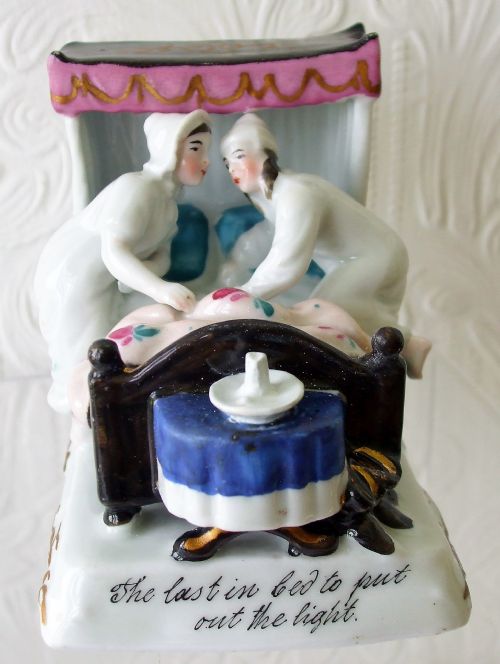
A german porcelain ornament selection centres heavily on figurative subjects, ranging from animal pairs and individual birds to human groups, street traders, and mythological scenes. Figures representing human groups, dancers, and allegorical sets appear alongside practical forms like posy holders and centrepieces.
The objects span production periods from the eighteenth century through the nineteenth century and into the art deco era of the nineteen-twenties and nineteen-thirties. Eighteenth-century examples often derive from Meissen models, while nineteenth-century output introduces pairs of parrots, dogs, and allegorical figures from Volkstedt, Sitzendorf, and related factories.
What varies in quality
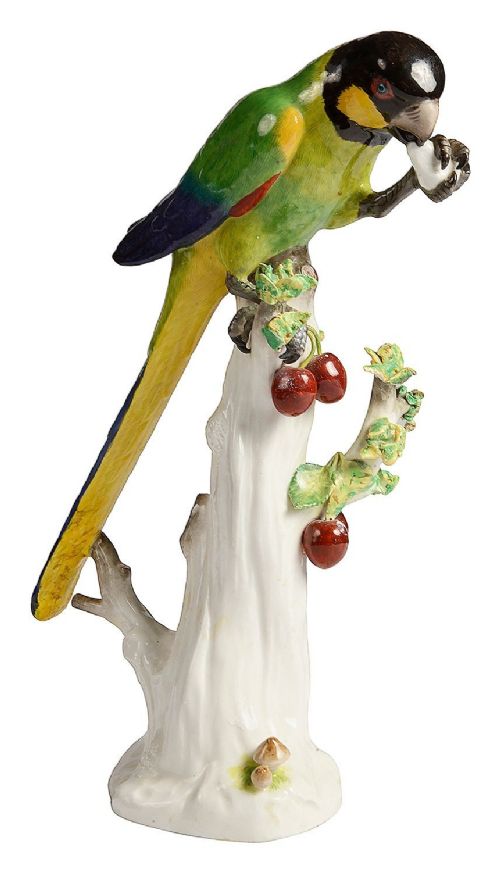
The refinement of the modelling dictates the distinction between standard production and superior examples, particularly in the rendering of facial expressions, plumage on birds, and folds in garments. Crisp detail in hand-painted enamels and gilding indicates greater skill in the decorating studio.
The complexity and scale of the composition also influence the character of an object, as larger grouped figures or paired animals demand higher technical control during the kiln firing to prevent warping.
Listings feature hard-paste porcelain, enamel, and gold leaf applied across eighteenth, nineteenth, and twentieth-century forms.
Meissen·Karl Ens·Nymphenburg·Volkstedt Rudolstadt Factory·Krister KPM Waldenburg·Richard Eckert·Rosenthal·Theo Voss·Sitzendorf
The German Porcelain Ornament Glossary
- Hard-paste porcelain
- A dense, vitrified ceramic material composed of kaolin and petuntse, fired at very high temperatures. It forms the solid body of traditional German figures.
- Bisque
- Unglazed fired porcelain that has a matte, biscuit-like surface texture. It appears frequently on piano babies and select nineteenth-century figures.
- Gilt
- A thin layer of gold applied to the surface of the porcelain as decoration. It highlights edges, garments, and architectural details.
- Posy holder
- A small vessel designed to display cut flowers, often incorporated into the base or structure of a figural composition. They combine decorative sculpture with functional display.
- Enamel
- Vitrified ceramic colours fused to the porcelain surface during a secondary low-temperature firing. Hand-painted enamels provide the polychrome palette on figures and birds.
German Porcelain Ornament: Frequently Asked Questions
How do I identify eighteenth century pieces?
Early pieces often display model numbers, specific factory marks, and sculptural styles aligned with rococo or neoclassical aesthetics. Subjects frequently include street traders, pastoral figures, and mythological scenes.
Closer inspection of the paste texture and enamel colours reveals the distinct palette used during periods such as the Marcolini era at Meissen.
Where were these figures made?
Production centres were concentrated in German regions renowned for porcelain manufacture, notably Meissen, Thuringia, and Bavaria. Factories like Volkstedt, Sitzendorf, and Nymphenburg operated regional kilns that supplied domestic and international markets.
Each workshop developed signature modelling styles, from realistic animal studies to elaborate Rococo revival groups.
How do I care for antique porcelain?
Antique figures require gentle cleaning with a soft, dry brush to remove dust from intricate areas like foliage or applied flowers. Water and liquid cleaners should be avoided, particularly on pieces with delicate enamel or gilt highlights.
Placement away from direct sunlight and heavy foot traffic protects the fragile limbs, posy holders, and protruding elements from accidental knocks.