




German Porcelain Dishes
German porcelain dishes bring together rigorous factory traditions and painterly hand-finishing, offering everything from cabinet plates to large centrepieces.
German Porcelain Dishes
When you search for german porcelain dishes, you encounter a diverse range of items spanning the eighteenth, nineteenth, and early twentieth centuries. The selection on this page centres predominantly on decorative plates, platters, dessert dishes, and ornate centrepieces originating from renowned regional manufactories.
Forms vary from practical serving vessels to purely ornamental cabinet pieces. Pieces frequently adopt historicist decorative vocabularies, drawing on Rococo Revival, Neoclassical, and Chinoiserie aesthetics alongside later Art Deco geometries.
How They Were Made
The foundation of these objects is hard-paste porcelain, fired at high temperatures to achieve a dense, impermeable body. Artisans then applied glazed surfaces that provided a smooth, vitreous ground for subsequent enamel painting.
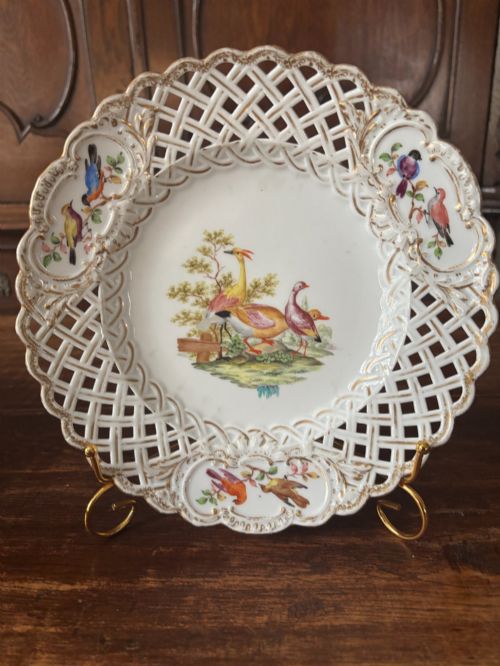
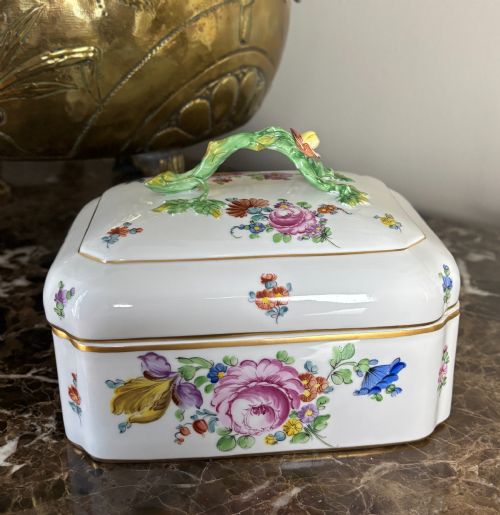
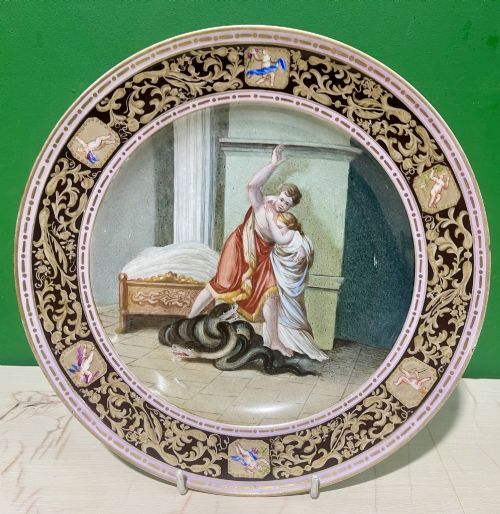
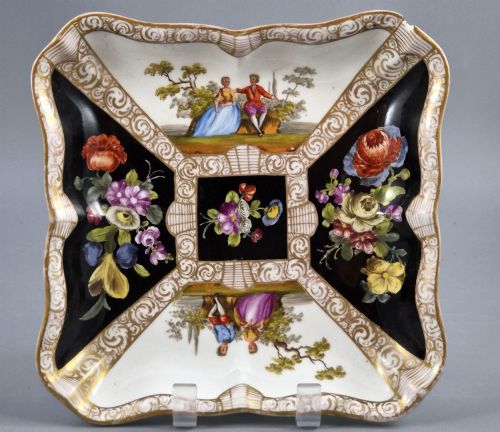
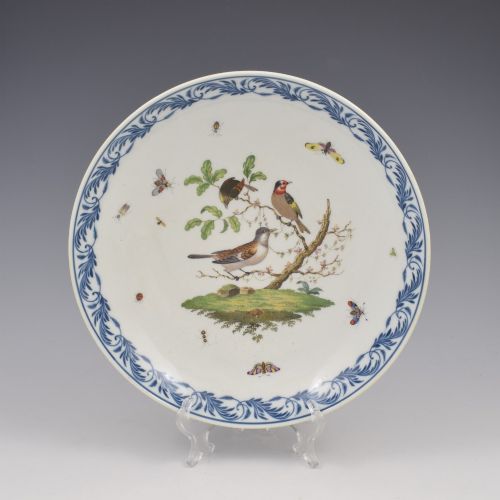
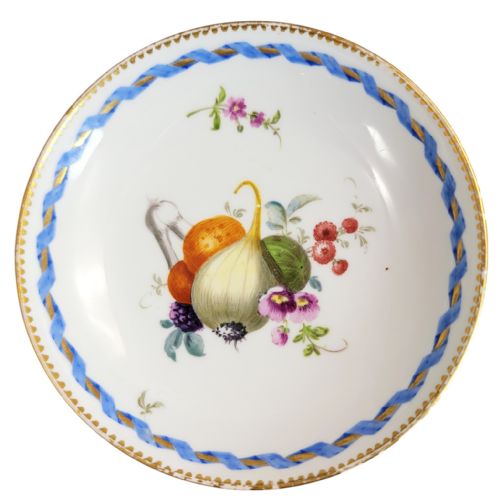
Decoration relied heavily on meticulous hand-painting, often incorporating finely detailed bird and floral motifs, mythological scenes, and raised gold leaf or gilding. Reticulated borders and applied ceramic elements, such as roses and putti, demonstrate advanced moulding and assembly techniques.
German Porcelain Dishes Retail Price Guide 2026
Typical asking prices for german porcelain dishes among the pieces listed under this phrase on Sellingantiques today, from the lower quarter to the upper quarter. They describe what is for sale here now, not the wider market.
Several charming figures depict porcelain jesters and turkeys doubling as table salt cellars.
What Varies in Quality
Quality rests primarily on the precision of the modelling and the finesse of the painting. Pieces featuring crisp, deep relief work and finely brushed polychrome enamels distinguish themselves from standard production wares.
The integrity of the glaze and the richness of the gilding further determine the tier of a piece. Well-preserved underglaze blue factory marks and unrubbed enamel details indicate superior workshop standards.
Meissen·Dresden·KPM Berlin·Furstenberg·Paul Müller Selb·Müller Volkstedt·Schierholz·Helena Wolfsohn
The German Porcelain Dishes Glossary
- Hard-paste porcelain
- A dense, vitrified ceramic composition fired at very high temperatures. It uses kaolin and petuntse to create a durable, bright white body.
- Reticulated plate
- A ceramic plate featuring pierced or openwork lattice borders. Artisans cut these geometric patterns into the clay before the initial firing.
- Sweetmeat figure
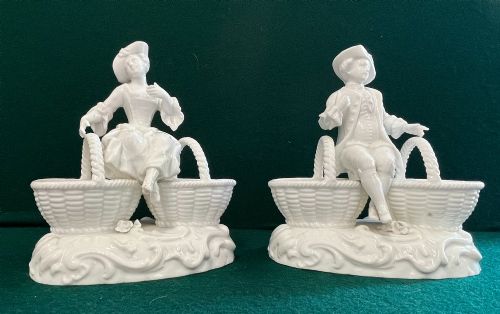
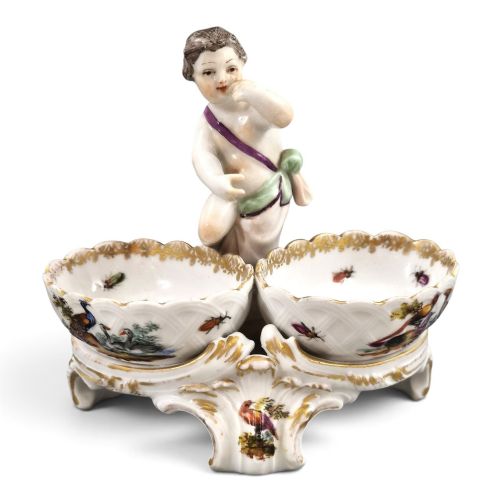
- A decorative ceramic figurine holding a small bowl or dish designed for confectioneries. These pieces frequently date to the nineteenth century.
- Underglaze mark
- A factory symbol or cipher applied beneath the protective glaze before firing. This technique protects the mark from subsequent wear.
German Porcelain Dishes: Frequently Asked Questions
How do I identify a Meissen mark?
Meissen pieces typically display crossed swords painted in underglaze blue on the base. The style of these swords changed across centuries, helping to narrow down the period of manufacture.
Familiarising yourself with variations in the hilt and blade shapes allows you to distinguish eighteenth-century examples from nineteenth-century revivals.
What is a centrepiece used for?
Centrepieces functioned as ornamental table decorations during formal dining services. They often incorporated shallow bowls or figures designed to hold fruit, flowers, or sweetmeats.
Over time, many of these grand ceramic arrangements transitioned from the dining table to sideboards and display cabinets.
How should I clean antique porcelain?
Antique porcelain requires gentle cleaning using warm water and a mild, non-abrasive detergent. Avoid soaking pieces with gilt highlights or delicate applied flowers to protect the fragile enamel surfaces.
Dry each item thoroughly with a soft, lint-free cloth rather than leaving them to air dry.
What is hard-paste porcelain?
Hard-paste porcelain is a true ceramic composition fired at exceptionally high temperatures. It combines kaolin clay and feldspar to produce a remarkably hard, vitrified material that resists scratching.
This robust body formed the technical basis for the finest European porcelain factories from the eighteenth century onward.