







German Pendulum Wall Clock
A german pendulum wall clock brings steady movement and rich timber cases into a room, offering the charm of traditional timekeeping.
German Pendulum Wall Clock
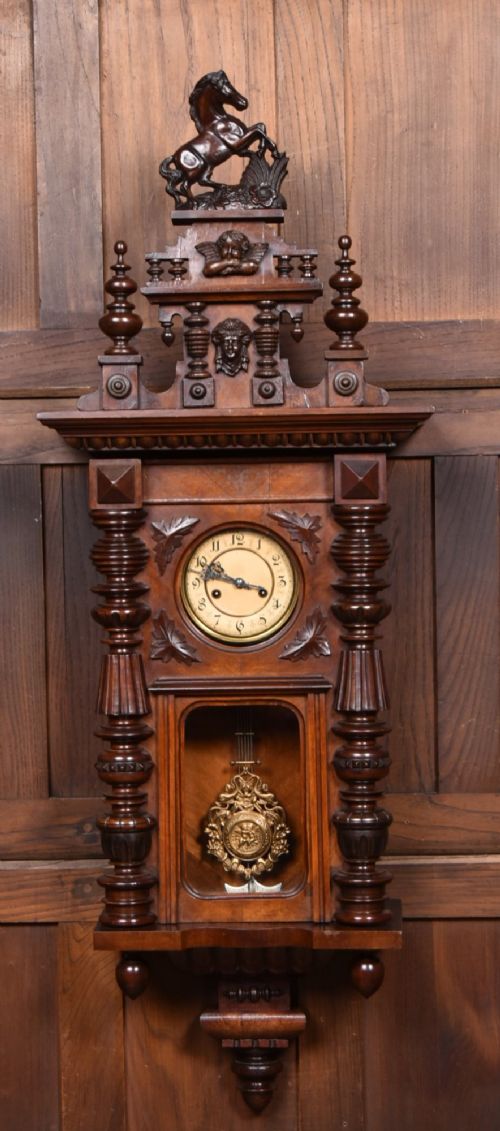
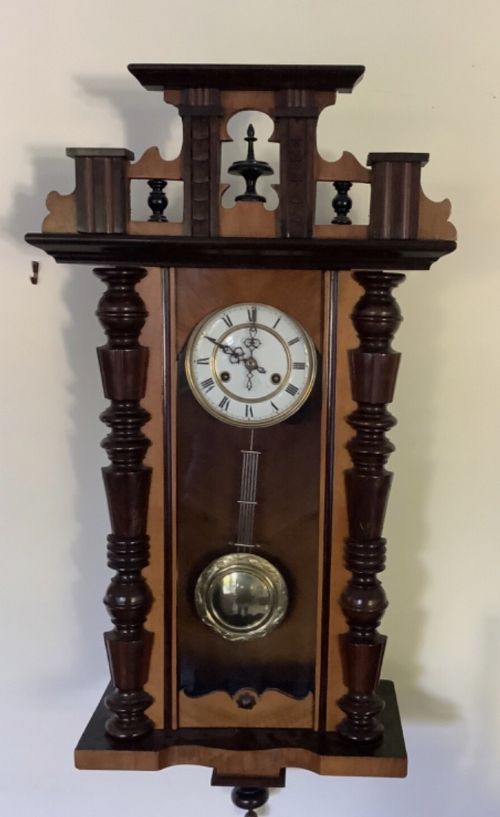
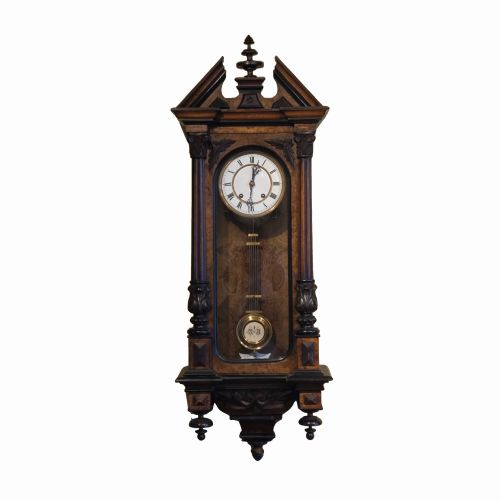
A german pendulum wall clock encompasses robust timepieces designed to hang securely while keeping time with a swinging pendulum. When searching for a german pendulum wall clock, buyers encounter examples originating from the nineteenth century up to the mid-twentieth century.
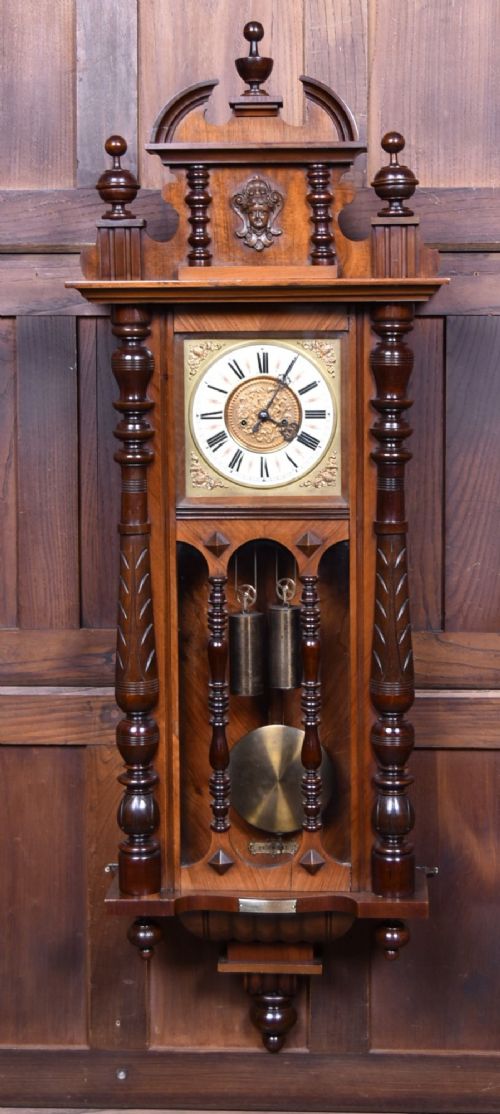
These clocks often display striking mechanisms, with eight-day movements, double weights, or triple weights governing the chime. Victorian and Art Nouveau stylistic influences appear frequently across the periods represented.
How they were made
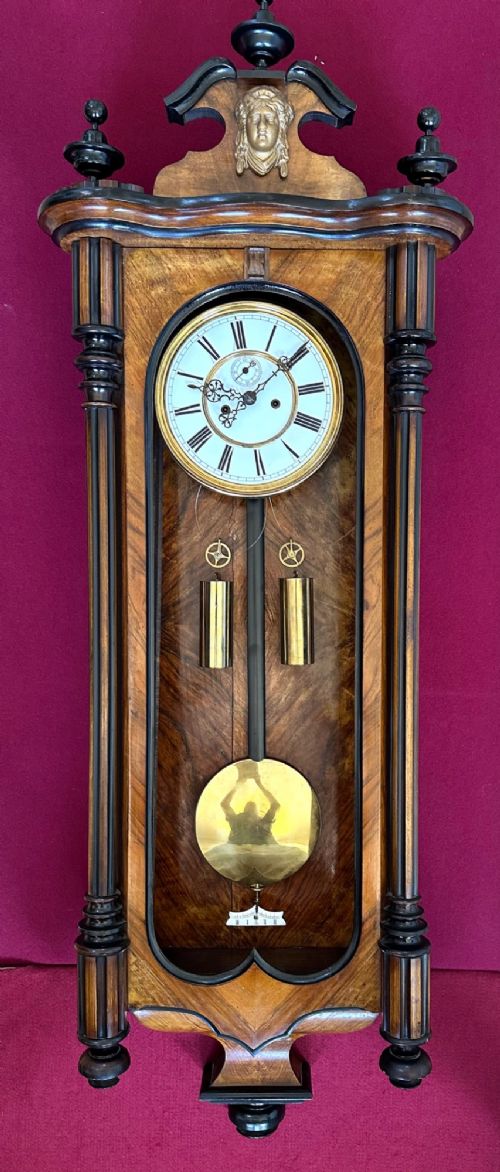
Cases rely heavily on walnut, mahogany, and ebonised wood, shaped and carved to house the delicate internal mechanisms. Enamel dials provide clear contrast for hands driven by brass gears and iron weights.
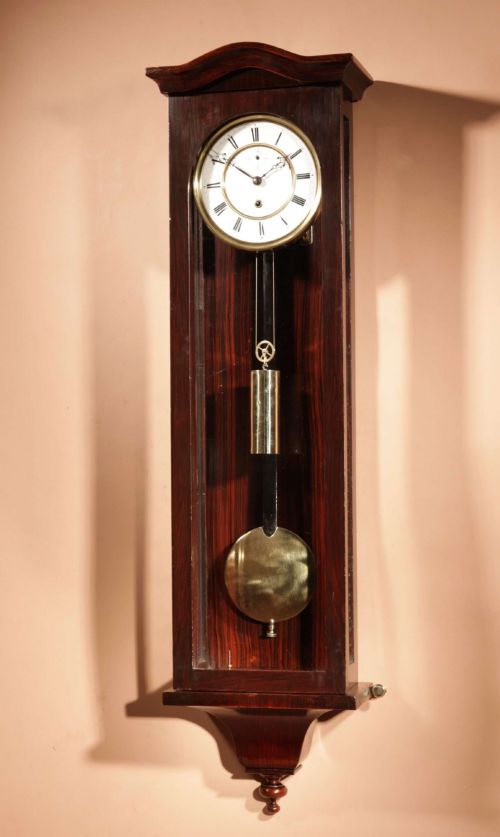
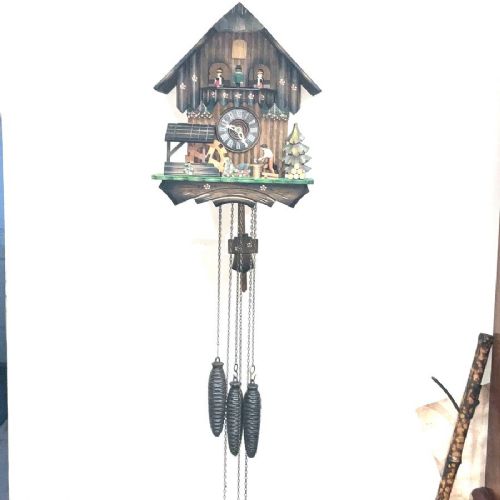
Black Forest examples incorporate intricate hand-carved wood elements, often depicting natural motifs for cuckoo clocks and musical automata. Vienna regulators utilise precision engineering within polished timber housings, pairing glass panels with visible brass pendulums.
Walnut is the predominant timber seen across these nineteenth-century clock cases.
What varies in quality
The finesse of the timber carving and the complexity of the movement define the upper tier of these timepieces. Simple spring-driven models contrast with intricate double-weight and triple-weight Grande Sonnerie mechanisms.
Makers such as Gustav Becker or Johann Baptist Beha introduced superior mechanical refinement and cabinetwork. The clarity of the enamel dial and the integrity of the original wood case further distinguish finer examples.
Philipp Haas·AG Lenzkirch·Gustav Becker·Johann Baptist Beha
The German Pendulum Wall Clock Glossary
- Vienna Regulator
- A precision wall clock developed in Austria and Germany during the nineteenth century, known for accurate weight-driven movements and glazed doors. These pieces showcase meticulous wood craftsmanship.
- Grande Sonnerie
- A complex clock striking mechanism that chimes both the hours and the quarters automatically. It represents a higher level of horological engineering.
- Cuckoo Clock
- A mechanical timepiece featuring automated figures, such as a bird emerging to call the hour. Traditional versions utilise carved wooden bellows and weight-driven movements.
- Ebonised Wood
- Timber treated to resemble ebony through staining or painting. This finish provides a dark, uniform appearance popular in nineteenth-century clock cases.
- Pendulum
- A suspended weight that swings to regulate the speed of a clock. Its precise length determines the accuracy of the timekeeping.
German Pendulum Wall Clock: Frequently Asked Questions
How do I wind a wall clock?
Most mechanical clocks require a key to pull the weights back up or tension the internal springs. Care must be taken not to over-wind the mechanism.
Consult the specific movement type, as eight-day clocks need attention weekly while others run for shorter durations.
Where should I hang a heavy regulator?
Secure the clock directly to a masonry wall or locate a sturdy stud in plasterboard. The weight of walnut cases and lead weights demands firm fixings.
Ensure the mounting is level so the pendulum swings evenly without catching against the case sides.
Why does the clock lose time?
Pendulum clocks rely on a level hang and an even beat to keep accurate time. Minor shifts in the wall position can alter the rhythm.
Adjustment nuts on the pendulum allow the bob to move up or down, correcting minor gains or losses over twenty-four hours.
How do I identify a Vienna regulator?
These clocks feature tall, glazed wooden cases designed to display the long brass pendulum and matching weights. The dials are typically enamel with Roman numerals.
Their movements reflect high nineteenth-century manufacturing standards, often bearing workshop signatures on the backplate.