


German Ceramic Figurines
German ceramic figurines bring cabinet work and tabletop ornament from Meissen, Volkstedt and Nymphenburg into the room.
German Ceramic Figurines
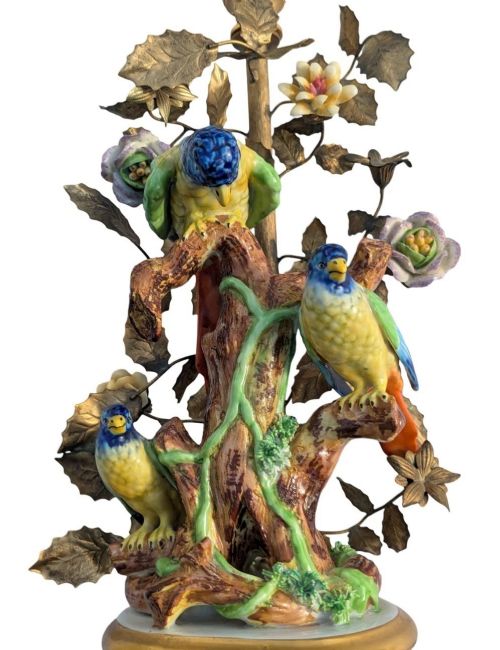
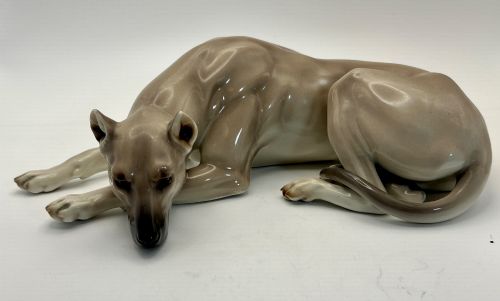
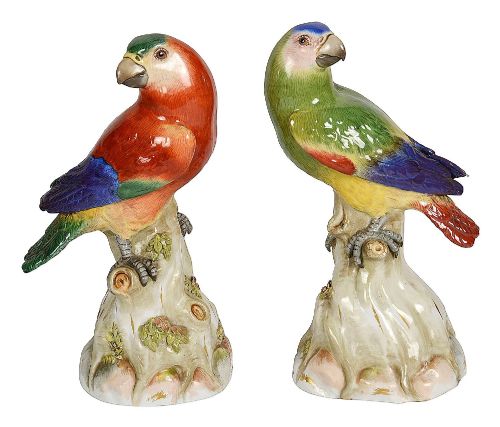
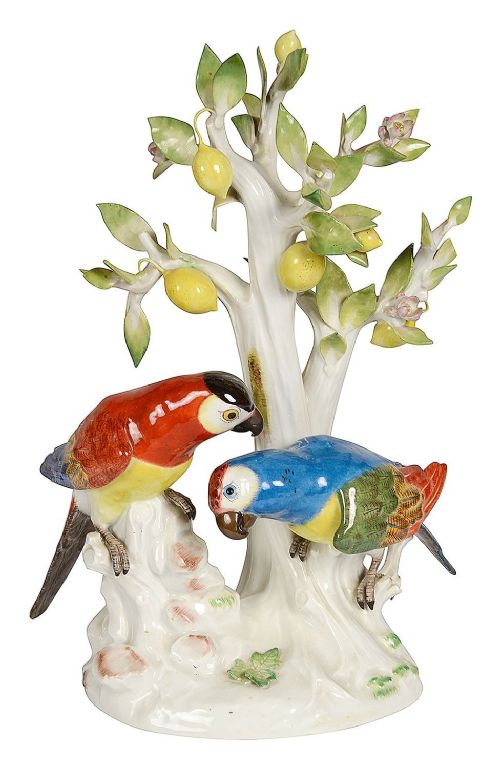
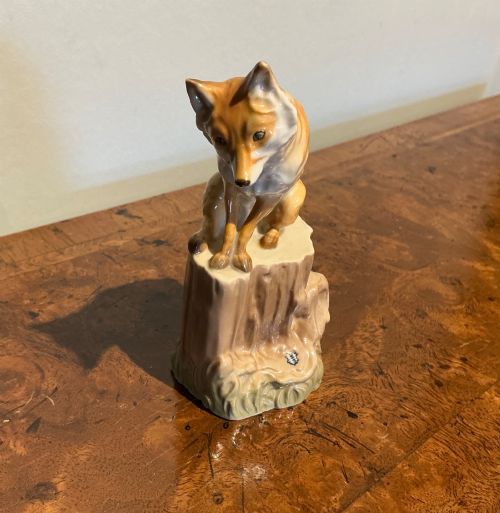
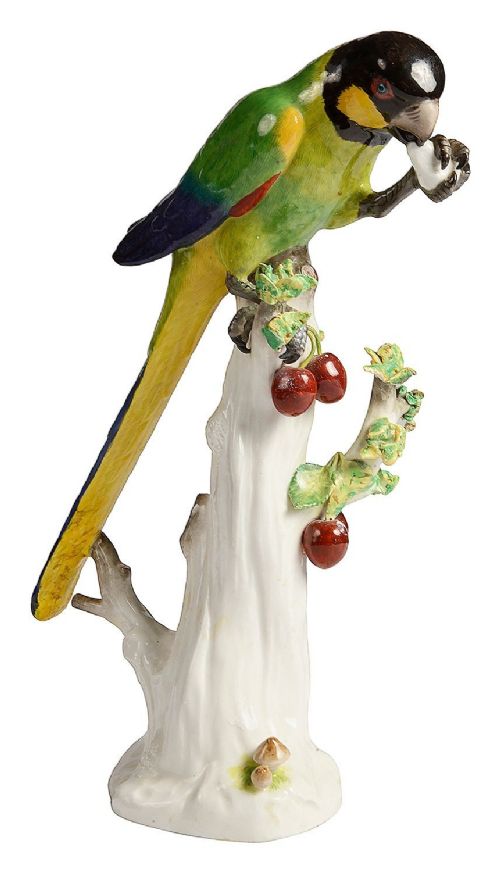
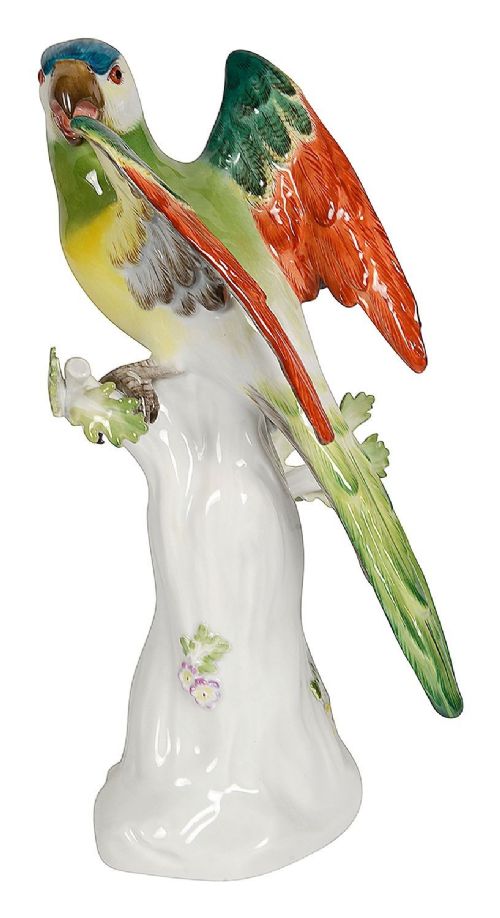
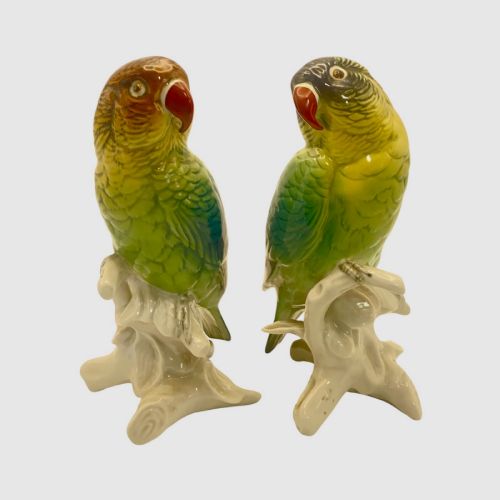
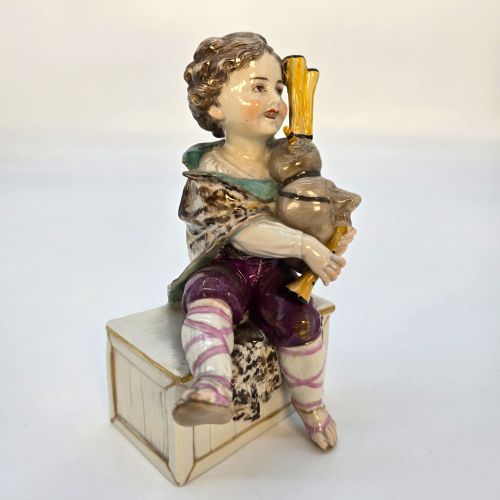
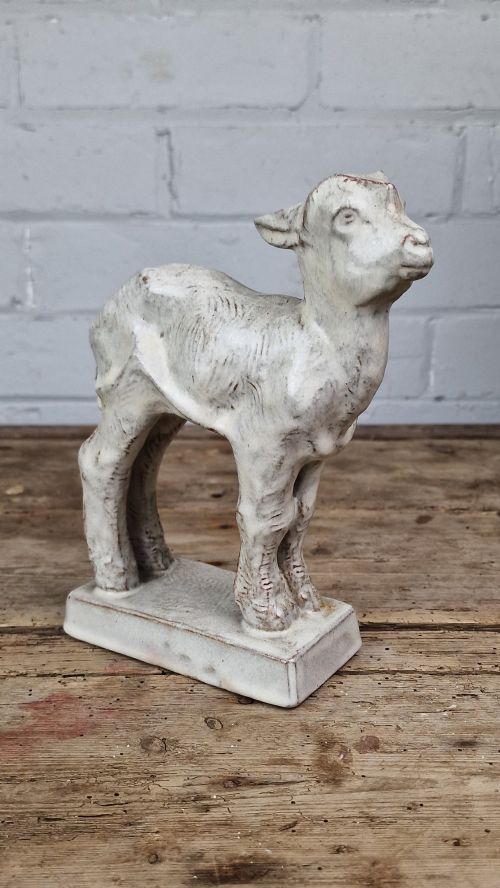
German ceramic figurines span animal subjects, human figures and allegorical groups produced across the eighteenth, nineteenth and early twentieth centuries. Bird models, particularly parrots perched on tree trunks or sitting beneath lemon trees, appear alongside human subjects including street traders, gardeners and dancers.
Meissen forms dominate the record, accompanied by works from Volkstedt, Karl Ens, Nymphenburg and Rosenthal. Pieces range from small cabinet figures measuring twenty-four centimetres to large models reaching fifty centimetres in height.
Materials and Technique
Makers utilised hard-paste porcelain and terracotta, shaped through moulding and hand modelling. Surface decoration relies on enamel painting, glaze and gilt or gold leaf applications.
Model construction frequently combines structural porcelain bodies with applied elements such as flowers, baskets and foliage, fixed prior to kiln firing.
German Ceramic Figurines Retail Price Guide 2026
Typical asking prices for german ceramic figurines among the pieces listed under this phrase on Sellingantiques today, from the lower quarter to the upper quarter. They describe what is for sale here now, not the wider market.
The listings span hard-paste porcelain, terracotta, enamel and gold leaf across the eighteenth, nineteenth and twentieth centuries.
Model Fidelity and Detail
The complexity of the form influences the piece, separating single standing figures from intricate groups involving multiple animals or elaborate botanical surrounds.
Karl Ens·Nymphenburg·Volkstedt Rudolstadt Factory·Paul Scheurich·Krister KPM Waldenburg·Richard Eckert·Carl Thieme Dresden·Fasold and Stuach·Rosenthal·C G Schierholz
The German Ceramic Figurines Glossary
- Hard-paste porcelain
- A dense ceramic material composed of kaolin and petuntse, fired at high temperatures to produce a vitrified body. It forms the primary substrate for Meissen and Nymphenburg figures.
- Enamel
- Coloured metallic oxide pigments fused to the glazed porcelain surface during a secondary low-temperature firing. These pigments deliver the vibrant reds, blues and greens seen on bird and human figures.
- Sweetmeat dish
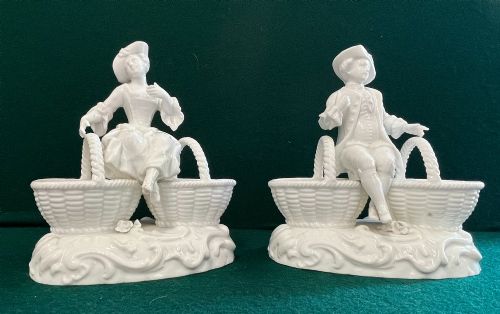
- A small ceramic vessel or figural grouping designed to hold confectionery or dried fruits at formal dining tables. They often take the form of baskets supported by figures.
- Blanc de Chine
- A pure white glaze applied directly to a porcelain body without polychrome enamel decoration. This finish highlights the sculptural modelling of the clay form alone.
- Gilt
- A thin layer of gold leaf or powdered gold applied to decorative borders, clothing details or tree trunks. It adds metallic contrast to the painted enamel surfaces.
German Ceramic Figurines: Frequently Asked Questions
How do I identify Meissen porcelain figures?
Meissen pieces often depict birds, allegorical groups or eighteenth-century courtly figures modelled with detailed botanical or architectural bases. Look for the characteristic crossed swords mark applied under the glaze.
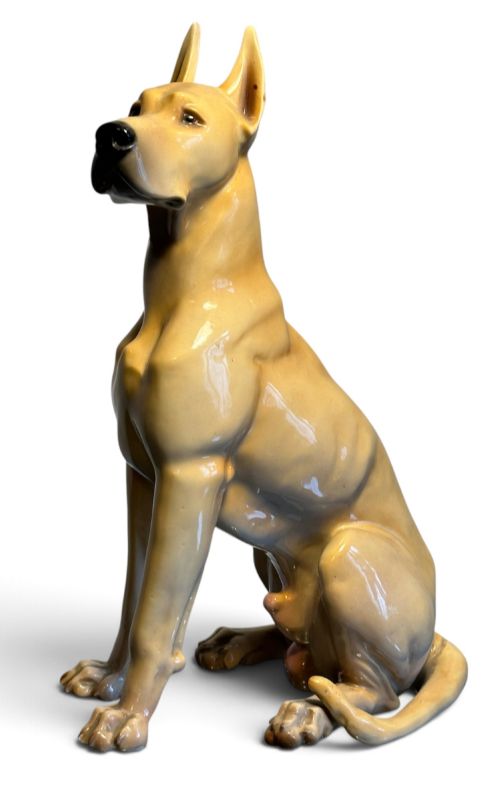
Subjects range from simple cabinet dogs to complex figural groups like the Four Seasons or classical narratives.
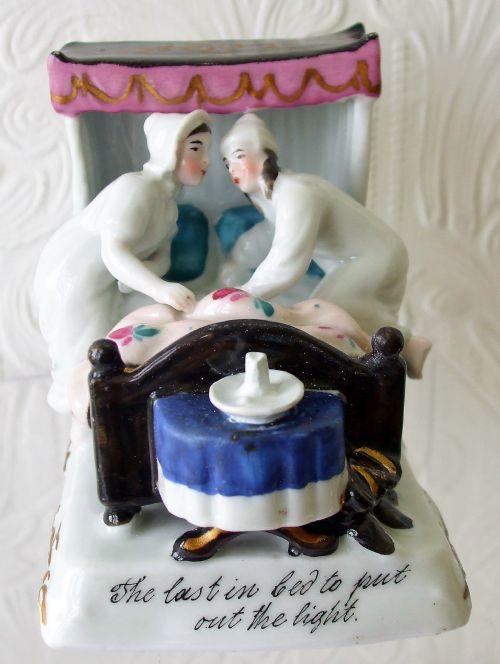
What are porcelain fairings?
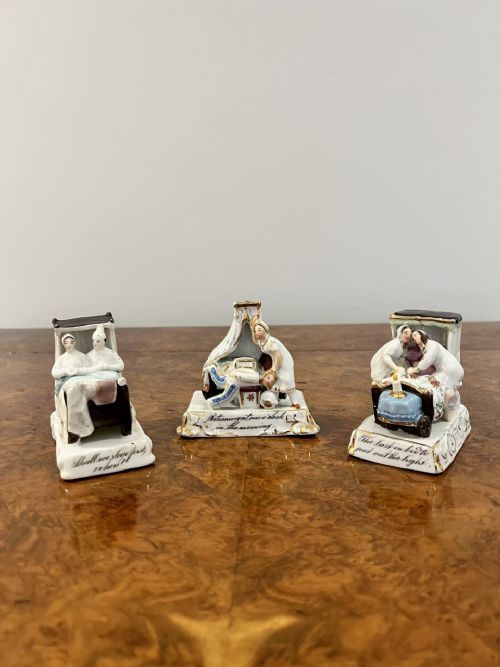
Porcelain fairings are small nineteenth-century ceramic ornaments, often humorous or domestic in theme, produced for the popular market. They typically feature descriptive titles moulded into the base.
These domestic scenes provide a contrast to the grander allegorical and animal models produced by factories like Meissen and Volkstedt.
How should I display ceramic figurines?
Place figurines within enclosed display cabinets or on stable tabletops away from direct sunlight and heavy foot traffic. Hard-paste porcelain is durable, but delicate applied details like leaves and fingers remain vulnerable to knocks.
Ensure shelves support the base evenly, particularly for larger parrot models and multi-figure groups.
What distinguishes Art Deco German figures?
Art Deco pieces from makers like Karl Ens or Fasold and Stuach introduce stylised geometries and simplified forms. They often feature animal subjects or modern figures such as flapper girls.
These models move away from Rococo Revival scrollwork and nineteenth-century naturalism towards clean silhouettes.