


German Art Glass
German art glass brings together vibrant enamelling, iridescent surfaces, and organic forms spanning the Victorian era through the art deco period.
German Art Glass
German art glass encompasses tableware, vases, decanters, and decorative pieces rooted in the 19th century, Victorian, Edwardian, and later periods.
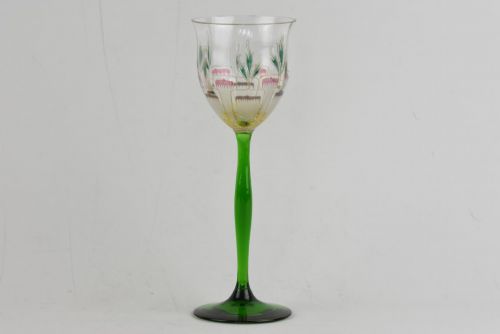
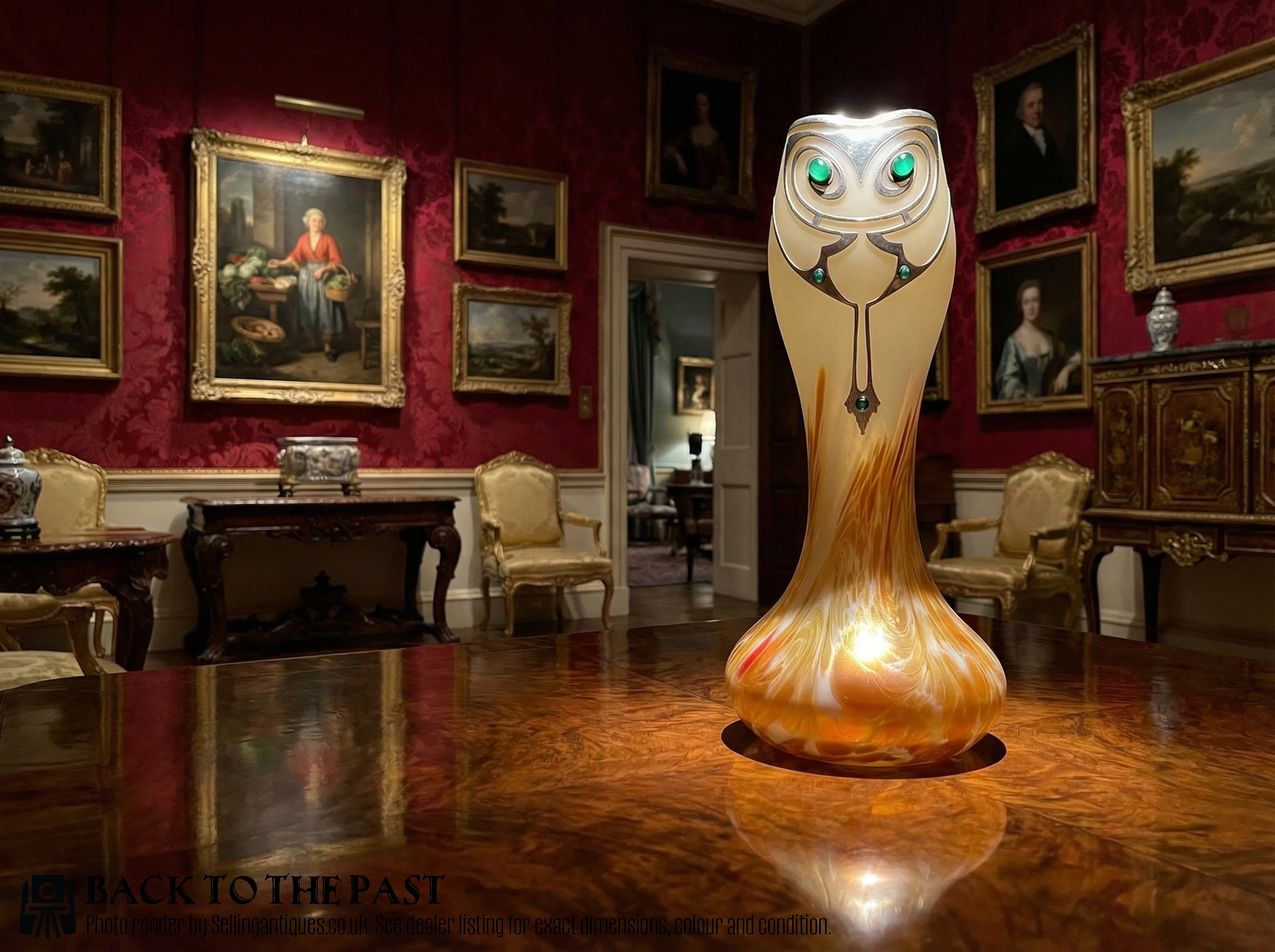
Buyers encounter items ranging from delicate hock glasses with enamel decoration to large iridescent glass vases with silver overlay.
Styles on this page stretch from ornate Jugendstil and Art Nouveau to clean Art Deco designs, often combining glass with silvered pewter or brass.
Materials and construction
Maker workshops utilised blown glass, crystal, and pressed glass, frequently integrating metalwork such as silver plate, silvered pewter, brass, and wrought iron.
Surface decoration involved polychrome enamel, gold leaf, and cameo carving, alongside silver overlay and mounts created by firms like WMF.
South German folk art traditions occasionally placed entire religious scenes inside glass bottles.
Judging the quality
Quality rests on the crispness of the enamel work, the weight and clarity of the glass, and the artistic ambition of the metal mounts.
Pieces bearing signatures from notable makers or distinct studios show superior handcrafting in their surface details compared to simpler production items.
Theresienthal·Karl Ens·Anton Buschelberger·Emmy Seyfried·Frits Hechert·Ferdinand von Poschinger·Orivit·Adelbert Niemeyer·Jakob Bengel
The German Art Glass Glossary
- Jugendstil
- The German manifestation of Art Nouveau, prominent around the turn of the 20th century. It favours stylised organic forms and flowing lines.
- Enamel
- A decorative glass paste fused to the surface through firing. It provides rich polychrome colours on glassware.
- Roemer
- A traditional German drinking vessel with a large bowl and a patterned stem. It frequently appears in green glass.
- Silvered Pewter
- A metal alloy treated to resemble silver, widely utilised by manufacturers such as WMF for mounts and figural stands.
German Art Glass: Frequently Asked Questions
What is german art glass?
German art glass covers decorative glassware, vessels, and tableware produced in Germany and Central Europe during periods like Art Nouveau, Jugendstil, and Art Deco.
These pieces often combine blown glass with metal mounts such as silvered pewter or feature detailed polychrome enamel decoration.
How do I date german art glass?
Dating relies on stylistic markers such as floral Jugendstil motifs from around 1900 or geometric Art Deco lines from the 1930s.
Maker marks, signatures on the glass, and accompanying metalwork styles also help pinpoint the period of manufacture.
How were these glass items used?
Many items served practical dining functions, including wine glasses, decanters, cordial sets, and hors d'oeuvres dishes.
Others functioned purely as decorative centerpieces, vases, and lighting to adorn period interiors.
How do I care for antique glass?
Antique glass requires gentle hand washing in lukewarm water using mild soap, avoiding harsh abrasive materials.
Care must be taken with pieces featuring enamel work, gold leaf, or metal mounts to preserve the delicate surface decoration.