
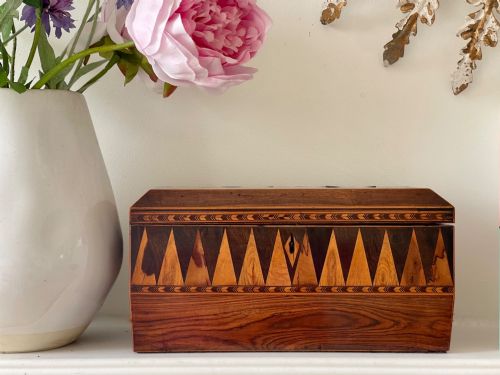

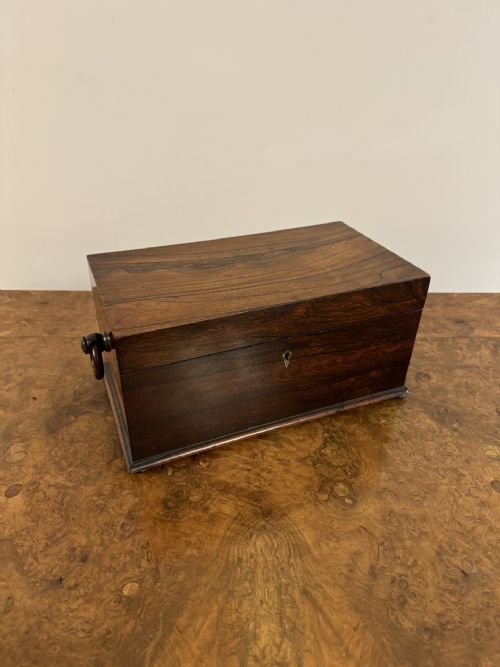
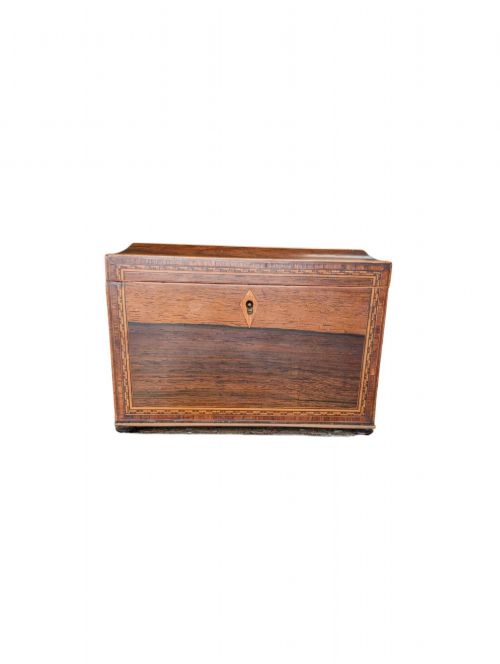
Georgian Wooden Tea Chest
A georgian wooden tea chest holds the leaf securely under lock and key, offering refined proportions and rich timber grain to any interior.
Georgian Wooden Tea Chest
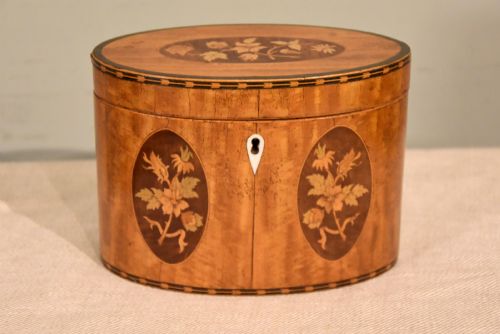
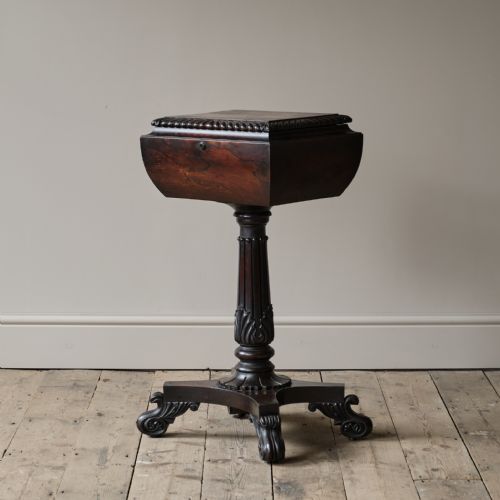
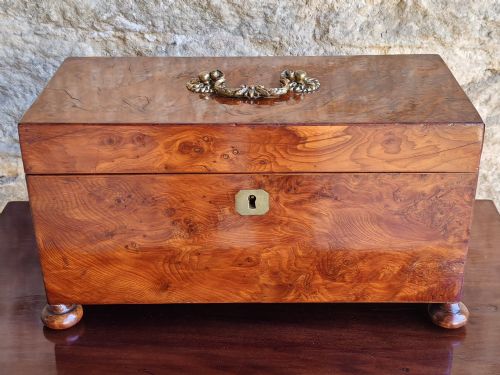
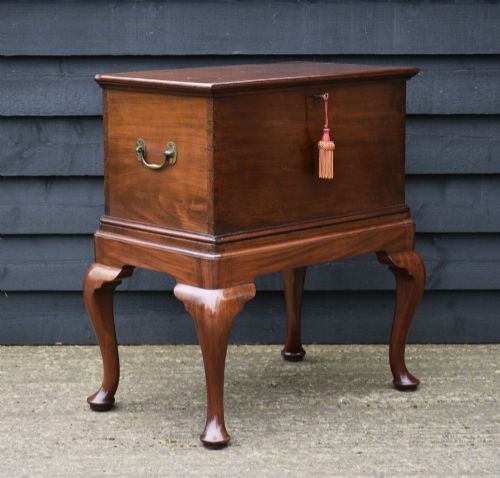
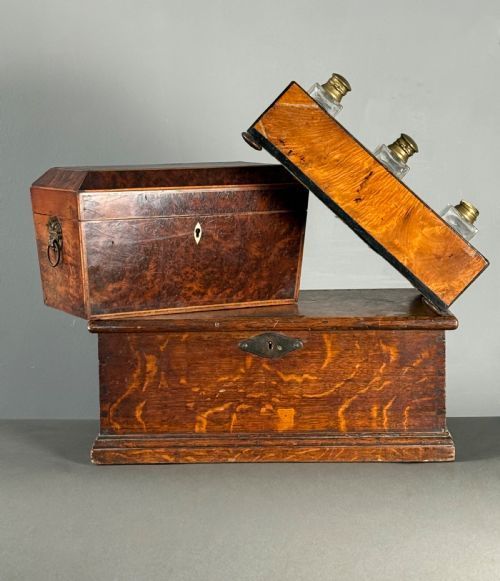
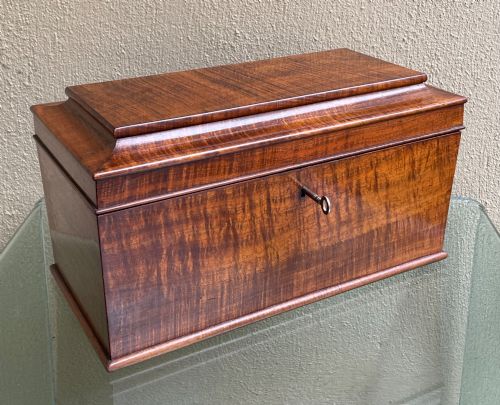
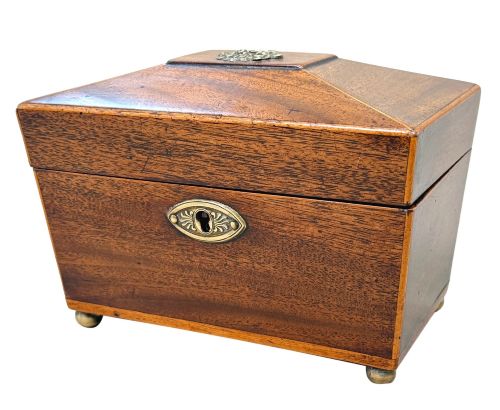
When you search for a georgian wooden tea chest, you encounter lidded containers made to store valuable dry tea leaves securely. The items listed span periods from the mid-eighteenth century through the Regency era and into the nineteenth century, taking forms such as rectangular boxes, sarcophagus shapes, and teapoys.
Mahogany, rosewood, and satinwood dominate the selection, often enriched with brass, boxwood, and bone details. These pieces served a domestic function in period households, guarding leaf varieties that carried considerable social and economic value.
Materials and construction methods
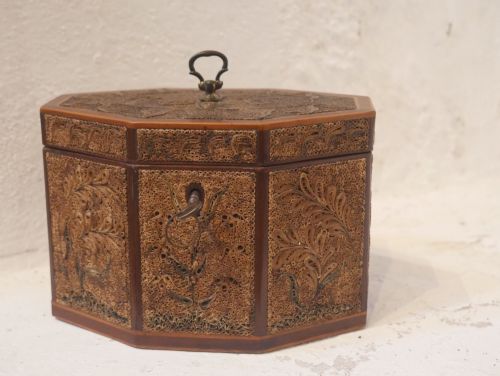
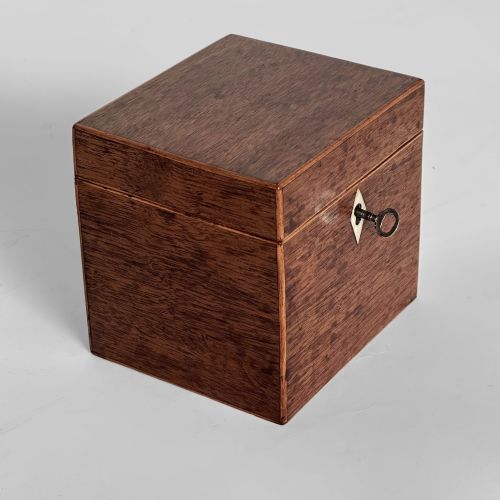
Cabinet makers built these vessels using dense tropical hardwoods like mahogany and rosewood, alongside native timbers such as walnut, yew, and satinwood. Surfaces frequently display intricate decorative techniques including parquetry, brass inlay, paper filigree, and shell or bone marquetry.
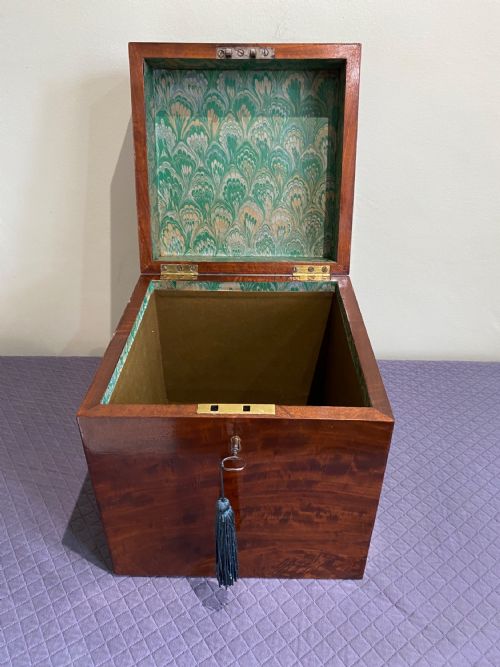
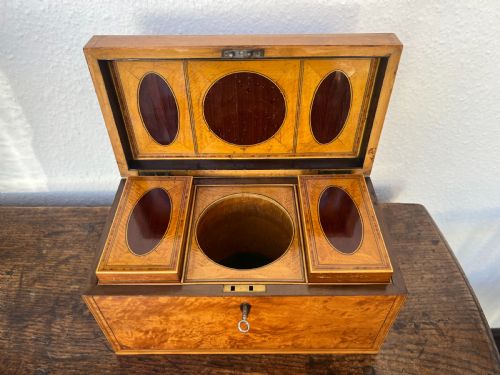
Interiors often incorporate fitted compartments, small mixing bowls made of glass, and secret drawers designed to protect the contents. Construction relied on precise joinery to stabilize dense woods against seasonal humidity shifts.
Georgian Wooden Tea Chest Retail Price Guide 2026
Typical asking prices for georgian wooden tea chest among the pieces listed under this phrase on Sellingantiques today, from the lower quarter to the upper quarter. They describe what is for sale here now, not the wider market.
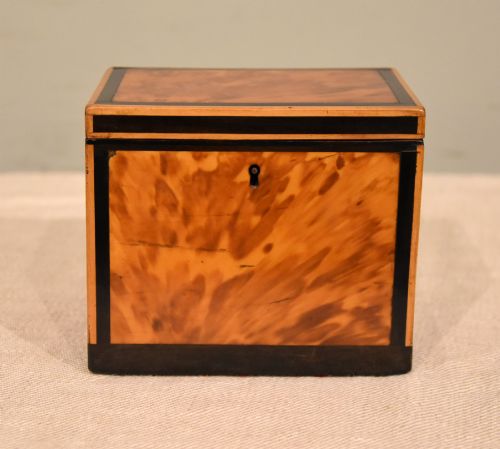
Listings feature eighteenth-century and Regency pieces constructed from mahogany, rosewood, satinwood, and tortoiseshell.
Distinguishing quality in the range
The standard of a georgian wooden tea chest depends upon the selection of timber veneers and the precision of decorative inlay work, such as contrasting stringing or pictorial motifs. Finer examples exhibit thoughtful proportions, intact internal fittings, and original hardware like brass lion mask handles or functioning locks.
Pieces featuring specialised techniques such as Tunbridge ware or complex sarcophagus forms represent a higher tier of cabinet making. Simpler rectangular forms executed in solid mahogany sit at the accessible end of the spectrum.
The Georgian Wooden Tea Chest Glossary
- Teapoy
- A freestanding container or small table fitted with internal compartments for storing tea leaves.
- Sarcophagus shaped
- A box style featuring a sloping, pedestal-mounted body reminiscent of a classical stone coffin, popular during the Regency period.
- Parquetry
- A geometric mosaic of wood pieces used for decorative veneer on surfaces.
- Navette shaped
- A pointed oval design with curved sides, frequently seen in late eighteenth-century decorative arts.
- Tunbridge ware
- Woodworking characterised by precise mosaic patterns built from tiny blocks of naturally coloured timbers.
Georgian Wooden Tea Chest: Frequently Asked Questions
What was the purpose of a tea chest?
These containers stored expensive tea leaves safely under lock and key in the principal rooms of a period home.
Because tea was a costly commodity, the head of the household kept the keys to regulate consumption.
How do I date a wooden tea caddy?
Stylistic markers such as bracket feet, oval shapes, or sarcophagus silhouettes help assign pieces to specific decades.
Timber choice also guides dating, with satinwood and elaborate inlay pointing toward the late eighteenth and early nineteenth centuries.
Where were these boxes kept in the house?
They sat on side tables or sideboard surfaces in formal reception rooms like the dining room or drawing room.
Guests gathered while the host unlocked the chest to measure out the leaves for brewing.
What are teapoys compared to tea chests?
Teapoys generally refer to larger lidded boxes, sometimes raised on pillar and claw stands rather than resting on furniture tops.
Both items served the primary function of holding tea leaves and mixing accessories.