
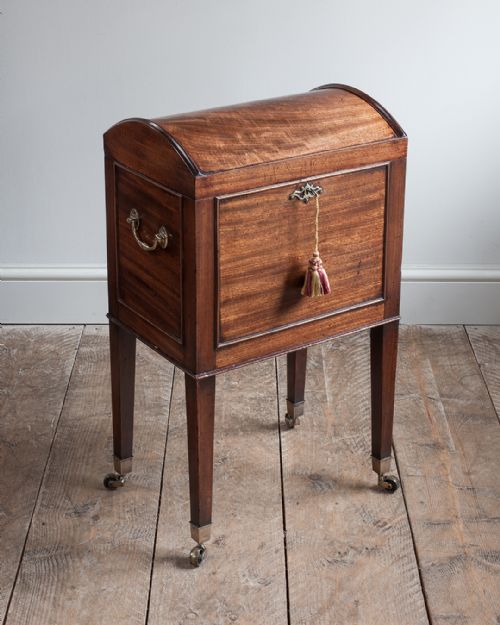


Georgian Wine Storage
Georgian wine storage pieces are timber cellarettes and coolers designed to hold bottles near the dining table, built to last for centuries.
Georgian Wine Storage
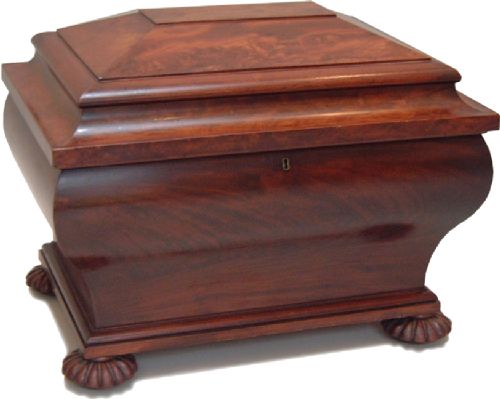
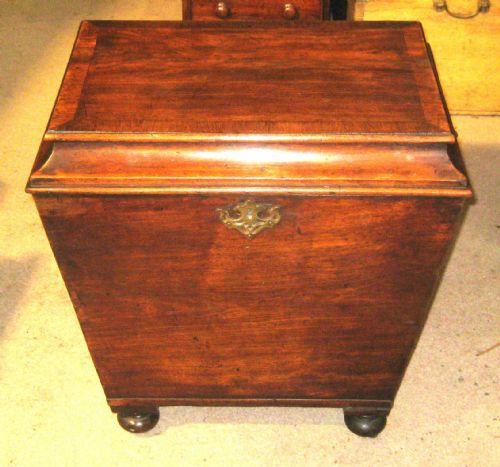
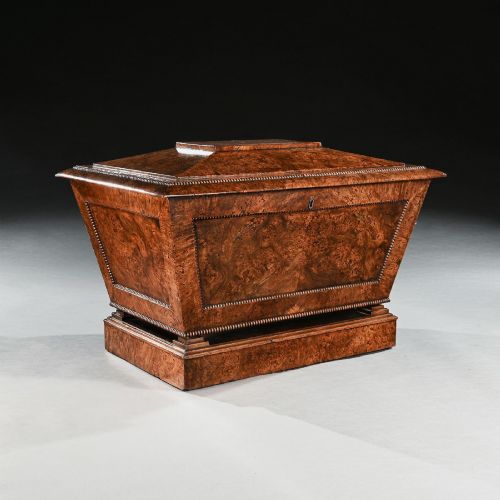
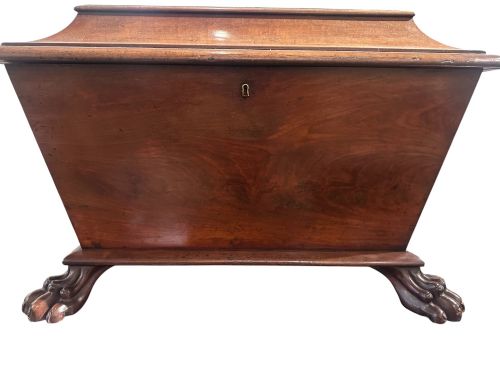
Georgian wine storage primarily takes the form of cellarettes, wine coolers, and bottle chests designed to keep bottles secure and accessible during dining. The versions you are most likely to meet on this page are mahogany cellarettes and sarcophagus-form coolers dating from the Georgian, Regency, and George III periods.
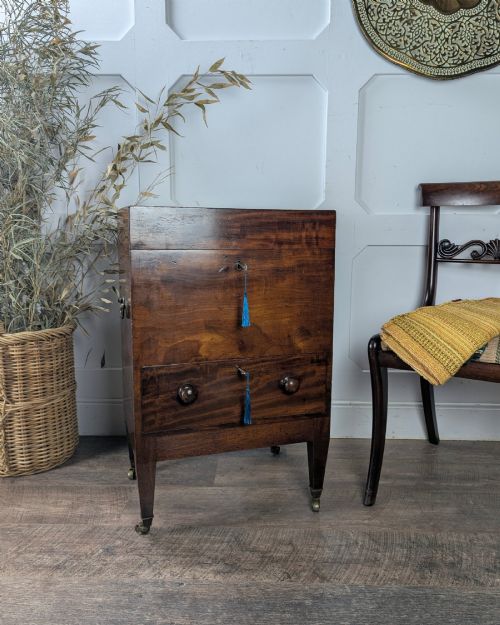
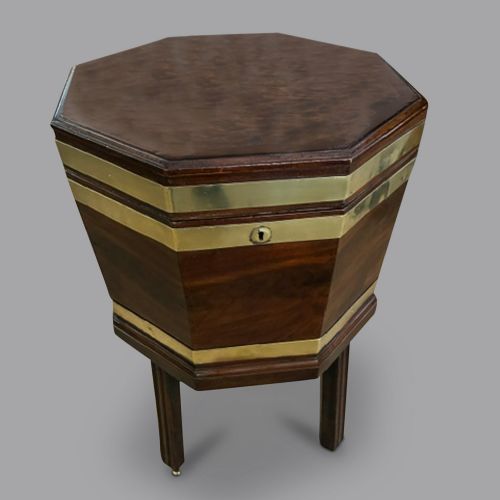
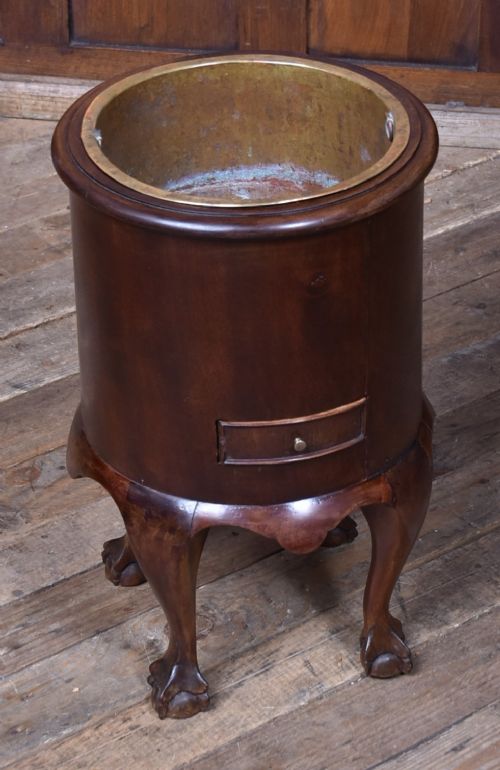
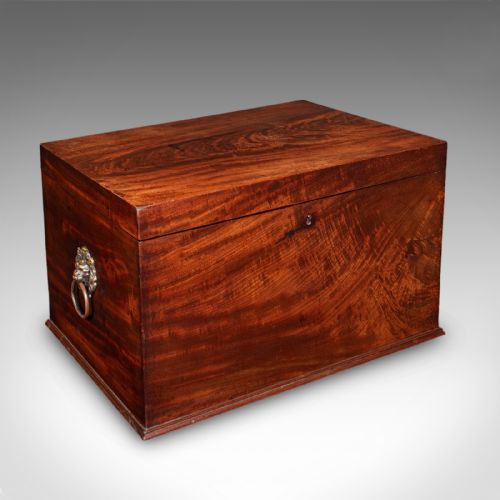
Makers and cabinet-makers built these receptacles in various shapes, including octagonal, box, and sarcophagus forms, often lined with zinc or fitted for internal bottle division. Alongside traditional chests, listings show occasional variants like metamorphic tables, plate buckets, and large blown glass liquid jars originating from the eighteenth and nineteenth centuries.
The materials and styles span multiple eras, encompassing George III, Regency, William IV, and Victorian periods, with occasional twentieth-century Edwardian examples. Buyers encounter pieces utilising brass handles, boxwood inlay, ebonised wood, and pollard oak, reflecting the practical needs of period dining rooms.
Judging quality
Quality rests in the choice of timber, such as highly figured flame mahogany or burr elm, and the precision of the cabinet-maker's joinery. Superior examples display crisp moulding, well-fitted boxwood inlay, and original brass hardware rather than later replacements.
The presence of original internal fittings, such as zinc linings or bottle dividers, elevates a piece significantly compared to those emptied or altered over time. Finer execution is also evident in the patination of the wood and the architectural proportions of sarcophagus or octagonal forms.
Listings feature mahogany predominantly, alongside alternative woods like rosewood, pollard oak, burr elm, and ebonised wood.
Gillows of Lancaster and London·Gillingtons·Whytock and Reid
The Georgian Wine Storage Glossary
- Cellarette
- A lockable container or box used to store wine bottles near the dining table. They frequently sit on low legs or directly on the floor and may include internal compartments.
- Sarcophagus Form
- A tapered, heavy-lidded shape resembling an ancient stone coffin, popular for Regency and George III wine containers. This style allowed makers to display grand proportions and rich timber veneers.
- Flame Mahogany
- A wood veneer cut from the fork of a mahogany tree to produce a flickering, symmetrical flame pattern. It was favoured by cabinet-makers for high-status principal surfaces.
- Pollard Oak
- Timber taken from pollarded oak trees, producing a dense, knotty grain with rich figuring. It appears on select Regency and George IV storage pieces.
Georgian Wine Storage: Frequently Asked Questions
What is a cellarette?
A cellarette is a dedicated timber box or chest designed to hold wine bottles safely within a dining room. They were kept close to the dining table for convenience during long meals.
Most period examples feature internal divisions to keep bottles separated and secure. Some versions also include metal linings to hold ice and water for chilling.
How were wine coolers used?
Wine coolers were utilised during formal dinners to keep bottles at the correct temperature before serving. Servants would load them with ice and water alongside the wine bottles.
Unlike modern refrigerators, these relied on mass and insulation to maintain temperature. They stood on the floor near the host or sideboard for easy access.
How do I identify a George III piece?
George III pieces typically display restrained classical proportions, solid mahogany construction, and understated brass fittings. Octagonal forms and brass ring handles are common hallmarks of this era.
Cabinet-makers of the eighteenth century focused on architectural lines and timber quality rather than heavy carving. Look for hand-cut dovetailing and period locks inside the lid.
Can I use these for modern bottles?
Many period cellarettes and coolers accommodate standard wine bottles within their internal wooden dividers. However, some older compartments are sized for historical bottle shapes and may require checking.
Buyers often utilise them as general storage chests or fireside log boxes if modern bottle dimensions do not fit the layout. Their sturdy construction handles heavy everyday items easily.