


Georgian Walnut Writing Bureau
A georgian walnut writing bureau brings warmth and practicality into a room through figured timber and a fitted drop-front desk.
Georgian Walnut Writing Bureau
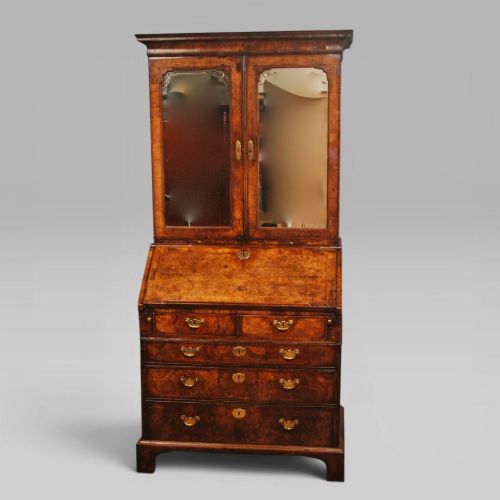
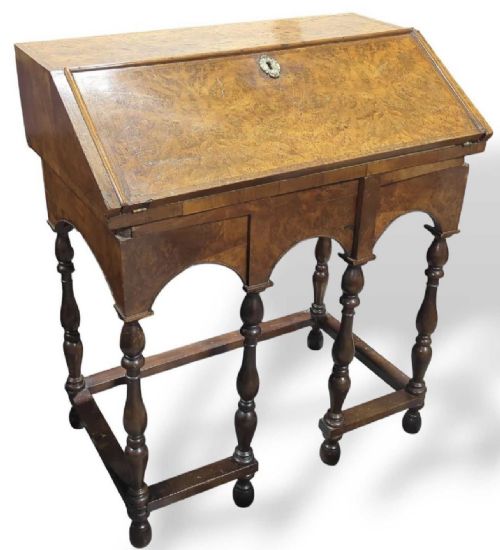
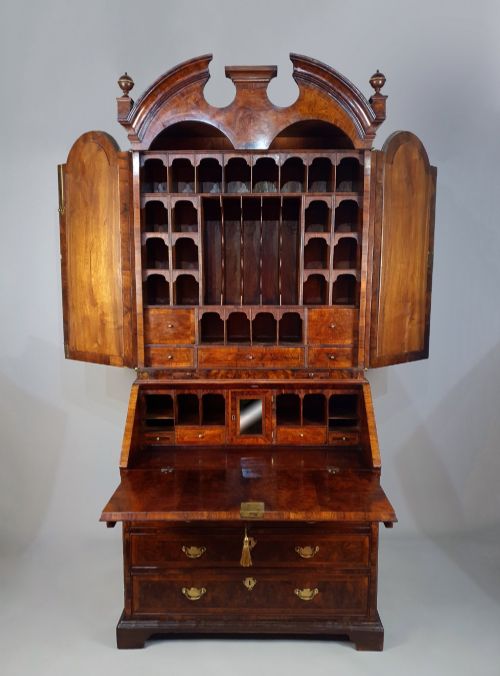
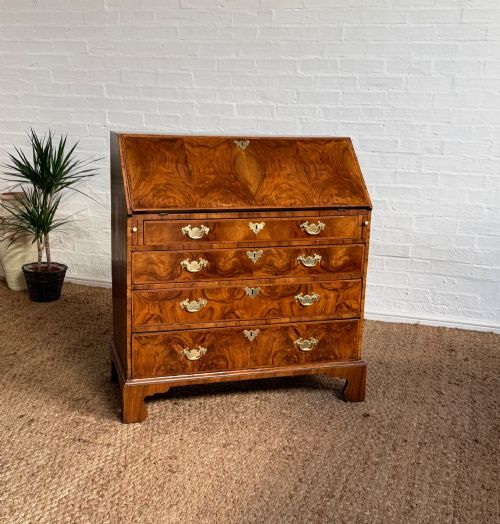
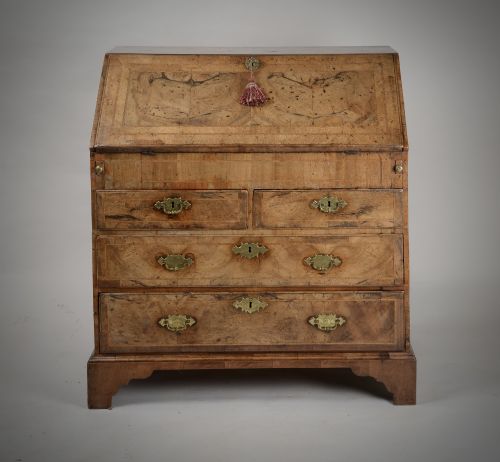
A georgian walnut writing bureau primarily takes the form of a fall-front desk that conceals pigeonholes and small drawers inside. Buyers encounter these pieces spanning the seventeenth century through the georgian periods, alongside later revival examples.
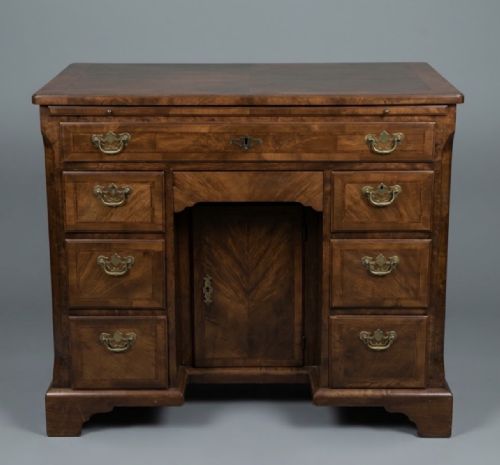
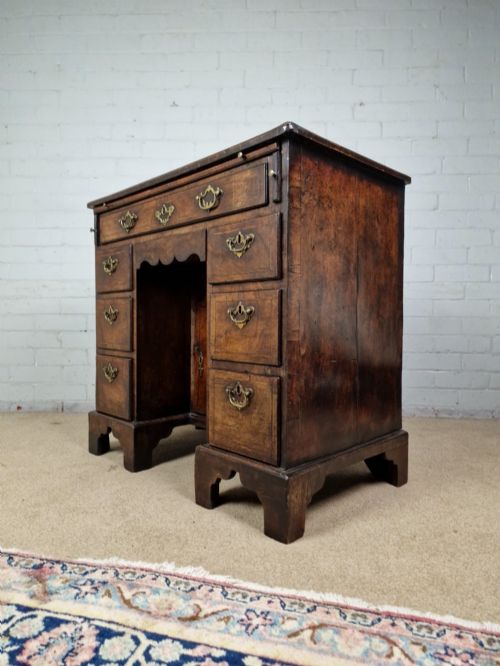
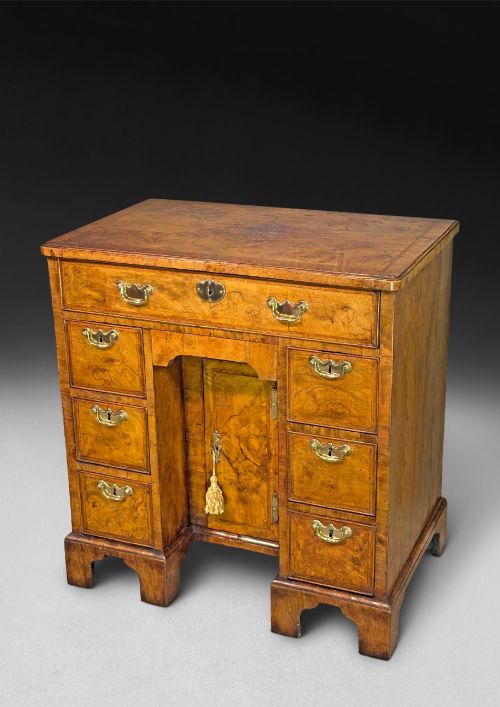
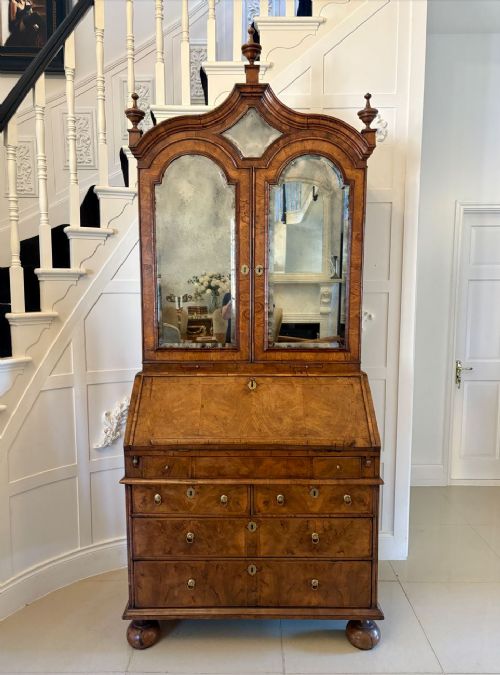
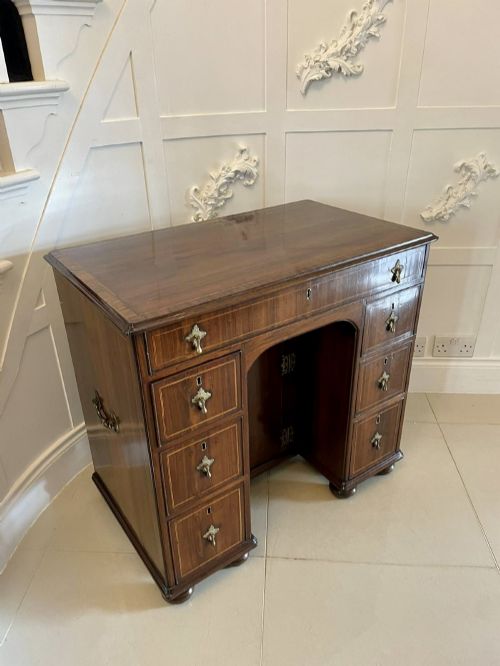
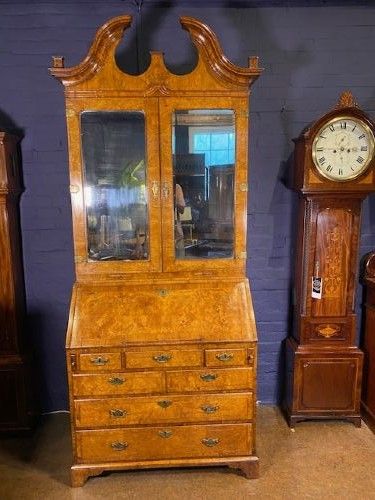
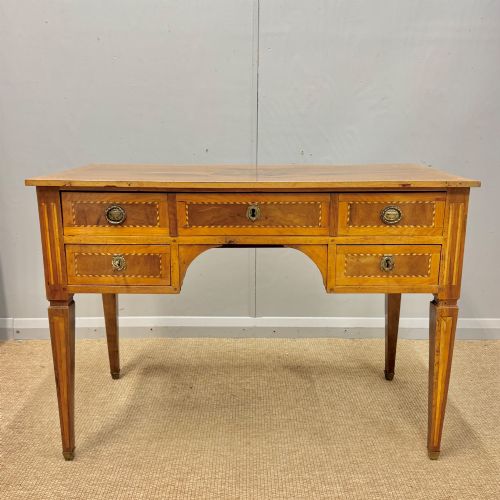
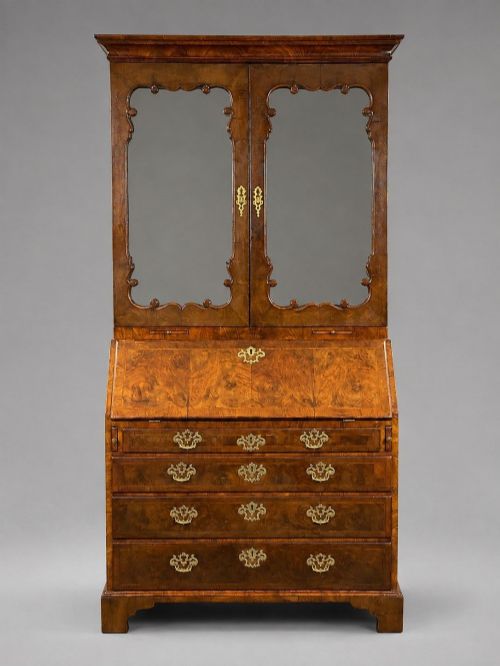
The selection extends to bureau bookcases with glazed upper sections, kneehole desks, and escritoires. Walnut and burr walnut dominate the construction across these varied desk forms.
Origins stretch across eighteenth century English workshops, with occasional Dutch baroque influences and later twentieth century interpretations appearing in the records.
Materials and Technique
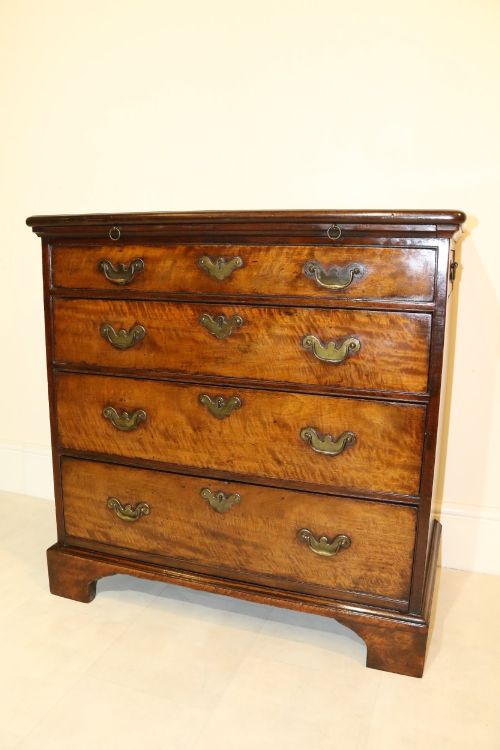
Cabinetmakers utilised solid walnut and burr walnut veneers applied to secondary woods like oak, often enriched by herringbone inlay and featherbanding. Brass handles, escutcheons, and hinges secure the drawers and fall-fronts.
Writing surfaces frequently integrate inserted red or green leather panels. Mirror glass occasionally appears within the upper doors of bureau bookcases.
Listings feature walnut, burr walnut veneer, oak, brass, and leather across pieces dating from the seventeenth to the twentieth century.
Craft and Proportion
Quality rests upon the selection of figured timber and the precision of the veneer work across the fall-front and drawers. Figured walnut and burr walnut grain patterns dictate the visual weight of the exterior.
Interior configuration and small proportions distinguish finer examples from standard bureau desks. The integration of candle slides, fitted compartments, and original brass hardware completes the construction.
maples of london
The Georgian Walnut Writing Bureau Glossary
- Bureau
- A writing desk featuring a sloping hinged lid that drops down to form a writing surface above drawers. This term covers standard fall-front models found throughout the georgian period.
- Escritoire
- A writing cabinet or bureau, often tall in proportion and enclosed by a fall-front or doors. These pieces date back to the seventeenth and early eighteenth centuries.
- Featherbanding
- A decorative inlay technique using small strips of veneer arranged in a herringbone V-shape pattern around drawer perimeters. It frames the burr walnut surfaces on better pieces.
- Kneehole desk
- A compact desk with a central recess for the knees, flanked by small drawers on both sides. These frequently incorporate walnut veneers and brass hardware.
- Burr walnut
- Wood taken from a walnut tree growth or burl, yielding a swirling, highly figured grain pattern. Cabinetmakers prized this material for principal exterior surfaces.
Georgian Walnut Writing Bureau: Frequently Asked Questions
What is inside a bureau?
A fitted interior typically contains small pigeonholes, concealed compartments, and tiny drawers arranged around a central locked cupboard.
These compartments held letters, inkwells, and private documents during daily use.
How do I use a bureau?
The hinged writing flap drops down toward the user to create a flat leather-lined or wood surface for writing letters.
When writing concludes, the fall-front lifts back up to secure the interior contents out of sight.
Where does burr walnut come from?
Burr walnut originates from abnormal tree growths that produce complex, knotted grain patterns rather than straight lines.
Cabinetmakers sliced these burls into thin veneers to cover larger drawer fronts and surfaces.
Are all these desks georgian?
The selection includes authentic eighteenth century pieces alongside seventeenth century examples and later nineteenth and twentieth century revivals.
Listing titles note specific periods ranging from the seventeen hundreds through to nineteen thirty.