

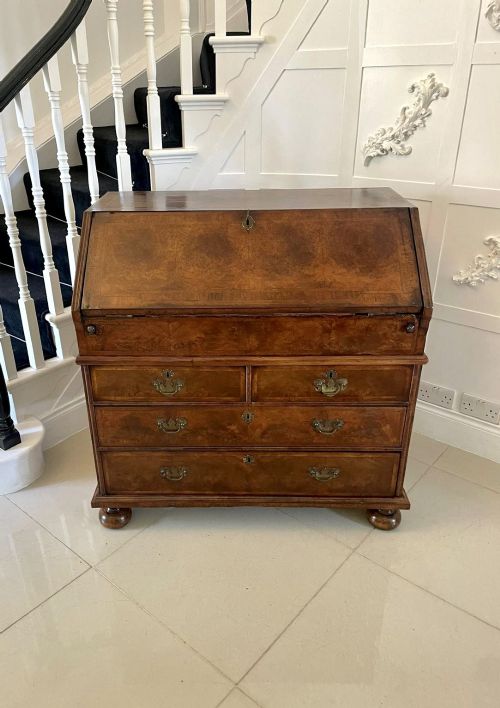
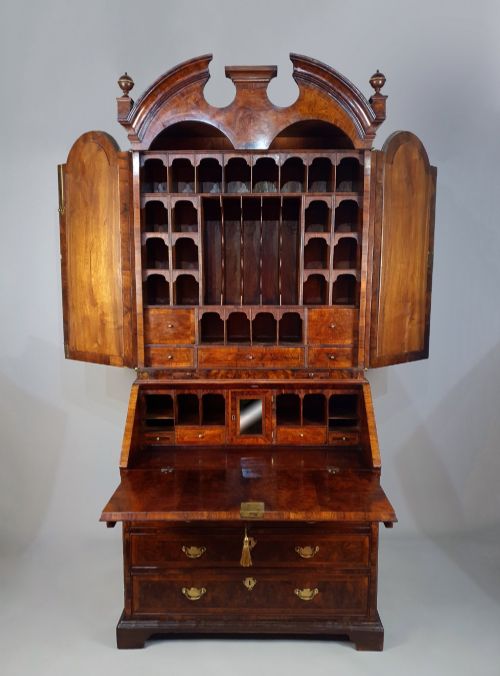
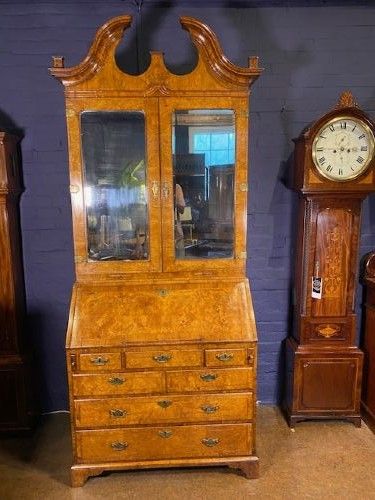
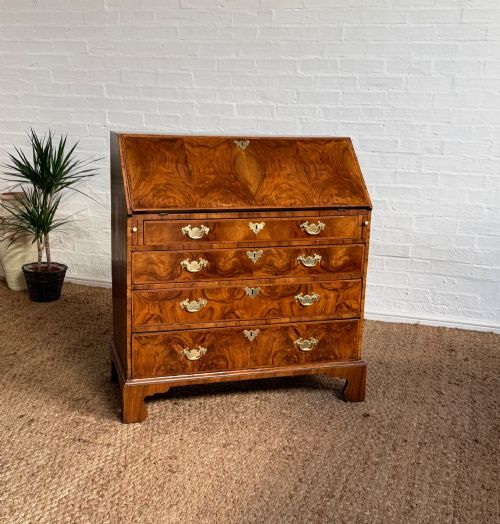
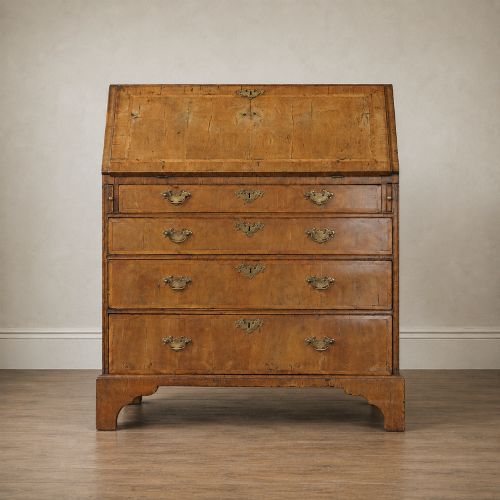
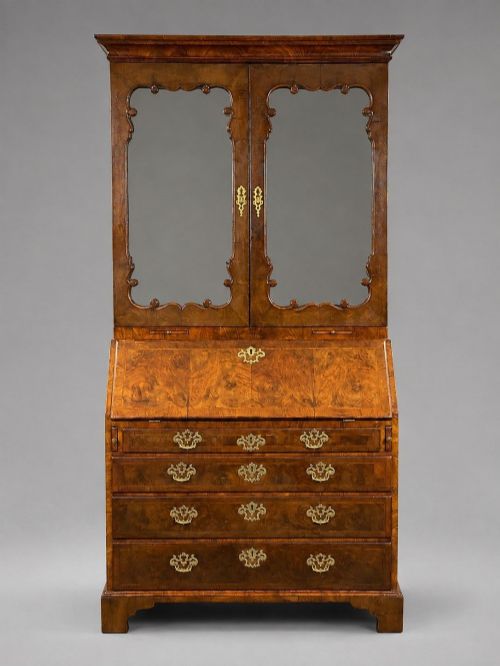
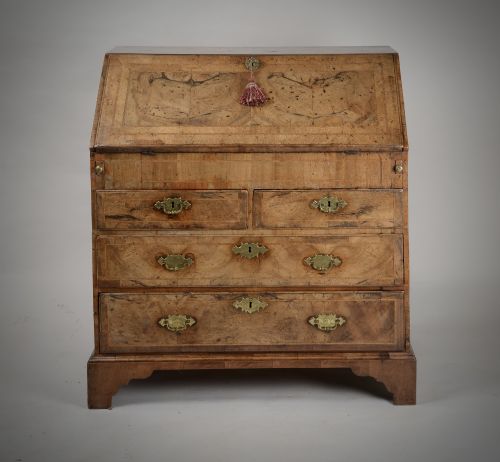
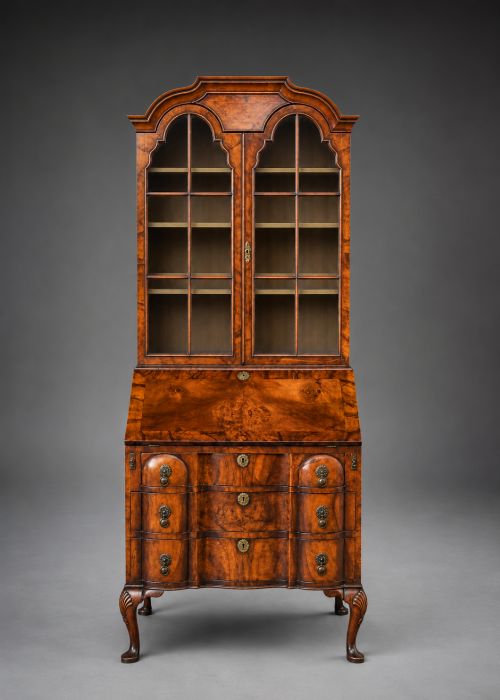
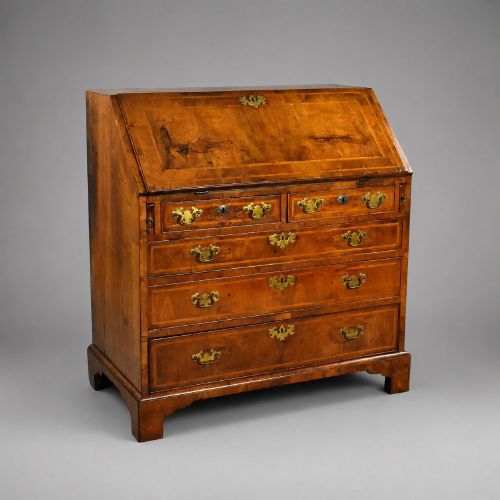
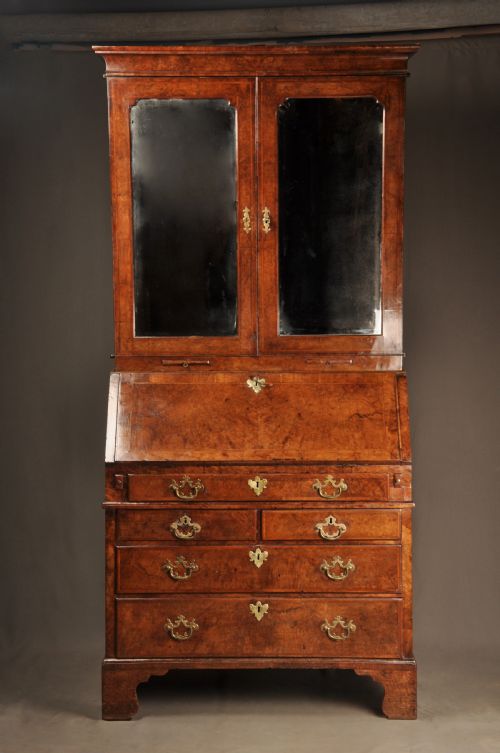
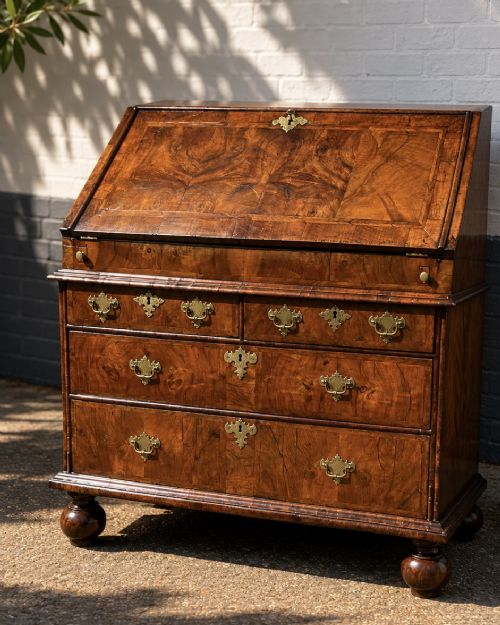
Georgian Walnut Slant Front Desk
A georgian walnut slant front desk offers rich timber figure and a fitted writing interior that suits daily study.
Georgian Walnut Slant Front Desk
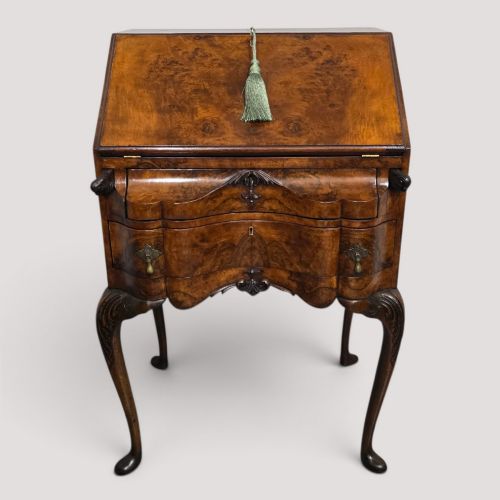
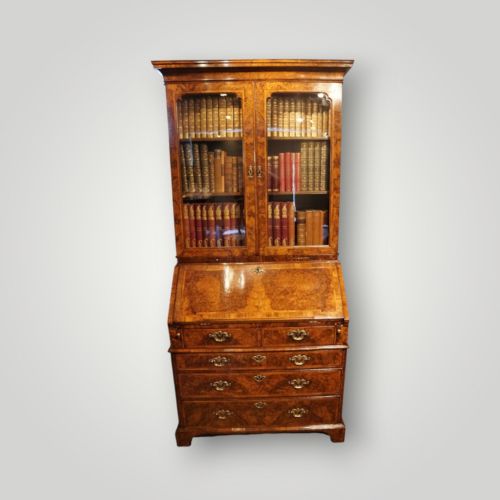
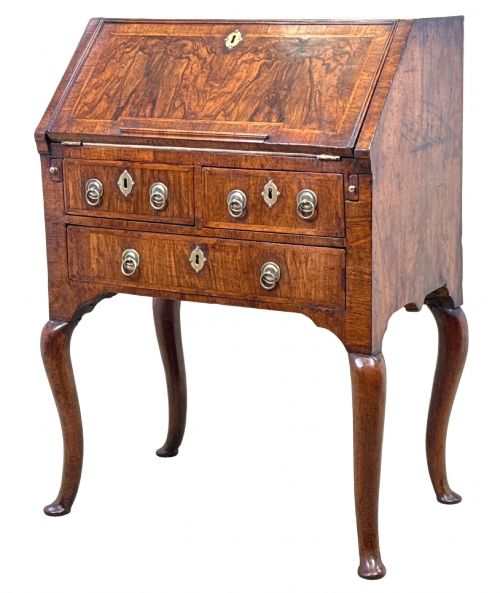
A georgian walnut slant front desk typically combines a fall front writing flap with internal pigeonholes and drawers, appearing across the Georgian period alongside earlier Queen Anne and William and Mary styles. These pieces range from compact single bodies on legs or stands to substantial two-part bureau bookcases featuring glazed upper sections.
Makers built these writing cabinets in walnut, burr walnut, and figured veneers, often incorporating oak for secondary carcase timbers. While the majority date from the eighteenth century, later revivals from the Edwardian era and the early twentieth century also surface in these forms.
Materials and Technique
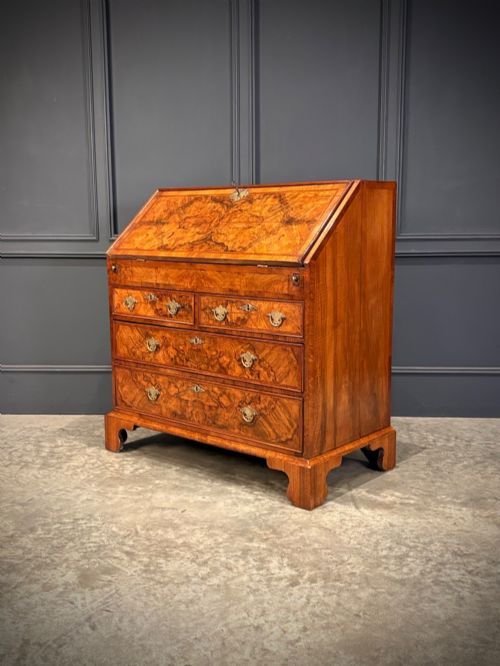
Cabinetmakers utilised figured walnut and burr walnut veneers applied over oak or pine carcases, creating intricate grain patterns across the fall front and drawer fronts. Herringbone banding and cross-banding frequently border these veneered surfaces to frame the rich timber figure.
Internal fittings rely on solid walnut and secondary woods for small drawers, secret compartments, and pigeonholes, while brass handles, escutcheons, and ironwork secure the doors and drawers.
Many of these desks conceal hidden secret drawers behind the pigeonholes, designed for private letters and small valuables.
Judging Quality
The distinction between tiers rests upon the choice of veneer and the retention of original surface patination. Pieces that display matching burr walnut figures across the entire fall front and fall within proportion command greater regard.
The integrity of the interior configuration, including original brass hardware, fitted document drawers, and candle slides on bureau bookcases, dictates the standing of an example.
The Georgian Walnut Slant Front Desk Glossary
- Slant front desk
- A desk featuring an angled hinged flap that drops forward to create a writing surface. This form conceals an interior arrangement of small drawers and pigeonholes.
- Burr walnut
- Timber taken from a tree growth or burl, yielding swirling, knotty grain patterns. Cabinetmakers prized this veneer for principal decorative surfaces.
- Bureau bookcase
- A dual-component cabinet combining a slant front writing desk base with an upper shelving or display section enclosed by doors. Glazed panels frequently front the top portion.
- Herringbone inlay
- A decorative border created by small strips of veneer laid in alternating diagonal directions to form a zigzag pattern. It frames drawer fronts and writing flaps.
- Fall front
- The hinged writing flap on a bureau that drops down into a horizontal position for use. It typically rests upon lopers or support arms when opened.
Georgian Walnut Slant Front Desk: Frequently Asked Questions
How do I use a slant front desk?
The hinged flap pulls down to rest horizontally on wooden support arms, revealing an internal arrangement of small drawers, pigeonholes, and central compartments for correspondence.
When writing is finished, the flap lifts back to a vertical position and locks, concealing papers and writing materials behind the burr walnut exterior.
What is the difference between walnut and burr walnut?
Standard walnut timber provides a straight, rich brown grain used for structural carcases and solid elements. Burr walnut utilises knotted growth timber cut into thin sheets of veneer to create dramatic, swirling patterns.
Cabinetmakers reserved burr walnut veneer for prominent display surfaces such as desk falls and drawer fronts.
How do I tell an 18th-century piece from a later revival?
Eighteenth-century examples display construction methods such as hand-cut dovetails, oak secondary timbers, and surface patination developed through centuries of use. Later Edwardian or twentieth-century revivals often utilise machine-cut elements and modern adhesives.
Examining the drawer linings and internal timber ageing helps clarify the period of manufacture.