





Georgian Walnut Secretaire
These georgian walnut secretaire pieces are refined writing cabinets and chests, offering concealed drawers and drop-front desks for discreet correspondence.
Georgian Walnut Secretaire
A georgian walnut secretaire is a practical writing cabinet designed to conceal correspondence and valuables behind a drop-front desk or fitted drawer. These pieces span the eighteenth century, encompassing reigns from Queen Anne through to George III.
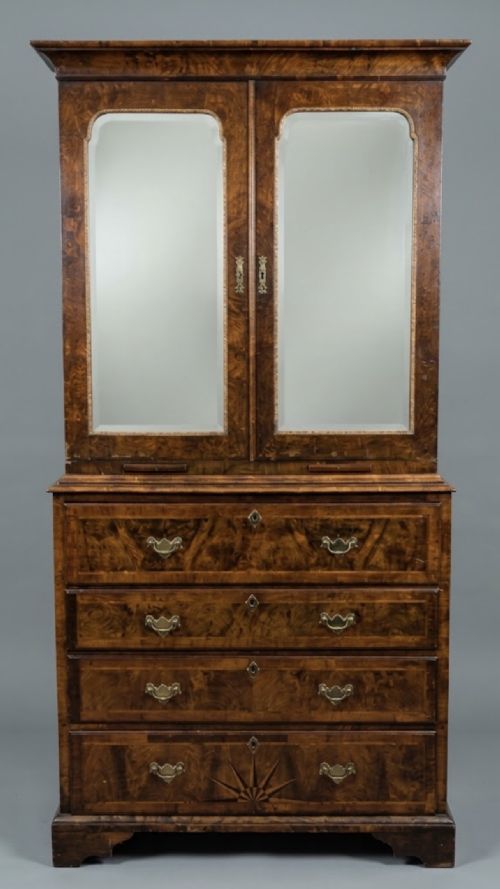
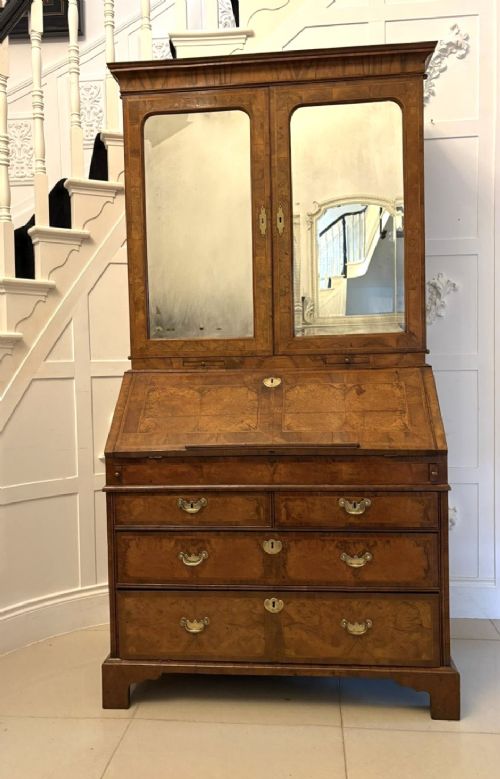
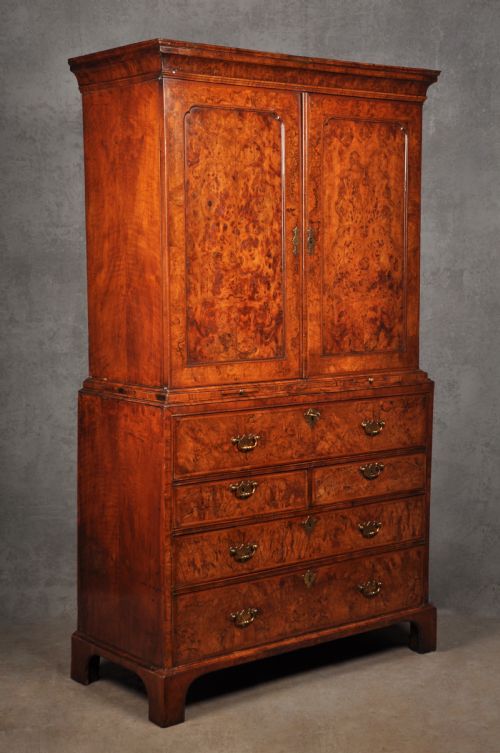
The selections available here range from tall chests on chests and bureau bookcases to compact kneehole desks and escritoires. Bureau bookcases and secretaire cabinets dominate the forms, offering upper display or storage space above the writing surface.
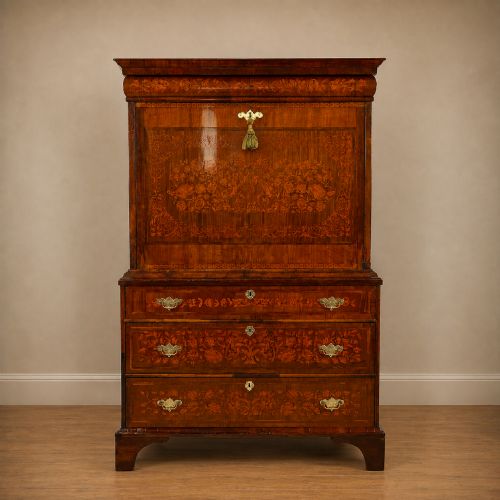
Early examples frequently display the rich grain of burr walnut, while later pieces incorporate marquetry inlay or satinwood details. Oak and brass commonly furnish the internal drawer linings and structural hardware.
Materials and construction
Makers utilised solid walnut and figured veneers laid over secondary timbers such as oak, creating stable surfaces with rich decorative grain patterns. Burr walnut veneer provided highly patterned panels for drawer fronts and fall-front desks.
Brass handles, escutcheons, and hinges secure the cabinetry and drawers, while internal fitments often include baize or leather writing surfaces. Marquetry inlay appears on select floral decorated pieces, utilising contrasting woods to form intricate patterns.
Georgian Walnut Secretaire Retail Price Guide 2026
Typical asking prices for georgian walnut secretaire among the pieces listed under this phrase on Sellingantiques today, from the lower quarter to the upper quarter. They describe what is for sale here now, not the wider market.
Listings span the eighteenth century, featuring styles from Queen Anne to George III constructed in walnut, oak, and brass.
Assessing quality
Quality rests upon the choice of timber and the dexterity of the veneer work, particularly where burr walnut figures are matched symmetrically across drawer fronts. Superior examples maintain crisp proportions, such as small-scale chests on chests or kneehole desks with well-preserved bracket feet.
The complexity of the interior fitment dictates distinction, separating simple drop-front desks from elaborate bureau bookcases with fitted pigeonholes, secret compartments, and glazed upper doors. Original brass hardware and undisturbed secondary timbers like oak also elevate a piece.
The Georgian Walnut Secretaire Glossary
- Secretaire
- A cabinet or chest incorporating a writing drawer with a drop front that conceals small pigeonholes and drawers.
- Escritoire
- An alternative term for a writing cabinet or bureau, frequently used interchangeably with secretaire in eighteenth-century pieces.
- Burr walnut
- A prized wood veneer harvested from the warted growths on walnut trees, yielding highly ornamental swirling grain patterns.
- Chest on chest
- A tall case furniture form consisting of a lower chest of drawers positioned beneath a slightly smaller upper chest.
- Kneehole desk
- A compact desk featuring a central recess for the sitter's legs, flanked by pedestals of small drawers.
- Marquetry inlay
- Decorative patterns formed by fitting contrasting pieces of wood veneer into a prepared wooden surface.
Georgian Walnut Secretaire: Frequently Asked Questions
What is a secretaire cabinet?
A secretaire cabinet is a piece of furniture designed for writing and storage, featuring a hinged drawer front that folds down to reveal a fitted interior.
Inside, makers arranged small compartments and secret drawers for letters and valuables, keeping them hidden when the main desk flap was closed.
How do I tell George I from George III walnut furniture?
George I pieces often display rich burr walnut veneers, herringbone banding, and compact proportions typical of the early eighteenth century.
By the reign of George III, cabinetmakers shifted towards different styles and occasional use of satinwood or floral marquetry alongside walnut.
Where should I place a secretaire in my home?
These cabinets suit studies, living rooms, or hallways where their compact footprint and enclosed writing surfaces provide both decoration and utility.
Keep them away from direct sunlight and strong heat sources to protect the delicate walnut veneers from drying and cracking.
What are bureau bookcases?
Bureau bookcases combine a lower writing cabinet with an upper section enclosed by doors, traditionally glazed for the display of books.
They offer extensive vertical storage while maintaining a dedicated writing surface that conceals everyday paperwork behind closed doors.