
Georgian Walnut Cupboard
A georgian walnut cupboard brings rich grain and understated proportion to any room, and this selection ranges from corner pieces to bedside cabinets.
Georgian Walnut Cupboard
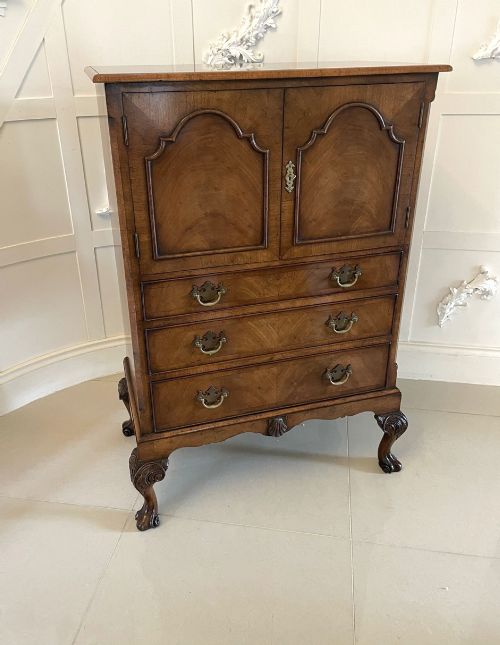
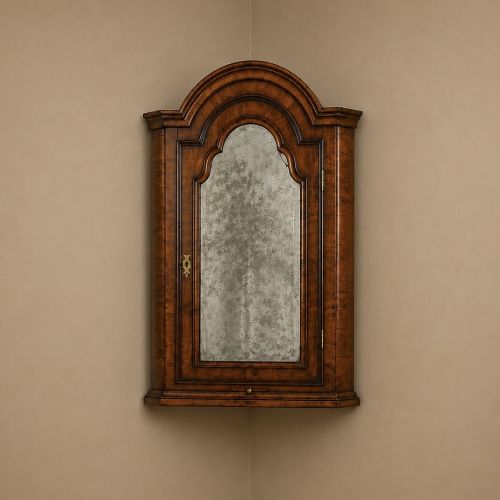
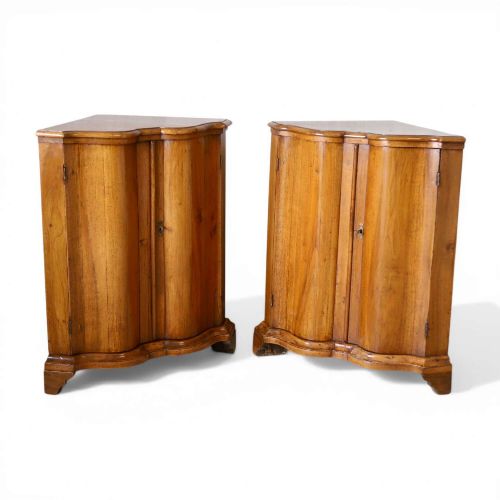
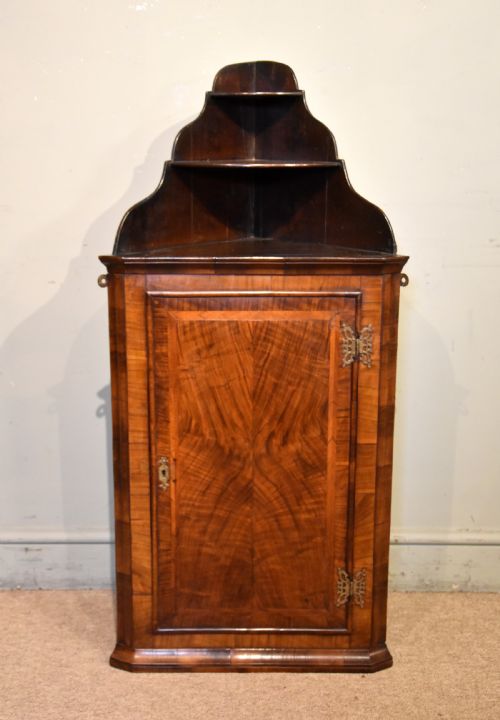
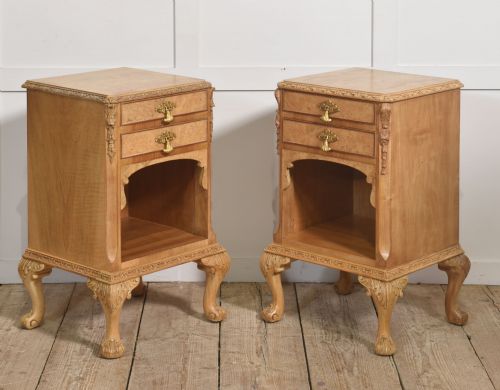
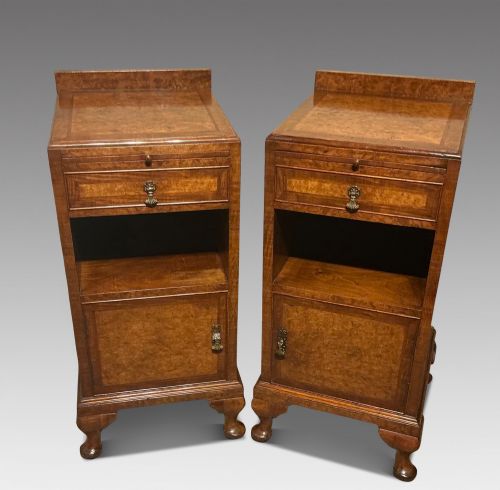
A georgian walnut cupboard encompasses a variety of storage furniture, most frequently seen on this page as hanging corner cupboards, bedside cabinets, and corner units. These pieces originate from distinct eras, spanning 18th Century production as well as later revival periods in the 19th and early 20th centuries.
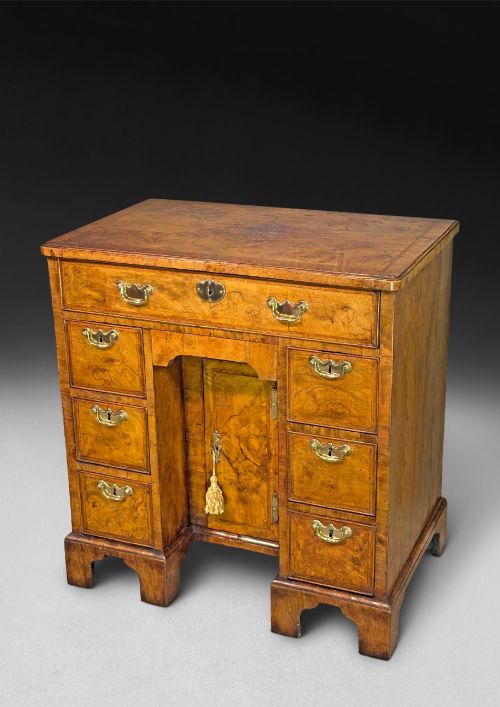
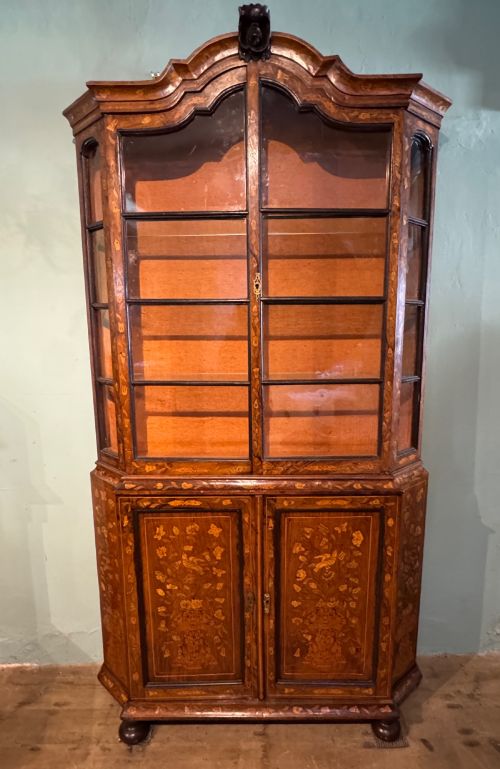
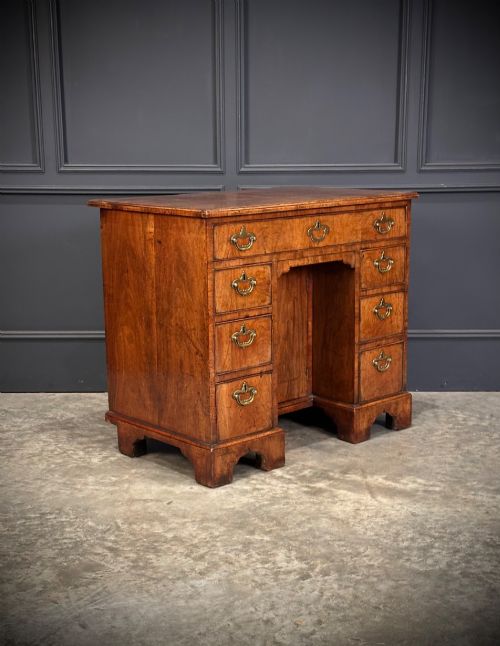
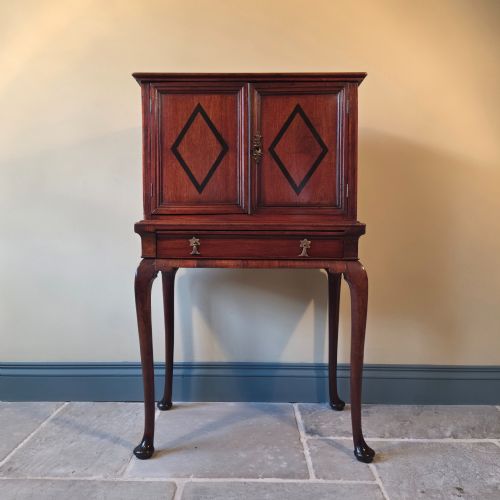
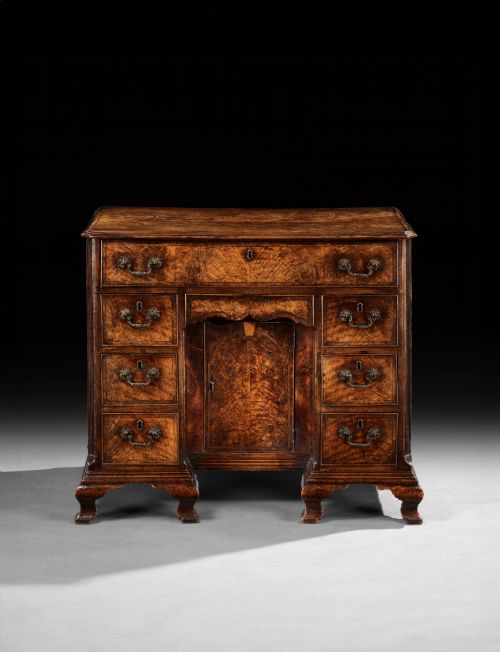
Buyers encounter numerous configurations, including floor-standing corner cupboards, side cabinets, and sophisticated kneehole desks that incorporate cupboard space. The selection includes both English regional examples and continental pieces such as Dutch marquetry and Italian walnut work.
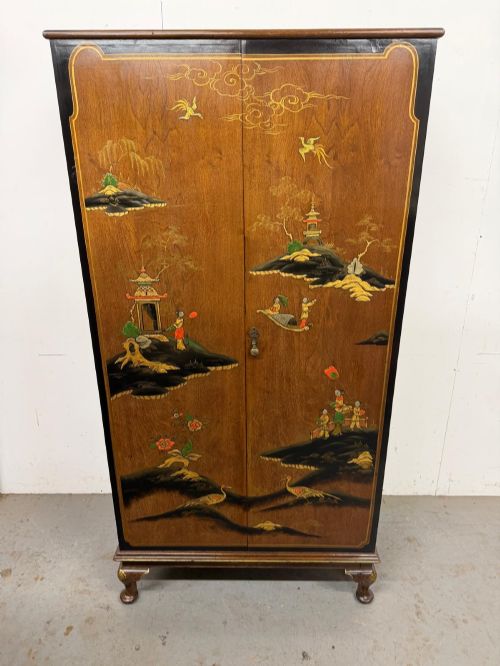
The assortment balances practical domestic storage with decorative presence, offering items designed to fit room corners or stand flat against walls. Craftsmanship ranges from authentic period construction to revival pieces produced in the decades following the Georgian era.
How they were made
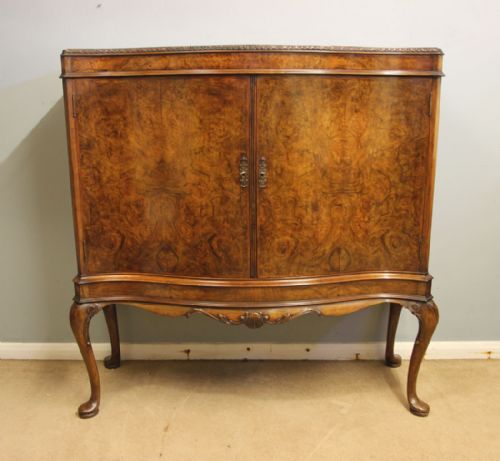
Cabinet makers utilised solid walnut alongside burr walnut veneer, figural veneers, and fiddleback walnut to create highly decorative exterior surfaces. Secondary timbers such as oak and fruitwood provided structural stability for carcases, drawer linings, and internal shelving.
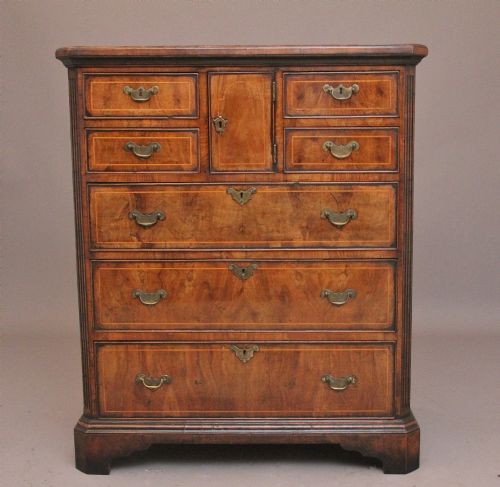
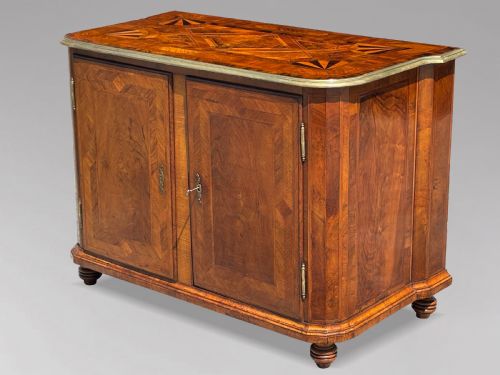
Construction techniques frequently involved crossbanding to frame panels and doors, alongside marquetry inlay for ornamental detail on continental examples. Metalwork hardware, including brass hinges, locks, and handles, was integrated to secure doors and drawers while adding functional contrast to the timber.
A tiny George II style figured chest stands just twenty centimetres high, proving grandeur needs very little floor space.
What varies in quality
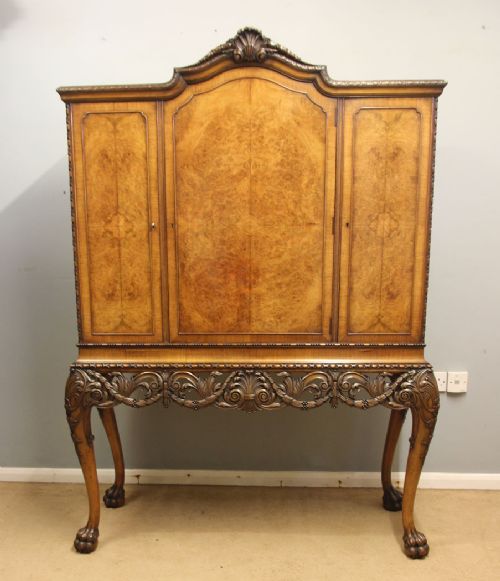
The refinement of the timber selection dictates much of the visual appeal, distinguishing standard walnut surfaces from highly figured burr or fiddleback veneers. Superior grain alignment and balanced matching across door panels demonstrate the maker's skill and ambition.
Construction integrity is evident in the survival of original components, such as brass hinges, locks, and internal elements like candle slides or mirror glass. The crispness of carved details, crossbanding precision, and the patination developed over centuries separate exceptional pieces from simpler utilitarian items.
Maple & Co.
The Georgian Walnut Cupboard Glossary
- Burr walnut
- A prized timber harvested from tree growths, yielding highly swirled, mottled grain patterns used for decorative veneer.
- Kneehole desk
- A compact desk featuring a recessed central space for the knees, flanked by pedestals of small drawers and cupboards.
- Crossbanding
- A narrow strip of veneer laid perpendicularly to the surrounding grain around the edge of a panel or drawer front.
- Marquetry
- Elaborate decorative inlay using various tinted woods and other materials to form pictorial or geometric patterns.
- Astragal glazed
- A glass-fronted door divided into smaller panes by narrow wooden mouldings known as glazing bars.
Georgian Walnut Cupboard: Frequently Asked Questions
Where should I place a corner cupboard?
Hanging and floor-standing corner cupboards utilise awkward room junctions efficiently while adding architectural interest.
They sit comfortably in dining rooms, living spaces, or hallways, drawing the eye to fitted shelving and glazed display areas.
How do I care for walnut furniture?
Maintain walnut surfaces by keeping them away from direct sunlight and sudden temperature shifts that dry the timber.
Apply a traditional beeswax polish occasionally to nourish the grain and preserve the natural sheen of the wood.
What is a kneehole desk?
A kneehole desk is a formal writing table designed with a central recess for seating, flanked by stacks of small drawers.
Many examples incorporate a cupboard concealed behind the kneehole space, offering discreet storage for papers and personal items.
Are revival pieces well made?
Revival items from the early 20th century often mirror the proportions and decorative veneers of 18th-century originals.
Cabinet makers during these later periods employed traditional joinery techniques, resulting in robust and visually appealing storage furniture.