


Georgian Walnut Corner Cupboard
A georgian walnut corner cupboard is a clever architectural storage piece designed to fit tight spaces while bringing rich timber grain into a room.
Georgian Walnut Corner Cupboard
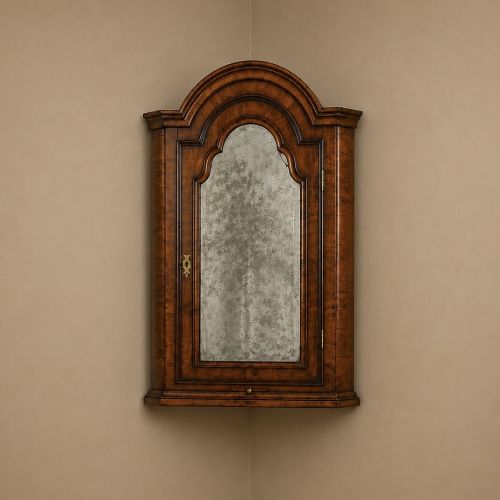
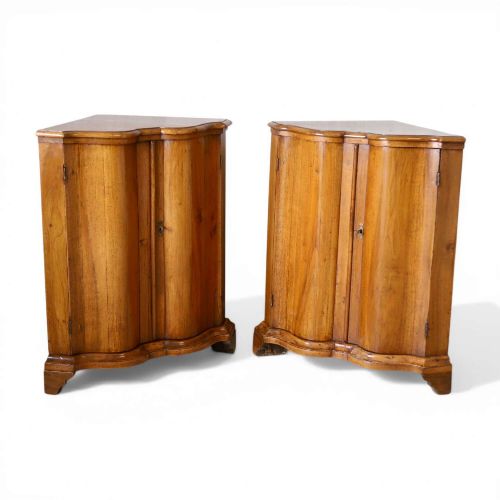
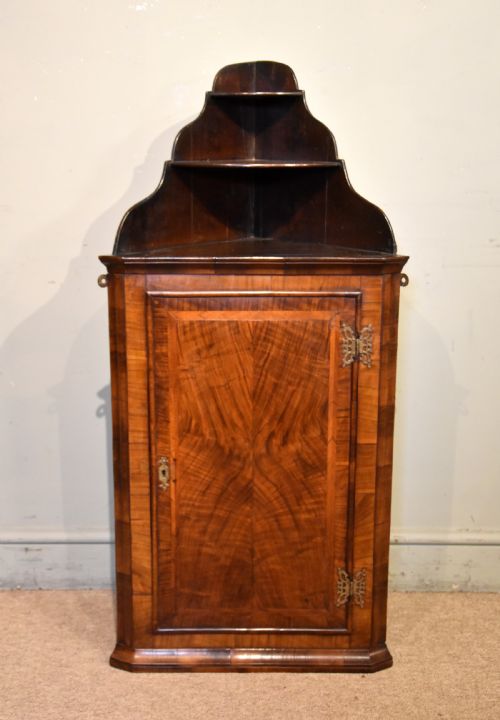
A georgian walnut corner cupboard is a space-saving cabinet built to occupy the meeting point of two walls in a room. The selection spans wall-hanging models, floor-standing units, and taller two-part display cabinets that house books or ceramics.
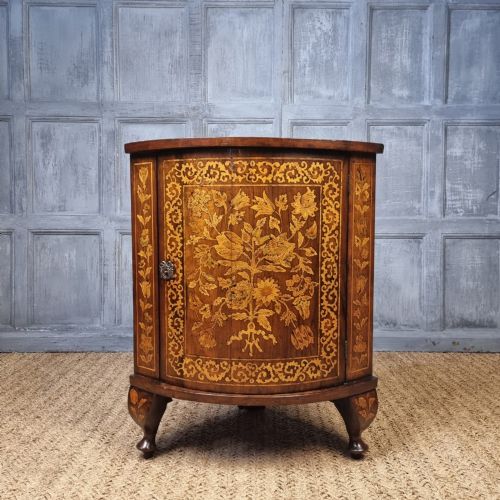
Most examples rely on figured timbers, with burr walnut and red walnut appearing frequently across the selection. Makers structured these pieces as single-door cupboards, double-door formats, or bow-fronted designs tailored for domestic interiors.
How they were made
Cabinet makers utilised solid walnut, burr walnut veneers, and secondary timbers like oak and fruitwood to construct carcases that endured decades of daily use. Exterior surfaces often incorporate marquetry, inlay wood, and brass hardware such as hinges and locks.
Glazing bars divided glass panes in display variants, while specialised mechanisms like candle slides and tambour shutters integrated practical workspace into the compact footprint.
Georgian Walnut Corner Cupboard Retail Price Guide 2026
Typical asking prices for georgian walnut corner cupboard among the pieces listed under this phrase on Sellingantiques today, from the lower quarter to the upper quarter. They describe what is for sale here now, not the wider market.
The listings span the eighteenth, nineteenth, and early twentieth centuries, incorporating walnut, oak, fruitwood, brass, and glass.
What varies in quality
The sophistication of the timber veneer work defines the upper tiers of the range, particularly where symmetrical burr walnut figures or intricate marquetry span the door panels. Cabinets retaining original glass, brass fittings, and working locks command stronger visual integrity.
Construction methods also distinguish output, ranging from straightforward provincial work to refined pieces featuring crossbanding, ovoid and diamond interlaced glazing, and well-balanced proportions.
The Georgian Walnut Corner Cupboard Glossary
- Burr walnut
- A figured wood grain obtained from tree growths, prized for its swirling patterns and used extensively on cabinet doors.
- Marquetry
- Decorative patterns formed by fitting together thin veneers of various woods on a surface.
- Crossbanding
- A narrow strip of veneer applied around the border of a panel, running perpendicular to the grain of the main surface.
- Tambour
- A flexible shutter made of narrow strips of wood glued to canvas, allowing curved cabinet doors to slide open smoothly.
- Glazing bar
- A wooden strip holding panes of glass within a sash door or display cabinet.
Georgian Walnut Corner Cupboard: Frequently Asked Questions
Where should I hang a wall cabinet?
These wall-mounted cupboards suit empty corners in dining rooms, hallways, or studies where floor space is limited. They anchor nicely above a small side table or stand alone at eye level.
Ensure the wall construction supports the weight of solid timber and glass before installation, keeping the unit away from direct heat sources that dry out old wood.
How do I clean walnut surfaces?
Dust the timber gently with a dry, soft cloth to remove everyday particles. Avoid using modern silicone polishes that build up and dull the historic finish.
Feed the dry wood occasionally with traditional beeswax applied sparingly, buffing it gently to maintain the natural warmth of the walnut grain.
Can I store heavy items inside?
Most hanging models are designed for lighter decorative objects, books, or glassware rather than heavy dinner services. The interior shelves typically rest on fixed wooden supports.
Floor-standing and two-part cabinets handle heavier loads more securely, but distributing weight evenly prevents stress on old shelving and internal fittings.
How do I identify the period?
Look at the construction details, timber choices, and secondary woods like oak or fruitwood visible inside the carcase. Early pieces often feature hand-cut dovetails and original brass hardware.
Revival styles from later centuries mimic these forms using different construction signatures, so examine the backboards, hinges, and lock plates for clues to the true date.