

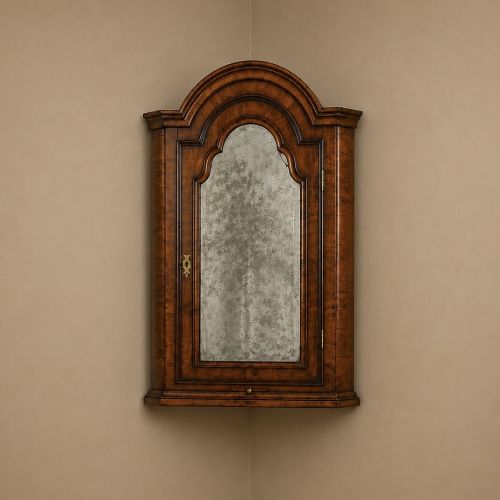
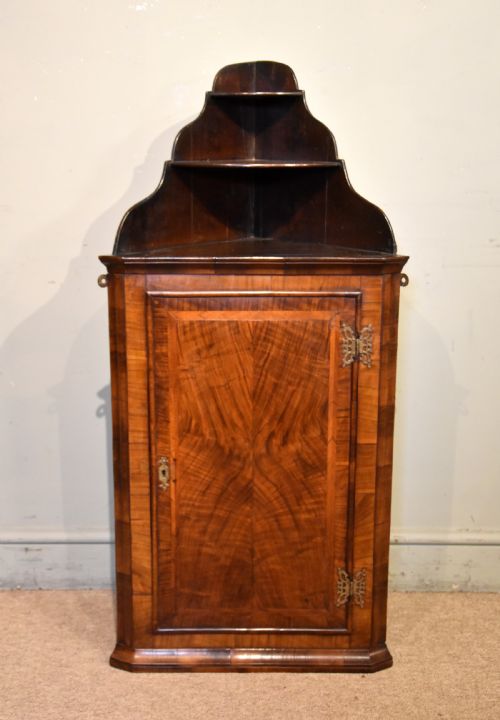
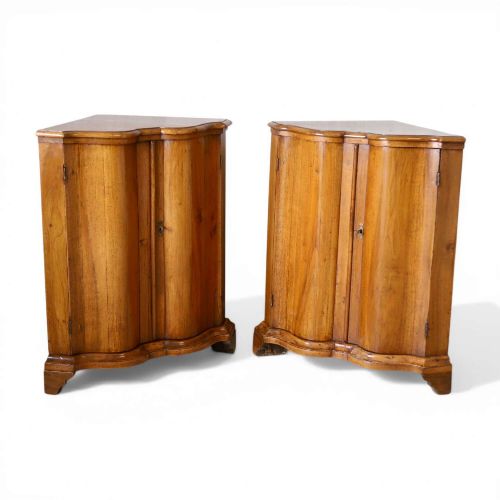
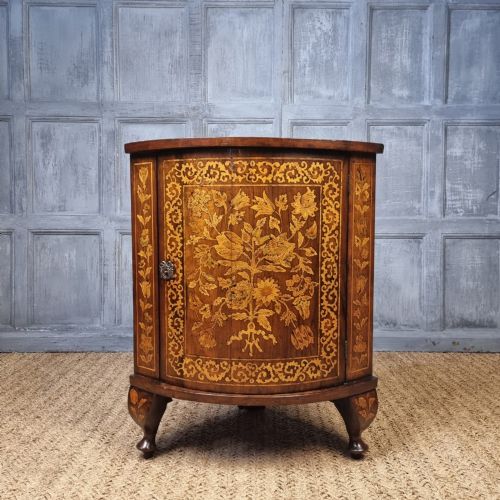


Georgian Walnut Corner Cabinet
A georgian walnut corner cabinet turns neglected room angles into functional display space with rich timber grain and period presence.
Georgian Walnut Corner Cabinet
These pieces are designed to fit snugly into the intersection of two walls, making efficient use of awkward room layouts. Most examples seen here date from the eighteenth century through to later revival periods, spanning hanging wall models, floor-standing tall cupboards, and two-part display units.
The version you are most likely to meet on this page is the single-door hanging wall cupboard or the taller floor-standing variant. They frequently display figured timber surfaces and traditional brass hardware, often housing shelving within for storage or glazed doors for display.
Assessing quality in walnut corner cupboards
Quality rests upon the choice of timber veneer and the crispness of any inlaid decoration. Highly figured burr walnut or intricate marquetry panels indicate superior craftsmanship compared to plain timber surfaces.
Structural integrity and originality dictate the standing of a piece. Original brasses, intact glass panes, and well-preserved timber patination elevate an example far above one with replaced elements or heavy restoration.
Georgian Walnut Corner Cabinet Retail Price Guide 2026
Typical asking prices for georgian walnut corner cabinet among the pieces listed under this phrase on Sellingantiques today, from the lower quarter to the upper quarter. They describe what is for sale here now, not the wider market.
Some eighteenth-century cupboards include hidden candle slides beneath the main door to illuminate the room during selection.
The Georgian Walnut Corner Cabinet Glossary
- Burr walnut
- A specialised timber cut from walnut tree growths, yielding highly swirled and mottled grain patterns. It was frequently used for decorative veneer on high-status furniture fronts.
- Astragal glazed
- A method of dividing a glass door into smaller panes using slender wooden mouldings called glazing bars. This technique is common on eighteenth-century display pieces.
- Marquetry
- The art of applying small pieces of veneer to form decorative patterns and pictorial designs. It appears on continental and English examples in floral or geometric motifs.
- Tambour
- A flexible shutter made from narrow strips of wood glued to canvas, allowing curved cabinet doors to slide open smoothly. It is found on specific geometric and Georgian storage units.
- Hanging corner cupboard
- A wall-mounted storage unit designed to be secured directly into a room corner. These pieces save floor space while providing eye-level display or enclosed shelving.
Georgian Walnut Corner Cabinet: Frequently Asked Questions
How do I hang a wall cabinet?
Wall-hanging models require secure fixing into solid masonry or direct wall studs using heavy-duty brackets suited to the weight of solid timber and glass.
Because these cupboards hold heavy contents, professional installation ensures the piece remains stable and safe against the wall.
Were these made for specific rooms?
These cabinets were historically placed in parlours, dining rooms, and hallways to store china, glassware, or valuables while utilising empty corners.
Their triangular footprint allowed homeowners to display prized possessions without obstructing household traffic flow.
How do I tell an 18th-century piece apart from a revival?
Early pieces display period construction techniques, hand-cut dovetails, and aged timber patination developed over centuries of use.
Revival items from later periods often show more uniform machine milling, standardised fixings, and cleaner secondary woods inside.
Do corner cabinets come in two parts?
Larger floor-standing versions are frequently built in two separate sections, featuring an upper display case resting on a lower cupboard base.
This bipartite construction made transport and placement in domestic interiors much simpler for historical makers and owners.