

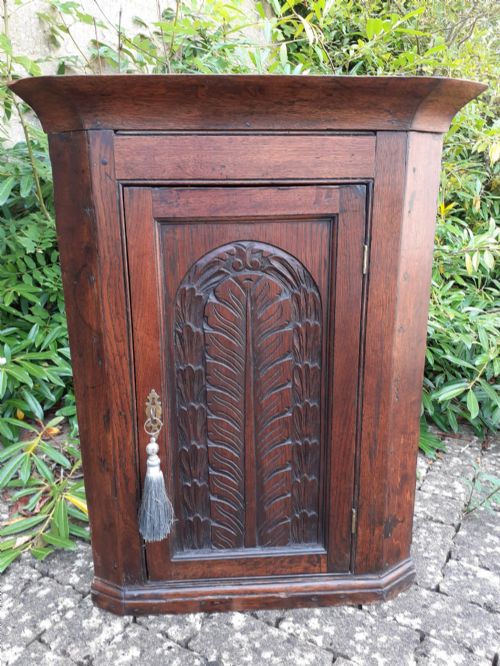
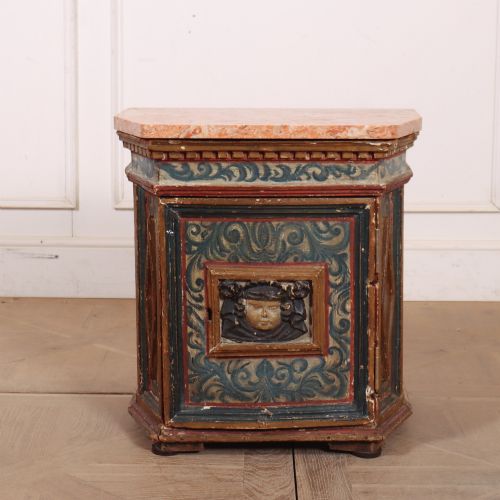


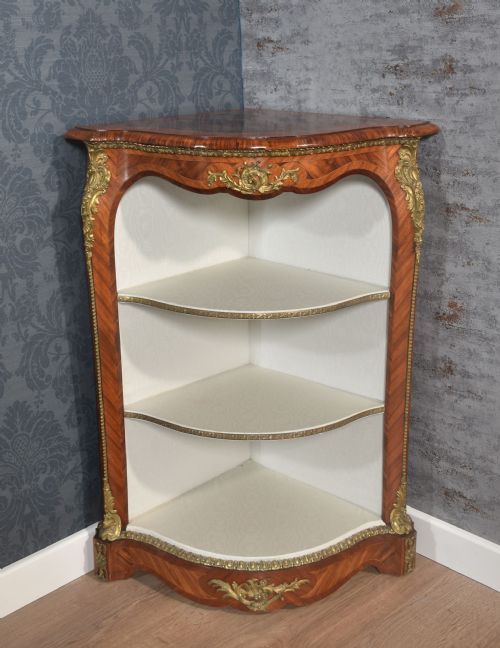


Carved Wooden Corner Cabinet
A carved wooden corner cabinet makes use of dead space while bringing rich texture and period character into a room.
Carved Wooden Corner Cabinet
A carved wooden corner cabinet is an architectural storage piece designed to fit neatly into the junction of two walls, making efficient use of awkward room layouts. These items range from wall-mounted cupboards to floor-standing examples in timber, constructed across the eighteenth and nineteenth centuries.
The versions most commonly met on this page span the Georgian and Victorian eras, utilising traditional cabinet-making forms and regional styles such as Chippendale Revival and Anglo-Moorish. Surviving examples demonstrate diverse international influences, from Italian Baroque painted surfaces to Dutch walnut marquetry.
Makers and makers' firms such as Liberty & Co. contribute to the variety of forms, alongside uncredited regional workshops. Buyers encounter everything from pine dome top fitted pieces to mahogany and dark carved oak variants.
How they were made
Construction relies upon solid timbers such as oak, mahogany, walnut, and pine, frequently paired with decorative veneers including kingwood and rosewood. Joinery techniques connect shaped shelves and panelled doors to fit exact corner angles.
Carving provides the primary ornamentation, supplemented in select pieces by brass hardware, ormolu mounts, marble elements, and intricate marquetry inlay. Painted finishes and mirror plates appear on specific Italian and Victorian interpretations.
Carved Wooden Corner Cabinet Retail Price Guide 2026
Typical asking prices for carved wooden corner cabinet among the pieces listed under this phrase on Sellingantiques today, from the lower quarter to the upper quarter. They describe what is for sale here now, not the wider market.
Some eighteenth-century corner cupboards include secret internal drawers hidden behind faux book spines or false panels.
What varies in quality
Quality rests in the crispness of the timber carving and the selection of figured veneers, where superior pieces exhibit deep grain movement and precise relief work. The integrity of the original joints and the weight of the chosen wood dictate the structural longevity.
Refined hardware, such as original brass hinges and fitted internal shelving, separates standard utility cupboards from masterworks of cabinet-making. The complexity of the style, from simple provincial oak to elaborate Italian Baroque painted decoration, governs the visual impact.
Liberty & Co.
The Carved Wooden Corner Cabinet Glossary
- Corner Cupboard
- A storage unit specifically built with a triangular footprint to slot into the corner of a room. These pieces usually feature panelled single doors.
- Marquetry
- The art of applying pieces of veneer to a structure to form decorative patterns. Dutch examples frequently employ this technique on walnut.
- Ormolu
- Gilded bronze mounts applied as decorative ornaments to furniture. This material appears on nineteenth-century statement pieces.
- Whatnot
- An open set of tiers or shelves used for displaying ornaments. Certain nineteenth-century variants incorporate mirrored backs and corner designs.
- Dome Top
- A curved upper section rising above the main body of a cabinet. Mid-eighteenth-century pine examples often utilise this architectural roofline.
Carved Wooden Corner Cabinet: Frequently Asked Questions
Where should I place a corner cabinet?
These cabinets suit dining rooms, hallways, or living spaces where standard rectangular furniture wastes floor area. They draw the eye into overlooked corners while providing enclosed storage.
Wall-mounted versions work well above tables or sideboards, whereas floor-standing or pedestal-based cupboards anchor an empty room angle entirely on their own.
How do I date a wooden corner cabinet?
Dating relies on timber choices, construction methods, and stylistic motifs visible across the piece. Eighteenth-century examples often feature solid oak, pine, or walnut with hand-cut joinery.
Victorian and later nineteenth-century pieces introduce darker oak finishes, machine assistance, and revivals of earlier Chippendale or Moorish aesthetics.
Are these cabinets difficult to install?
Wall-hung variants require secure fixings into solid masonry or studwork to bear the weight of heavy timber and stored contents. Professional installation ensures the cabinet hangs plumb against out-of-true walls.
Floor-standing and cupboard-on-stand models simply rest on the floor, though securing tall pieces to the wall prevents tipping.
What is the difference between walnut and mahogany?
Walnut was favoured in earlier centuries for its rich, figured grain and takes well to intricate marquetry inlay. It offers a warm, golden-brown tone that deepens over time.
Mahogany provides a dense, reddish-brown timber that gained popularity during the Georgian period. It supports crisp, deep carving without splintering.