

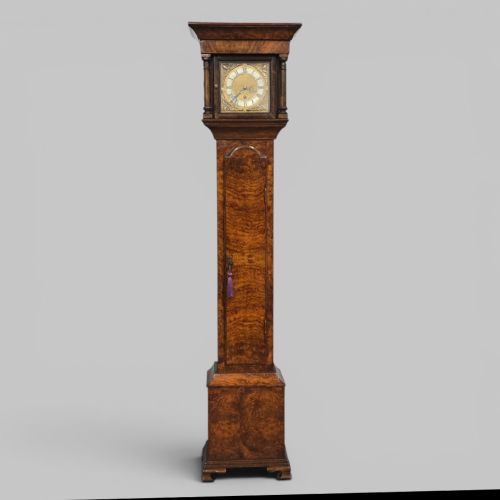


Georgian Walnut Clock
A georgian walnut clock brings rich timber and precise brass movement into a room, anchoring the space with centuries of horological craft.
Georgian Walnut Clock
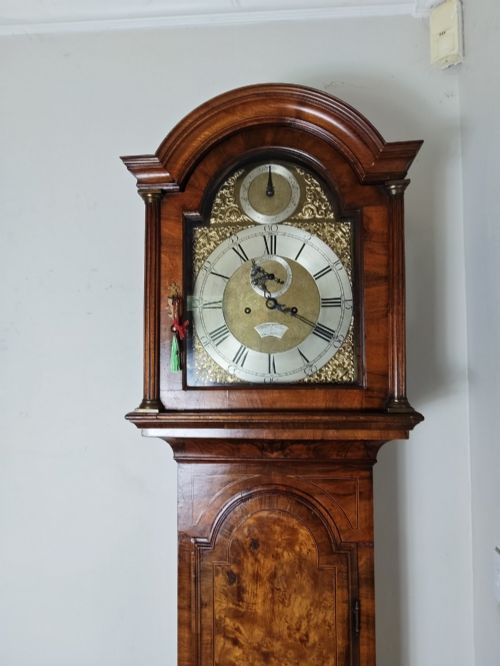
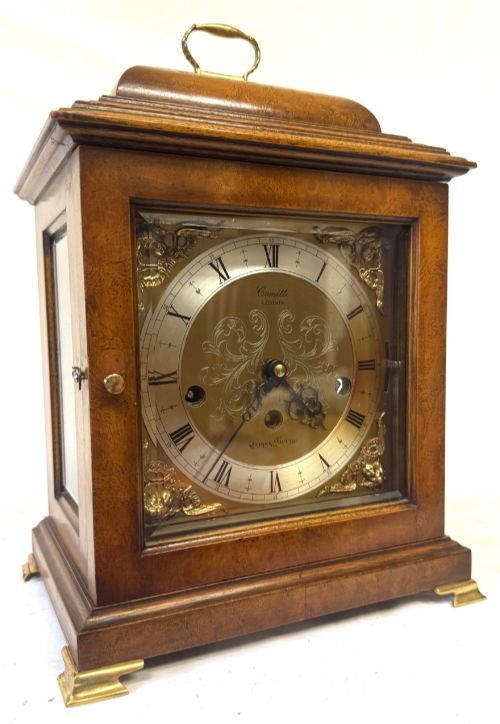
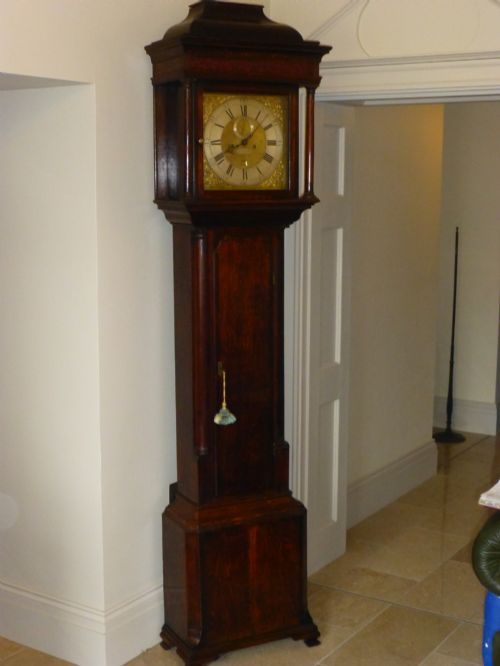
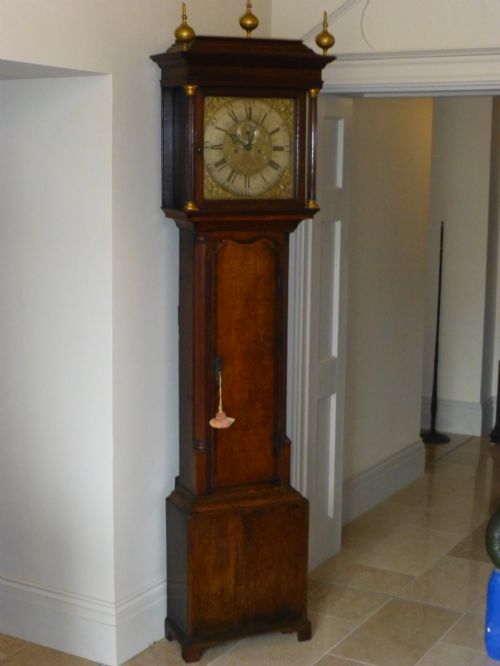
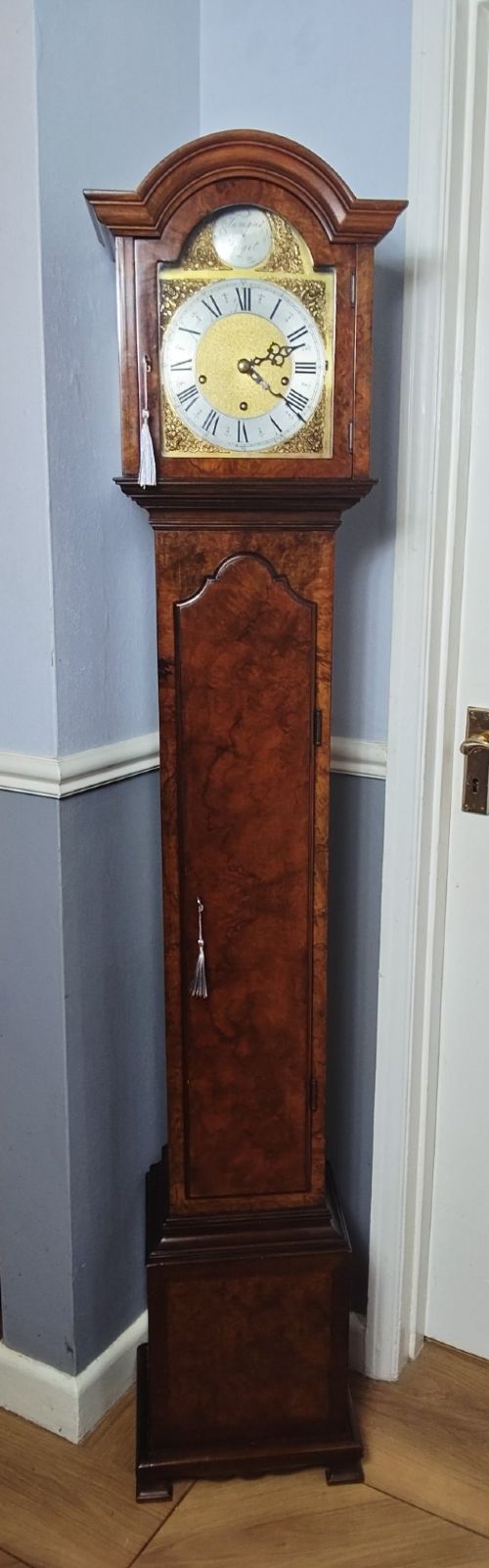
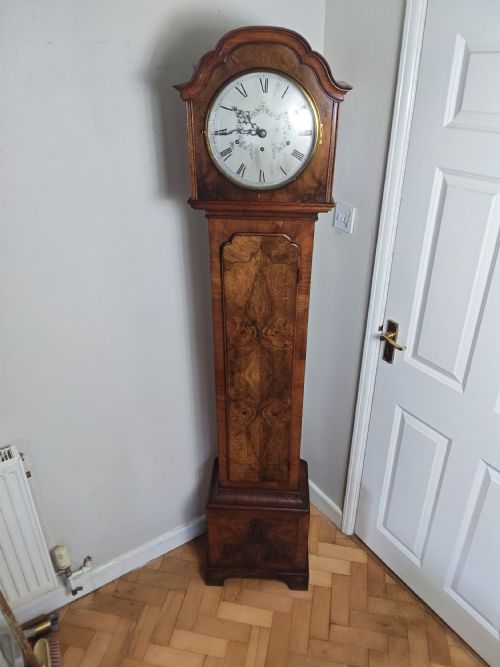
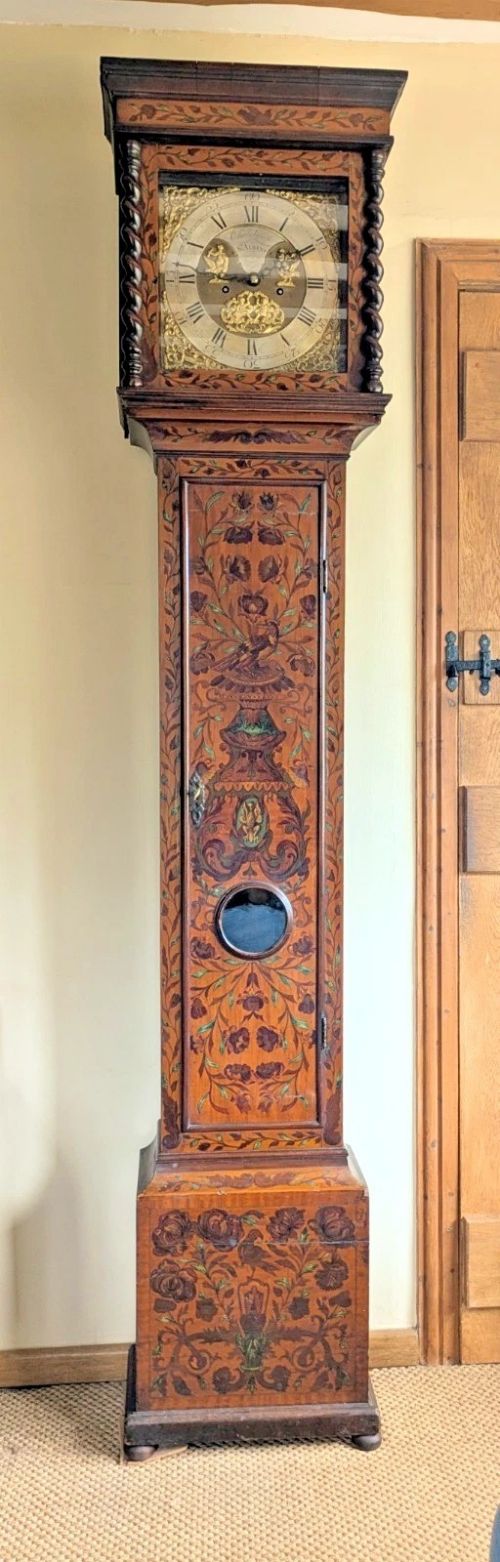
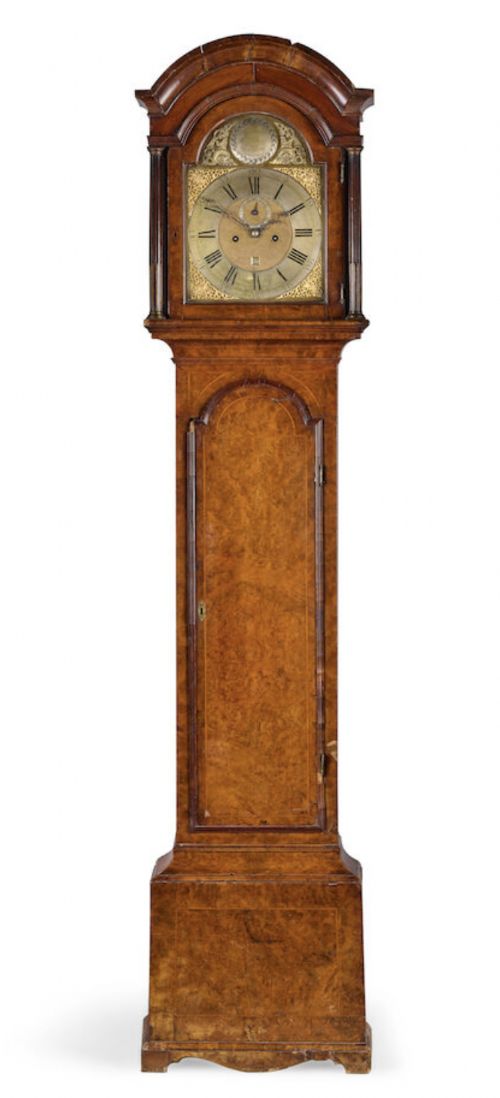
When you search for a georgian walnut clock, you encounter tall floor-standing longcase examples alongside smaller bracket, mantel, and wall variants. The tall versions dominate the selection, often appearing in figured, burr, or red walnut timbers alongside oak and marquetry details.
The objects span periods from the early eighteenth century through to later revival styles like Queen Anne and George II. Makers stamped their brass dials and movements, leaving names associated with London, provincial towns, and cities like Norwich and Bristol.
Buyers select these timepieces for their architectural timber cases and historical movements, ranging from simple eight-day strikes to complex musical quarter-chiming configurations. Each piece reflects the cabinetry and metalworking standards of its specific decade of origin.
How they were made
Cabinetmakers utilised solid walnut, burr walnut veneers, and red walnut over foundational woods like oak, applying polished finishes that highlighted the natural grain patterns. Cases often incorporated arched hoods, brass dial faces, and glazed inspection doors.
Clockmakers constructed the internal movements using brass plates, steel wheels, and pinions, driven by weights or spring-loaded fuses. Dials featured engraved silvered chapter rings, cast brass spandrels, and subsidiary seconds or moonphase displays.
What varies in quality
The intricacy of the timber selection dictates much of the visual merit, with deeply figured burr walnut veneers commanding higher regard than plain grain surfaces. Cabinet construction details, such as matching grain continuity across the door panels and original mouldings, separate standard examples from finer commissions.
Horological excellence rests on the completeness and originality of the movement, including signed brass dials and matching maker signatures between the dial plate and the internal mechanics. Retaining original brass weights, pendulums, and intricate chime or moonphase mechanisms elevates the standing of an individual clock.
Richard Corless of Stockport·Smith of Chester·Charles Louch St Albans·Windmills and Wightman London·Thomas Vernon London·Langley Bradley·Henry Deykin Worcester·Edward Upjohn Exon·Samuel Young Nantwich·John Harrington London·Jonathan Marsh London·Bentley London·John Taylor of London·Baldwin of Loughborough·James Drury of London·Joseph Oxley Norwich·James Bush London·George Tyler London
The Georgian Walnut Clock Glossary
- Burr walnut
- A specialised timber veneer obtained from tree growths containing clustered bud knots, producing highly ornamental swirling grain patterns. It was favoured by eighteenth-century cabinetmakers for high-status furniture and clock cases.
- Longcase clock
- A tall, weight-driven pendulum clock housed in a wooden case with a base, trunk, and hood enclosing the dial. They are frequently referred to as grandfather clocks.
- Fusee
- A conical drum used in spring-driven clocks to maintain even power delivery to the gear train as the mainspring unwinds. This mechanism improves timekeeping consistency throughout the running period.
- Spandrel
- An ornamental metal corner piece applied to the dial plate around the circular chapter ring. In earlier pieces these were cast in brass and often pierced or chased.
- Quarter chime
- A mechanism that sounds the quarters of an hour on multiple bells or gongs before striking the full hour. These movements require additional trains of gears alongside the timekeeping and striking trains.
Georgian Walnut Clock: Frequently Asked Questions
How do I wind an eight-day longcase clock?
You use a small winding key inserted into holes on the brass dial face to draw the weights upward. Care must be taken not to overwind the movement.
For weight-driven models, ensure the weights are guided safely down their channels without catching the pendulum behind them.
What is the difference between a grandfather and a grandmother clock?
A grandfather clock is a full-sized floor-standing longcase clock, typically standing over six feet tall. Grandmother clocks are smaller, scaled-down versions produced in various periods.
Both utilise similar weight-driven pendulum mechanisms enclosed in walnut or oak cabinetry.
Why do some clocks have moonphase dials?
A moonphase dial tracks the lunar cycle through a rotating painted disc visible through an arch on the clock face. It served a practical purpose in earlier centuries for navigation, farming, and tide tracking.
Today, collectors appreciate the mechanical complexity and visual ornamentation these apertures add to the brass dial.
How do bracket clocks differ from longcase clocks?
Bracket clocks are compact, portable timepieces designed to sit on furniture tables, brackets, or mantelpieces rather than stand on the floor. They use spring-driven fusee movements instead of hanging weights.
Their smaller scale allowed makers to incorporate carrying handles and intricate architectural wood cases.