




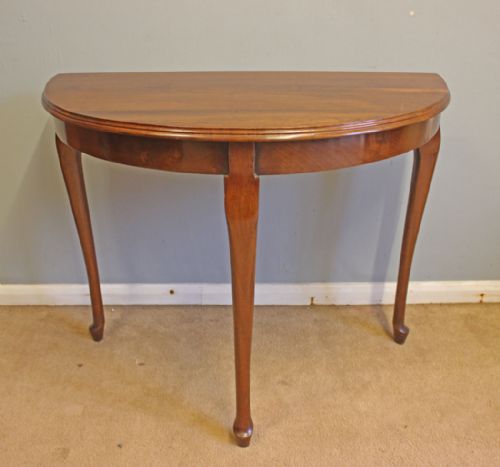
Georgian Walnut Card Table
A georgian walnut card table brings 18th-century craftsmanship into a modern room, offering a folding top designed for evening gaming.
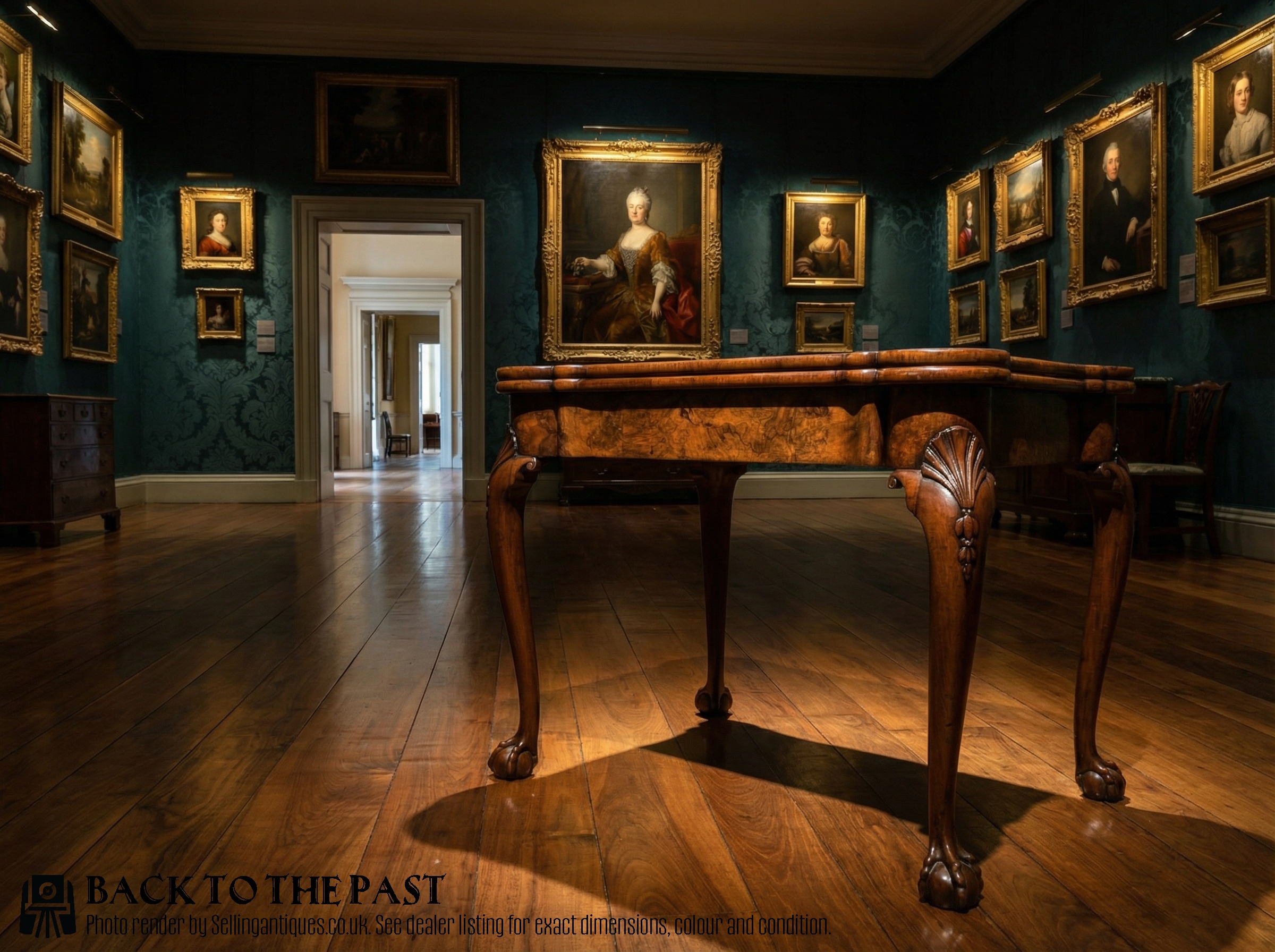
Georgian Walnut Card Table
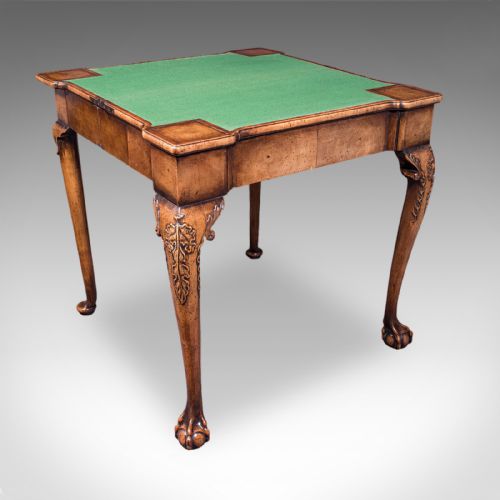
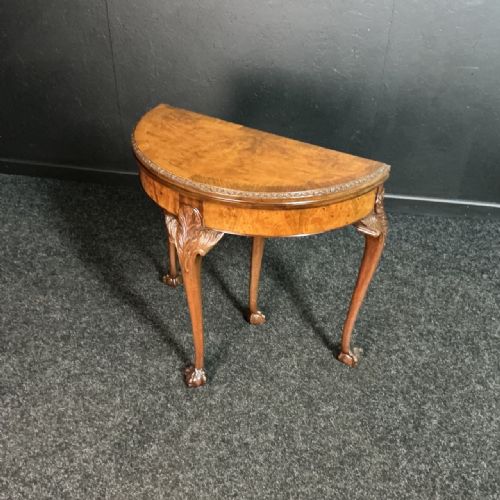
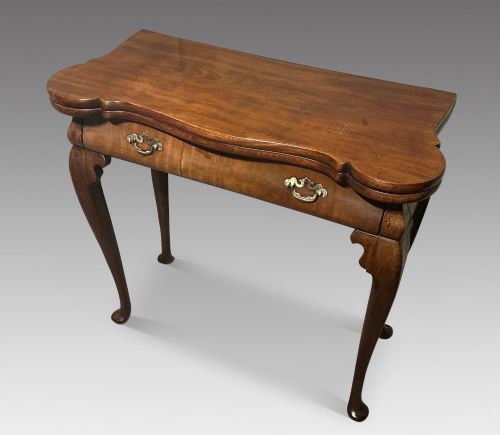
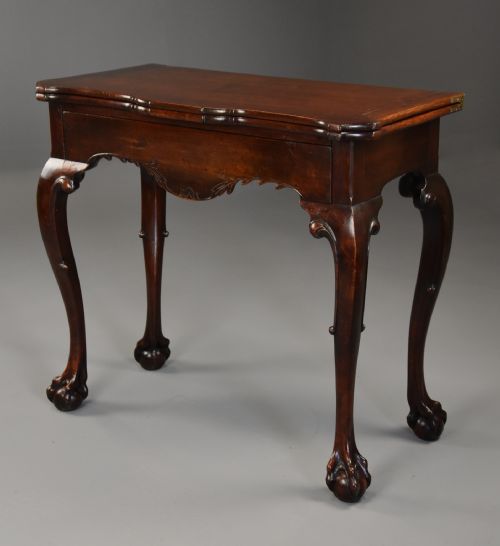
A georgian walnut card table is a folding piece designed for gaming, appearing in forms from straight-edged folding tables to demi lune and console shapes. These tables date from the eighteenth century as well as later revival periods including the early twentieth century.
The material vocabulary spans solid walnut, burr walnut, and figured walnut veneers over timber frames such as oak and fruitwood, often lined with baize. Alongside card and games tables, related tea tables and occasional side tables appear in the record.
Gradations of quality
Quality rests in the choice of timber figure, such as highly figured burr walnut and carefully matched veneer grains across the folding leaves. The crispness of marquetry inlay and the subtlety of crossbanding further separate standard production from superior pieces.
Structural finesse shows in the precision of the folding action, the stability of the timber frame, and the retention of a rich surface patina developed over centuries.
Listings feature walnut, burr walnut veneer, brass, oak, and baize across pieces spanning the eighteenth to twentieth centuries.
Maple & Co
The Georgian Walnut Card Table Glossary
- Baize
- A woven woolen material used to line the playing surfaces of gaming tables. It provides a soft, durable texture for card play.
- Burr walnut
- A prized veneer taken from the warted growths of walnut trees. It yields complex, swirling grain patterns highly valued by cabinetmakers.
- Crossbanding
- A strip of veneer laid around the border of a table top with the grain running perpendicular to the central panel. This technique frames the primary wood.
- Demi lune
- A half-moon shape characteristic of certain console and folding tables. These pieces fit flat against a wall when closed.
- Marquetry
- The art of applying decorative veneer pieces to form intricate pictorial designs. It appears on eighteenth-century table tops.
Georgian Walnut Card Table: Frequently Asked Questions
What is a georgian walnut card table used for?
These tables served primarily for evening card games and social gatherings in domestic parlors. The hinged top folded out to reveal a baize-lined playing surface.
When closed, the table functioned as a side table or console against a wall. This dual purpose made them versatile furniture pieces in historic homes.
How do I identify a georgian walnut card table?
Look for walnut timber, figured veneers, and a hinged top designed to fold open. Period examples display specific construction traits and joinery typical of eighteenth-century cabinetmaking.
Revival pieces from later centuries emulate these earlier forms. Examining the secondary woods and interior framing helps distinguish original period items from later interpretations.
How do I care for a walnut games table?
Keep the wood away from direct sunlight and steady heat sources to prevent veneer lifting and timber splitting. Dust regularly with a dry cloth and maintain stable room humidity.
Protect the baize surface from sharp objects and moisture. Gentle waxing preserves the finish and maintains the natural patina.
Are all these tables from the eighteenth century?
The listings include both original eighteenth-century pieces and later revival versions from the nineteenth and twentieth centuries. Each era employs similar walnut materials and folding formats.
Distinguishing between periods relies on examining construction techniques, hardware, and timber ageing. Both original antiques and quality revival pieces hold distinct appeal for collectors.