


Georgian Vernacular Armchair
A georgian vernacular armchair carries the honest craft of country makers, offering sturdy timbers and comfortable seats shaped by regional hands.

Georgian Vernacular Armchair
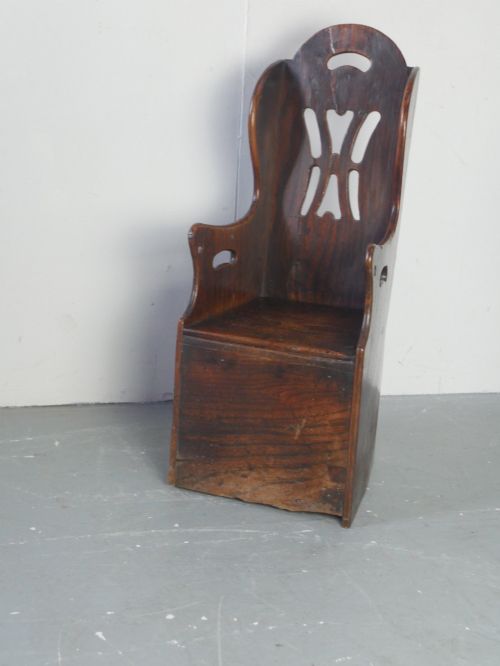
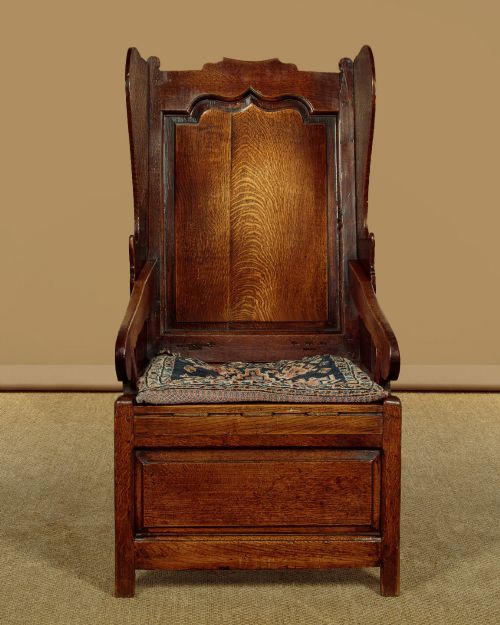
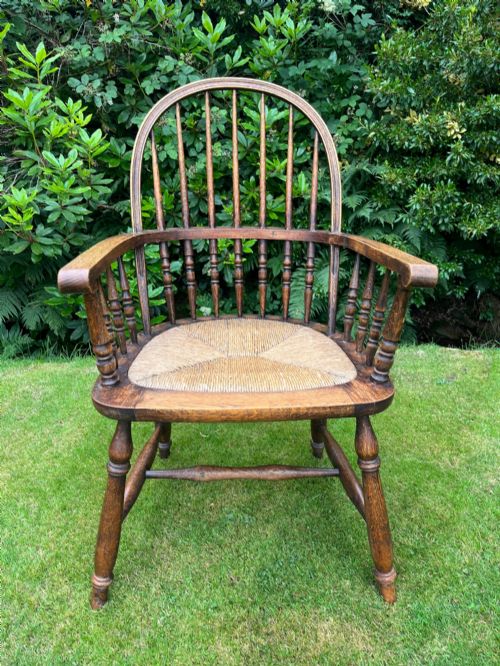
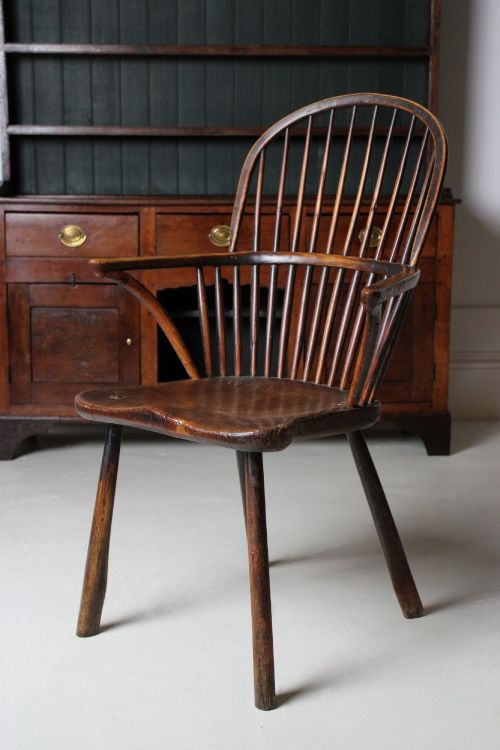
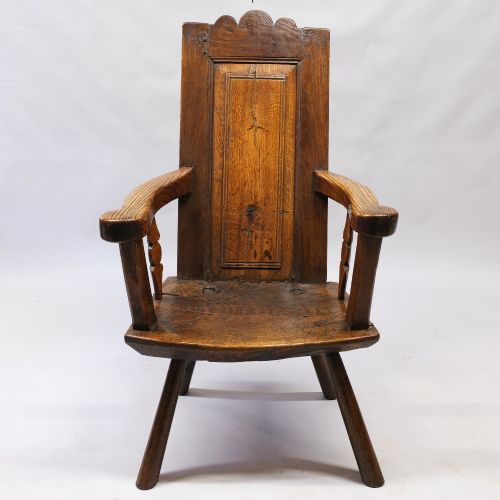
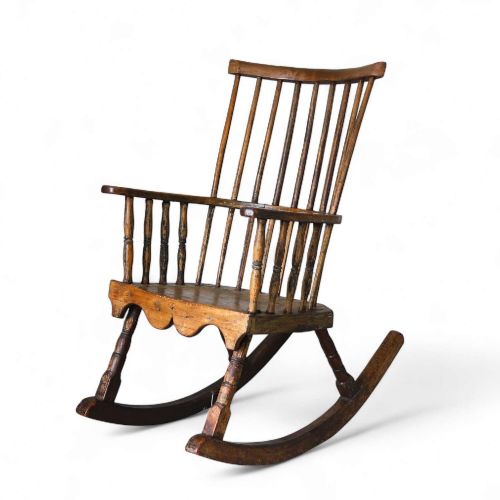
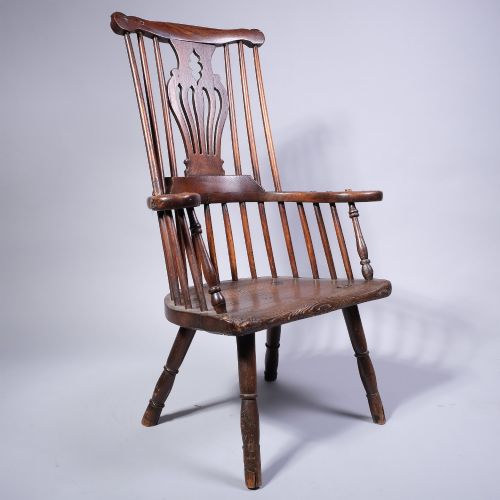
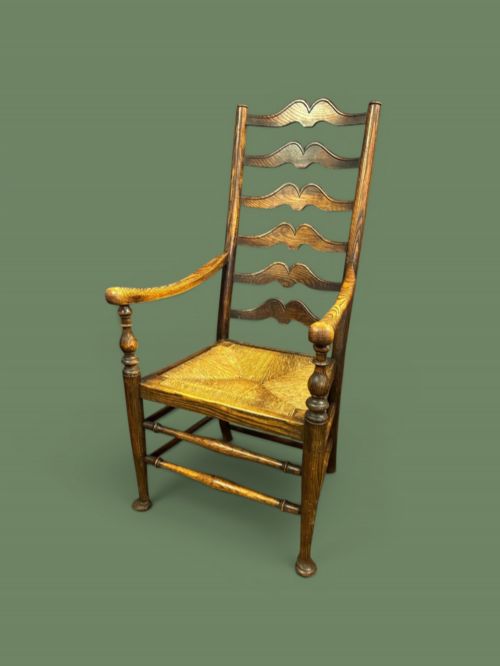
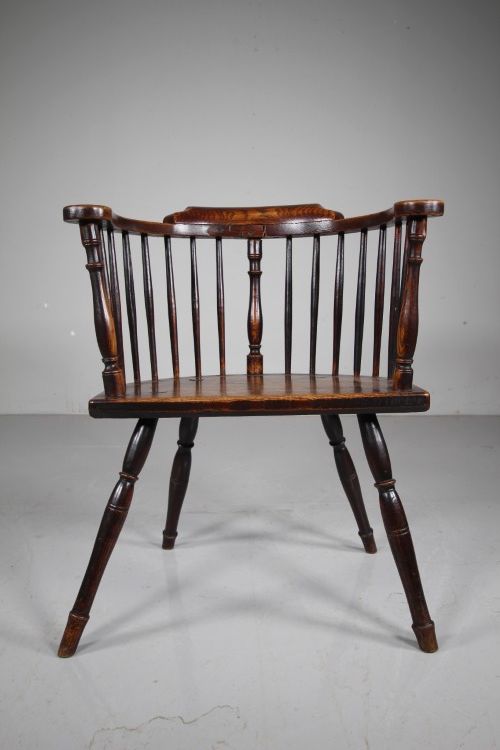
A georgian vernacular armchair represents the practical seating built outside major urban workshops, drawing on regional traditions across the English countryside. These seats include Windsor forms, ladder backs, lambing chairs, and spindle backs intended for daily domestic life.
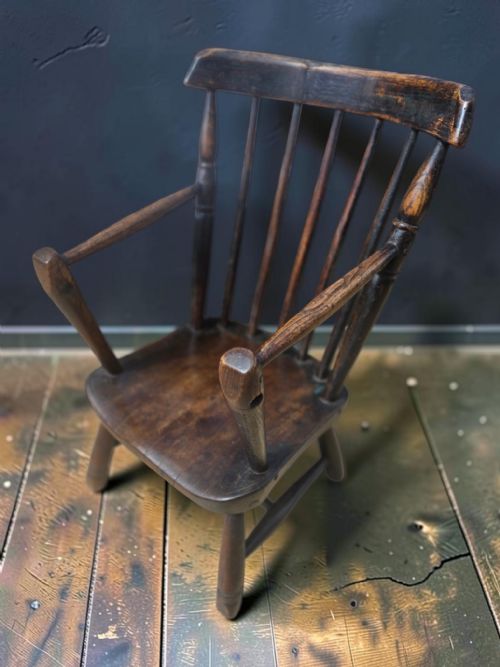
Makers shaped these pieces in local timbers like elm, ash, and oak, often combining woods to suit the stresses of the frame. Surviving examples span children's seating, high chairs, rocking chairs, and substantial carvers designed for the fireside.
How they were made
Cabinet makers and bodgers utilised native hardwoods such as ash for steam-bent bows and elm for solid, anti-split seats. Yew appears in high-status country pieces, valued for its rich grain and natural lustre.
Construction relies on traditional joinery like wedged tenons and shaved spindles, occasionally complemented by rush seating or retained layers of early paint.
Some country chairs retain small under-arm drawers originally built for stowing pipes or tallow candles.
What varies in quality
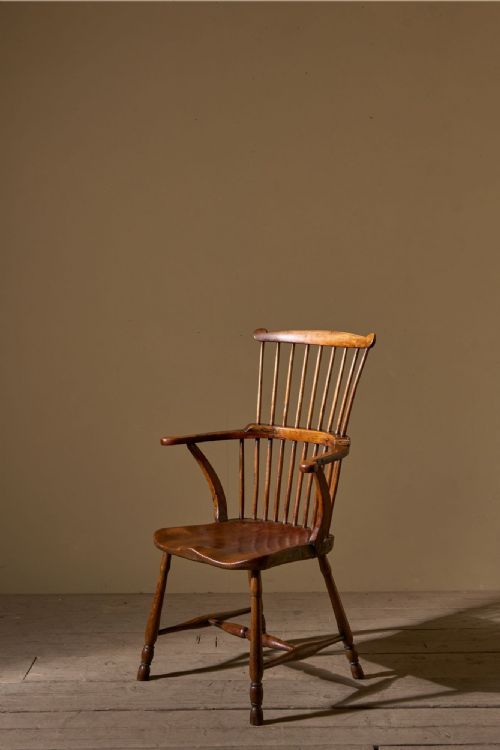
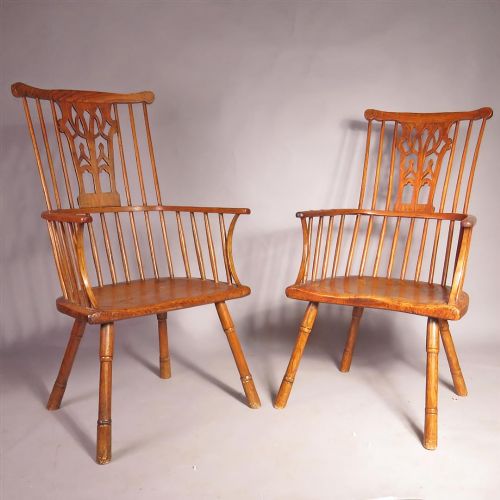
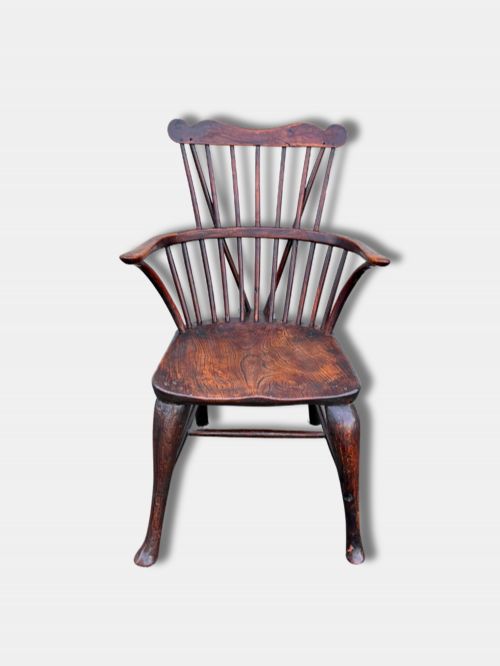
The sophistication of the turning and the harmony of the timber selection set individual examples apart. A well-proportioned comb back with generous proportions and clear regional character commands greater appreciation than a plain, utilitarian build.
Surface preservation also dictates standing, with original scrubbed finishes or early brown paint holding more integrity than heavily restored or stripped surfaces.
The Georgian Vernacular Armchair Glossary
- Windsor chair
- A wooden chair featuring a solid saddle-shaped seat into which the legs and back spindles are directly wedged. This form developed distinct regional variations across the Thames Valley, West Country, and Yorkshire.
- Comb back
- A Windsor chair design where the central vertical spindles extend upward to support a horizontal top rail resembling a comb. It offers an elegant profile often seen on mid-eighteenth-century examples.
- Lambing chair
- A hooded or wing-backed fireside chair traditionally fitted with a solid panel or box base to block draughts. They were constructed in oak or elm for rural farmhouses.
- Rush seat
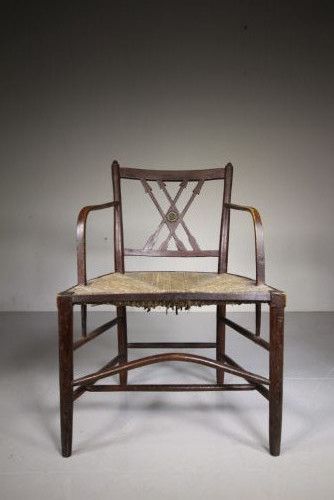
- A seating platform woven from dried marsh rushes twisted into cords. This technique provides a resilient and comfortable surface for ladder back and country armchairs.
- Broadarm
- A Windsor chair variation featuring one exceptionally wide, flat arm resting designed for writing or working. These arms frequently incorporate small storage drawers beneath.
Georgian Vernacular Armchair: Frequently Asked Questions
What is a vernacular armchair?
A vernacular armchair is a piece of regional seating built by local country joiners rather than fashionable city cabinet makers. These chairs prioritise functional comfort, sturdy construction, and available local timbers over strict adherence to prevailing classical styles.
They reflect the traditional woodworking methods of specific districts, resulting in diverse forms like Windsor chairs, stick backs, and panel-backed seats.
How do I identify a Windsor chair?
A Windsor chair is distinguished by its thick solid wood seat, which serves as the central anchor for all other components. The legs and back spindles fit directly into drilled holes in the seat rather than connecting through a conventional frame.
They appear in various back styles, including hoop back, comb back, and low back, often combining contrasting timbers such as elm seats with ash spindles.
Where were these chairs made?
These chairs were produced in rural workshops and forested regions across England and Wales. Specific areas developed distinct stylistic traits, such as the Thames Valley, the West Country, Cheshire, and Welsh districts like Snowdonia.
Local timber availability heavily influenced production, with beech, ash, elm, and yew selected depending on the region's woodland.
How do I care for an antique country chair?
Protect antique country chairs by keeping them away from direct heat sources, radiators, and strong sunlight, which dry out native timbers and cause splitting. Maintain stable indoor humidity levels to preserve the wood and any historic painted surfaces.
Apply microcrystalline wax sparingly to nourish dry timber and clean surfaces gently with a soft, dry cloth without harsh chemical polishes.