

Georgian Upholstered Ottoman
A georgian upholstered ottoman brings substantial seating and rest to a room, drawing on centuries of sturdy timber frames and rich textile coverings.
Georgian Upholstered Ottoman
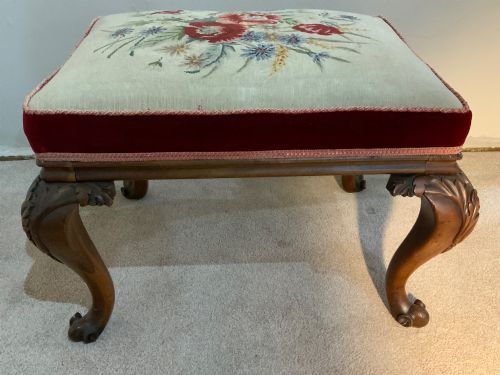
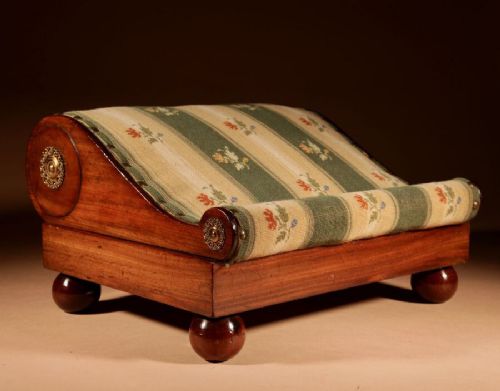
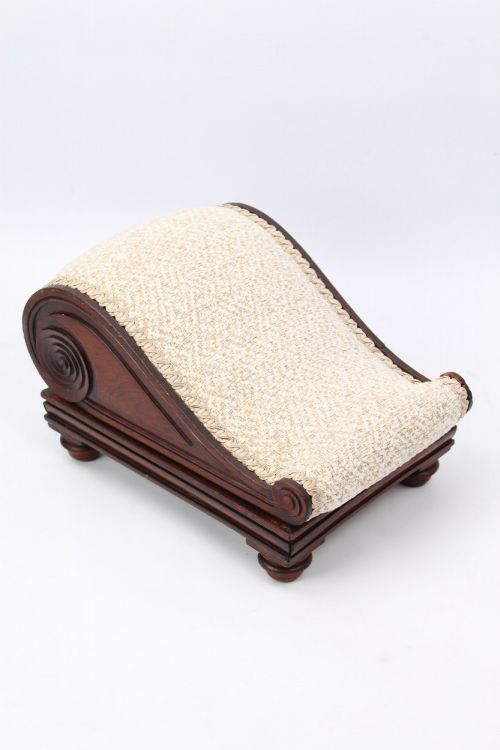
When searching for a georgian upholstered ottoman, you encounter a variety of forms including footstools, long stools, and dressing stools spanning periods from the eighteenth century through later revivals. The listings show solid timber frames paired with diverse coverings, ranging from early carved footstools to large mahogany and walnut examples.
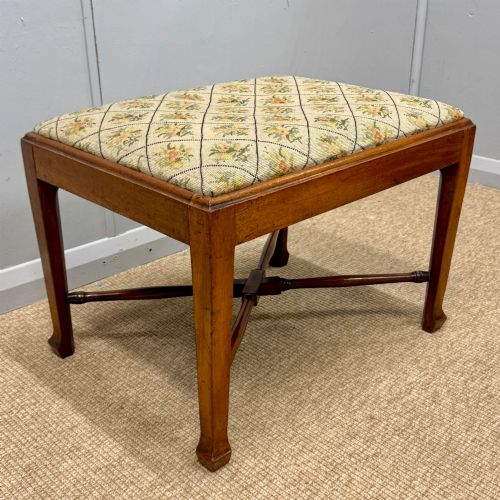
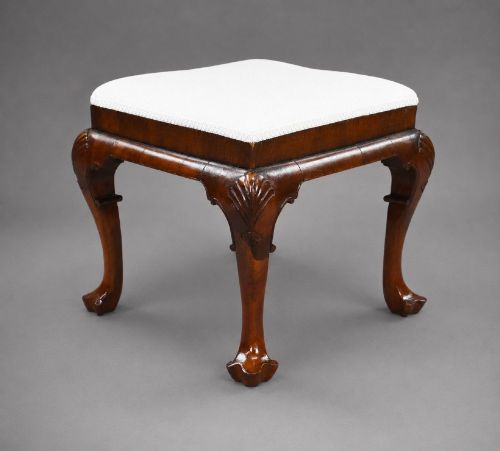
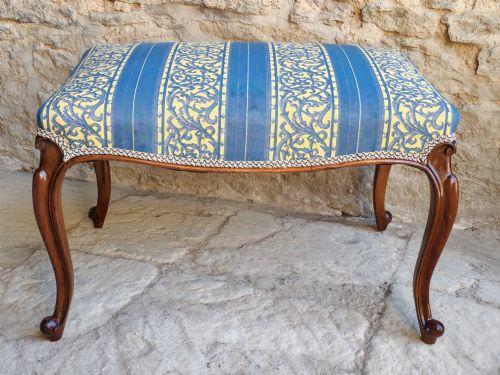
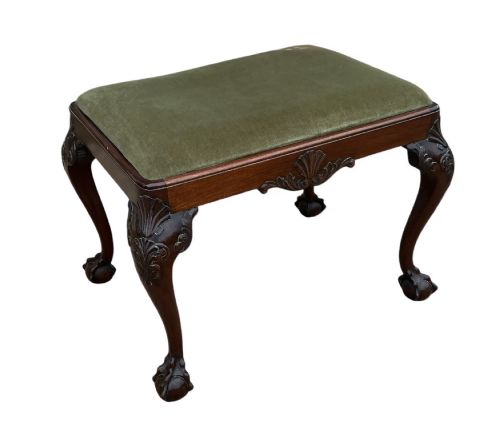
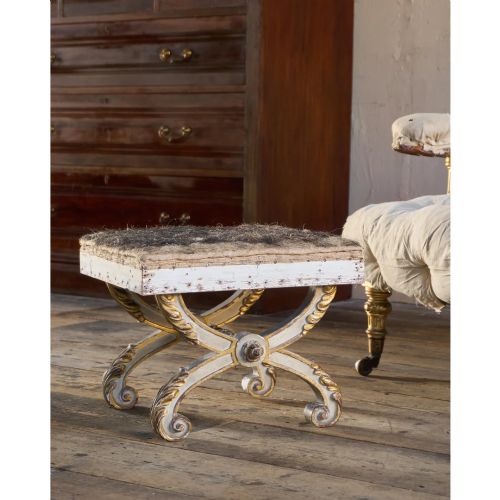
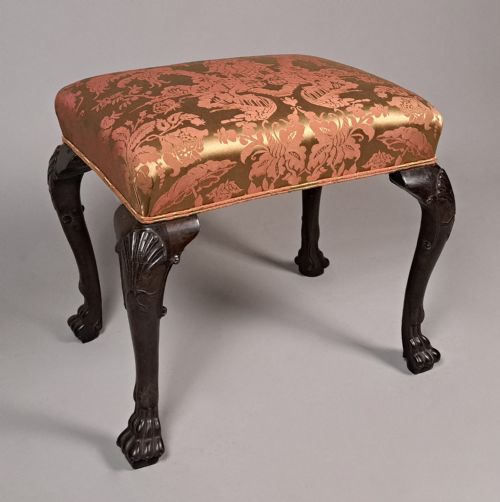
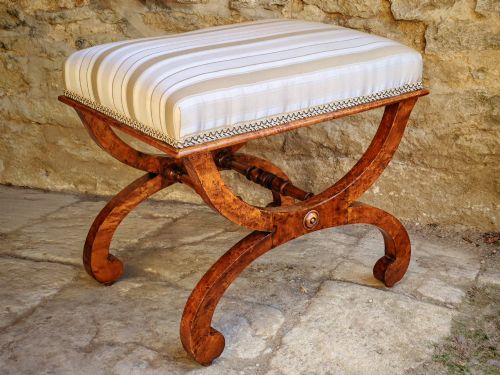
While true eighteenth-century pieces appear alongside nineteenth-century interpretations and later revivals like Chippendale and Queen Anne styles, mahogany and walnut frames dominate the selection. These low seating pieces frequently incorporate cross stretchers, cabriole legs, or X-frame curule designs.
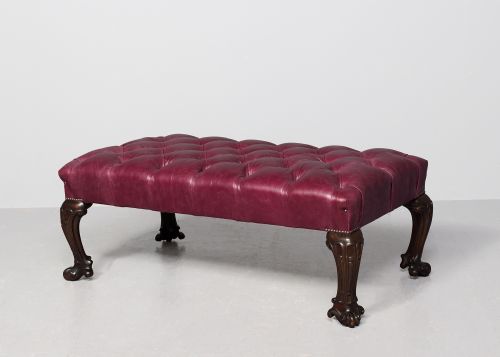
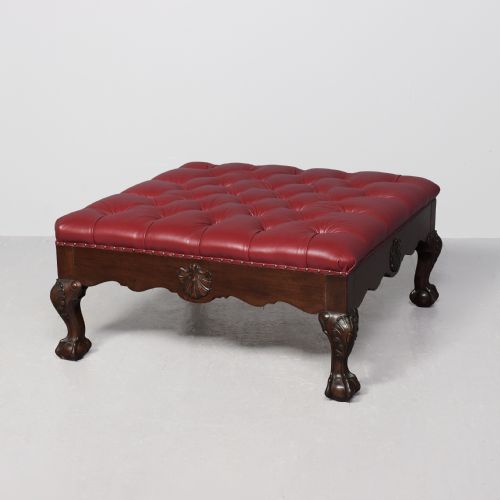
The textile side of these pieces introduces considerable variety, with upholstery spanning original needlepoint, kilim, velvet, wool, tapestry, chenille, and buttoned hide. Brass studding and carved wooden details often accent the edges of the upholstered surfaces.
Materials and construction
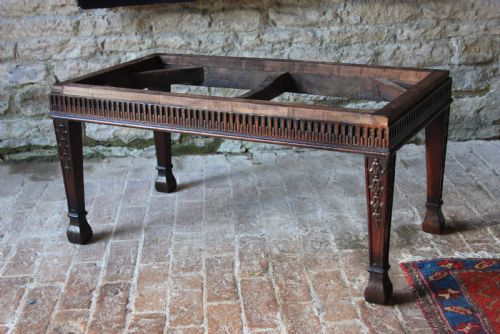
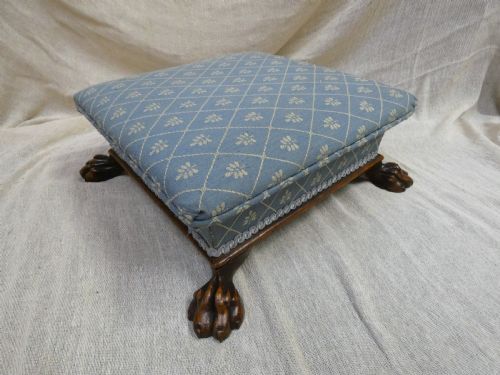
Makers constructed the structural frames of these pieces primarily using dense hardwoods such as mahogany, walnut, rosewood, and beechwood, occasionally incorporating burr maple or giltwood. Joinery techniques supported heavy use, often reinforced with cross stretchers or sturdy legs featuring lions paw feet.
Textiles provided the primary surface finish, utilising woven wool, tapestry, needlework, chenille, and velvet, alongside smooth leather and hide fixed with brass studs. Buttoning techniques added depth and tension to the upholstered top sections.
An adjustable gout stool allows a user to tilt their resting foot precisely toward the fireplace.
Assessing quality in frames and coverings
The refinement of the timber carving separates standard production from exceptional examples, particularly in details like cabriole legs, X-frame geometry, and applied giltwood. Heavier timber selection and balanced proportions indicate greater care during original manufacture.
The integrity and historical continuity of the upholstery also define the tier of the piece, with intact period needlework, kilim, or buttoned hide carrying distinct craftsmanship compared to later replacements.
Miles & Edwards
The Georgian Upholstered Ottoman Glossary
- Curule
- An X-shaped frame design originating in antiquity that provides balanced cross-braced support to stools. This form appears in several nineteenth-century listings.
- Kilim
- A flatwoven textile used historically as a durable and decorative covering for seating tops. These woven coverings bring geometric patterns to the wooden frames.
- Cabriole
- A furniture leg that curves outward and then tapers inward to a foot, typical of eighteenth-century design. This profile appears frequently on walnut and mahogany frames.
- Needlepoint
- A form of counted thread embroidery executed on canvas to create dense, patterned textile surfaces. Many period examples retain this original hand-stitched needlework.
- Stretcher
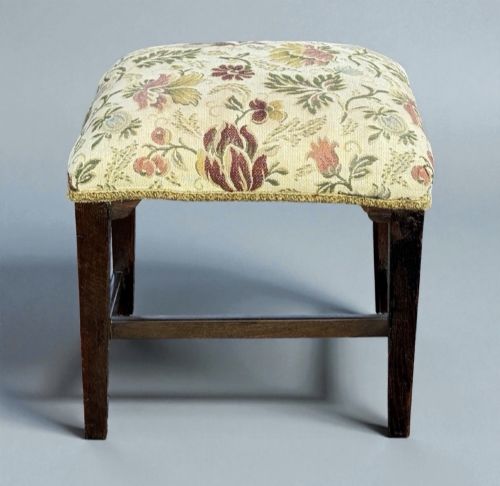
- A horizontal timber rail connecting the legs of a stool to provide structural rigidity. Cross stretchers add specific stability beneath the seat frame.
Georgian Upholstered Ottoman: Frequently Asked Questions
What is a georgian upholstered ottoman?
These furnishings are low timber-framed seats designed for resting feet or sitting, upholstered in textiles or leather.
The category encompasses footstools, long benches, and dressing stools built across multiple centuries of craftsmanship.
How were these stools used historically?
Original owners utilised them in parlours and dressing rooms as movable seats or foot rests near firesides.
Their robust timber frames and upholstered tops provided comfortable auxiliary seating when entertaining guests.
How do I distinguish revival styles from original pieces?
Revival pieces often replicate eighteenth-century Chippendale or Queen Anne proportions while utilising later nineteenth- or twentieth-century construction methods.
Examining the timber ageing, joinery techniques, and underside construction clarifies whether a piece dates to the georgian period or a subsequent revival era.
What textiles cover these frames?
Upholstery ranges from durable hide and leather secured with brass studs to decorative woven wool, velvet, and tapestry.
Many examples feature original needlepoint or kilim coverings that reflect the domestic tastes of their respective periods.