
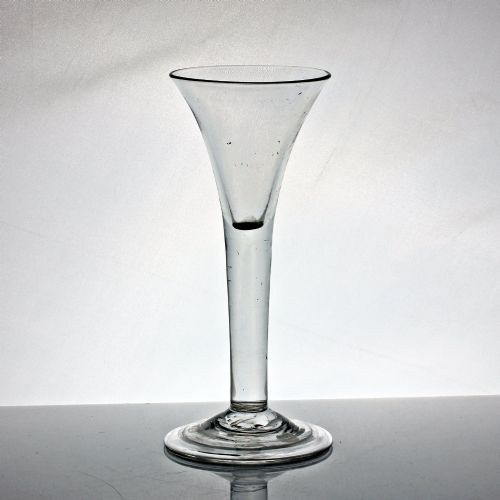
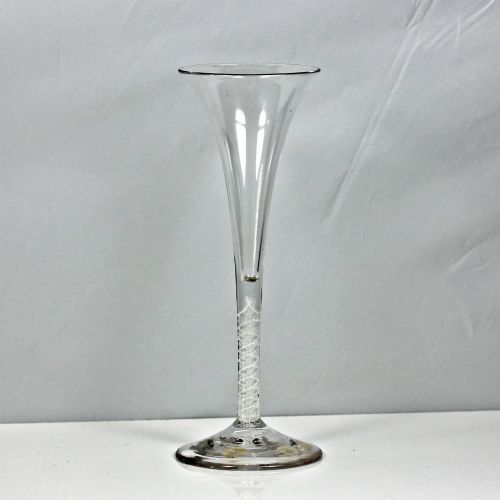
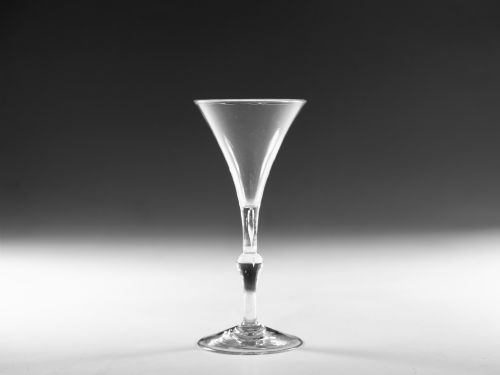
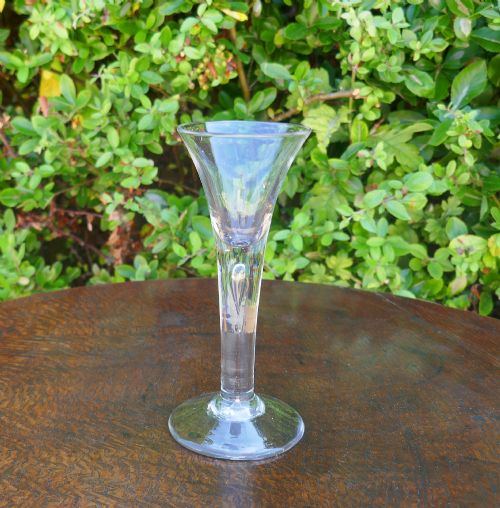


Georgian Trumpet Wine Glass
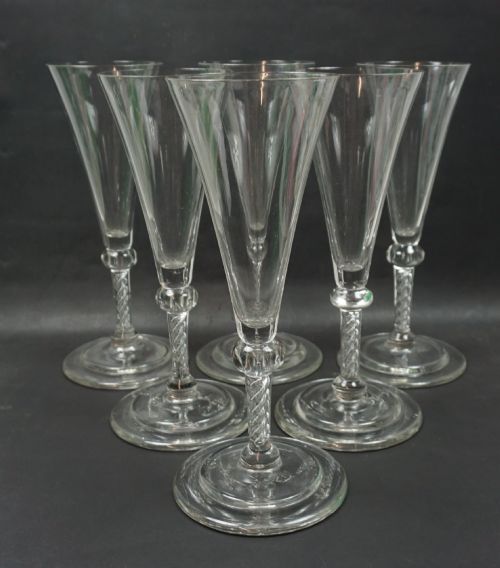
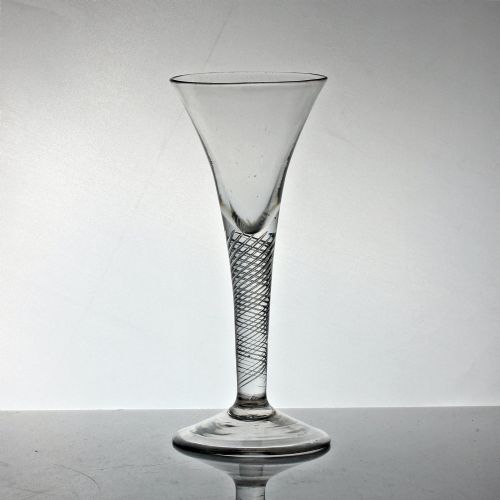
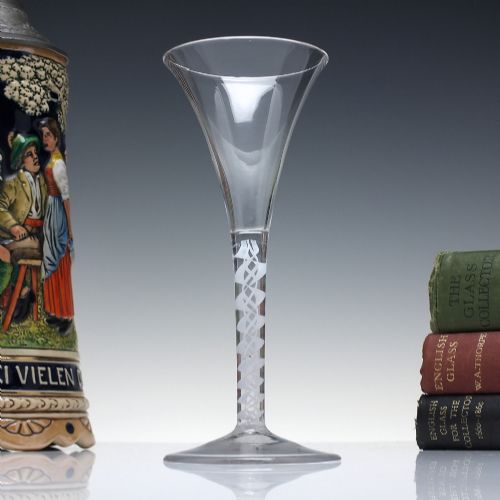
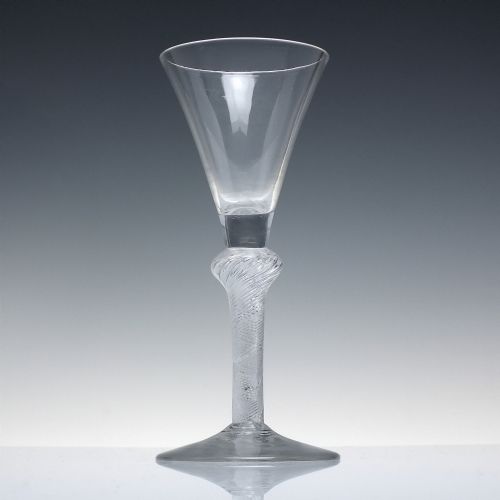
A georgian trumpet wine glass brings the unmistakable weight of eighteenth-century lead metal and the clean sweep of an elongated bowl straight to the modern table.
How they were made
These glasses rely on lead glass or flint glass, heavier and softer than modern soda glass, allowing craftsmen to draw the bowl and stem from a single gather of molten metal. This hot-tool technique created the characteristic drawn trumpet profile seen across eighteenth-century examples.
Twist stems were formed by manipulating air bubbles or opaque white enamel rods within the glass before drawing and shaping the stem. Additional decoration such as facet cutting or engraving was applied after the vessel cooled.
What varies in quality
Quality rests in the balance of the metal, the symmetry of the drawn trumpet bowl, and the clarity of the lead glass. A well-proportioned foot and a crisp, uniform twist elevate a piece above simpler, heavier domestic forms.
The presence of characteristic manufacturing marks like folded feet or deliberate air tears contributes to desirability. Finer pieces demonstrate superior handle-weight and precise optical properties within the glass itself.
An eighteenth-century glassblower trapped a tiny bubble in the stem just so, creating an accidental talisman that survives centuries later.
The Georgian Trumpet Wine Glass Glossary
- Air tear
- A small elongated bubble deliberately or accidentally trapped inside the stem or foot of a glass during blowing. This simple inclusion is frequently found in mid-eighteenth-century English drinking vessels.
- Balustroid
- A stem form intermediate between the heavy baluster and the later slender stems, featuring knops and swelling profiles. It echoes architectural balusters of the period.
- Drawn trumpet
- A bowl and stem pulled from a single gather of molten glass, creating a continuous, unbroken taper. This technique defines the classic eighteenth-century silhouette.
- Folded foot
- A rim turned under the base of the glass to create a smooth, heavier edge that resists chipping. This practical detail adds stability to tall drinking vessels.
- Lead glass
- A heavy, brilliant glass containing lead oxide, developed in England during the late seventeenth century. It produces a clear ring when struck and accepts deep cutting and engraving.
Georgian Trumpet Wine Glass: Frequently Asked Questions
Can I still use these for drinking wine?
Many collectors enjoy using eighteenth-century glassware for special occasions, appreciating the tactile quality of lead glass in the hand. The small capacities typical of the period suit modern tasting portions.
Exercise caution with stemware by holding the glass firmly by the stem rather than the bowl. Hand washing is essential after use.
What is an air twist stem?
An air twist is formed by drawing out tiny air bubbles trapped within the molten glass rod, twisting them into spiral threads as the stem is pulled. This technique creates delicate optical patterns inside the clear metal.
Twists can appear as single or multi-spiral strands running down the length of the stem. They are characteristic of mid-eighteenth-century English manufacturing.
Why do some feet have a fold?
A folded foot involves turning the outer edge of the glass under toward the underside while the metal is still hot. This created a smooth, reinforced rim that protected the base from chipping on rough tavern or dining tables.
Folded edges are a common indicator of earlier eighteenth-century production. They add noticeable weight and balance to tall trumpet bowls.