
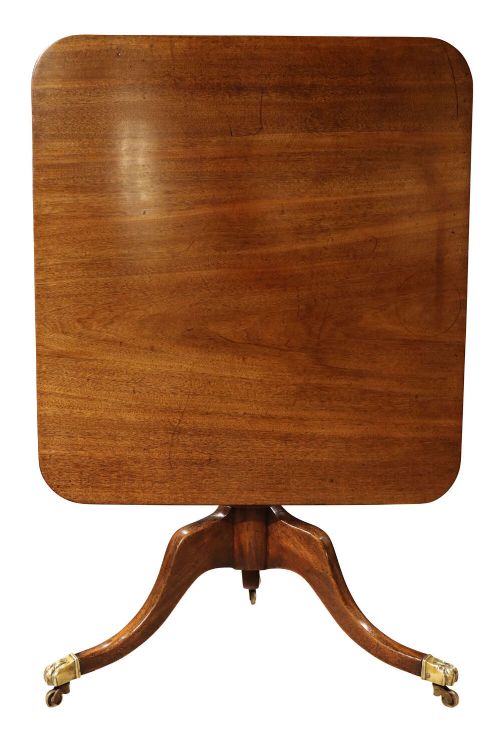
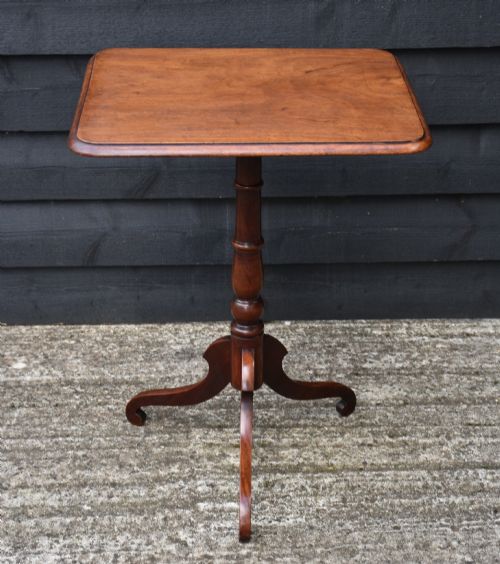
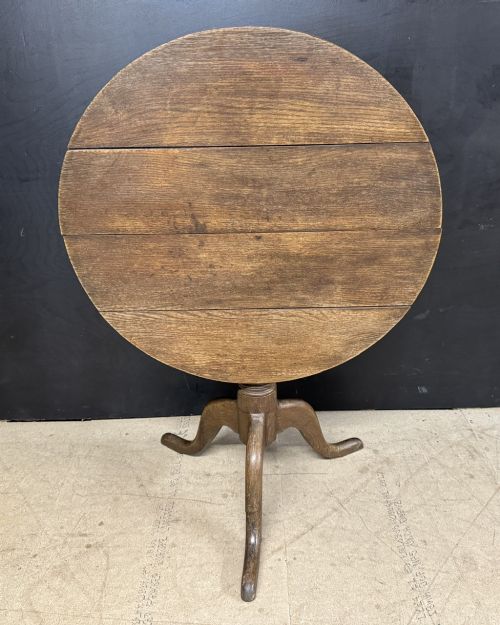
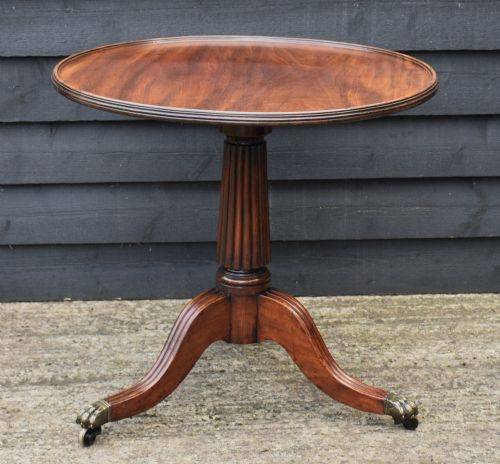
Georgian Tilt Top Wine Table
A georgian tilt top wine table brings ingenious space-saving design and rich timber character into any room.
Georgian Tilt Top Wine Table
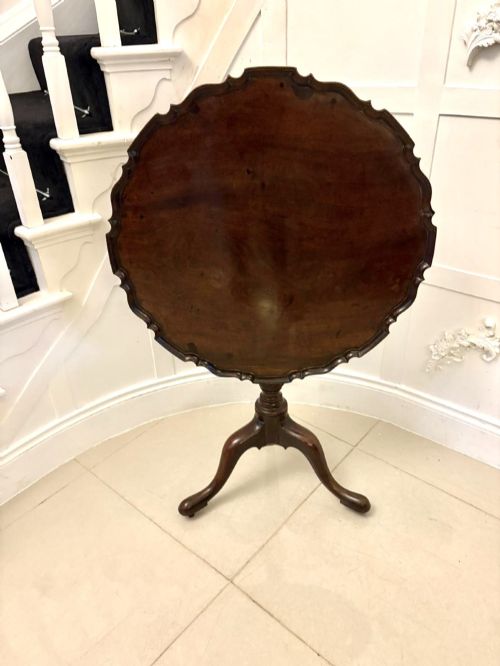
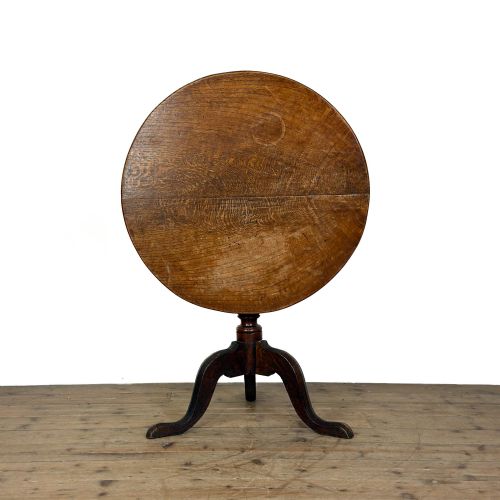
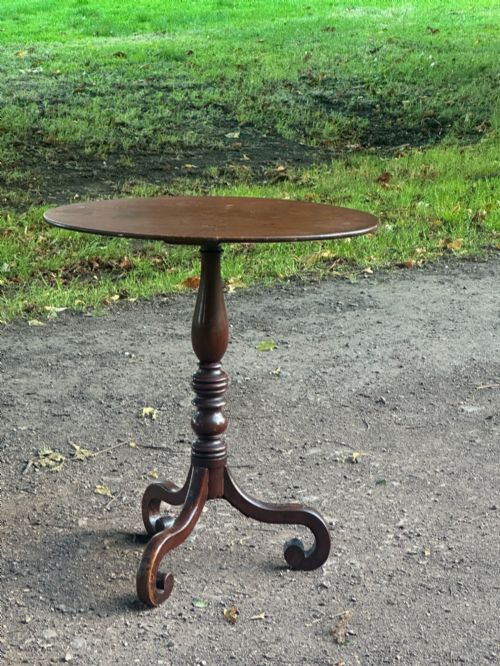
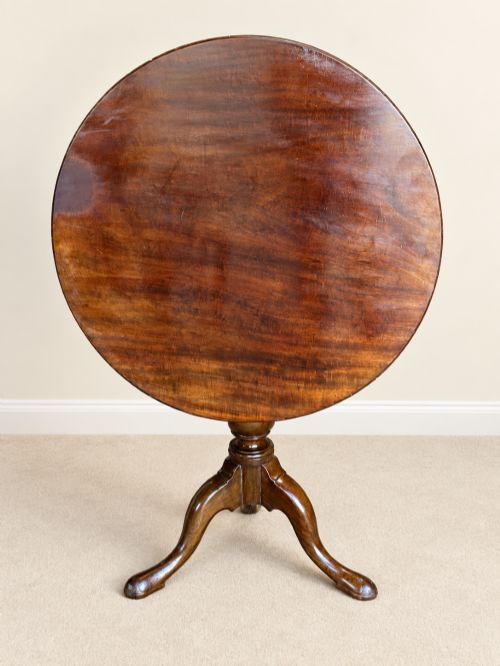
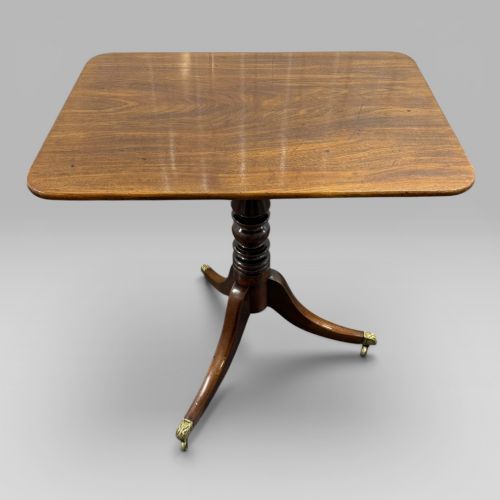
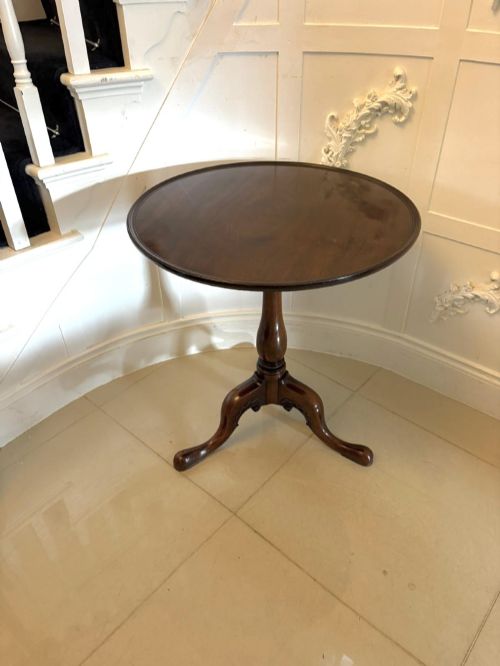
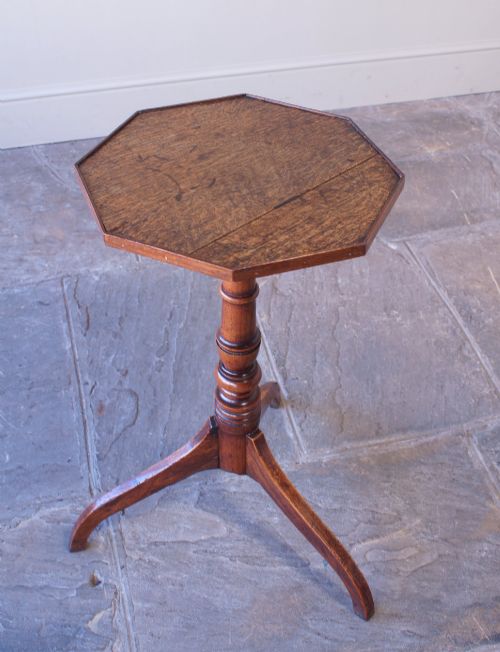
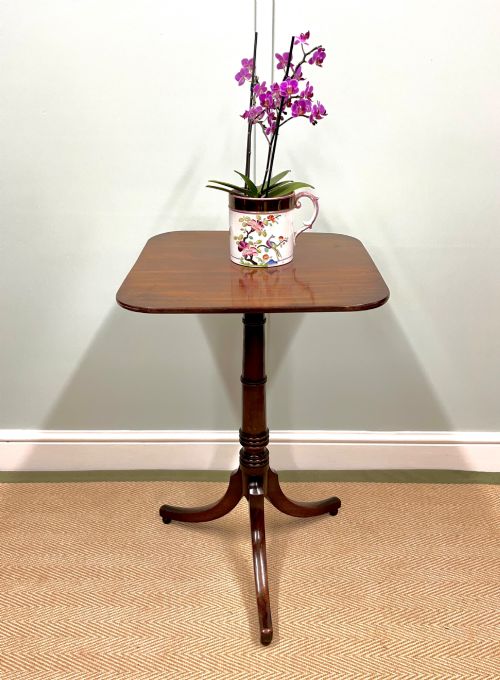
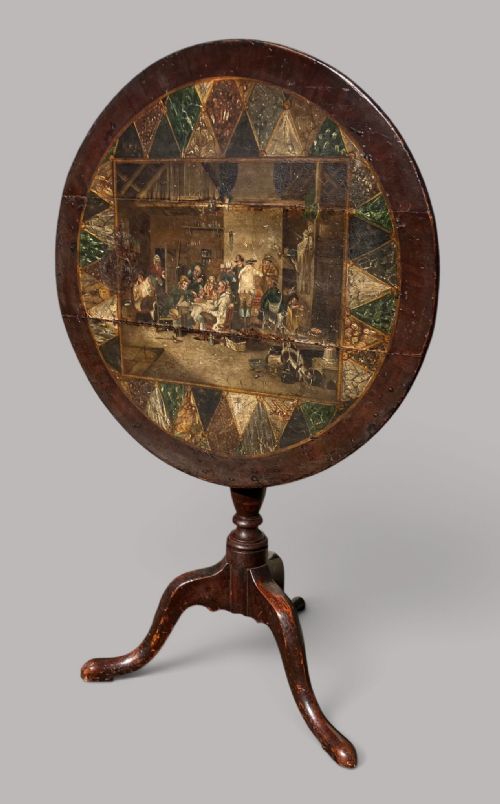
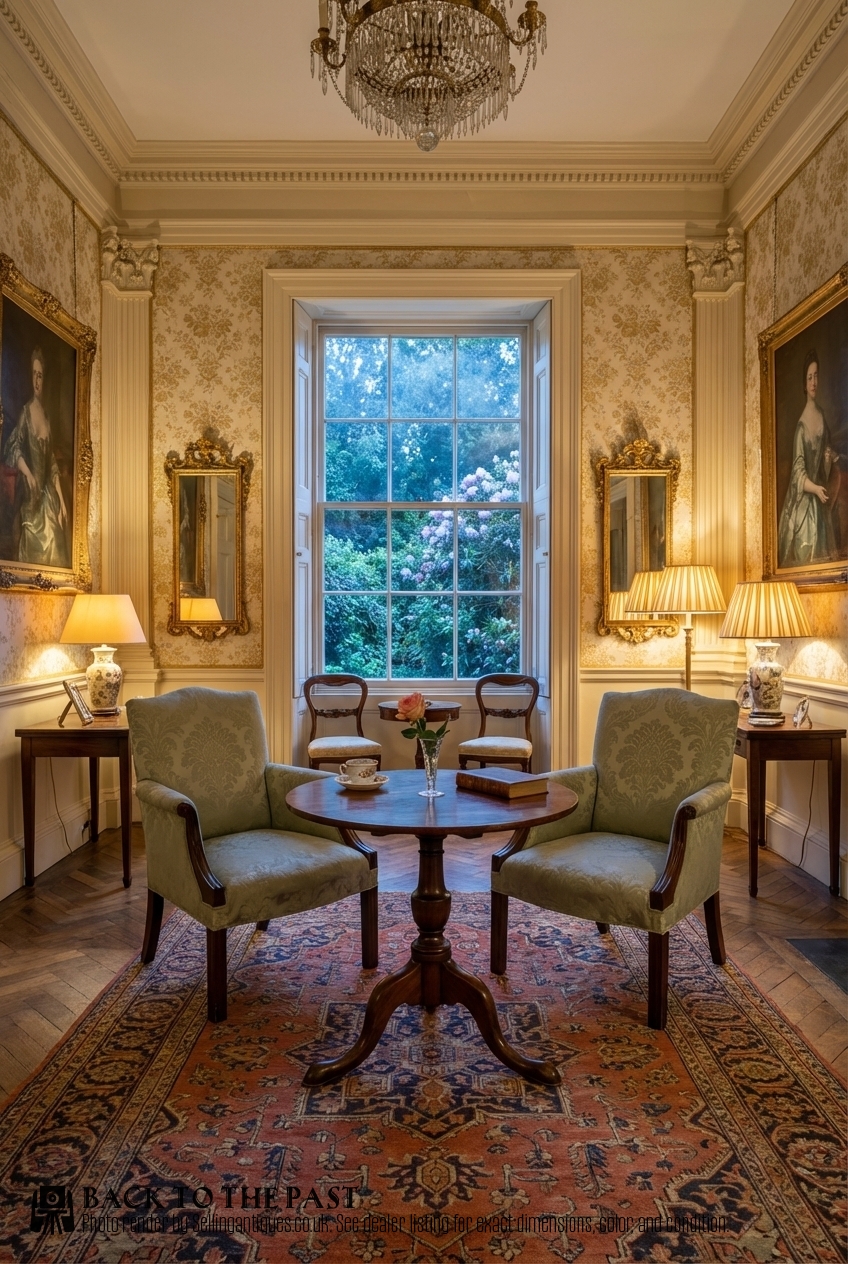
A georgian tilt top wine table is a compact, portable surface raised on a central pillar and three legs, designed to tip vertically when not in use. These pieces served as flexible furniture for holding drinks, books, or small items in period drawing rooms and parlours.
The most common examples encountered on this page date from the eighteenth and nineteenth centuries, spanning George III through to Regency and Victorian periods. Mahogany and oak dominate the selection, appearing alongside occasional walnut, fruitwood, and elm specimens.
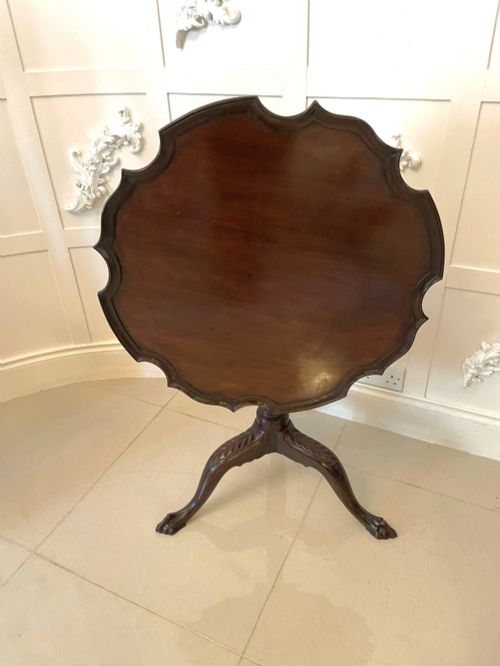
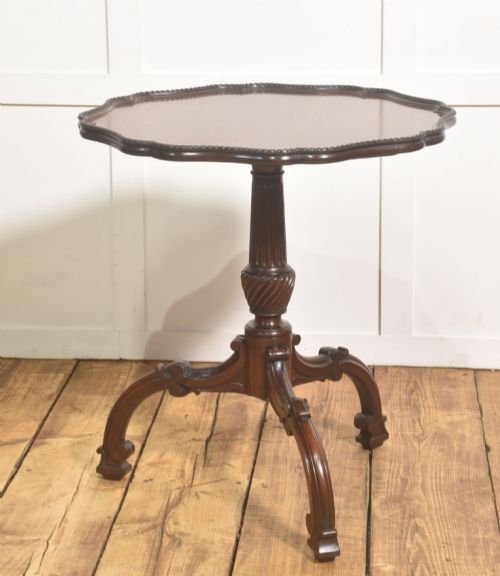
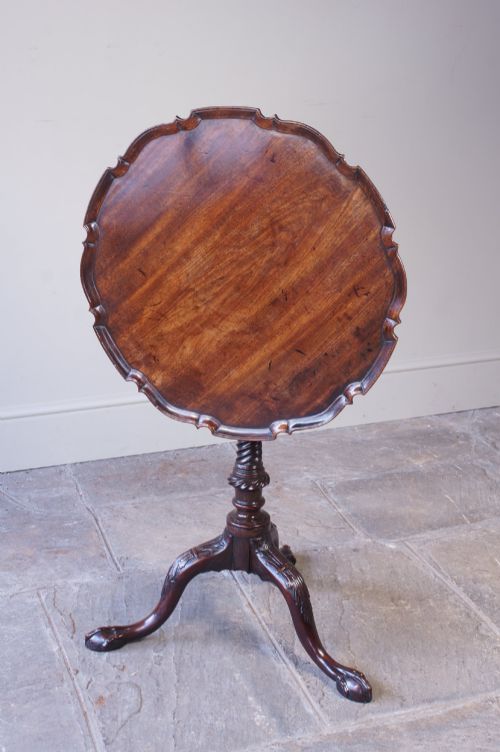
Makers produced these tables with circular, oval, square, or serpentine tops, often incorporating carved pie crust edges or birdcage mechanisms. Buyers seeking authenticity will find standard tripod bases alongside occasional pedestals and inlaid decoration.
How they were made
Cabinet makers constructed these tables primarily from solid or veneered timber such as mahogany, oak, walnut, and fruitwood. Selected hardwoods provided the structural integrity needed for slender tripod legs and central turning columns.
Joinery techniques included mortise and tenon connections for the leg assemblies alongside specialised pivoting hardware like birdcage mechanisms. Artisans shaped timber using hand saws, planes, and chisels, occasionally finishing surfaces with boxwood inlay or carved pie crust borders.
Listings feature oak, walnut, fruitwood, and mahogany tables spanning the Georgian, Regency, Victorian, and Edwardian periods.
What varies in quality
Quality in a georgian tilt top wine table rests upon the selection of timber and the crispness of execution. Dense, richly figured mahogany or burr walnut elevates a piece far above plain utility versions.
Proportion and stability dictate the upper tier of craftsmanship, where slender legs retain absolute rigidity through precise hand-cut joinery. Subtle detailing such as carved birdcage catches, moulded pie crust edges, and inlaid boxwood distinguish master workshops from standard regional production.
Gillow
The Georgian Tilt Top Wine Table Glossary
- Tilt top
- A pivoting table surface that swings from horizontal to vertical to save floor space when pushed against a wall.
- Tripod base
- A central pedestal support resting on three spreading legs, typical of eighteenth-century occasional tables.
- Birdcage
- A timber framework beneath the table top that allows the surface both to rotate and to tilt.
- Pie crust edge
- A raised, carved, and scalloped perimeter fashioned from the solid timber of the table top.
- Snap top
- A spring-loaded or catch-secured mechanism holding the pivoting table top firmly in its horizontal position.
Georgian Tilt Top Wine Table: Frequently Asked Questions
What was a tilt top wine table used for?
These tables functioned as portable surfaces for serving wine or holding candles and books during evening gatherings. Owners could tip the top flat against a wall when the floor space was needed for other activities.
Their lightweight construction allowed servants to move them easily from room to room as daily routines shifted within the house.
How do I spot a genuine Georgian table?
Examine the construction methods visible beneath the top and around the tripod base for hand-cut joinery and period timber patination. Genuine examples display natural wear patterns and timber shrinkage appropriate to the eighteenth century.
Check the pivot mechanism for traditional wooden or early iron fixings rather than modern replacement hardware.
How do I care for antique mahogany and oak?
Keep wooden surfaces away from direct sunlight and strong heat sources to prevent the timber from drying out or splitting. Apply traditional beeswax periodically to maintain the natural lustre and feed the grain.
Use coasters and felt pads beneath objects placed on the surface to protect the polish from moisture and scratches.
Why do some tops rotate as well as tilt?
The inclusion of a rotating mechanism, often called a birdcage, allowed the user to angle the table surface conveniently without moving the entire heavy base. This feature represents a finer level of period cabinet making.
It also ensured the table sat flush against a wall in whichever orientation suited the room layout best.