
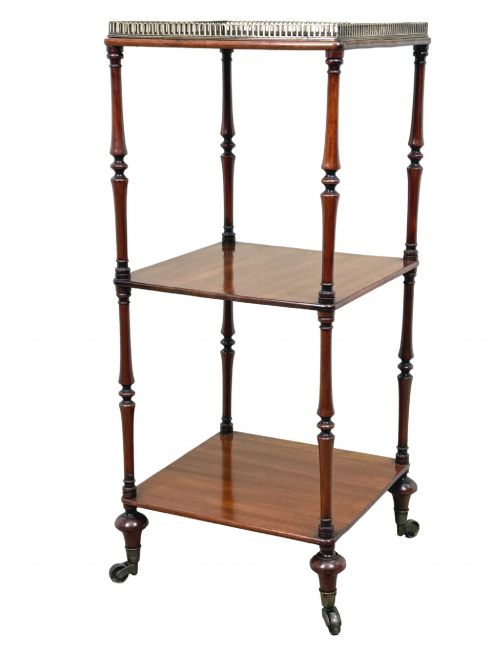
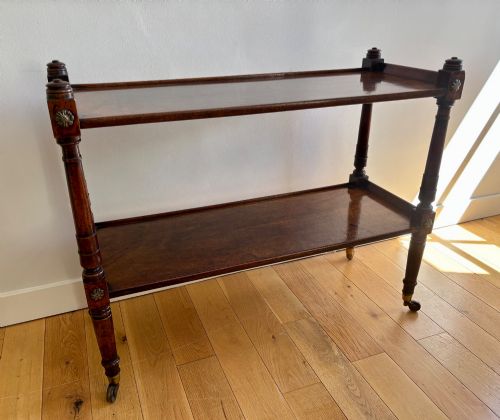
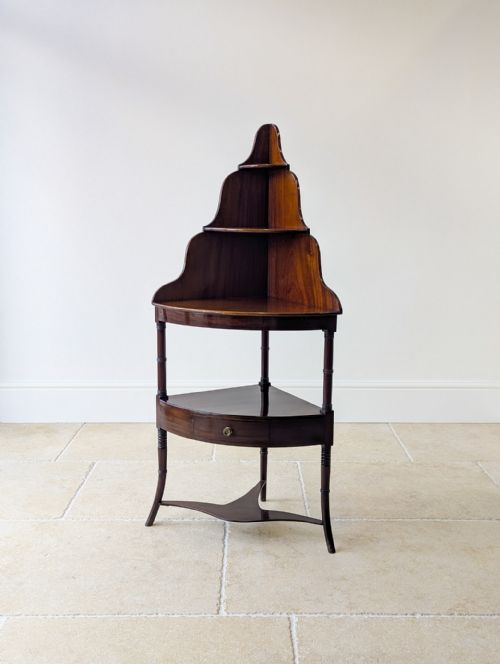

Georgian Tiered Display Stand
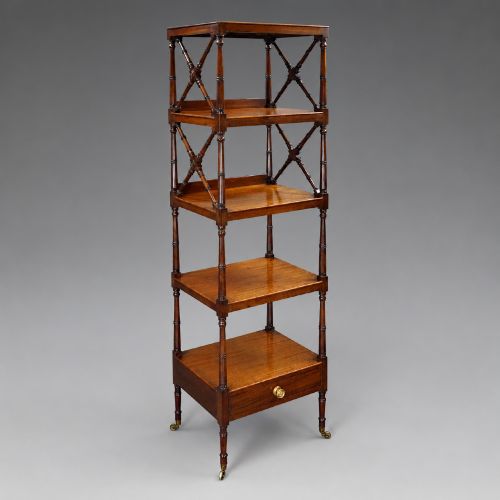
A georgian tiered display stand organises precious objects through ascending levels of mahogany, rosewood or oak.
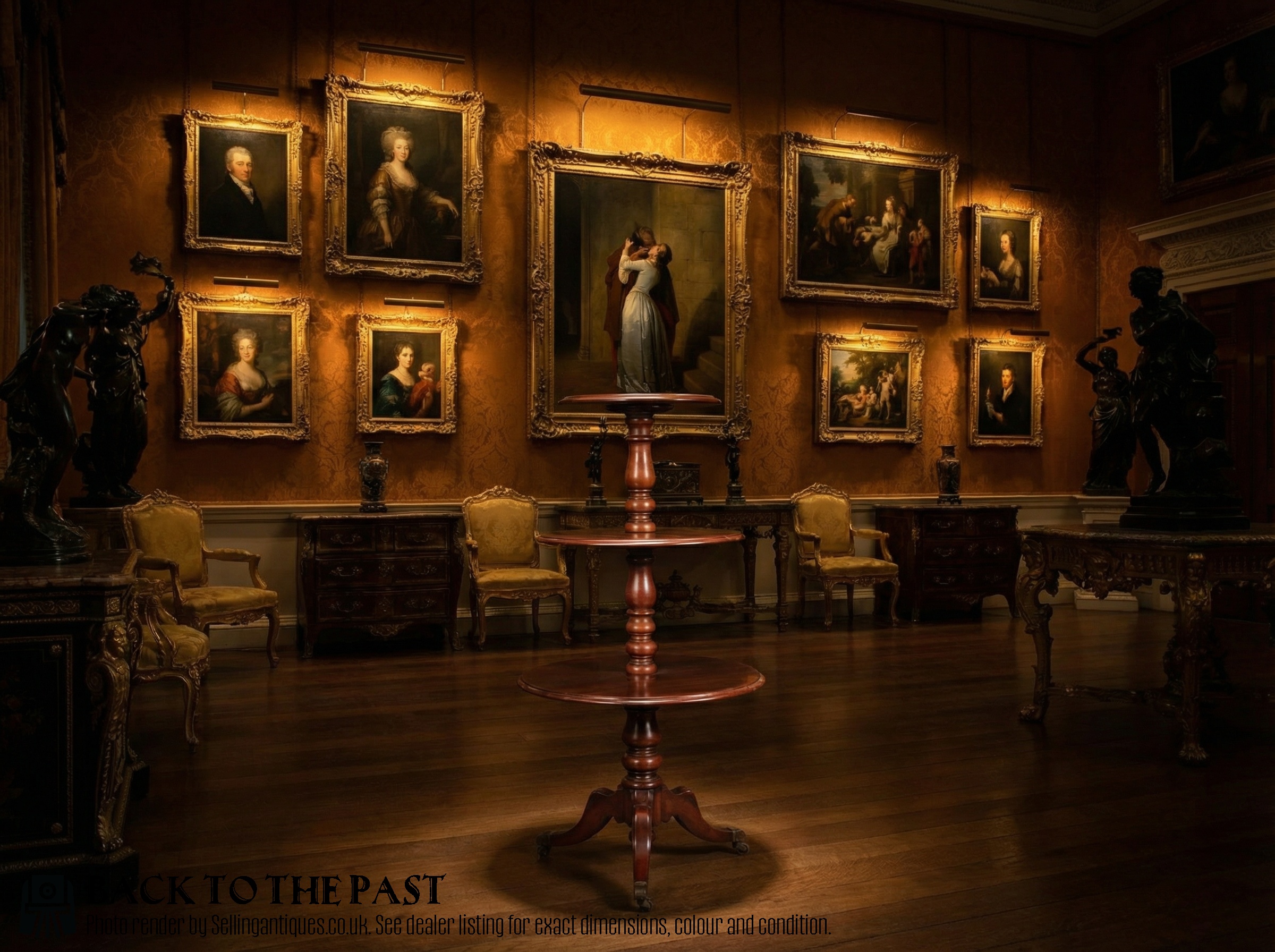
Georgian Tiered Display Stand
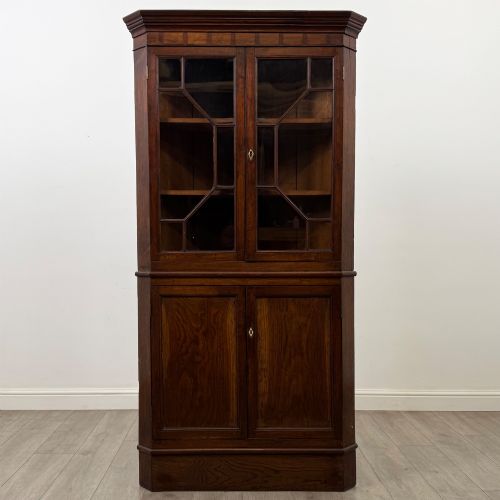
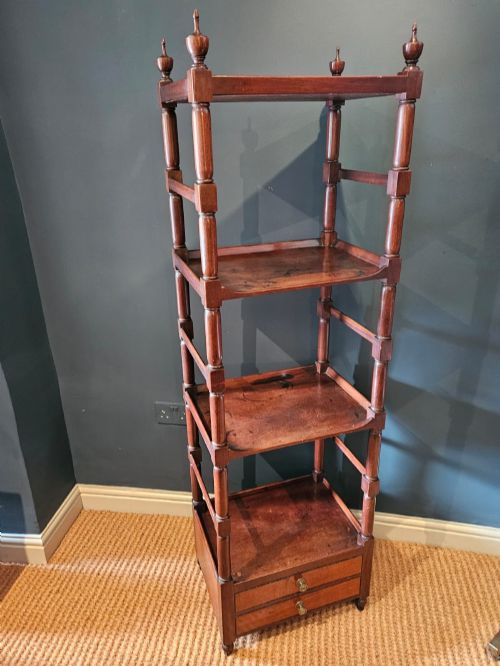
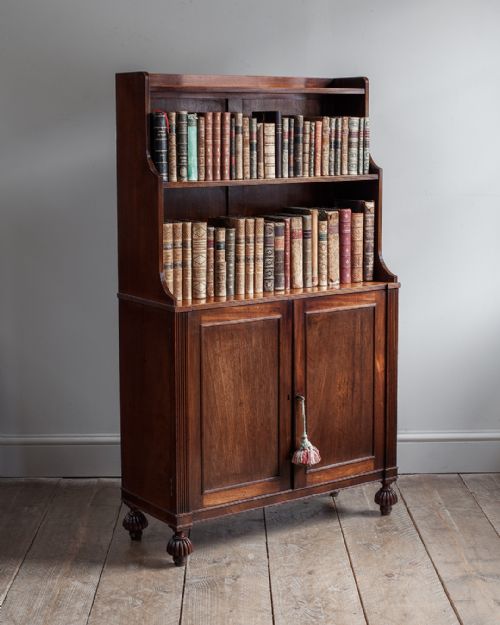
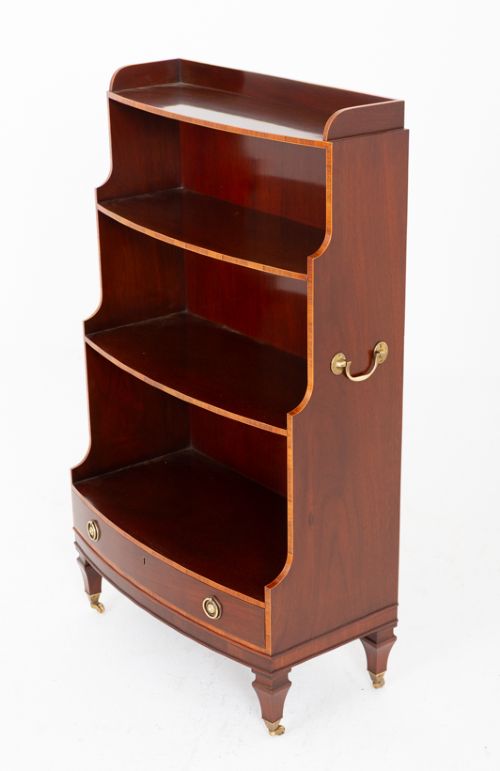
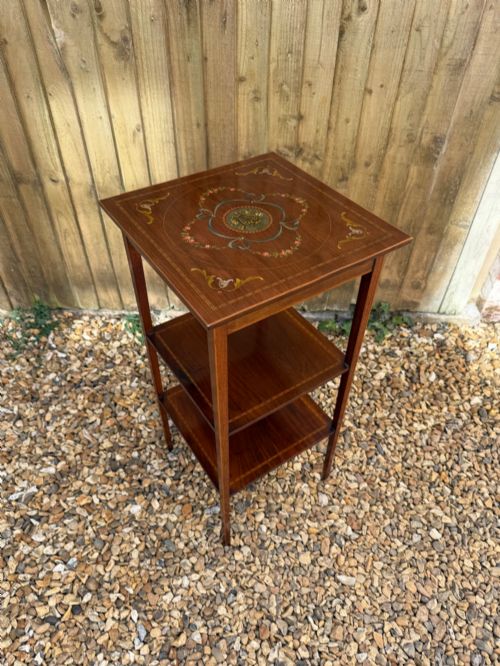
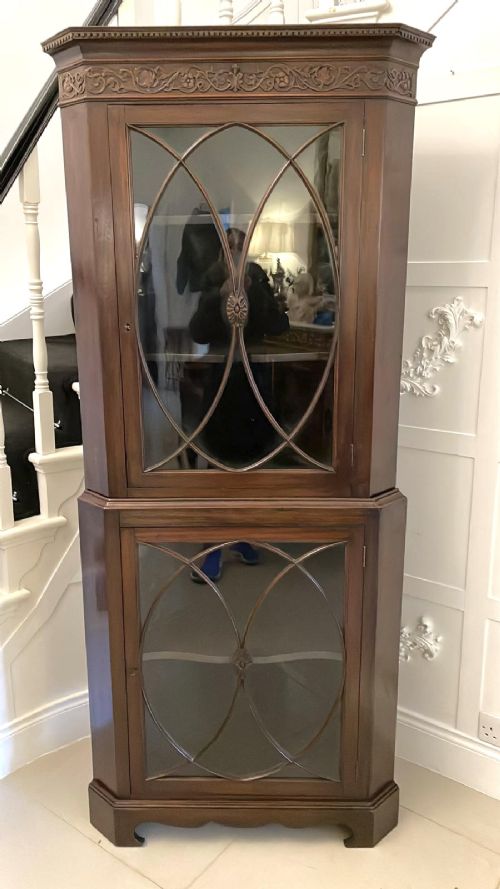
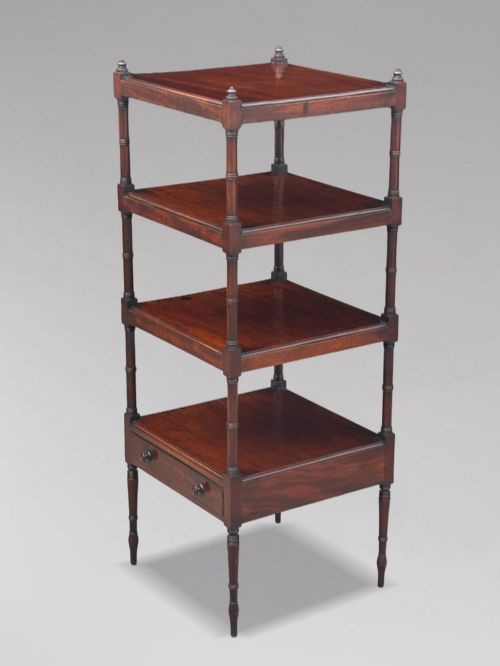
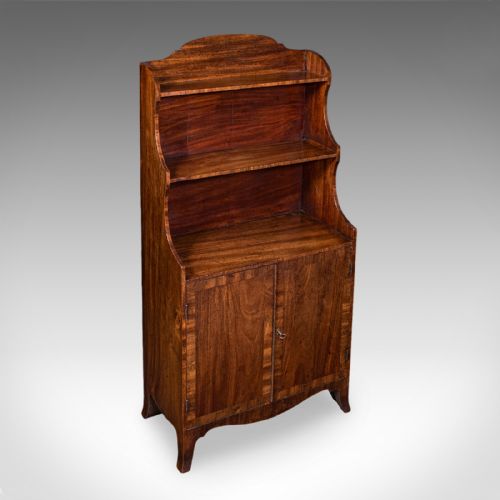
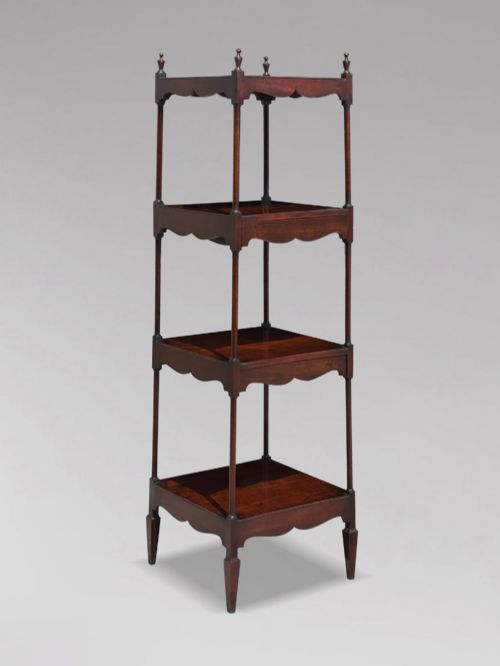
Buyers seeking a georgian tiered display stand typically encounter freestanding whatnots, etageres, and waterfall bookcases spanning the Georgian, Regency, and nineteenth century periods. These architectural pieces provide open levels for books, ceramics, and small ornaments.
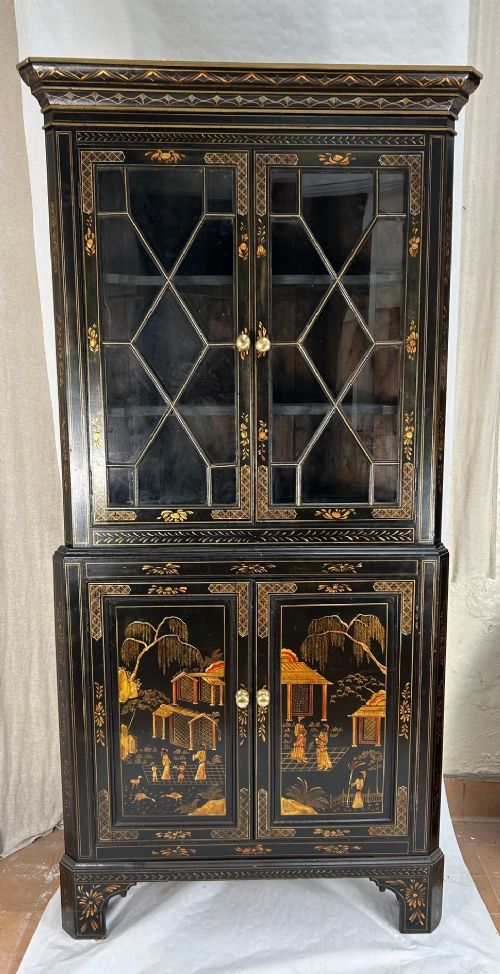
The form encompasses corner cabinets, dumb waiters, and music stands alongside traditional open shelves. Mahogany remains the dominant timber, often complemented by rosewood, oak, and painted finishes across various regional workshops.
What varies in quality
Quality diverges in the crispness of turned columns, the refinement of timber grain, and the overall structural proportion. Pieces attributed to specific cabinetmakers show superior timber selection and joinery precision.
The integration of secondary woods, the weight of brass castors, and the subtlety of carved details distinguish standard production from exceptional examples.
Some nineteenth century stands double as music racks, proving our ancestors had strong opinions on where to store sheet music.
Gillows
The Georgian Tiered Display Stand Glossary
- Whatnot
- An open shelving unit with multiple tiers designed for displaying ornaments or books. This form became popular during the late eighteenth century.
- Etagere
- A set of open shelves for displaying small objects. The term derives from French furniture terminology.
- Waterfall bookcase
- A set of open shelves where each upper tier recedes behind the one below it. This creates a cascading profile.
- Dumb waiter
- A tiered freestanding stand featuring revolving or stationary circular trays. These were traditionally utilised for serving food.
- Astragal glazed
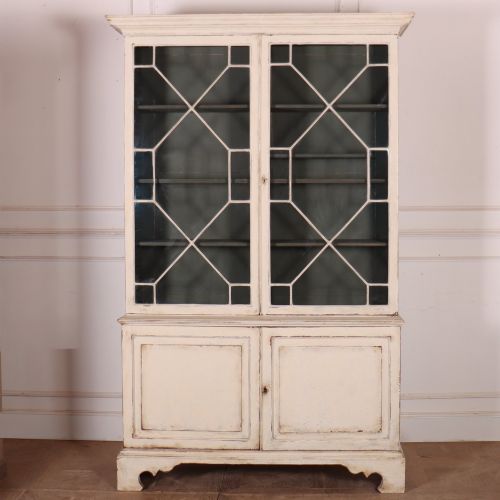
- Glass secured within a framework of wooden bars on cabinet doors. This technique defines classical display cabinetry.
Georgian Tiered Display Stand: Frequently Asked Questions
What is a tiered display stand used for?
These multi-level units served diverse domestic purposes, from holding dining room porcelain and serving dishes as dumb waiters to displaying books and decorative ornaments on open shelves.
Today, they function effectively in modern interiors for exhibiting collections of small objects while taking up minimal floor space.
How do I identify a Georgian piece?
Examination of timber density, hand-cut joinery, and period-appropriate secondary woods helps determine age. Stylistic markers include turned uprights and classical proportions.
Maker attributions often rely on distinctive construction traits associated with documented workshops of the era.
Are corner stands practical for small rooms?
Corner cabinets and washstands utilise unused wall angles efficiently. Their tapering or triangular footprints allow placement in compact spaces.
Open etageres and corner shelves provide vertical storage without overwhelming a small interior.
What woods were commonly used?
Mahogany represents the predominant material across these tiered stands, ranging from rich brown tones to figured grains. Rosewood, oak, and painted timber also appear frequently.
Secondary timbers like pine or oak frequently form the interior structures and backboards of the pieces.