





Georgian Tambour Commode
A georgian tambour commode is a neat bedside cabinet with a sliding slatted door, prized for its clever concealed storage and fine timber.
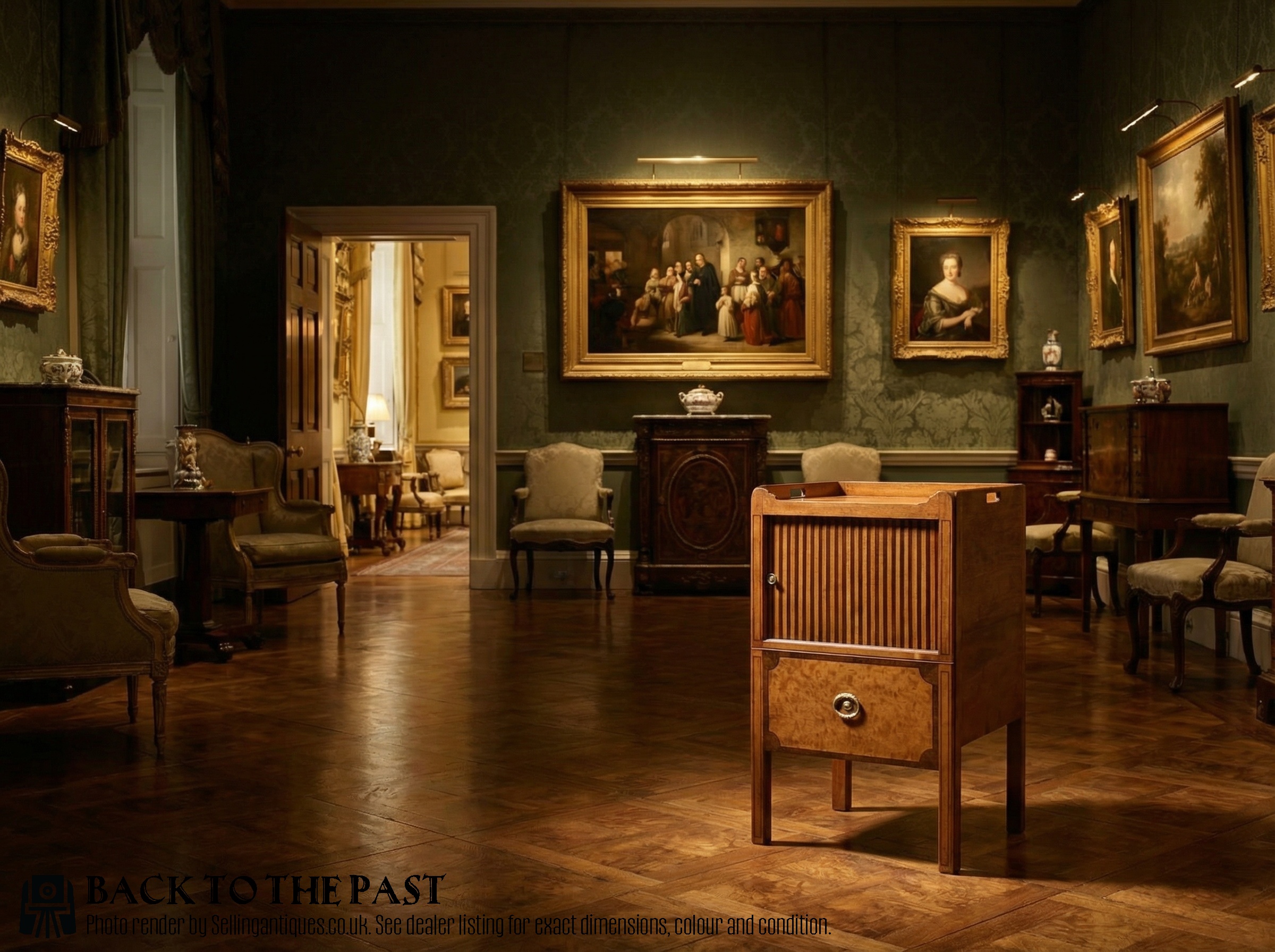
Georgian Tambour Commode
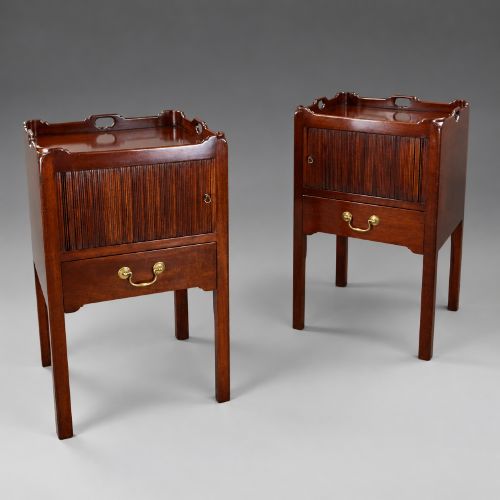
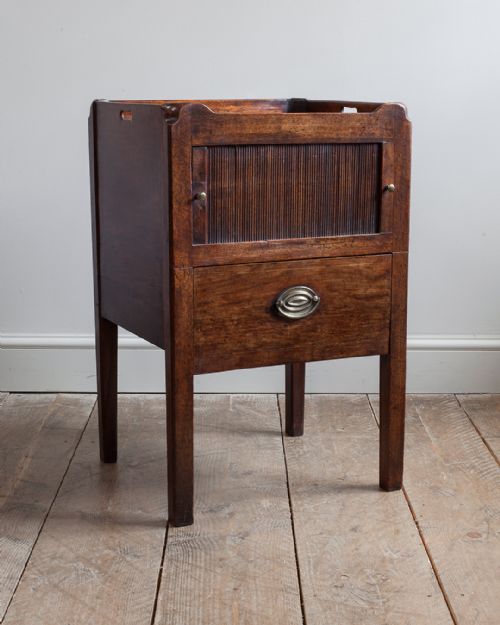
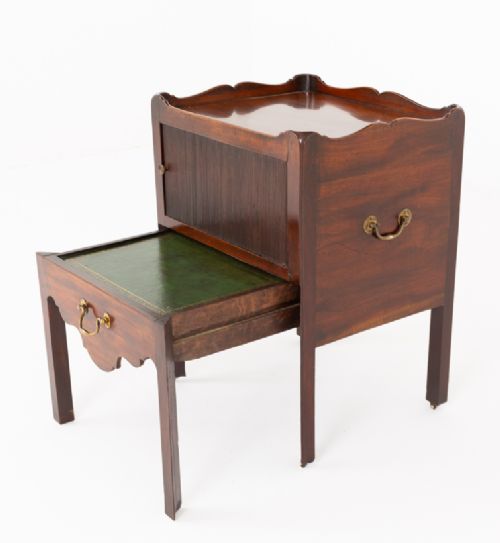
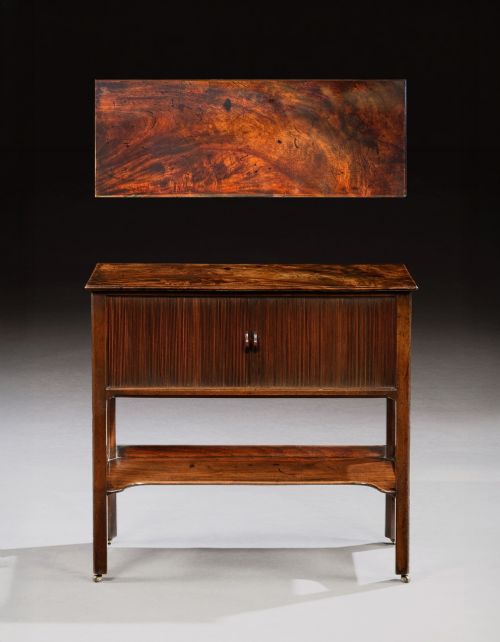
A georgian tambour commode is primarily found as a bedside cabinet, nightstand, or small bedside cupboard dating from the Georgian, George III, and Regency periods, alongside later revival pieces from the twentieth century. These compact items take the form of small cabinets, chests of drawers, and credenzas designed for domestic bedrooms.
The defining feature of these pieces is the tambour front, a flexible sliding shutter made of vertical strips of wood glued to a canvas backing. This mechanism conceals a compact storage compartment, often accompanied by a tray top or enclosed surface designed for practical use beside a bed.
What varies in quality
Quality rests in the precision of the tambour mechanism and the smoothness of its travel, which depends on careful alignment of the tiny wooden slats. A superior piece maintains tight joints and fluid movement despite humidity changes over the centuries.
The choice of timber grain and the crispness of any boxwood inlay dictate the visual standing of the cabinet. Finer examples display carefully matched flame mahogany veneers and well-proportioned serpentine, bow-front, or concave shapes rather than plain box forms.
Form variations include serpentine fronts, bow fronts, concave shapes, and tray tops combined with bedside cupboards.
Gillows
The Georgian Tambour Commode Glossary
- Tambour
- A flexible shutter door constructed from narrow vertical strips of wood attached to a fabric backing. It slides along a concealed track to enclose a cabinet opening.
- Commode
- A small cabinet or chest of drawers designed for bedroom use. In this context, it often refers to bedside tables and nightstands with enclosed storage.
- Tray top
- A raised rim around the upper surface of a bedside table or commode. This feature prevents small items from rolling off the edges.
- Serpentine
- A furniture front curving outward in the centre and inward at the sides in a gentle 'S' shape. This profile demands advanced woodworking skill to execute cleanly.
- Satinwood
- A pale, lustrous exotic hardwood used for contrasting inlay work and banding. It provides a bright golden accent against darker mahogany.
Georgian Tambour Commode: Frequently Asked Questions
What is a tambour door?
A tambour door consists of narrow vertical wooden slats glued to canvas, allowing the shutter to slide smoothly around a curved cabinet track.
This ingenious mechanism hides the interior storage without needing clearance for swinging doors in a tight bedroom space.
Where were these cabinets used?
These pieces served primarily as bedside tables or nightstands in Georgian bedrooms, holding chamber pots, wash equipment, or personal items.
Today they function equally well as small side tables or lamp stands in living spaces.
How do I spot a later reproduction?
Twentieth-century pieces often show different internal timber choices, machine-cut tracks, and modern adhesive traces behind the slats.
Examination of the timber patination, drawer linings, and hand-cut dovetails helps separate eighteenth-century originals from later copies.
Why do some tops have galleries?
Tray tops or raised galleries kept water jugs, glasses, and personal effects secure on the upper surface during the night.
This practical feature prevents spills from reaching the floor and protects the polished mahogany surface.