

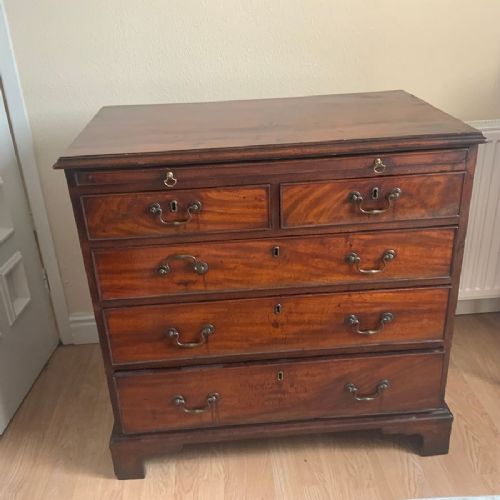
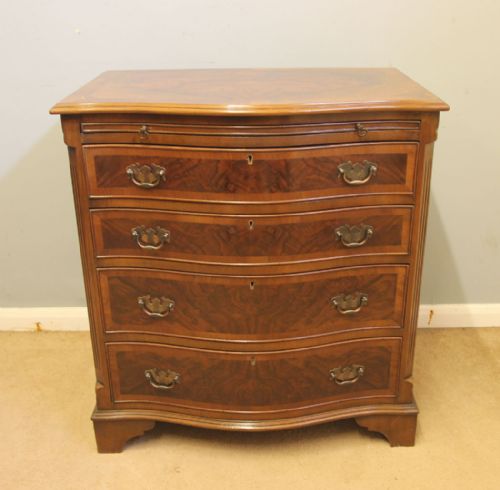


Georgian Tallboy with Slide
A georgian tallboy with slide offers towering storage paired with a pull-out surface, bringing ingenious eighteenth-century utility straight into a modern bedroom.
Georgian Tallboy with Slide
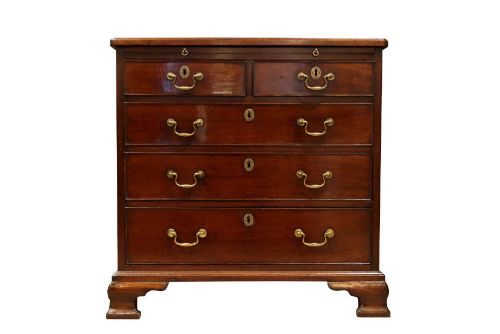
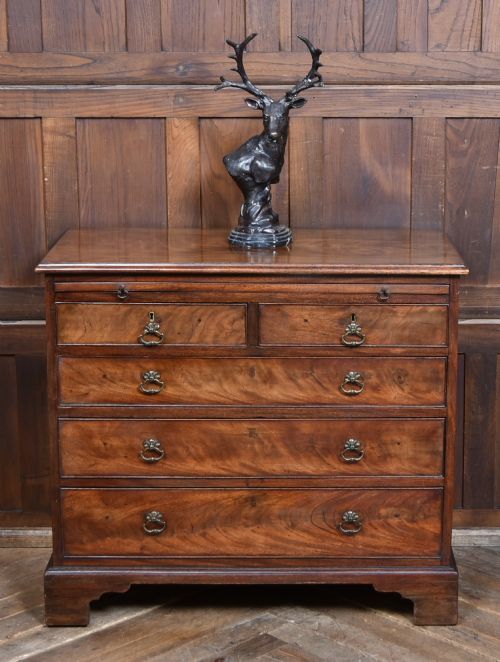
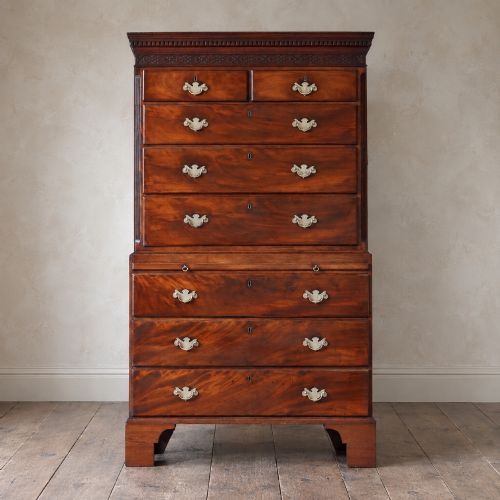
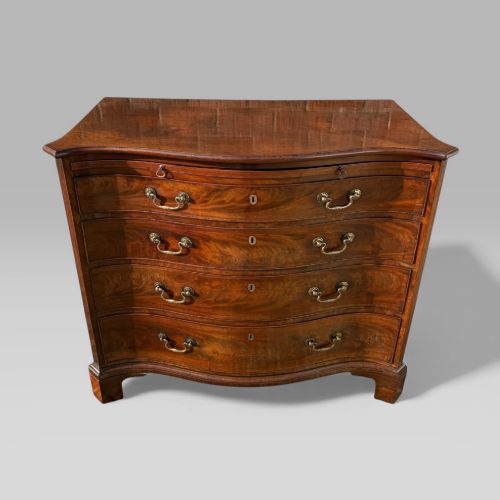
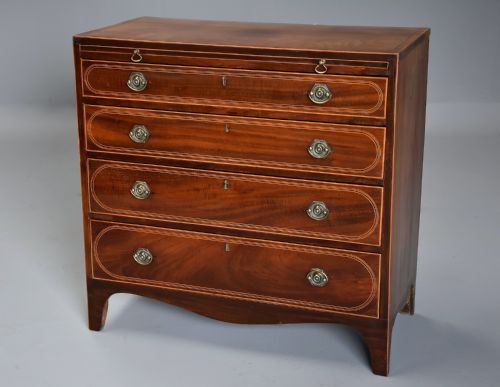
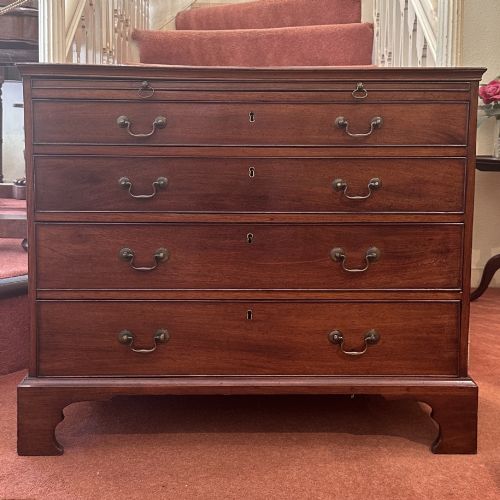
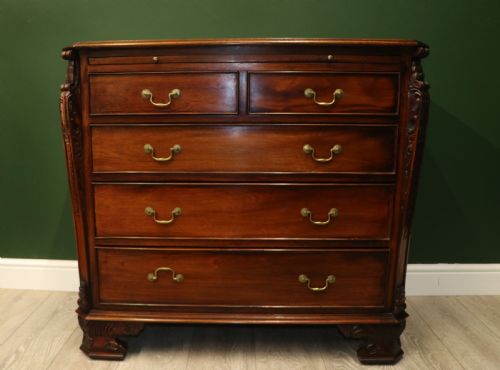
A georgian tallboy with slide typically takes the form of a chest on chest or a bachelor's chest, rising tall in the room to maximise drawer space. These pieces combine multiple tiers of graduated drawers with a pull-out brushing slide, designed originally for grooming or writing while standing.
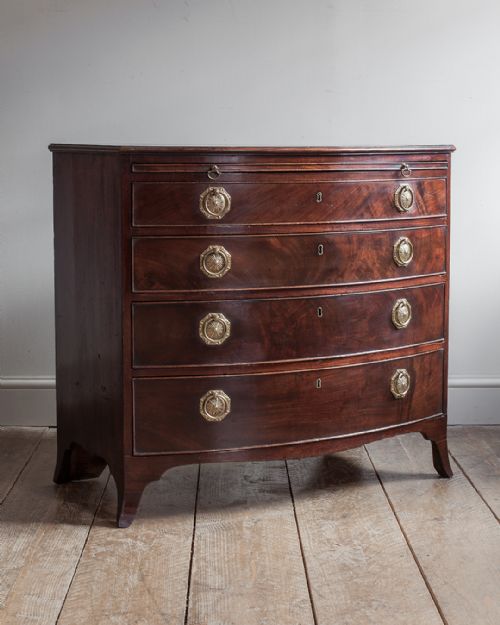
The pieces on this page span the Georgian and George III periods alongside later nineteenth-century revivals, constructed primarily as chest of drawers and linen press forms. Mahogany dominates the selection, appearing in figured, flame, and standard varieties alongside occasional examples in burr walnut and oak.
Buyers will most frequently encounter eighteenth-century designs alongside nineteenth-century interpretations, ranging from compact proportions to imposing double-body tallboys. Each variant maintains the defining architectural presence and functional sliding shelf that mark the category.
How they were made
Cabinet makers constructed these pieces using solid timbers and choice veneers, applying mahogany, flame mahogany, and burr walnut over secondary woods like oak and pine. The pull-out slides frequently feature baize inserts or polished wood surfaces, built to run smoothly within dedicated housings beneath the top drawers.
Hardware played an essential structural and decorative role, with original brass handles and escutcheons secured through the drawer fronts. Construction techniques relied on dovetail joints for the drawers and robust frame designs to support the stacked weight of chest-on-chest tallboy configurations.
Forms on this page include chest on chest tallboys, linen presses, and bachelor chests with baize-lined slides.
What varies in quality
The grade of timber sets the visual hierarchy, with highly figured flame mahogany and burr walnut commanding attention through rich grain patterns and deep chatoyancy. Superior examples display meticulous matching of veneers across the drawer fronts and harmonious proportions between the upper and lower sections.
Execution of secondary details dictates the standing of a piece, from the crispness of carved mouldings to the integrity of the sliding mechanism. The retention of original brass hardware and the smooth operation of every drawer and slide reflect the care taken by the original maker.
The Georgian Tallboy with Slide Glossary
- Brushing slide
- A pull-out shelf integrated into the furniture frame, originally used for brushing clothes or writing.
- Chest on chest
- A tall storage unit formed by stacking a smaller chest of drawers directly on top of a larger base chest.
- Linen press
- A tall cabinet featuring upper sliding trays enclosed by doors, positioned above lower storage drawers.
- Flame mahogany
- A veneer cut from the fork of the mahogany tree, producing a distinctive flickering flame-like grain pattern.
- Baize
- A coarse woolen material often used to line the writing and brushing surfaces of pull-out slides.
Georgian Tallboy with Slide: Frequently Asked Questions
What is a brushing slide used for?
The pull-out slide served as a temporary surface for folding garments, grooming, or writing correspondence in the bedroom. Owners could pull it out easily when needed and push it flush into the cabinet frame when not in use.
In period settings, this feature offered practical convenience without requiring a separate desk or table. Today, it provides a functional display ledge or a charming nod to eighteenth-century domestic habits.
How do I tell a tallboy from a standard chest?
A traditional tallboy, often referred to as a chest on chest, consists of two distinct cabinet sections stacked vertically to achieve greater height. This design provides significantly more storage than a standard low chest of drawers while occupying a smaller floor footprint.
Standard chests of drawers sit lower in the room as a single unit, whereas tallboys command vertical space with imposing proportions. Many tallboy variants also incorporate specialised top sections, such as linen presses with internal sliding trays.
Are these pieces suitable for modern bedrooms?
These tall cabinets offer exceptional vertical storage capacity, making them ideal for modern bedrooms where floor space is at a premium. The deep drawers accommodate clothing easily while the compact footprint preserves room layout.
Living with these pieces brings historic character and warmth to contemporary interiors without sacrificing practical utility. The sliding shelf continues to offer a clever spot for daily accessories.
How do I distinguish Georgian from later revival pieces?
Authentic Georgian pieces exhibit eighteenth-century construction traits, including hand-cut dovetails, native timber usage, and specific cabinet proportions reflective of the period. Makers of that era relied on solid secondary woods like oak and pine inside the carcass.
Nineteenth-century revival pieces often display heavier proportions, machine-finished elements, or distinct Victorian secondary woods. Comparing the interior construction methods and timber ageing helps clarify the exact period of manufacture.