


Georgian Style Window Bench
A georgian style window bench offers a refined seat for an alcove, combining period elegance with practical comfort.

Georgian Style Window Bench
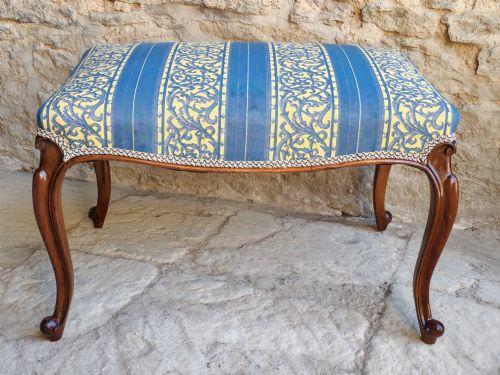
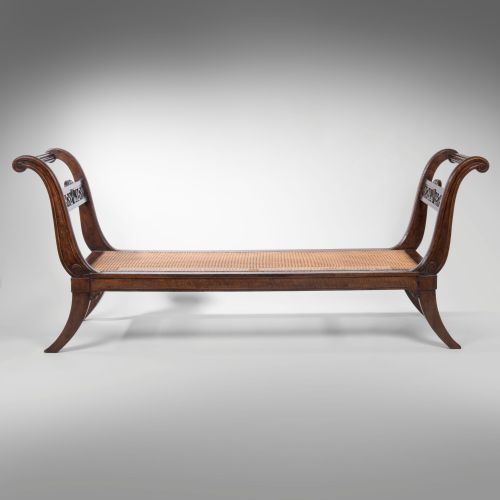
A georgian style window bench encompasses low seating forms designed to sit beneath sills, including window seats, long stools, and small settees. The pieces appearing in this category span the eighteenth and nineteenth centuries, along with later revivals from the Edwardian era and the early twentieth century.
Makers adapted these benches for hallways and parlours as well as window bays, utilising sturdy timber frames and upholstered tops. Surviving examples range from plain mahogany and oak frames to gilded or painted versions with elaborate carving.
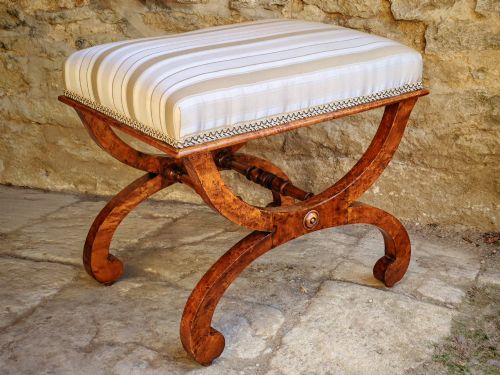
Buyers will encounter forms influenced by specific classical idioms, such as Hepplewhite shield backs, Regency X-frames, and Adam neoclassical motifs. These variations provide flexible seating options that complement both period interiors and modern rooms.
How they were made
Cabinetmakers constructed these frames primarily using dense hardwoods like mahogany, walnut, and oak, often selecting burr maple for decorative contrast. Timber selection dictated the strength of slender legs and curved rails.
Upholstery completed the seats, employing traditional stuffing techniques beneath fabrics such as velvet and woven textiles. Brass accents and gilding provided finishing details on formal Regency and neoclassical pieces.
Listings feature mahogany, walnut, and oak as the primary woods utilised for these benches, alongside velvet and cane upholstery.
What varies in quality
The distinction between standard examples and exceptional pieces rests upon the crispness of the carved detail and the choice of timber. Finely figured mahogany and well-defined gilding elevate the status of a bench.
Proportion and structural harmony separate straightforward utilitarian seating from high-style workshop production. Pieces bearing distinct stylistic affinities to known makers display superior joinery and refined silhouettes.
Gillows
The Georgian Style Window Bench Glossary
- X-frame
- A structural support formed by two intersecting diagonal members resembling the letter X. This design appeared frequently on Regency window seats and folding stools.
- Giltwood
- Timber coated with a thin layer of gold leaf applied over a prepared gesso surface. It was common on formal decorative seating from the eighteenth and nineteenth centuries.
- Shield back
- A chair or settee back shaped in the outline of a heraldic shield. This characteristic form is heavily associated with the Hepplewhite style.
- Claw and ball
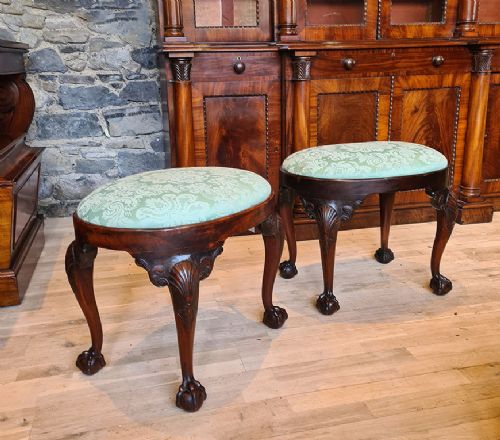
- A carved furniture foot depicting a bird's talon grasping a spherical ball. Cabinetmakers utilised this motif on walnut and mahogany furniture during revival periods.
Georgian Style Window Bench: Frequently Asked Questions
Where should I place a window bench?
These benches fit naturally beneath low window sills, in wide hallways, or at the foot of a bed. Their compact depth allows them to provide extra seating without blocking natural light.
In living areas, they also serve as low occasional tables when topped with a rigid tray, making them adaptable to modern room layouts.
How do I identify a Regency window seat?
Regency window seats often feature classical architectural motifs, sabre legs, or prominent X-frame supports. Mahogany and giltwood finishes predominate in this group.
They frequently display clean horizontal lines influenced by classical Greek and Roman designs, distinguishing them from earlier ornate rococo pieces.
Are Edwardian window benches authentic antiques?
Edwardian window benches date from the early twentieth century and represent a period of revival craftsmanship. Makers of this time closely copied eighteenth and nineteenth-century Georgian styles using traditional timbers.
While not originating in the Georgian era, these pieces possess genuine age and historical craftsmanship in their own right.