



Georgian Style Wall Tables
Georgian style wall tables bring architectural presence into a hallway or reception room through classic proportions and refined timber work.
Georgian Style Wall Tables
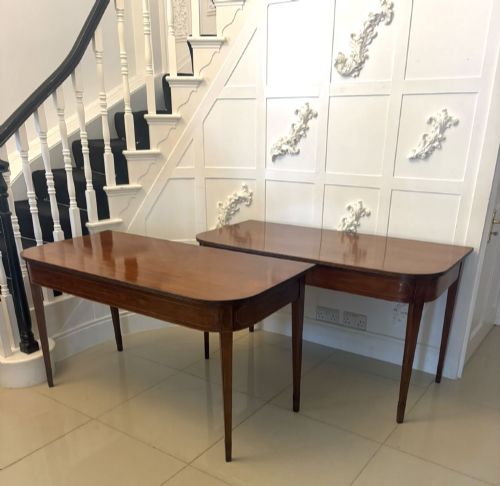
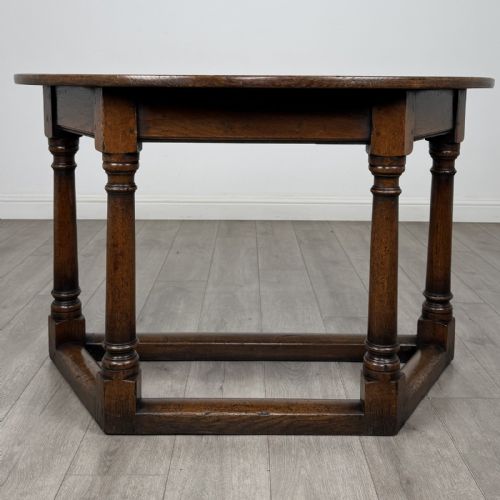
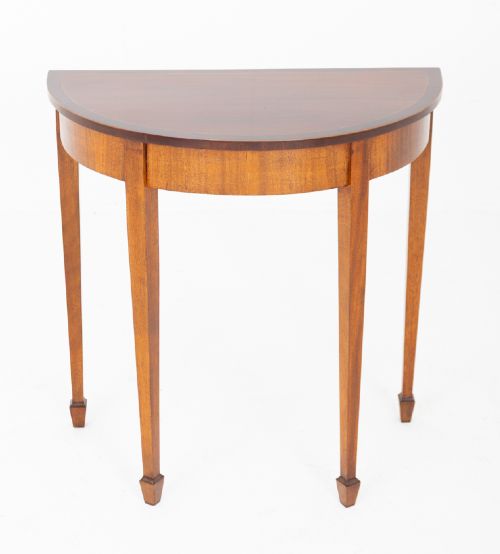
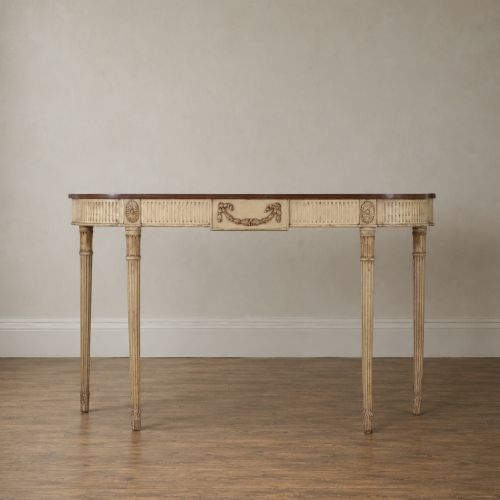
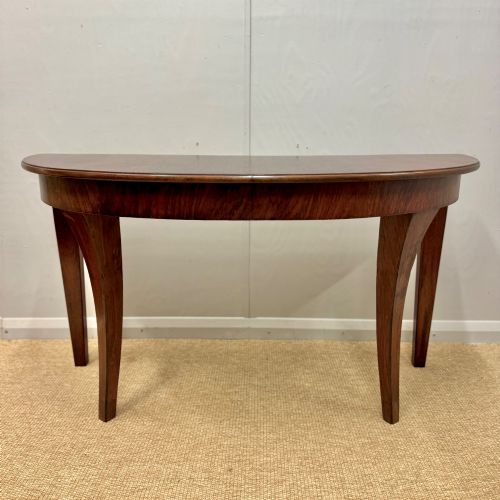
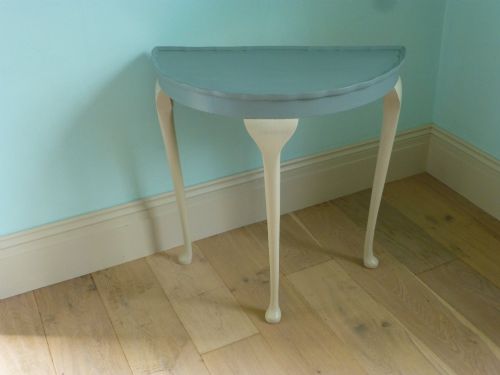
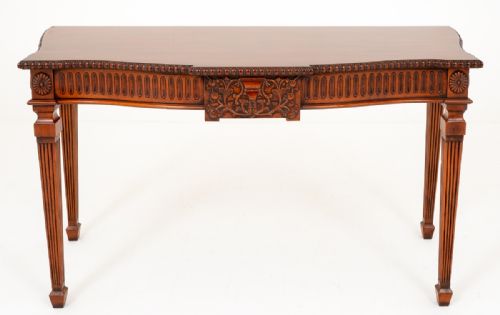
Georgian style wall tables encompass side tables, console tables, and pier tables designed to sit flush against a wall in hallways and principal rooms. When you search for Georgian style wall tables, you encounter demi-lune, serpentine, and rectangular forms rooted in eighteenth-century proportions.
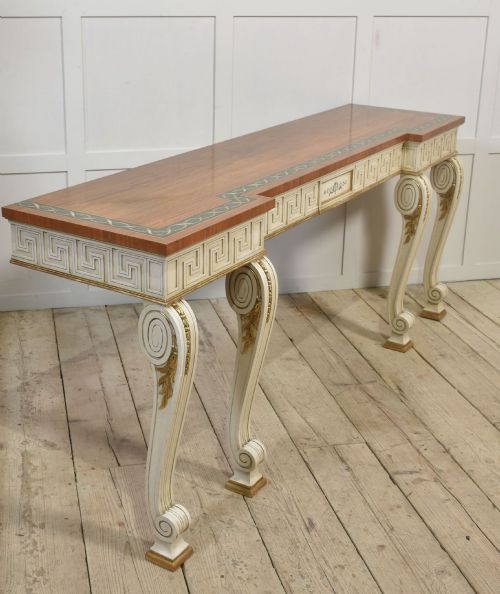
The pieces appearing on this page span genuine eighteenth-century origins through to later nineteenth-century and early twentieth-century revivals. Mahogany and satinwood predominate, alongside painted and giltwood surfaces that reflect neoclassical and rococo influences.
Materials and construction methods
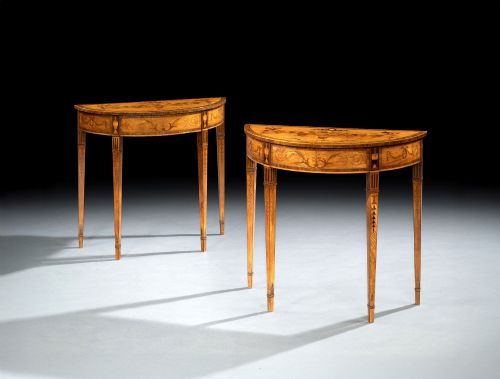
Cabinetmakers utilised solid timbers and veneers, predominantly mahogany and satinwood, often enhanced with marquetry, crossbanding, and delicate inlay work. Carved details in walnut and giltwood appear alongside painted and gilt finishes applied to wooden frames.
Many examples incorporate marble tops or feature hand-painted decorative motifs, combining structural joinery with surface ornamentation characteristic of the neoclassical and revival periods.
Georgian Style Wall Tables Retail Price Guide 2026
Typical asking prices for georgian style wall tables among the pieces listed under this phrase on Sellingantiques today, from the lower quarter to the upper quarter. They describe what is for sale here now, not the wider market.
The listings span the eighteenth, nineteenth, and early twentieth centuries, featuring mahogany, satinwood, marble, and giltwood across console and side table formats.
Judging quality and craftsmanship
Quality rests in the crispness of the carving, the selection of timber figures, and the precision of the inlay work. Finer examples show thoughtful integration between the timber frame and decorative elements such as gilt gesso or hand-painted panels.
The distinction between eighteenth-century originals and later revival pieces lies in the depth of hand-finishing and the integrity of the structural joinery over time.
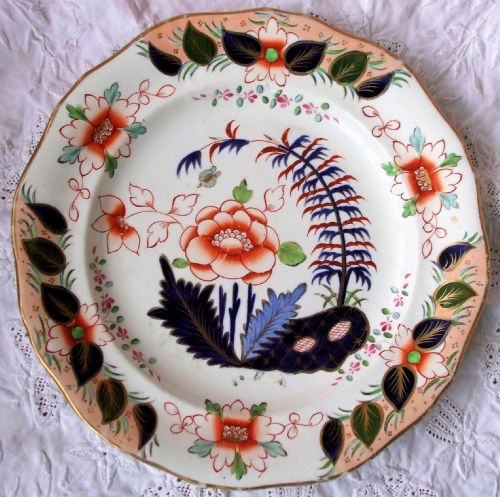
John Davenport of Longport·Robert Adam
The Georgian Style Wall Tables Glossary
- Demi-lune
- A half-moon shape commonly found in console and side tables designed to stand flat against a wall. This profile became especially popular during the neoclassical revival.
- Pier table
- A table designed to stand against the wall between windows, frequently paired with a matching wall mirror above. These pieces often feature decorative marble tops and carved giltwood frames.
- Marquetry
- The art of applying decorative pieces of veneer to a structure to form intricate designs or pictures. Craftsmen used contrasting timbers to create geometric and floral patterns.
- Crossbanding
- A border technique where thin strips of veneer are laid running perpendicular to the grain of the main surface. This frames the top or drawers of a quality table.
Georgian Style Wall Tables: Frequently Asked Questions
How do I distinguish original Georgian from revival pieces?
Examination of the timber, construction techniques, and tool marks reveals the age of a piece. Eighteenth-century furniture exhibits hand-cut joinery and timber ageing appropriate to its era.
Revival pieces from the nineteenth and early twentieth centuries adopt the same neoclassical vocabulary but display manufacturing methods and secondary woods consistent with their later production dates.
What is the difference between a side table and a console table?
Side tables typically stand on four legs and function independently against any wall. Console tables historically relied on wall brackets or two front legs for support, though many later versions stand freely.
In modern usage, the terms often overlap, particularly with wall-fixed demi-lune and pier formats.
How do I care for antique mahogany and satinwood?
Routine maintenance requires dusting with a soft, dry cloth and avoiding placement near direct heat sources or strong sunlight. These precautions protect fragile veneers and rich timber finishes from drying out.
Occasional applications of appropriate wax feed the wood and preserve the natural sheen without building up heavy residues.