



Georgian Style Silver Tableware
Georgian style silver tableware brings classical symmetry and proportion to the dining table through pieces designed for formal serving.
Georgian Style Silver Tableware
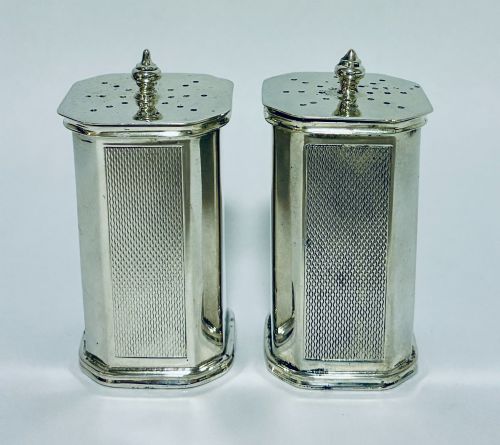
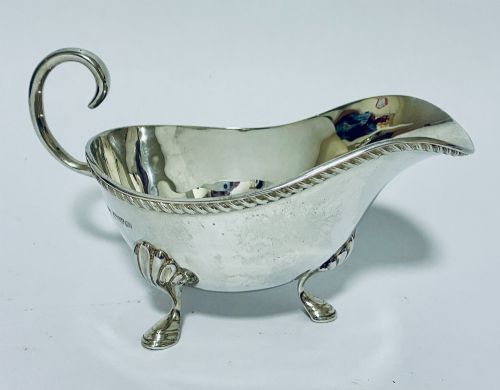
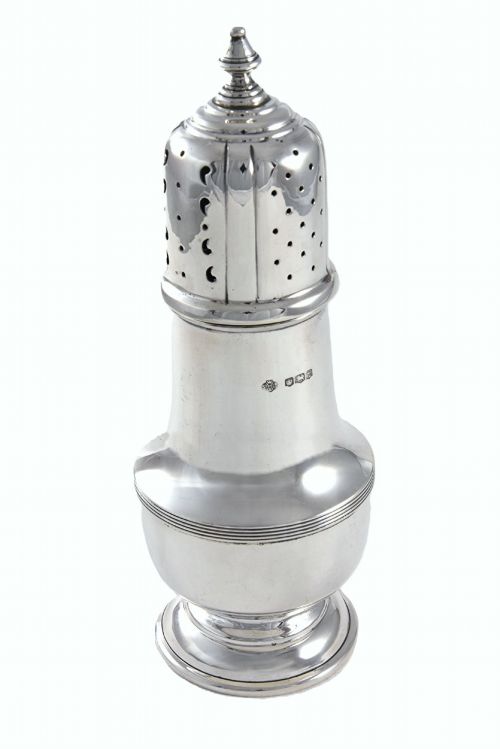
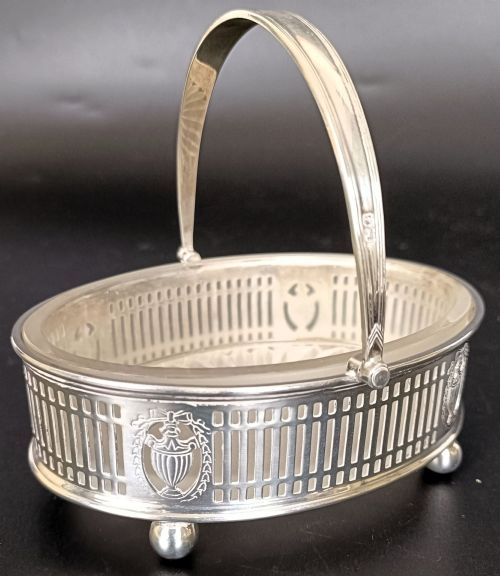
Georgian style silver tableware encompasses functional dining items such as sauce boats, sugar casters, mustard pots, baskets, and tea urns. Many examples date from the revival periods of the late nineteenth and early twentieth centuries, echoing earlier eighteenth-century forms.
Buyers frequently encounter condiments and servers produced during the George V and Victorian eras alongside occasional genuine Georgian period pieces. These objects reflect traditional dining rituals focused on hospitality and formal table settings.
Materials and Technique
Construction relies primarily on sterling silver and silver plate, shaped through casting, hammering, and assembly. Manufacturers also incorporated glass inserts, notably cobalt blue glass liners, within openwork baskets and mustard pots.
Surface treatments range from plain polished finishes to intricate neoclassical chasing and gadrooned borders. Makers utilised standard workshop techniques to achieve the substantial weight and crisp definition characteristic of these styles.
The listings show items spanning from the Georgian period through Victorian revivals and into the twentieth century, incorporating sterling silver, silver plate, and cobalt blue glass.
Indicators of Quality
Quality rests upon the crispness of cast details, the weight of the metal, and the balance of the form. Superior pieces maintain clear hallmarks and retain their original liners and structural integrity without distortion.
The distinction between standard commercial output and finer workshop production appears in the hand-finishing of handles, feet, and borders. Heavier gauge metal ensures durability and a more satisfactory hand feel during daily use.
The Barker Brothers·Charles Stuart Harris·Robert Pringle And Sons·Viners Sheffield·Walker And Hall
The Georgian Style Silver Tableware Glossary
- Sterling silver
- A silver alloy containing 92.5 percent pure silver and 7.5 percent other metals, usually copper. This standard ensures sufficient hardness for functional tableware.
- Silver plate
- A base metal substrate coated with a thin layer of silver through electroplating or older Sheffield plating methods. It offers the appearance of solid silver at a different cost.
- Sauce boat
- An open vessel with a spout and handle used for serving gravies and sauces. They typically feature tripod or pad feet and neoclassical decorative motifs.
- Sugar caster
- A perforate-lidded jar used for sprinkling sugar over food. They often feature pear-shaped bodies on raised circular feet.
- Condiment set
- A matched group of small vessels for holding salt, pepper, and mustard. These sets often include bespoke blue glass liners and matching spoons.
Georgian Style Silver Tableware: Frequently Asked Questions
What is the difference between silver and silver plate?
Solid sterling silver consists of a regulated alloy of precious metal throughout its entire structure, bearing official hallmarks from an assay office. Silver plate applies a thin layer of silver over a base metal such as copper or nickel brass.
Over decades of cleaning, plated items may show the underlying metal through the silver layer, whereas solid pieces retain their metal composition beneath surface wear.
How do I clean antique silver tableware?
Maintenance requires a soft cloth and a specialised silver polish formulated to remove tarnish without abrading the metal surface. Harsh chemical dips should be avoided, particularly on items with fitted glass liners or delicate chased details.
Rinsing the pieces in warm soapy water after polishing removes residual cleaning agents and preserves the subtle highlights within the chased decoration.
Can I use these items for everyday dining?
Solid silver and plated tableware remain functional for contemporary dining provided they are washed by hand rather than placed in an automated dishwasher. Acidic foods such as vinegar or mustard should not be left in contact with silver surfaces for extended periods.
Regular handling helps prevent heavy tarnish buildup, as natural friction from use keeps high points bright.
How do I date a piece of silver tableware?
British silver incorporates formal hallmarks that indicate the assay office, the maker's mark, and a specific date letter corresponding to the year of testing. Additional sovereign duty marks can further narrow the period of manufacture.
Stylistic cues such as neoclassical proportions or revival motifs provide a general timeframe when assay marks are worn or absent.