
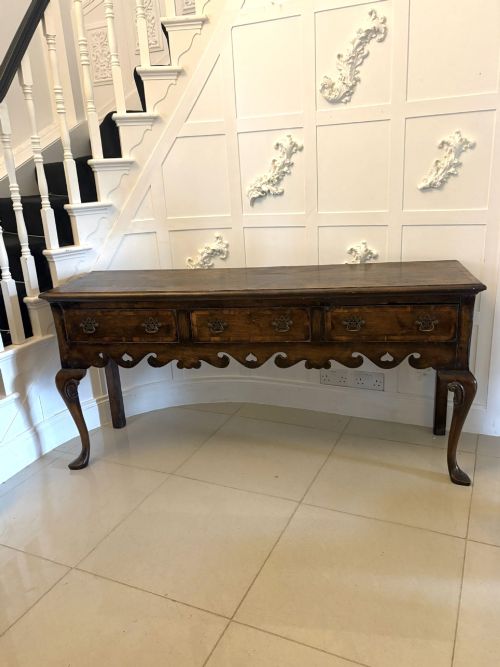
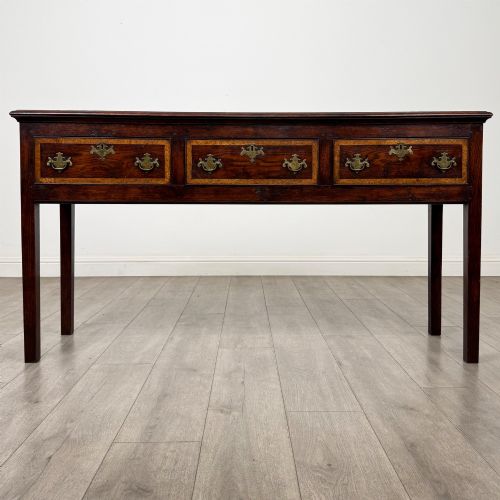
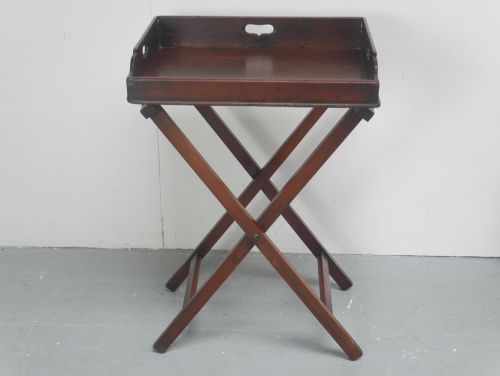
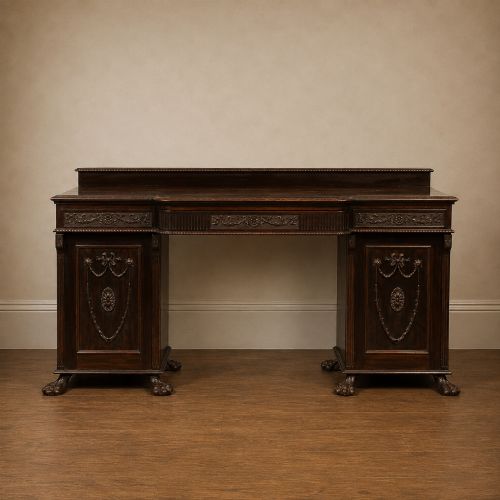

Georgian Style Serving Table
A georgian style serving table brings formal dining presence and rich timber grain to a room.
Georgian Style Serving Table
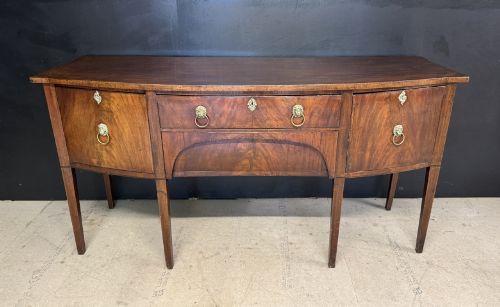
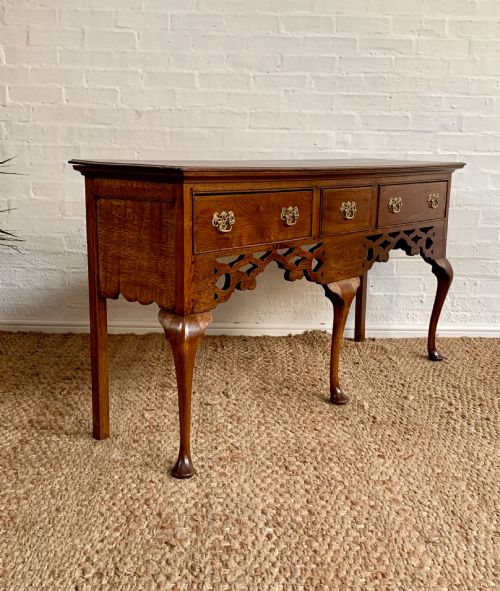
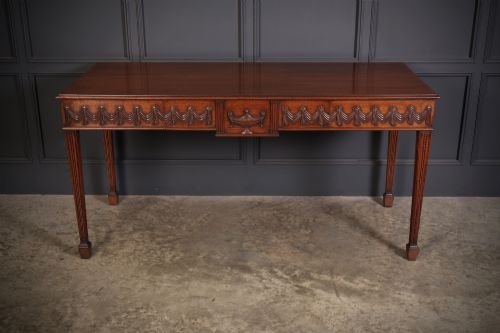
A georgian style serving table is a substantial timber console or server designed for dining rooms and large halls. The listings here encompass authentic eighteenth-century examples alongside later nineteenth-century revivals and twentieth-century interpretations.
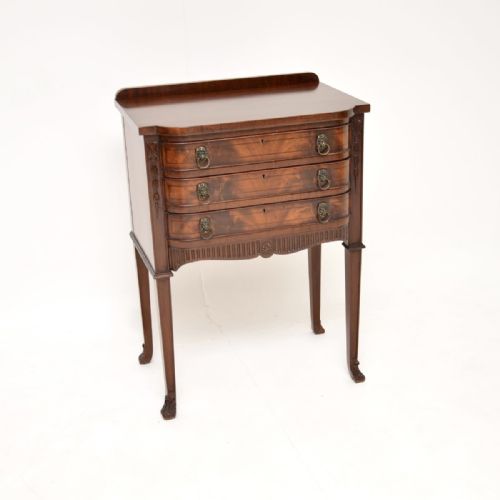
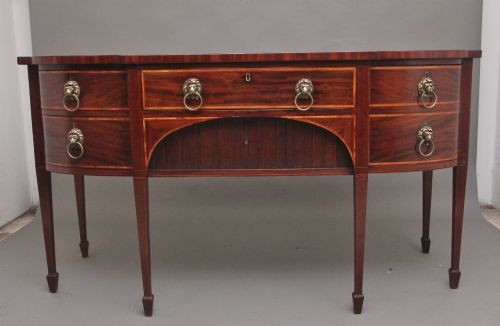
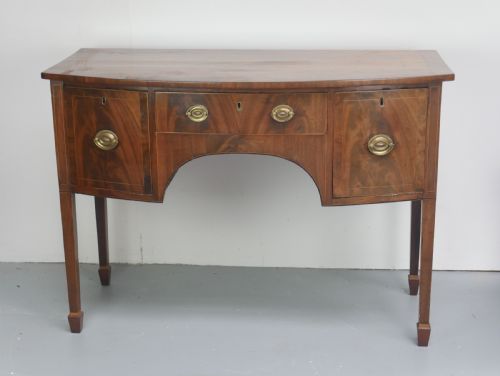
Most pieces encountered on this page are mahogany, taking forms from bowfront sideboards to monumental breakfront servers. Makers across the Georgian, Victorian, and Edwardian periods drew on classic proportions to build these heavy dining pieces.
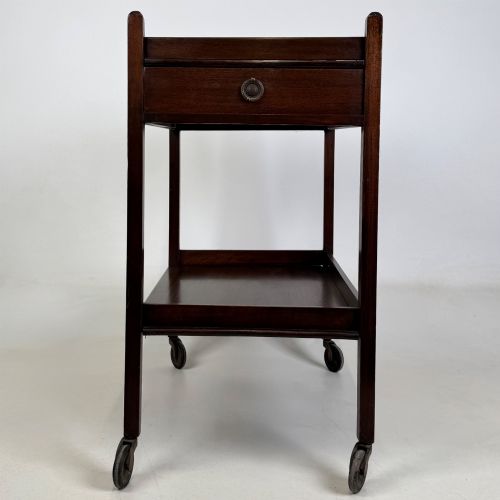
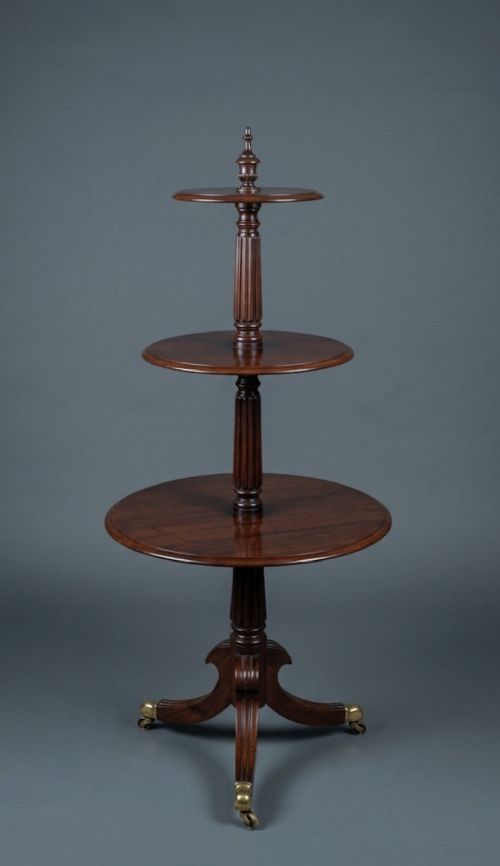
Beyond the standard serving table, the selection includes related forms like dresser bases, dumb waiters, and butlers trays on stands. These items share the practical purpose of holding dishes and serving ware during meals.
What varies in quality
Quality in a georgian style serving table rests on the selection of timber figures and the crispness of carved details. Finer examples feature well-matched mahogany grains, delicate stringing, and precise inlay work rather than heavy, plain surfaces.
Proportion and structural integrity distinguish superior tables from simpler utilitarian pieces. Stronger architecture in the legs, drawers, and stretcher bases marks the work of more skilled cabinetmakers.
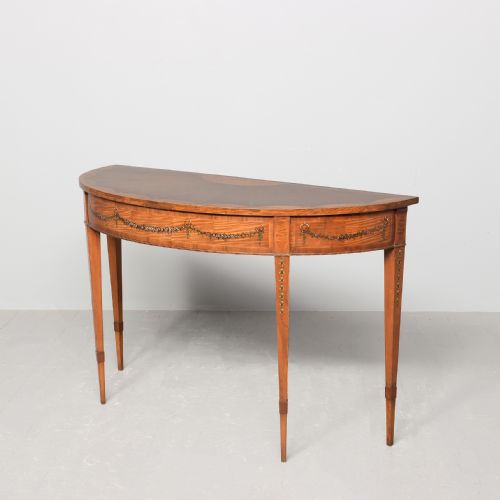
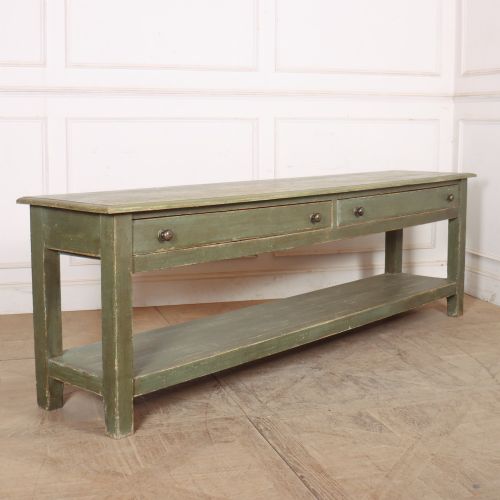
Listings feature mahogany as the dominant timber, accompanied by oak, walnut, burr walnut, satinwood, and painted finishes.
George Hepplewhite·Gillows
The Georgian Style Serving Table Glossary
- Bowfront
- A curved front convex in shape. This profile softens the rectangular lines of a standard serving table.
- Cross-banding
- A strip of veneer applied to the border of a table top running perpendicular to the grain of the centre. It creates a contrasting frame around the main timber.
- Dumb waiter
- A tiered set of circular revolving shelves on a central column. It allowed diners to help themselves without servants present.
- Serpentine
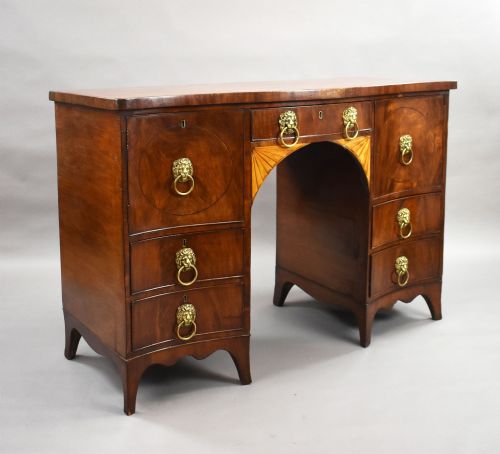
- A wave-like front curving outward in the centre and inward at the sides. This shape demands high skill from the cabinetmaker.
- Inlay
- Pieces of contrasting wood fitted into a recess to form a decorative pattern. Boxwood and satinwood are typical choices for dark mahogany surfaces.
Georgian Style Serving Table: Frequently Asked Questions
Where did they put a serving table?
These tables stood against dining room walls to hold heavy platters, dishes, and silverware during large meals. Servants plated food on them before bringing dishes to the main dining table.
In modern homes, they function well in hallways, living rooms, or dining spaces as console tables with useful drawer storage.
How do I tell an 18th century table from a later revival?
Original eighteenth-century pieces display hand-cut joinery, timber shrinkage appropriate to age, and secondary woods like oak or pine inside the drawers. The patination develops a deep, soft lustre through generations of use.
Revival pieces from the Victorian and Edwardian eras often use more uniform machinery-cut elements and standardised hardware, even when faithfully copying earlier Georgian styles.
What is the difference between a sideboard and a serving table?
Traditional serving tables are open beneath the top frame, often featuring a frieze drawer or an open potboard shelf below. They emphasise clean architectural lines and decorative legs.
Sideboards developed enclosed cupboard space and multiple drawers across the base to store bulkier dining room inventory, glassware, and linen.
How do I care for a mahogany surface?
Keep mahogany timber away from direct sunlight and heat sources to prevent the wood from drying out or splitting. Dust regularly with a dry cloth and apply a traditional beeswax polish sparingly to maintain the finish.
Avoid using modern silicone sprays or placing damp glasses directly on the polished timber top.