
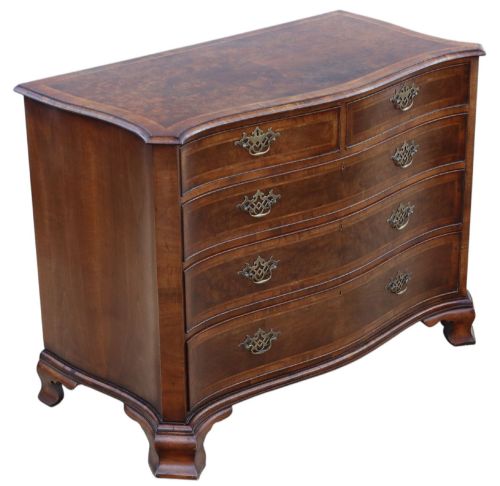
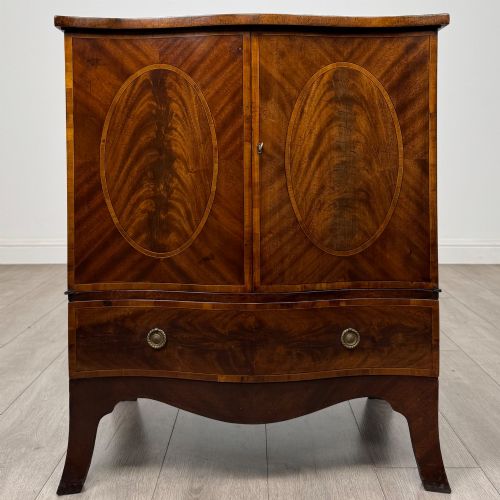
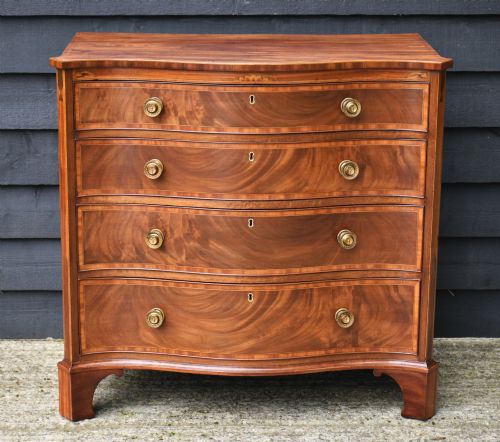
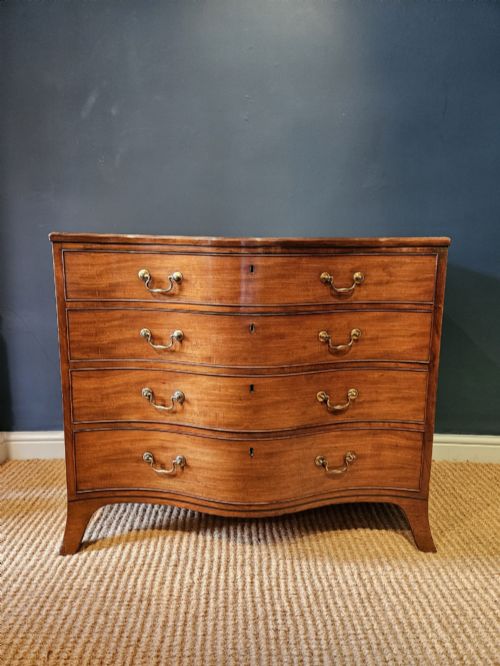
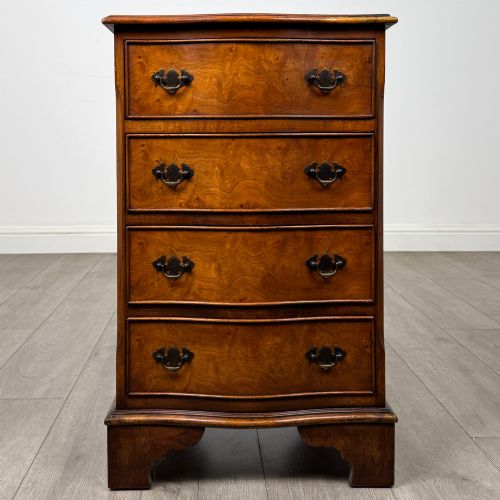
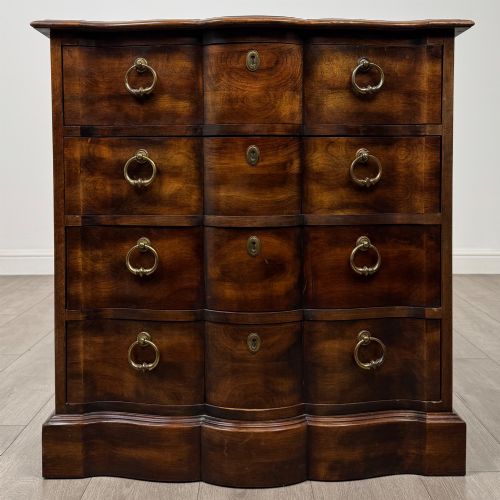
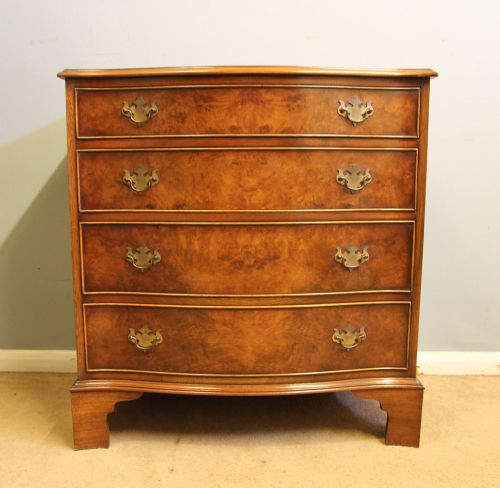
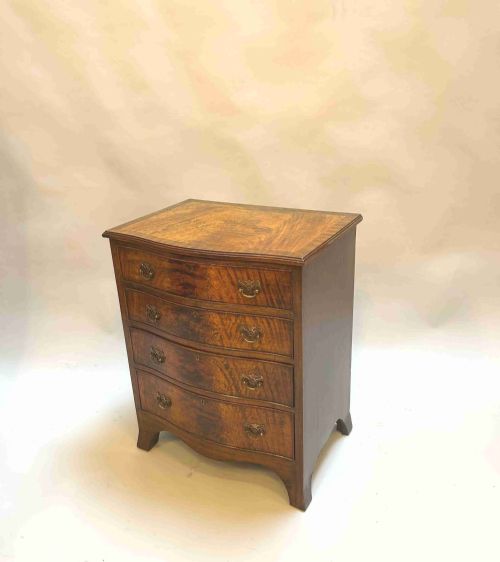
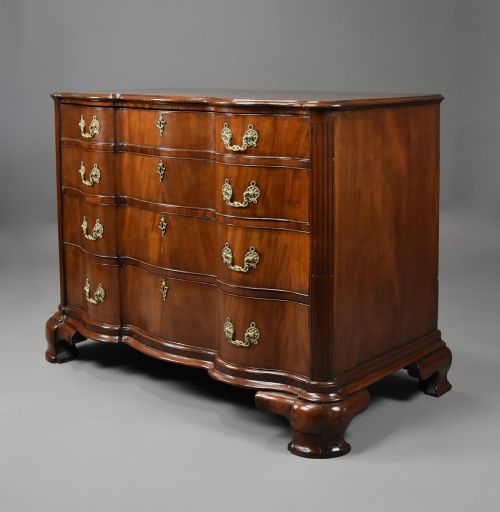
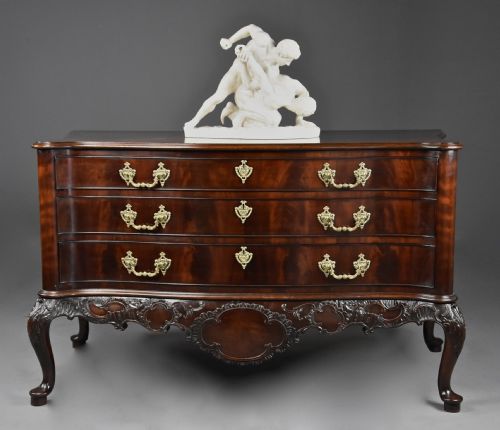
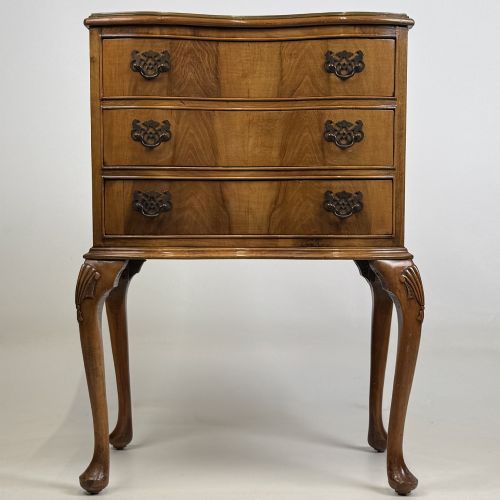

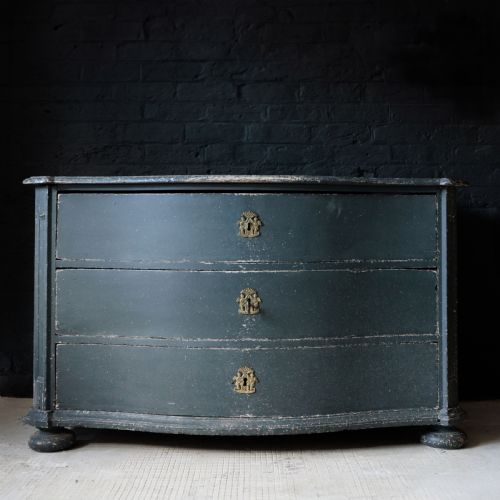


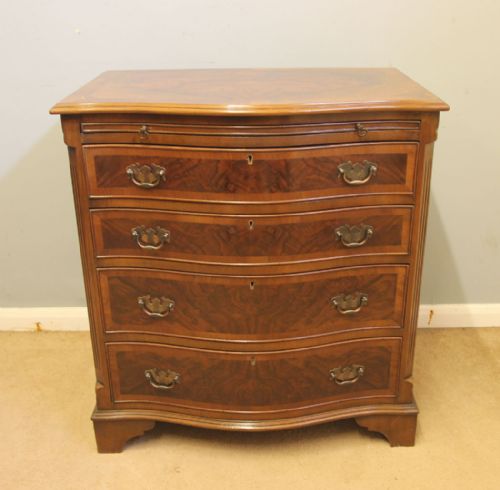
Georgian Style Serpentine Commode
These georgian style serpentine commode pieces bring curved fronts and rich timber to a room, offering practical storage with distinct architectural flair.
Georgian Style Serpentine Commode
A georgian style serpentine commode functions primarily as a chest of drawers or small cabinet featuring a distinctive undulating front curve. The pieces meeting this description range from authentic eighteenth-century examples to later revival interpretations from the Edwardian era and the twentieth century.
Makers designed these items as principal storage furniture for domestic interiors, often placing them in principal bedchambers or formal reception rooms. Buyers encounter variations spanning traditional mahogany builds to highly figured burr walnut and satinwood surfaces.
Judging the quality
Quality rests on the choice of timber figure, such as richly patterned burr walnut or carefully matched mahogany veneers, alongside the crispness of any boxwood inlay or marquetry. Superior examples display seamless alignment along the undulating drawer fronts and robust secondary woods within the drawer construction.
The sophistication of the revival period or the age of an eighteenth-century original dictates the baseline of execution, where finer pieces exhibit meticulous attention to the proportions of the serpentine sweep and the integration of brass mounts.
Listings feature woods including mahogany, burr walnut, walnut, satinwood, and Dutch elm, paired with brass hardware and boxwood inlay.
The Georgian Style Serpentine Commode Glossary
- Serpentine
- A front profile characterised by a convex central section flanked by two concave curves. This contour requires advanced cabinetmaking skill to execute correctly.
- Commode
- A low decorative chest of drawers or cabinet designed for domestic storage. The term often describes grander pieces originating from both English and continental workshops.
- Crossbanding
- A border technique where thin strips of veneer are laid perpendicular to the grain of the main surface. It frames drawer fronts and tabletops on better quality furniture.
- Marquetry
- The art of creating decorative patterns on wood surfaces using fitted pieces of different coloured veneers. It frequently appears on satinwood revival and eighteenth-century examples.
- Oxbow
- A specific variant of a curved drawer front featuring a concave centre flanked by convex outer curves. This inverted serpentine form appears on select continental commodes.
Georgian Style Serpentine Commode: Frequently Asked Questions
Where should I place a serpentine commode?
These pieces suit reception rooms, hallways, or principal bedrooms where the curved front adds visual softness to straight walls.
Their compact proportions allow them to function effectively as statement storage items without dominating smaller floor spaces.
How do I tell an 18th-century piece from a revival one?
Examination of internal construction timber, drawer linings, and hand-cut joints helps distinguish period items from Edwardian or twentieth-century revivals.
Original eighteenth-century pieces display appropriate timber ageing and construction methods specific to their period, whereas revival pieces often utilise standardised secondary woods.
What is the difference between a commode and a chest of drawers?
While both terms describe drawer storage, commode traditionally denotes a more decorative, low-standing cabinet often associated with continental or high-style English design.
Standard chests of drawers generally focus primarily on utilitarian storage capacity rather than elaborate serpentine shaping and decorative veneers.
How do I maintain the wood surface?
Regular dusting with a soft, dry cloth preserves the polished finish of mahogany, walnut, and satinwood surfaces.
Applying occasional appropriate wax feeds the timber and prevents the dry air of modern rooms from affecting fine veneers.