

Georgian Style Mahogany Chests
Georgian style mahogany chests bring deep timber grain and classical proportion into a room, carrying the formal design vocabulary of the eighteenth century.
Georgian Style Mahogany Chests
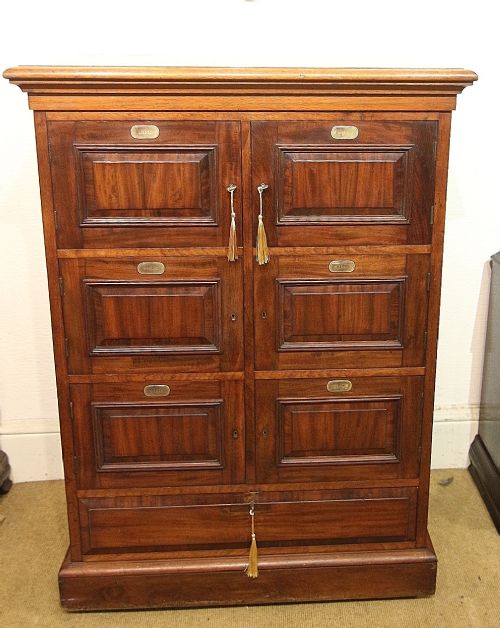
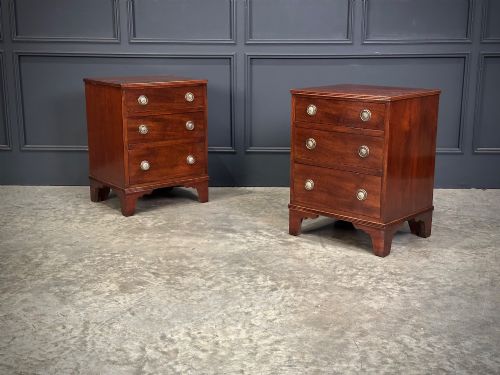
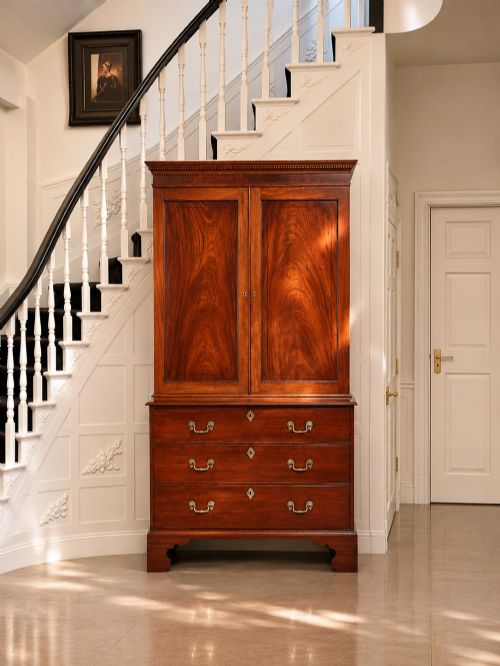
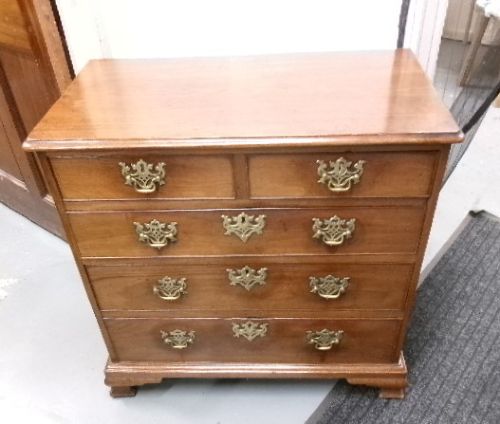
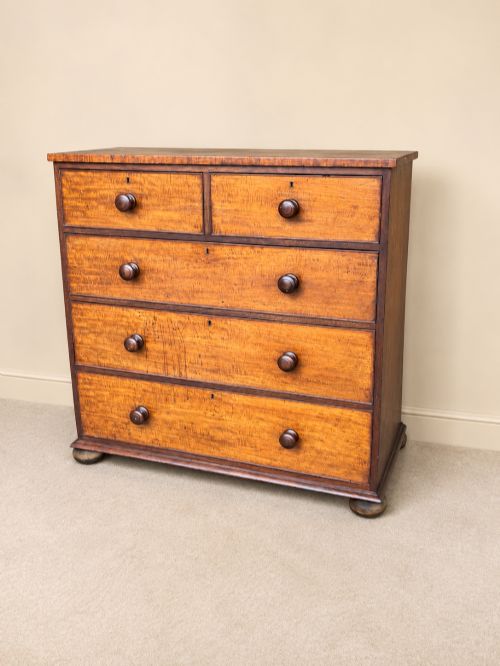
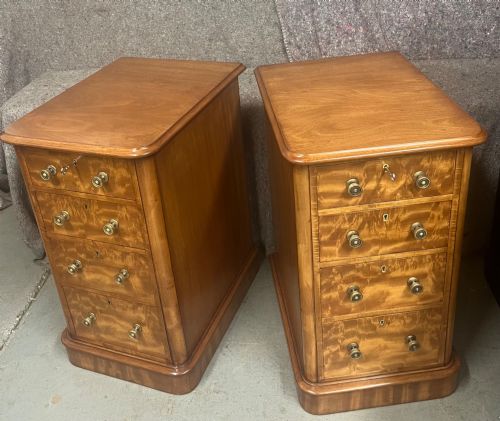
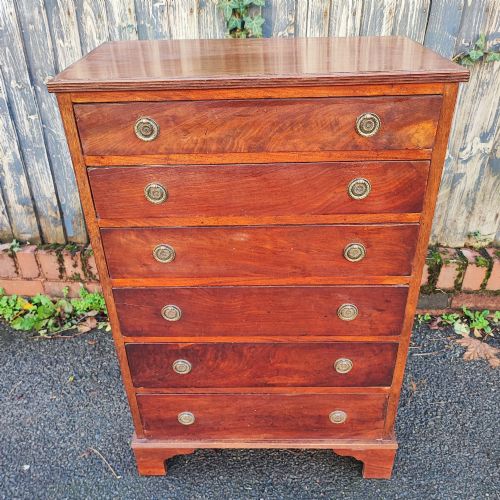
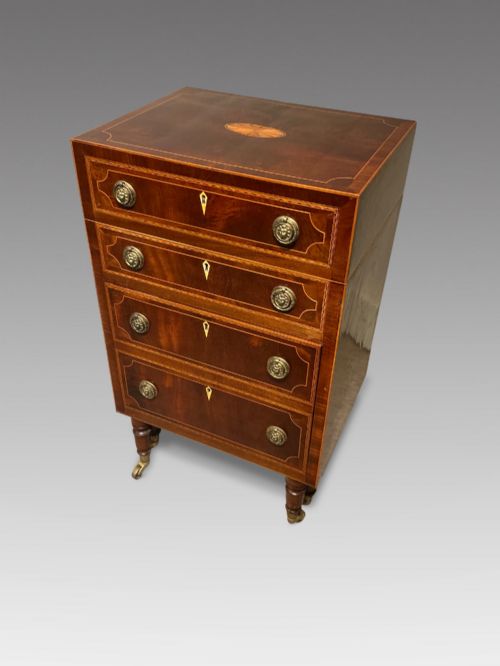
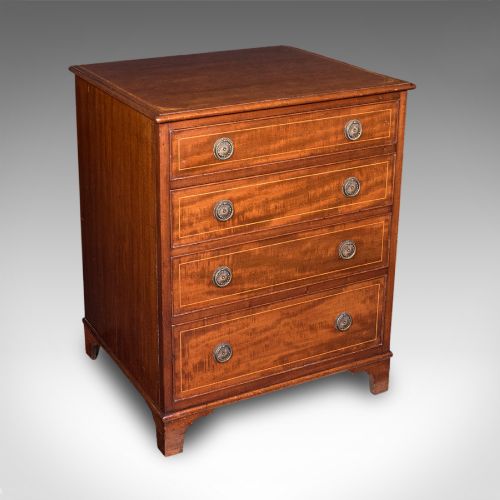
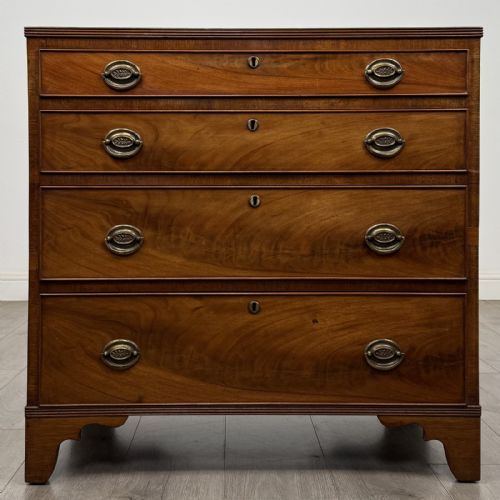
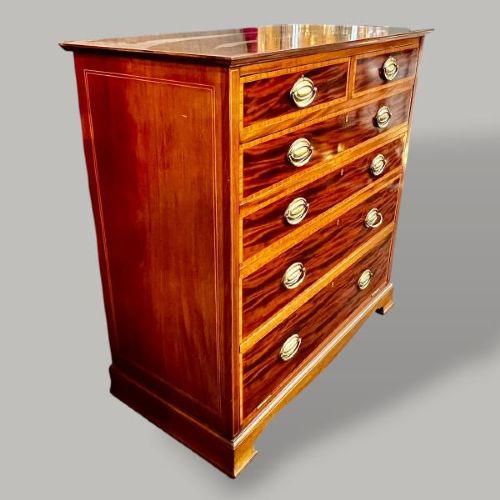
Georgian style mahogany chests encompass storage furniture built in the manner of the eighteenth century, drawing heavily from the periods of Georgian, Regency, and later revival eras like the Edwardian decades and the 1920s. Buyers encountering these pieces on this page will find standard two-over-three drawer configurations, tallboys, chests on chests, and diminutive bedside versions suited to smaller spaces.
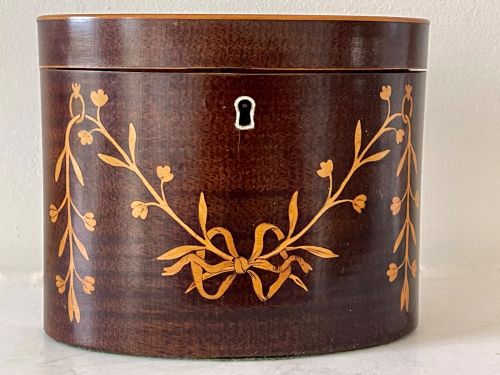
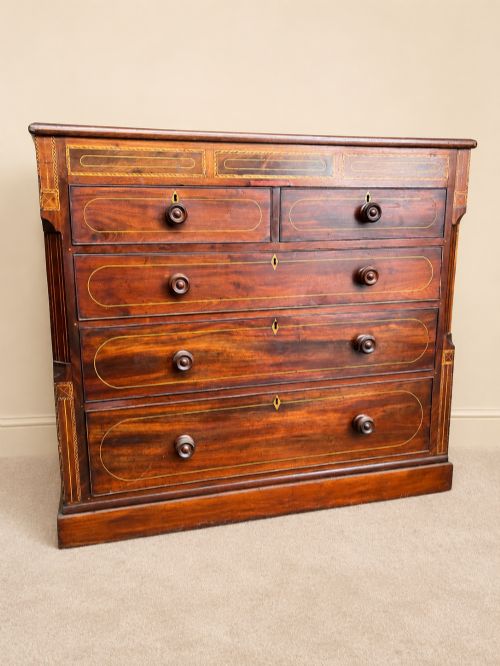
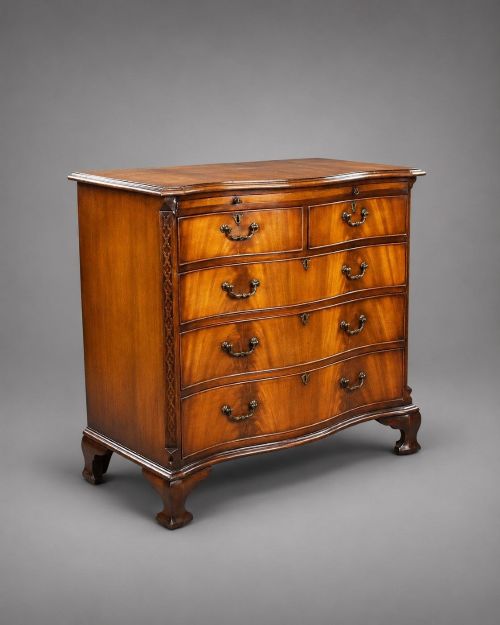
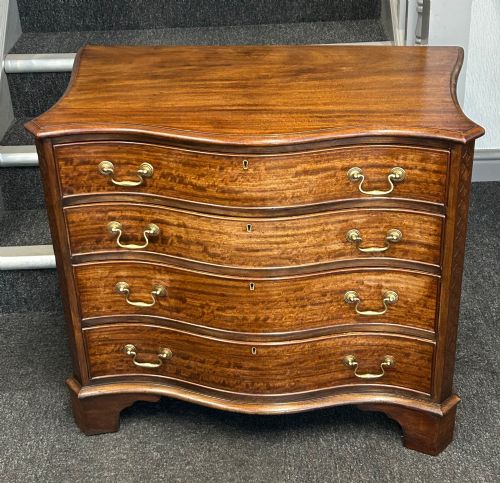
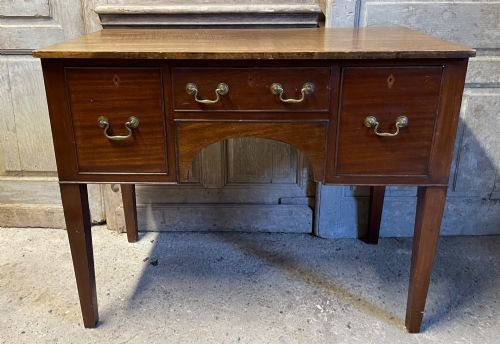
The materials span solid timbers and veneers, frequently supported by secondary woods like oak, alongside decorative additions such as satinwood inlay, brass handles, and bone escutcheons. Forms range from straight-fronted chests with bracket feet to serpentine fronts and bow fronts, reflecting both authentic period manufacture and subsequent revival craftsmanship.
Materials and Construction
Cabinet makers utilised mahogany as the primary visible timber, often selecting figured or flame veneer varieties to create dynamic grain patterns across drawer fronts and top surfaces. Secondary elements incorporated satinwood inlay for contrast and solid oak for drawer linings and internal framing.
Hardware played an integral structural and decorative role, featuring cast brass drop handles, keyhole escutcheons, and bracket feet or cabriole legs supporting the base. Joinery techniques relied on dovetailed drawer construction and pegged tenons, ensuring stability across both authentic eighteenth-century examples and twentieth-century revivals.
Georgian Style Mahogany Chests Retail Price Guide 2026
Typical asking prices for georgian style mahogany chests among the pieces listed under this phrase on Sellingantiques today, from the lower quarter to the upper quarter. They describe what is for sale here now, not the wider market.
Miniature apprentice pieces appear alongside full-sized linen presses, proving that grand Georgian proportions translated charmingly down to table scale.
Assessing Craftsmanship and Finish
The standard of timber selection divides pieces across the range, with superior examples displaying matched flame mahogany veneers and crisp, undamaged satinwood stringing. Lesser pieces utilise plain or flat grain boards without the depth of colour achieved through traditional polishing.
Construction details distinguish workshop execution, visible in the tightness of the dovetail joints, the symmetry of the cockbeading around drawer edges, and the retention of original brass hardware. Refinished surfaces or replaced feet alter the integrity of a piece, whereas untouched patination elevates the character of the timber.
Whytock & Reid
The Georgian Style Mahogany Chests Glossary
- Serpentine front
- A front contour that curves outward in the centre and inward toward the ends, requiring advanced woodworking skill to shape timber accurately.
- Bracket foot
- A structural foot positioned at the corners of a chest, shaped in an L-shape profile that typically supports Georgian and revival case furniture.
- Bachelors slide
- A pull-out shelf positioned above the top drawers, historically utilised as a writing surface or dressing tray.
- Satinwood inlay
- A contrasting light-coloured exotic wood set into the darker mahogany surface to create geometric borders or decorative motifs.
- Cockbeading
- A narrow rounded moulding projecting around the edges of drawer openings, designed to protect the drawer edges and frame the facade.
Georgian Style Mahogany Chests: Frequently Asked Questions
How do I spot a reproduction chest?
Examinations of internal timbers, drawer joints, and backboards usually reveal the era of manufacture. Eighteenth-century pieces display hand-cut dovetails and oak linings, whereas twentieth-century revivals often utilise standardised machine-sawn components.
Secondary woods and the ageing of the mahogany finish provide further clues. Soft wood framings or modern fixings generally indicate a later Georgian style piece rather than a period original.
What is a tallboy chest?
A tallboy is a high chest of drawers, typically constructed in two stacked sections with a smaller chest sitting atop a larger base. This configuration maximises vertical storage without demanding additional floor space.
They appeared frequently during the eighteenth century and subsequent revival periods, offering deep storage capacity combined with formal classical proportions.
How should I care for mahogany?
Mahogany responds best to stable indoor humidity and protection from direct sunlight, which can bleach the warm red tones of the timber. Regular dusting with a dry lint-free cloth maintains the surface without the buildup of silicone polishes.
Occasional applications of traditional beeswax nourish the grain and preserve the deep historic patination accumulated over decades of use.
What is a brushing slide?
A brushing slide is a pull-out wooden shelf integrated into the upper section of a chest, positioned just below the top surface. Historically, owners used these surfaces for folding garments or writing letters.
They appear frequently on better quality Georgian and revival pieces, sliding smoothly within tracks hidden beneath the top moulding.