



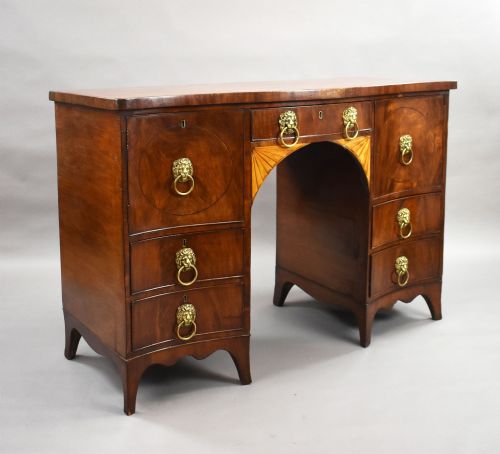


Georgian Style Inlaid Desk
A georgian style inlaid desk brings classical proportion and delicate marquetry to a study, offering a refined writing surface shaped by cabinet-makers of the past.
Georgian Style Inlaid Desk
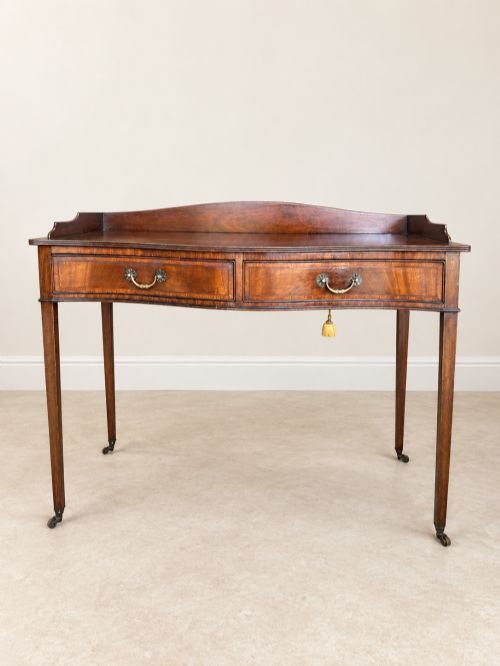
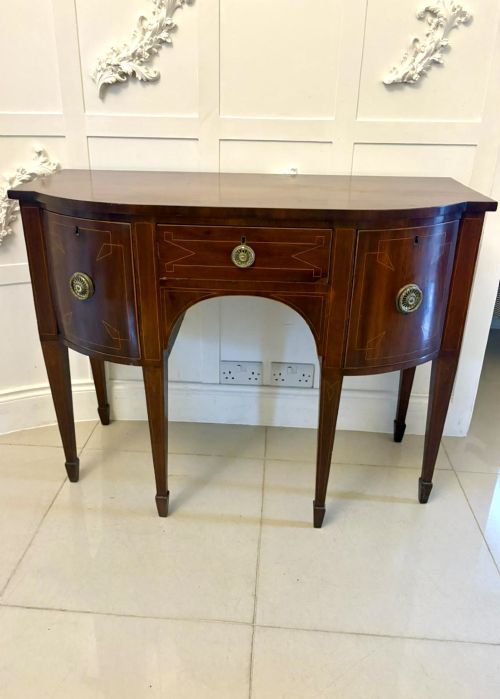
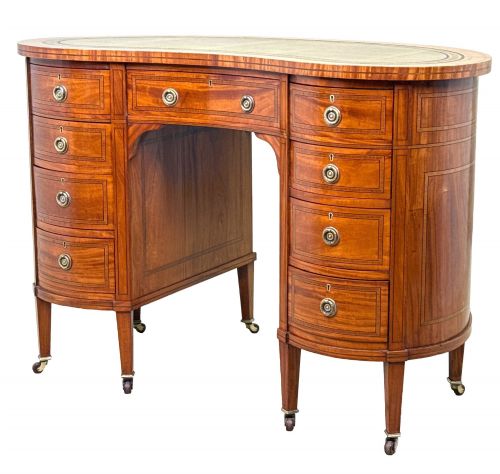
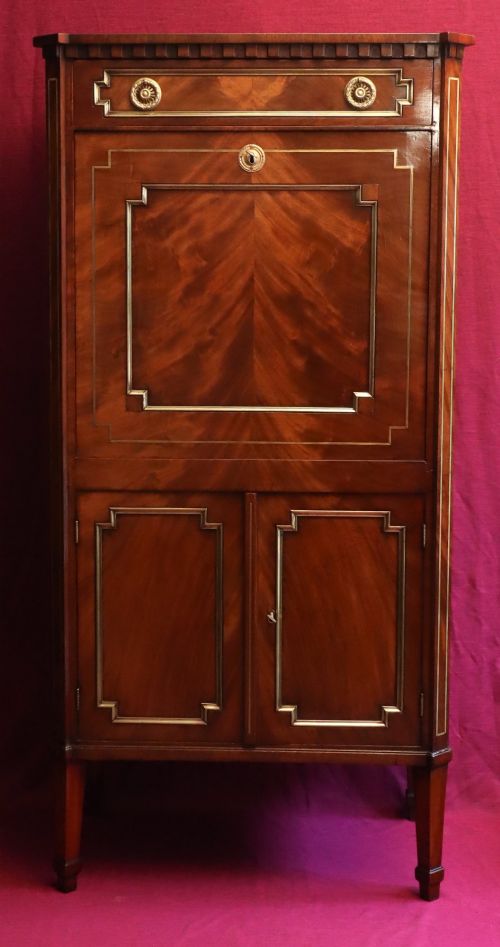
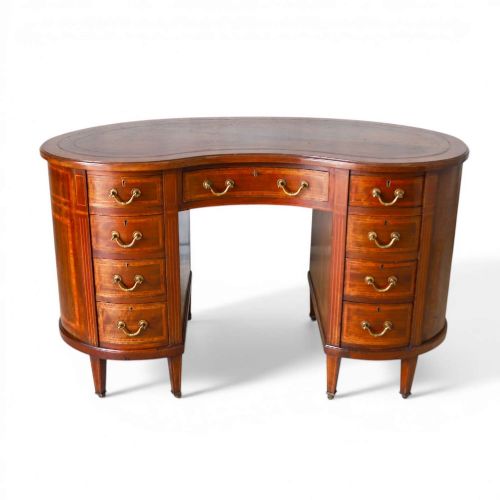
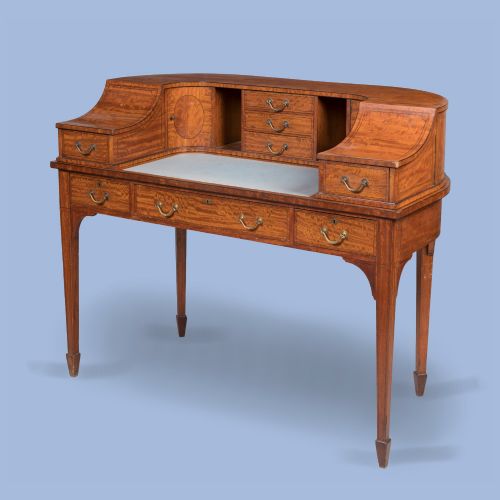
A georgian style inlaid desk comprises writing tables, bureau bookcases, and specialised forms like kidney desks or Carlton House models designed for domestic correspondence. You are most likely to meet mahogany and satinwood examples dating from the nineteenth and early twentieth centuries, particularly revival pieces reflecting eighteenth-century taste.
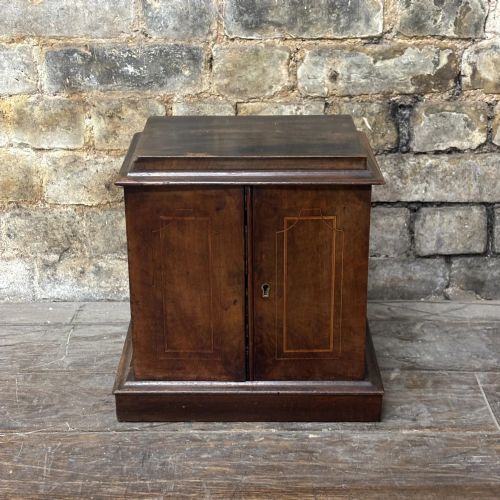
The assortment on this page spans compact writing tables with delicate boxwood stringing up to substantial bureau bookcases and partner desks. Many reflect Sheraton Revival or Regency influences, showing disciplined geometry combined with contrasting wood veneers.
These writing pieces draw on historical forms originating in the Georgian period, yet their construction often dates to later decades such as the Edwardian era or nineteen-twenty. Buyers encounter both pedestal formats and lighter writing tables fitted with leather inserts and small stationery drawers.
Materials and construction methods
Cabinet-makers utilised solid mahogany and figured timbers as the structural foundation, applying fine veneers of satinwood, rosewood, and fruitwood to create contrasting borders and pictorial panels. Boxwood and brass stringing was meticulously inlaid into channeled grooves to define drawers, borders, and writing surfaces.
Writing surfaces were frequently lined with tooled leather, whilst interior compartments incorporated secret drawers and pigeonholes constructed from secondary woods. Joinery relied on traditional dovetails for drawer construction and precise mortise and tenon frames for the main carcase.
Listings feature eighteenth-century pieces alongside nineteenth-century Sheraton Revival examples, utilising mahogany, satinwood, rosewood, and brass.
Factors determining quality
The distinction between standard and superior examples lies in the crispness of the marquetry and the choice of timber figure, where highly figured flame mahogany or richly grained satinwood elevates a piece. Superior execution is visible in the continuity of inlay across drawer fronts and the precision of hand-cut dovetailing within secondary compartments.
Hardware integrity and the retention of original leather writing inserts or fitted interior stationery compartments heavily influence the overall standard. Pieces demonstrating restrained proportions and meticulous attention to internal secondary woods consistently represent the finer tier of cabinet-making.
Edwards and Roberts·Gillows of Lancaster
The Georgian Style Inlaid Desk Glossary
- Stringing
- A narrow strip of contrasting wood or brass inlaid into the surface of furniture to form delicate borders. It is frequently seen in geometric patterns on table tops and drawer fronts.
- Marquetry
- The art of forming decorative patterns by fitting together veneers of different woods, metals, or ivory onto a structural carcase. This technique creates pictorial scenes or floral motifs on fall fronts and desk tops.
- Carlton House desk
- A horseshoe-shaped writing desk featuring a stepped superstructure of small drawers and compartments around the back and sides. It originated in the late eighteenth century and was frequently revived during the Edwardian period.
- Secretaire bookcase
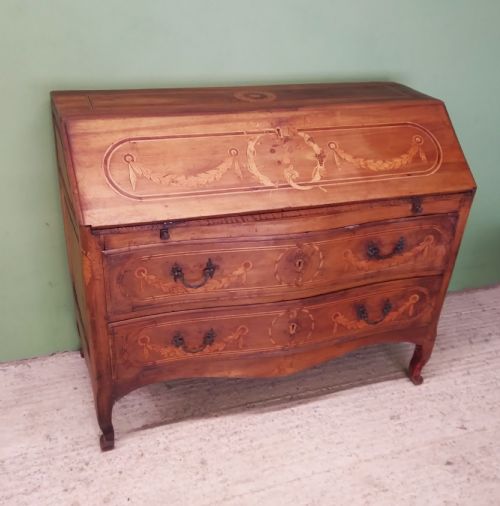
- A tall piece of furniture combining a lower bureau or writing drawer with glazed upper shelving for books. The writing section typically drops open on hinges to reveal a fitted interior of pigeonholes and small drawers.
- Satinwood
- A lustrous, hard timber native to Ceylon and India, prized for its golden yellow colour and reflective grain. It was extensively utilised during the Sheraton and revival periods for desk surfaces and banding.
Georgian Style Inlaid Desk: Frequently Asked Questions
How do I distinguish a genuine Georgian desk from a revival piece?
Examine the secondary woods used inside drawer linings and the backboards, as nineteenth-century revival pieces often incorporate machine-cut elements or different pine species compared to eighteenth-century equivalents. Tool marks, screw types, and the method of veneer application also offer clear indicators of period construction versus later interpretation.
Style nomenclature in listings often references Georgian or Sheraton Revival for pieces built a century later, meaning construction details and hardware must guide your dating rather than outline alone.
How should I care for an antique leather desk top?
Protect the leather writing surface from direct sunlight and excessive moisture by using coasters and blotting paper during everyday use. Period leather benefits from occasional light conditioning with neutral wax or leather balm recommended for antiques rather than modern chemical cleaners.
Preserving the original gold tooling requires gentle handling and avoiding abrasive cloths or heavy scrubbing around the borders.
Can I use a kidney desk as a freestanding piece?
Kidney desks and partners tables are constructed with finished backs specifically designed to sit proud in the centre of a room rather than pushed against a wall. Their curved profiles allow them to function effectively as sculptural centrepieces in a study or library.
Checking the rear veneer and timber quality confirms whether a specific table was intended for open placement.