

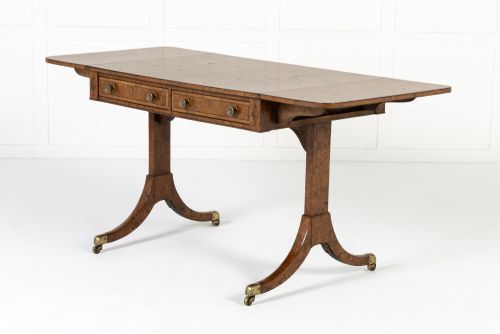
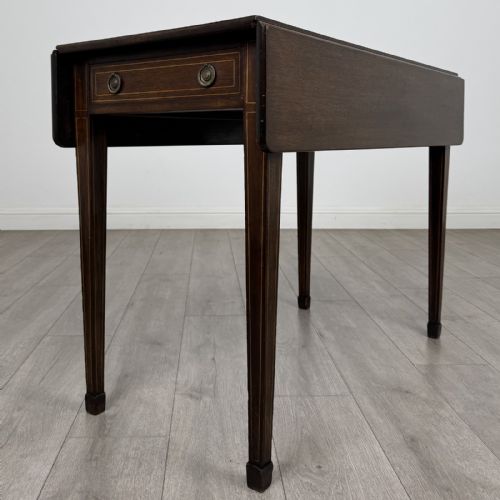
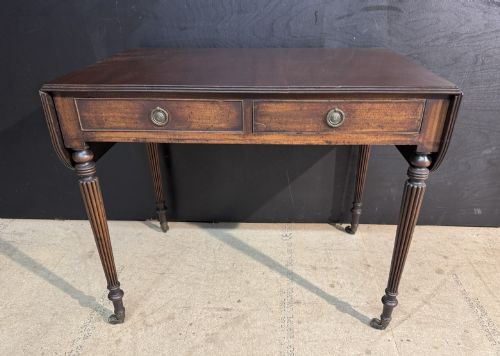
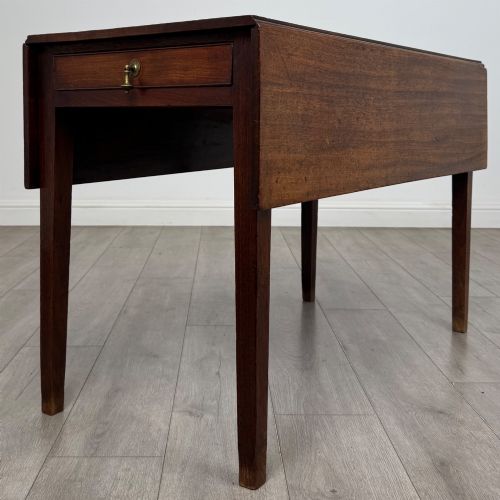

Georgian Style Drop Leaf Table
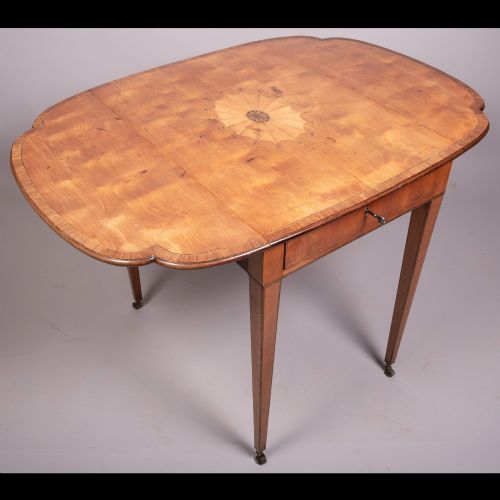
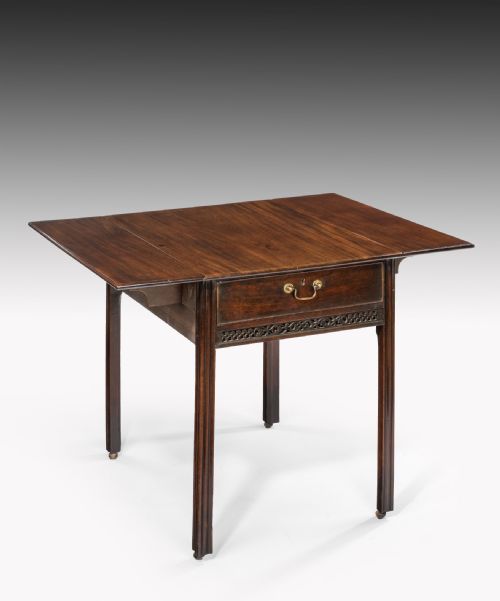
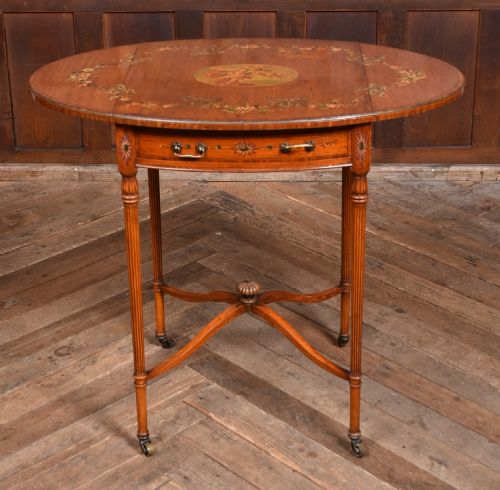
A georgian style drop leaf table offers folding flaps for flexible space, spanning compact side pieces to large dining boards.
Georgian Style Drop Leaf Table
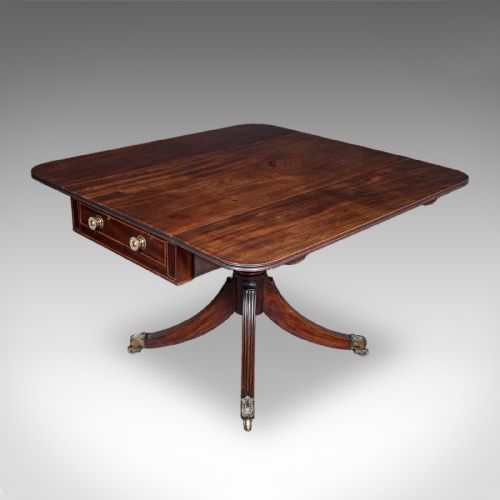
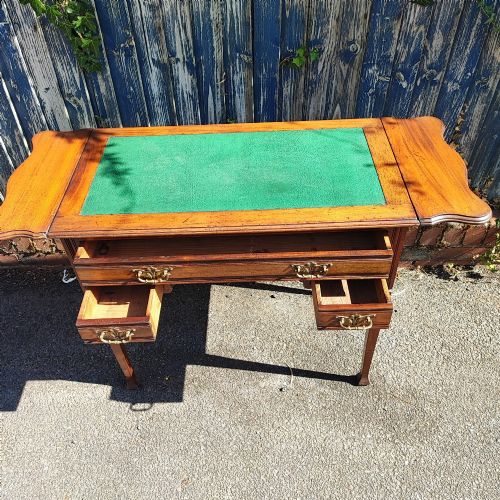
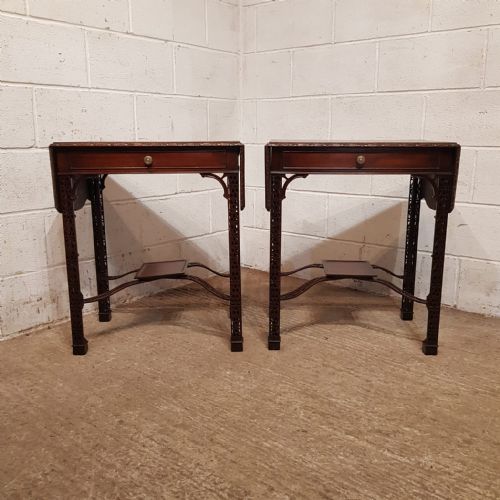
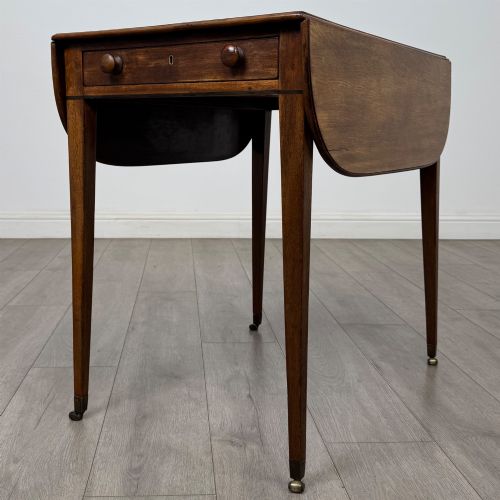
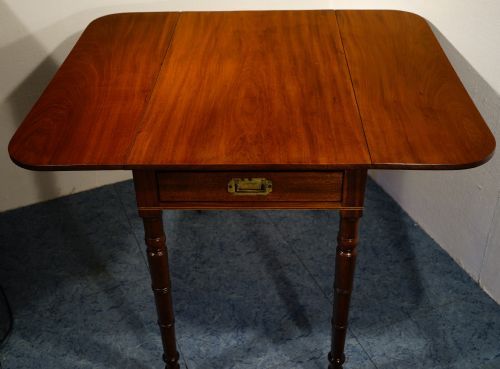
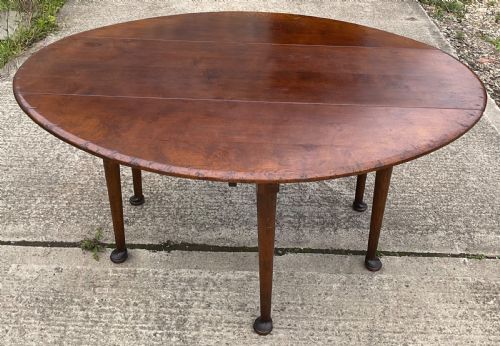
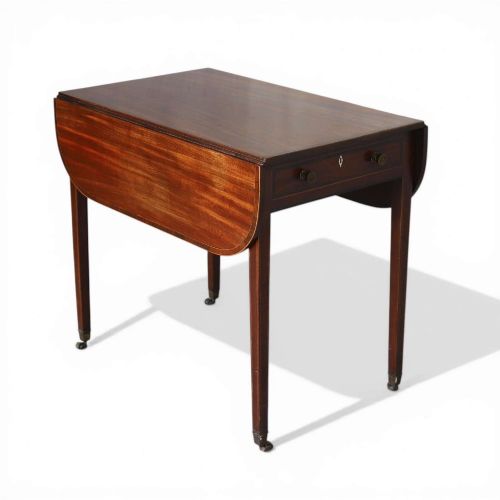
A georgian style drop leaf table comprises pieces built with folding flaps supported by hinged or swing legs, designed to expand surface area when needed and tuck away tightly against a wall. The selection ranges from 18th century originals to later revivals from the 19th and 20th centuries.
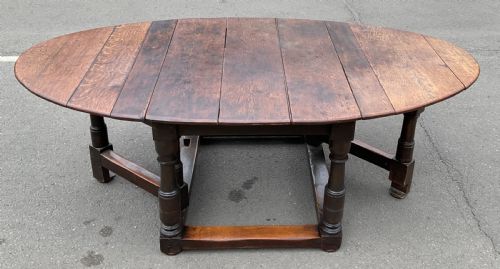
The common form met on this page is the pembroke or sofa table, typically executed in mahogany with satinwood banding, alongside larger gateleg dining versions in oak.
Origins span formal English dining rooms to smaller sitting spaces, appearing across periods from George III through to Edwardian and later revival eras.
How They Were Made
Cabinet makers utilised dense hardwoods like mahogany, oak, and walnut, frequently incorporating contrasting timbers such as satinwood and rosewood for cross-banding and inlay work.
Structural integrity relied on stable gateleg actions or pivoting wooden brackets known as rule joints to support the drop flaps under weight.
Georgian Style Drop Leaf Table Retail Price Guide 2026
Typical asking prices for georgian style drop leaf table among the pieces listed under this phrase on Sellingantiques today, from the lower quarter to the upper quarter. They describe what is for sale here now, not the wider market.
Listings feature mahogany, oak, satinwood, and yew wood across dining, sofa, pembroke, and occasional table forms.
What Varies in Quality
The distinction between tiers rests upon timber selection and the crispness of secondary details like brass castors, drawer dovetailing, and precise hand-inlay rather than applied decoration.
Proportion and stability define superior examples, ensuring that drop leaves align flush with the main top when raised and that swing legs bear weight securely.
The Georgian Style Drop Leaf Table Glossary
- Pembroke table
- A small rectangular table with two hinged drop flaps on opposite sides, frequently fitted with one or two small drawers.
- Gateleg table
- A table with legs on swinging hinged gates that pull out to support drop-down leaves.
- Rule joint
- A specific moulding joint used on drop-leaf tables where the flap meets the fixed top, hiding the gap during movement.
- Cross-banding
- A strip of veneer applied to the edges of a tabletop running perpendicular to the grain of the main surface.
Georgian Style Drop Leaf Table: Frequently Asked Questions
How do I use a drop leaf table daily?
Keep the flaps dropped against the wall for everyday walking space, then raise them when dining or working.
Support the leaves carefully using the designated swing legs or wooden brackets before placing heavy items on top.
Where do I place a sofa table?
Sofa tables fit naturally behind a freestanding sofa or against a bare hallway wall.
Their narrow depth allows them to function as a compact desk or side surface without blocking pathways.
How do I date a mahogany table?
Examine the timber grain, construction joints beneath the top, and secondary woods inside the drawers.
Earlier 18th-century pieces display hand-cut joinery and dense native mahogany, whereas later revivals show machine-sawn components.
What is satinwood cross banding?
Cross banding involves framing the primary tabletop timber with a contrasting border of lighter satinwood veneer.
This decorative technique highlights the edge profile and adds visual depth to the surface.