




Georgian Style Dressing Stool
These georgian style dressing stool examples are low seating forms built for the bedroom and dressing room, combining period revival designs with practical utility.
Georgian Style Dressing Stool
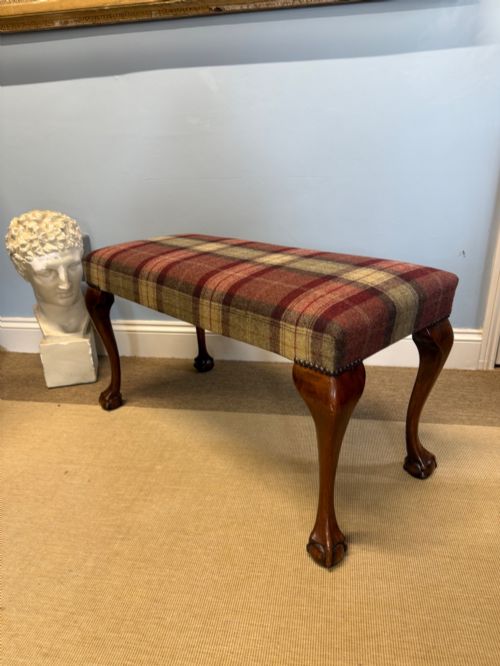
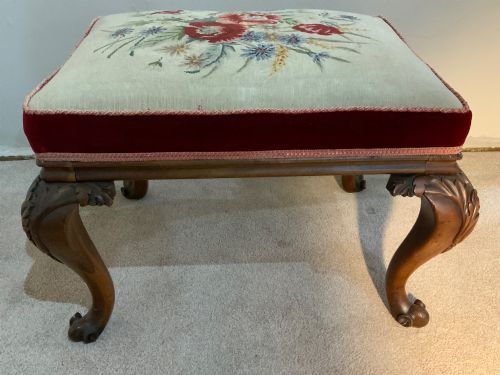
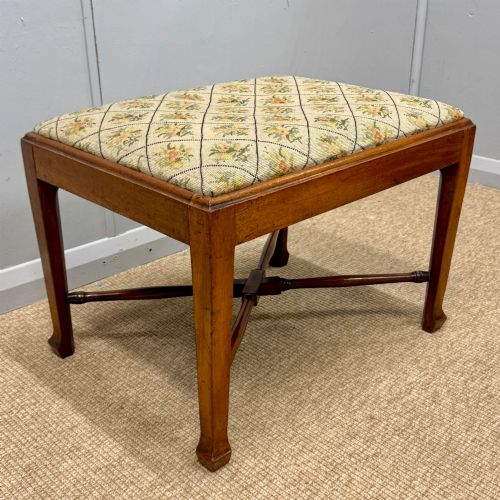
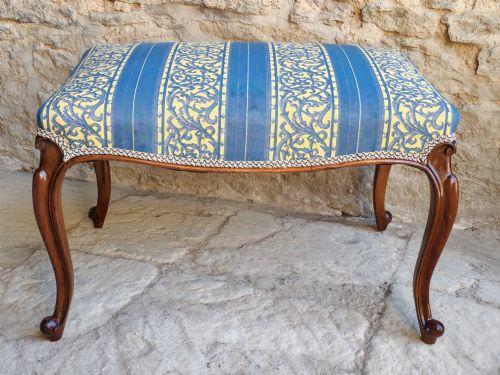
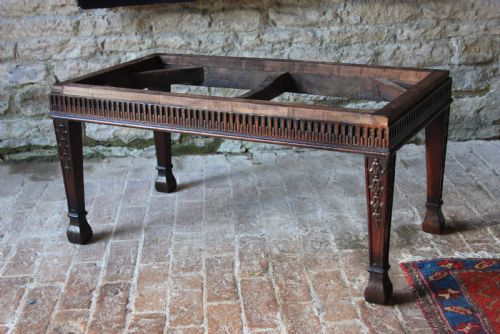
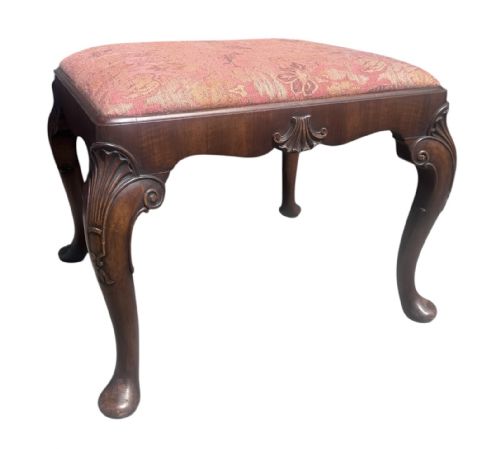
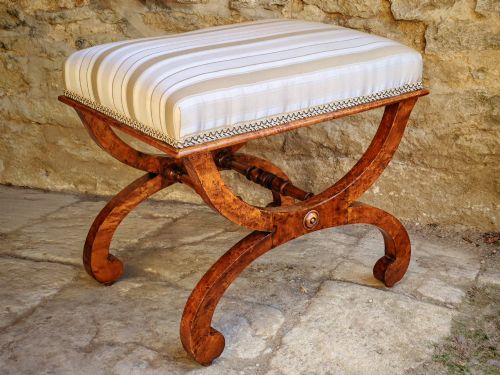
A georgian style dressing stool is typically encountered as a revival piece from the late nineteenth and early twentieth centuries, alongside genuine eighteenth century and Regency examples. These low seats appear in forms such as square, rectangular, and serpentine benches, often featuring cross stretchers or cabriole legs.
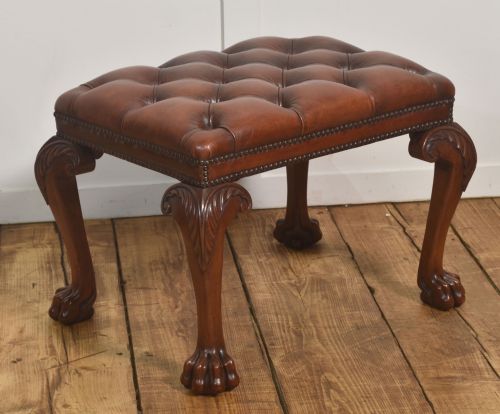
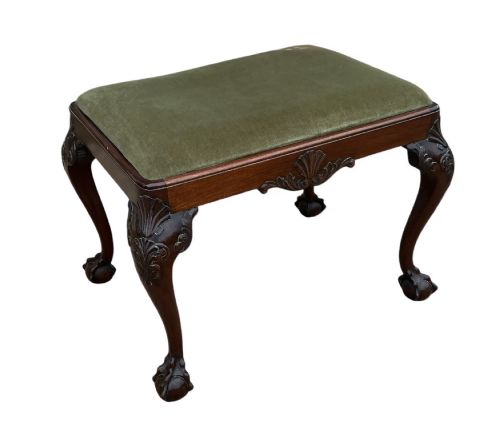
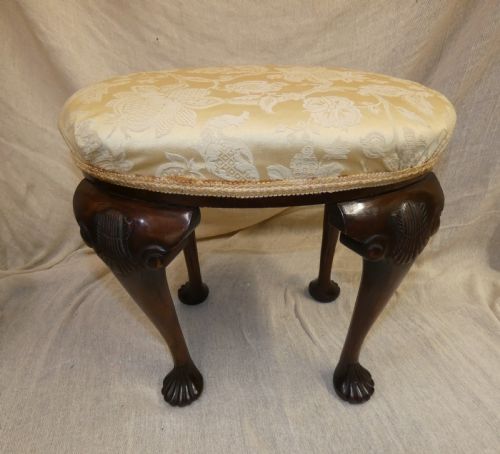
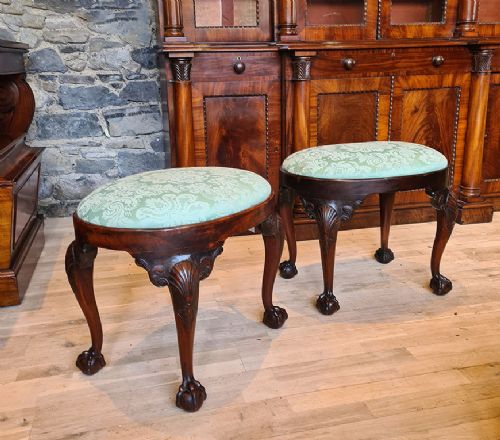
The selection ranges from simple mahogany frames to elaborate carved seating with claw and ball feet. Makers working in revival styles drew heavily upon Chippendale and Queen Anne vocabulary, producing dressing stools and window seats intended for domestic chambers.
Materials and construction
Makers constructed these stools primarily in solid mahogany and walnut, occasionally utilising burr maple or painted timbers. Frames join traditional cabinetmaking joints with carved decorative details such as foliage or claw and ball feet.
Upholstery forms a vital part of the construction, employing materials like leather, velvet, damask, wool, and tapestry. Needlework and textile covers are secured over padding to complete the dressing stool seat.
Listings feature mahogany and walnut predominantly, alongside decorative elements like tapestry and brass.
Craftsmanship and materials
Quality separates through the crispness of the timber carving and the selection of cabinet woods, such as figured walnut or dense mahogany. Superior examples display depth and precision in hand-carved details on the legs and frame.
The integrity of the frame construction and the fidelity of the period revival style dictate the standing of a piece. Finer stools maintain proportion and balance, paired with appropriate traditional upholstery materials.
The Georgian Style Dressing Stool Glossary
- Cabriole leg
- A furniture leg that curves out and then in, resembling the shape of an animal's leg. This form appears frequently on walnut and mahogany seating.
- Cross stretcher
- Wooden rails connecting the legs near the base for added stability. They are often found on dressing stools and benches from the eighteenth and nineteenth centuries.
- Serpentine
- A furniture outline that curves inward in the centre and outward at the ends. This flowing shape appears on the frames of certain dressing stools.
- Claw and ball
- A foot motif carved to resemble a bird's talon gripping a ball. This detail is commonly seen on walnut and mahogany revival pieces.
Georgian Style Dressing Stool: Frequently Asked Questions
What is a dressing stool?
A dressing stool is a low seat designed to be used in front of a dressing table or vanity. They provide compact, movable seating for the bedroom.
Historically, these pieces matched the broader bedroom suite in timber and style. Today they function flexibly as dressing table seats, footstools, or small benches.
How do I date a walnut stool?
Dating a walnut stool involves examining the timber grain, construction techniques, and stylistic revival markers. Pieces from the eighteenth century show distinct timber ageing compared to late nineteenth century revival items.
Revival pieces often adopt Queen Anne or George I design cues while retaining Victorian or Edwardian manufacturing methods. Look closely at the joinery and finish to distinguish period originals from later interpretations.
Are these stools comfortable?
These stools are built for short periods of sitting while dressing or grooming. Their upholstered tops provide a firm yet cushioned surface.
Many pieces feature traditional padding and fabric coverings such as tapestry, leather, or velvet. Comfort depends on the condition of the internal stuffing and the stability of the wooden frame.
Where should I place a stool?
A dressing stool fits naturally in a bedroom before a dressing table or desk. Their compact footprint also suits hallways and living spaces as occasional window seats.
Because they take up minimal floor space, these stools work well at the foot of a bed or tucked beneath a console table when not in use.